
Bienenfarm 2025 – VAWC & Bücker Meeting
In August 2025, the historic Flugplatz Bienenfarm, just 30 km west of Berlin, once again became a vibrant meeting point for aviation enthusiasts from across Europe. The combined Vintage Aerobatic World Championship (VAWC) and Bücker meeting transformed the airfield into a living showcase of flying history, where the scent of avgas, the hum of wooden propellers, and the roar of classic radial and inline engines filled the summer air. Visitors were treated to an unforgettable weekend that brought together rare aircraft, passionate pilots, and a strong sense of community.

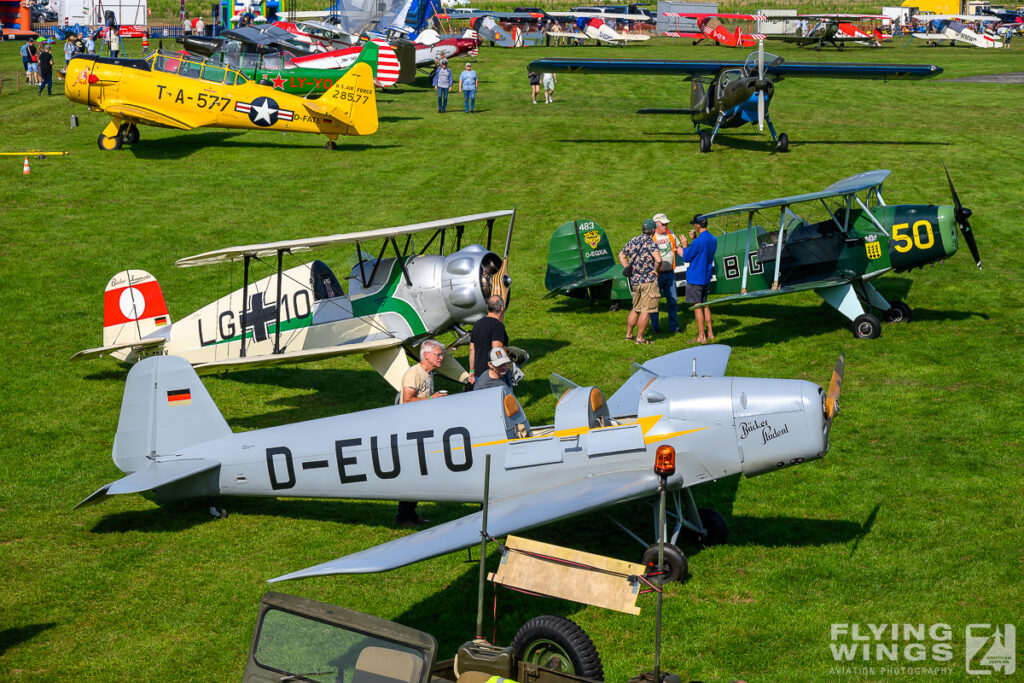
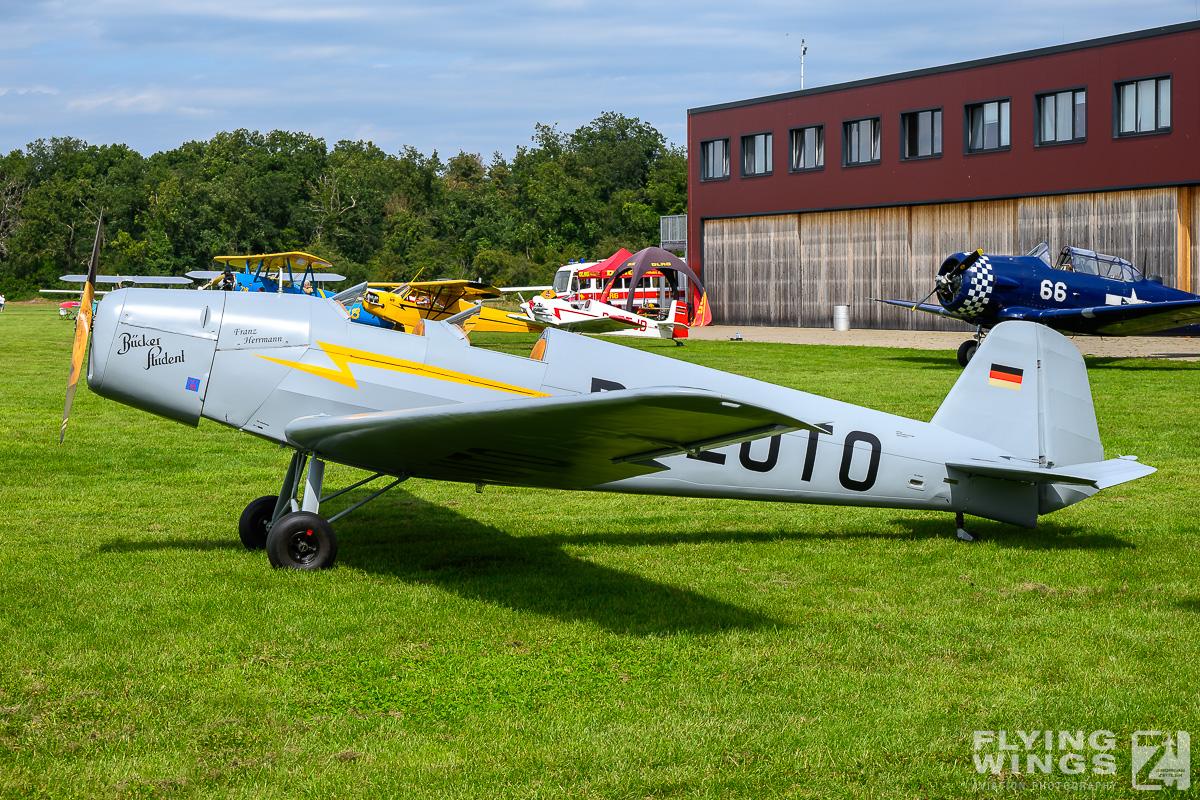
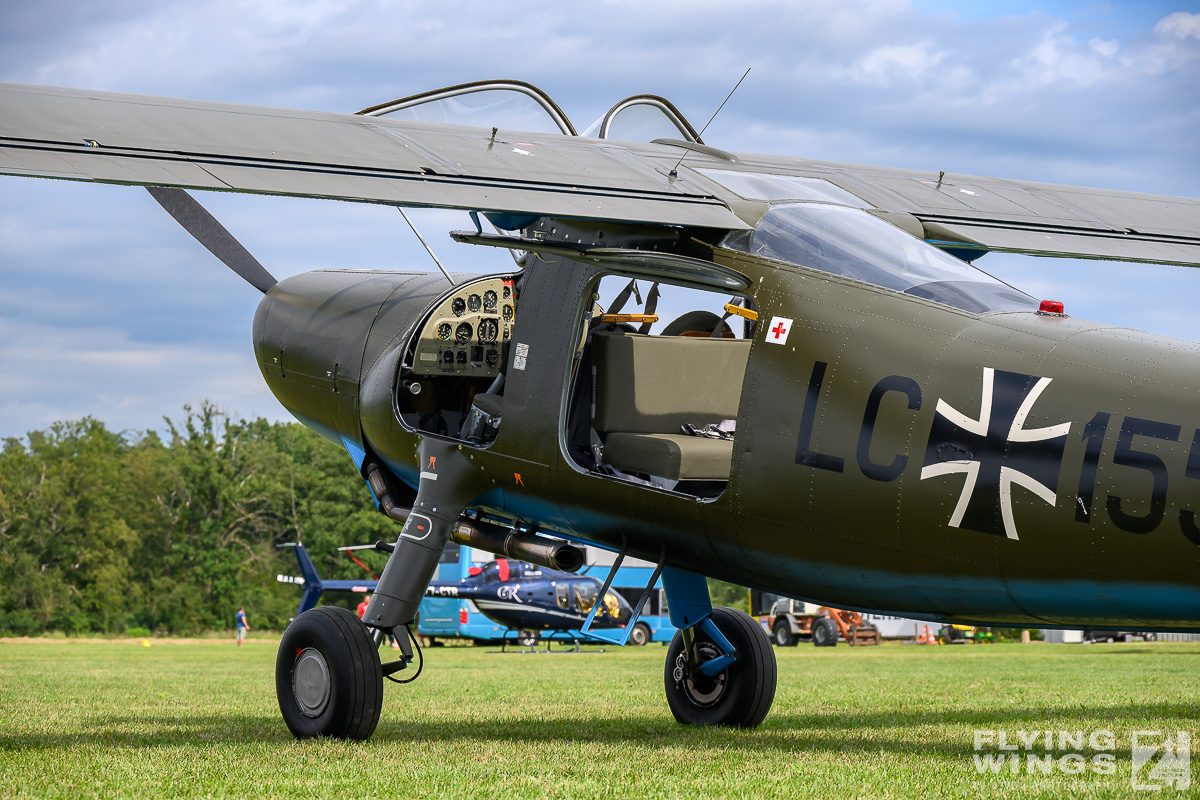
Originally built as an agricultural airfield during DDR times, Bienenfarm has evolved into one of Germany’s most important centres for historic aviation. Since 2008, the non-profit Quax-Flieger have been active here, taking full ownership in 2017 and transforming the site into what they call a “flying museum.” The airfield now houses over 20 vintage aircraft, including the unique Bücker Student, Fw 44 Stieglitz, Boeing Stearman, Harvard IV, Pilatus P-2/P-3, Dornier Do 27, and Cessna 172. At its heart stands a 1,800 m² wooden hangar, completed in 2020, which serves as exhibition space, workshop, and event venue, with capacity for up to 50 aircraft.
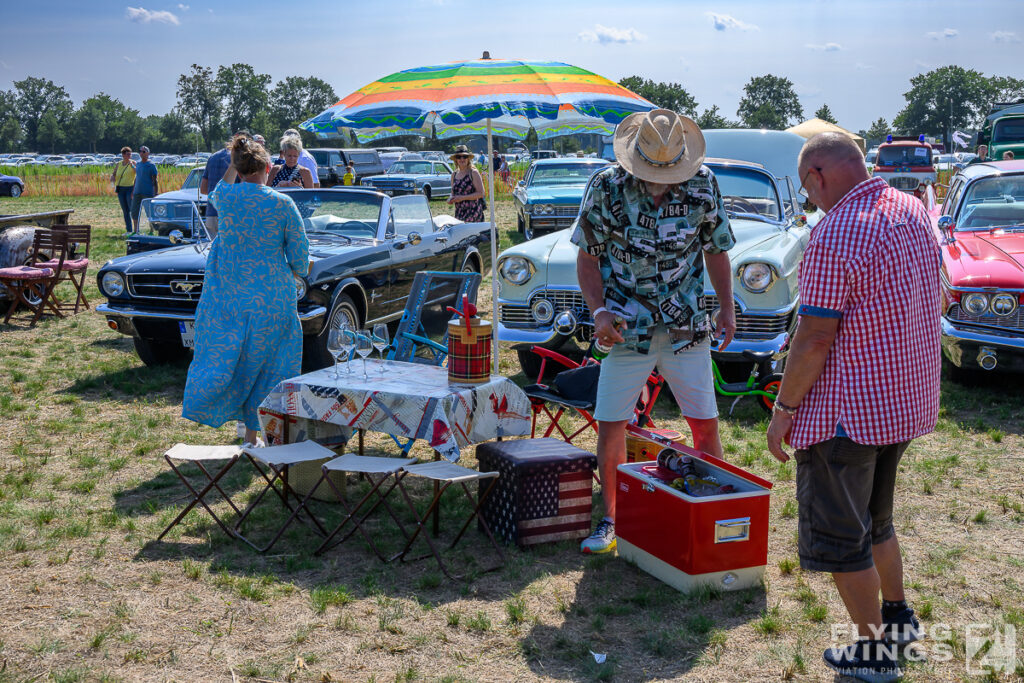
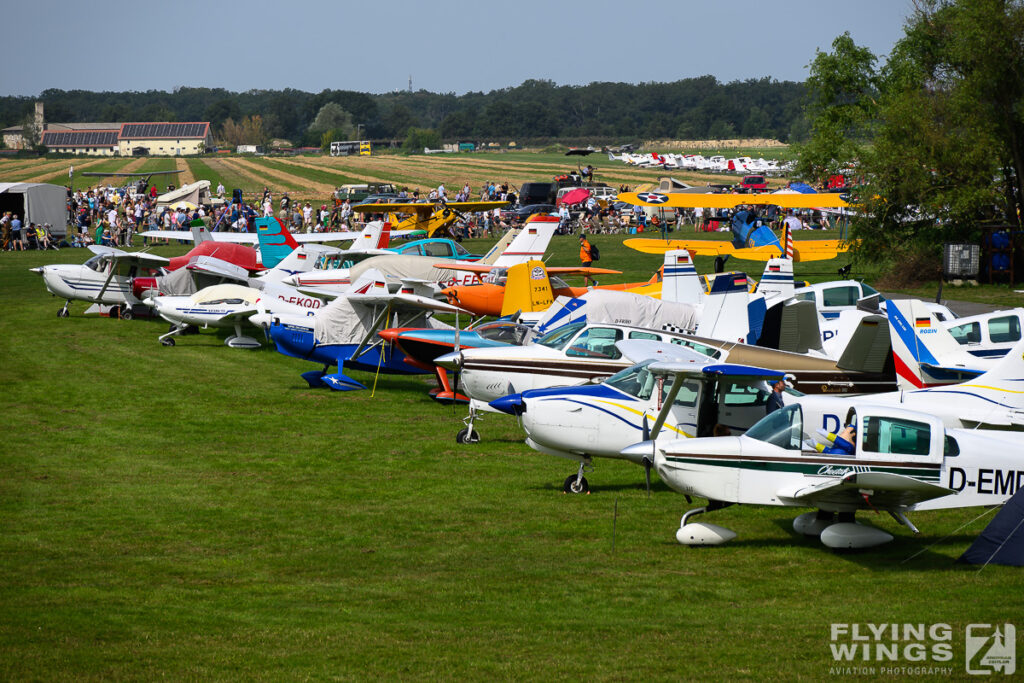
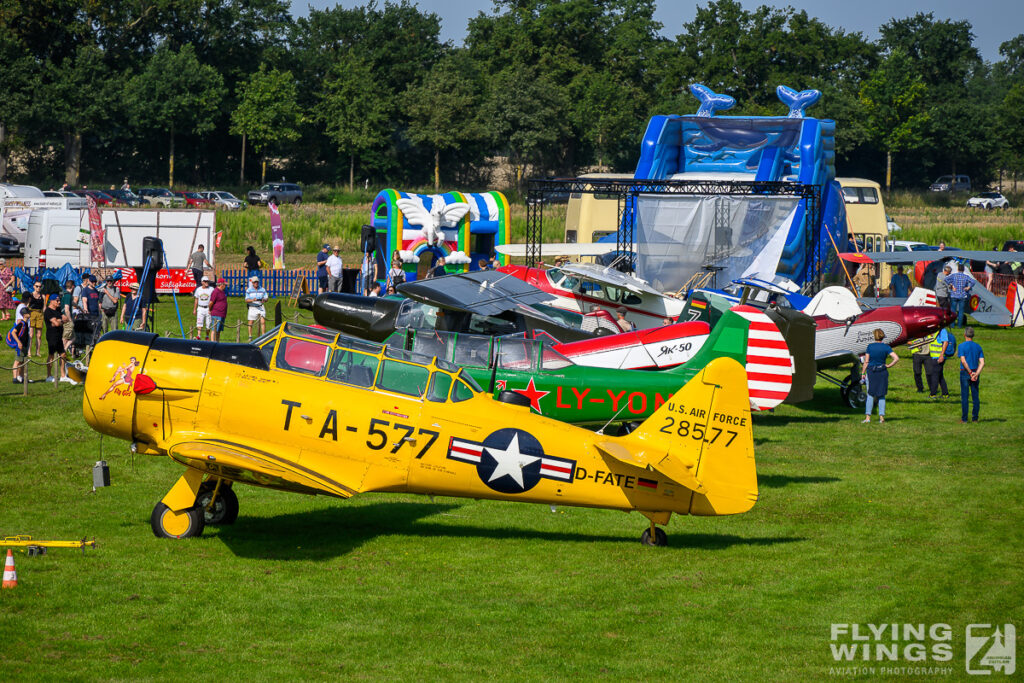
The 2025 season centred entirely on the VAWC, held from August 7–10. Around 270 aircraft were registered, with up to 200 historic machines parked on the grass airfield at any one time, accompanied by an impressive display of vintage cars. Friday opened the event to the public for the first time, giving around 1,000 visitors a relaxed preview before the main action. Saturday saw the highest turnout, with 4,000–5,000 guests spread along the one-kilometre flight line, while Sunday offered a gentler mix of competition flying, departures, and closing festivities.
The VAWC competition brought together pilots from four classes, flying original or authentically built pre-1960s aircraft in precision aerobatic sequences. These were performed at a minimum altitude of 1,500 ft (about 500 m), making the pilots’ skill all the more impressive. Smoke systems on some aircraft enhanced visibility, allowing spectators to follow the exact figures. The most creative discipline, “The Performance,” saw freestyle routines flown to music, blending artistry with vintage aviation heritage and creating some of the most memorable displays of the weekend.
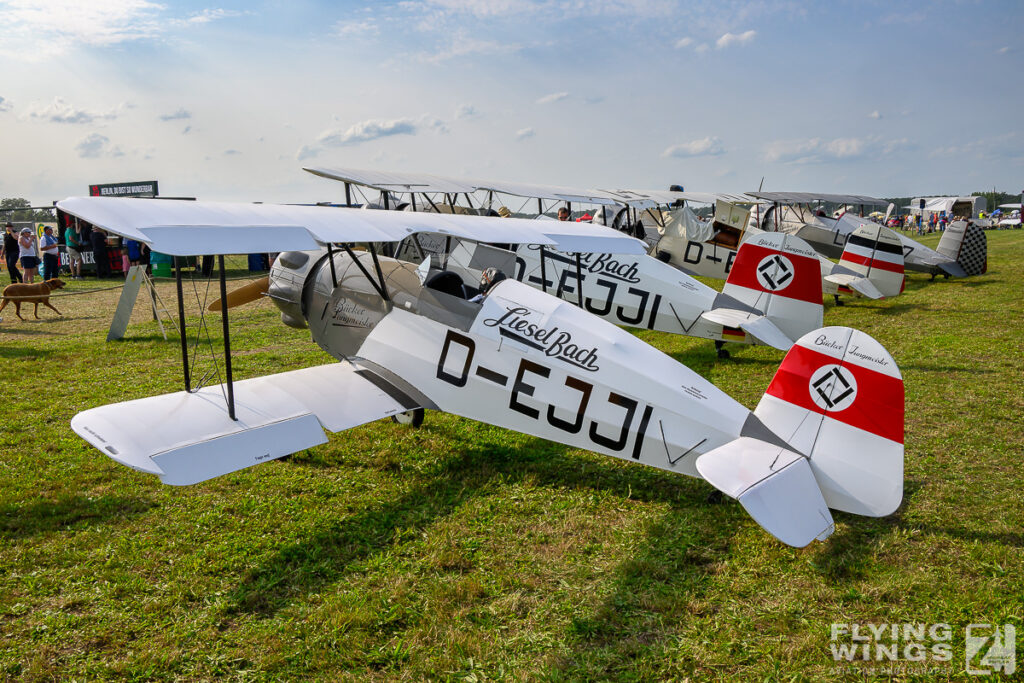
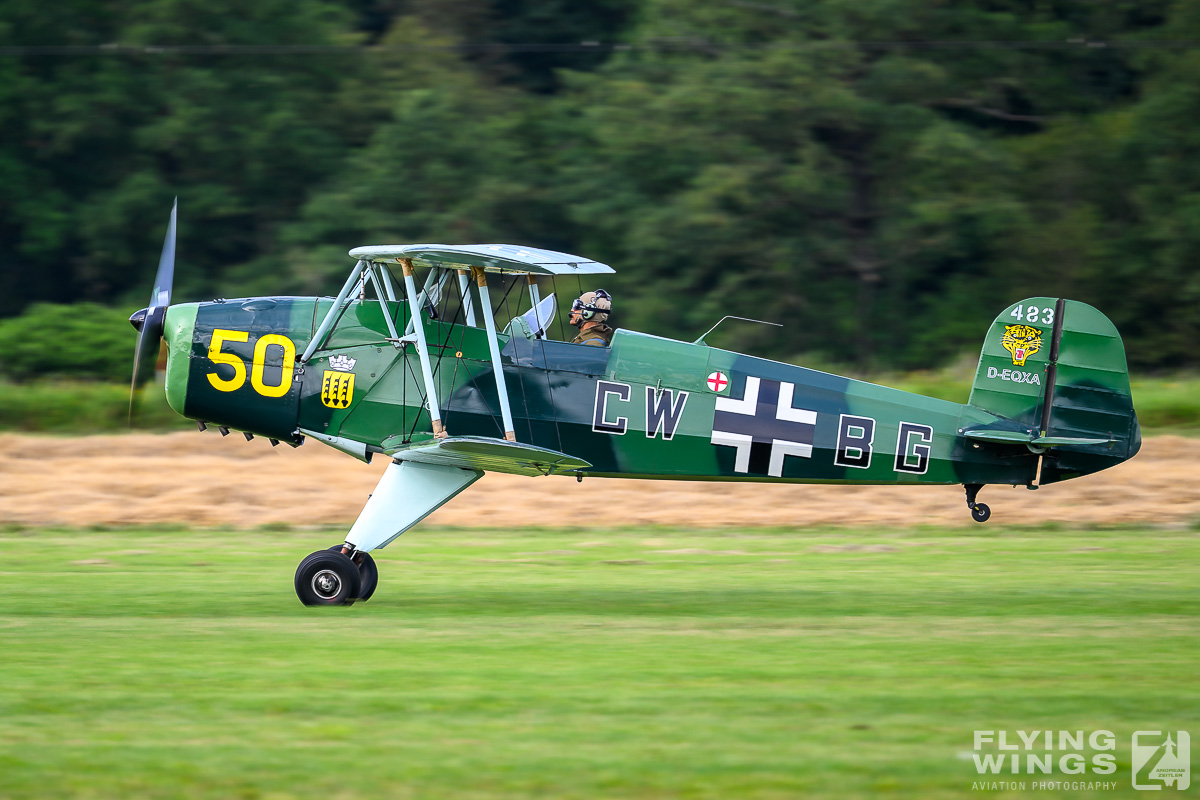
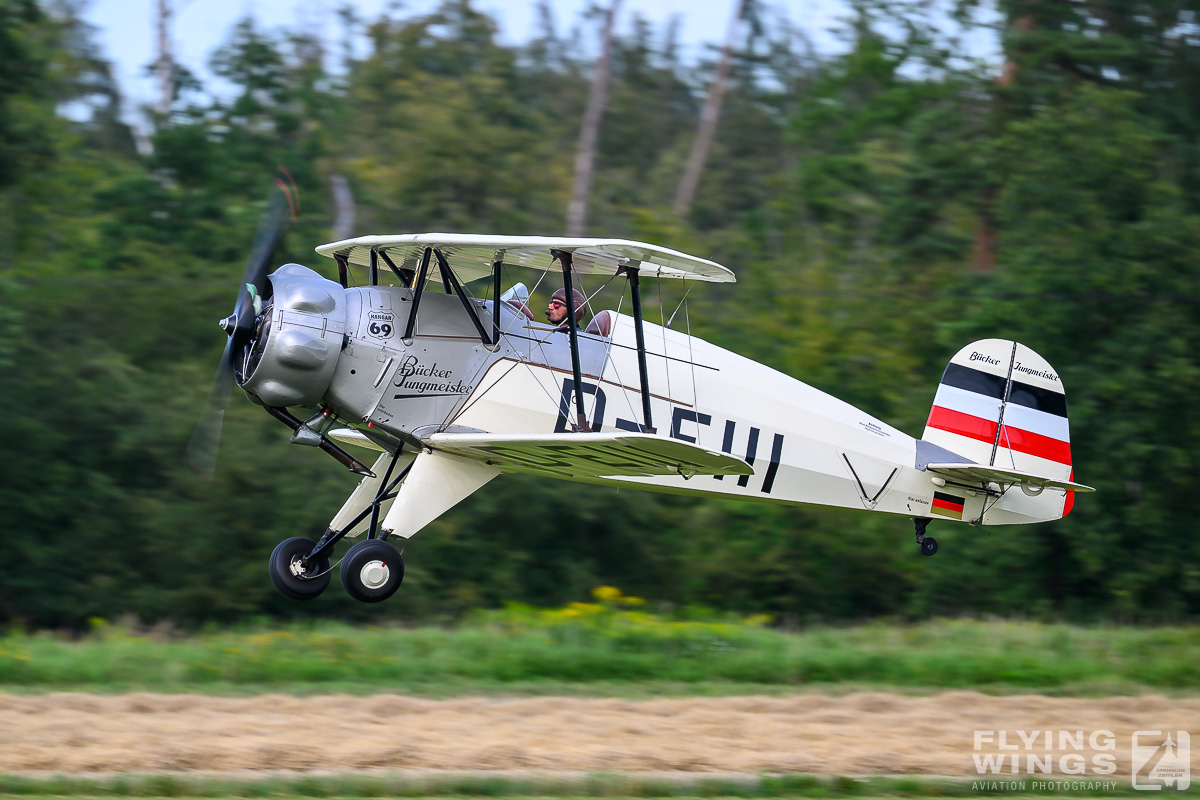
This year’s event also incorporated the long-running Bücker meeting, bringing together more than 20 aircraft of this iconic German brand. From the trainer Bücker Jungmann to the agile Bücker Jungmeister and the ultra-rare Bücker Student—the only airworthy example in the world, based at Bienenfarm—the gathering was a dream for enthusiasts. Many of these aircraft, normally scattered across Europe, were seen together for the first time in decades, creating an unprecedented line-up along the flight line.
A standout moment was a unique three-ship formation of Student, Jungmann, and Jungmeister, flown together for the first time in history.
This rare sight, accompanied by the distinct sound of both inline and radial engines, drew gasps and applause from the crowd. The formation made several passes over the field on Friday afternoon, offering a sensory mix of living history and emotional nostalgia that few present will forget.

The Bücker Jungmeister, celebrated for its agility and dominance in pre- and post-war aerobatic competitions, showcased tight loops, fast rolls, and knife-edge passes, demonstrating why it remains a favourite among vintage aerobatic pilots. The Jungmann, its famous predecessor, displayed elegance and grace, while the Student offered a glimpse into Bücker’s vision for modern flight training in the late 1930s.

Although the VAWC focused more on competition precision than on fast-paced airshow stunts, the atmosphere was kept lively with continuous flying activity. Visitors could enjoy scenic flights in classic aircraft such as the Dornier Do 27, Stampe, and Boeing Stearman, while on the ground there were historic vehicles, open hangars, and opportunities to meet the pilots and crews. The Quax-Flieger hospitality and the family-friendly setting made the event appealing not only to aviation enthusiasts but also to newcomers experiencing vintage aviation for the first time.
With its combination of world-class vintage aerobatics and the largest public display of Bücker aircraft in recent history, the VAWC 2025 at Flugplatz Bienenfarm stands out as one of Europe’s premier historic aviation events of the year. As the hangar doors close on this successful season, all eyes turn to 2026 to see which popular formats will return to this unique airfield on Berlin’s doorstep.
Bienenfarm: VAWC & Bückertreffen 2025 – Photo Gallery



About the VAWC: The Vintage Aerobatic World Championship is dedicated to preserving the art of classic aerobatics in original or faithfully restored aircraft built before the 1960s. Pilots fly to traditional sequences that emphasize style, precision, and the unique character of historic machines, free from the demands of modern high-performance competition. More information at vintageaerobatic.com.
About the Quax-Flieger: Founded in 2006, Quax is a volunteer association of over 800 members committed to restoring, maintaining, and flying historic aircraft. From their main base in Paderborn and their second home at Bienenfarm, they keep classics such as Bückers and Piper Cubs in the air. Their motto: “Out of the museum, onto the runway!” Visit them online at quax-flieger.de.