End of an Era: German Navy Sea King Mk.41 Completes Its Last Mission
On August 31, 2024, a major chapter in German naval aviation came to an emotional close. The last two Westland Sea King Mk.41 helicopters completed their final landing at Marinefliegergeschwader 5 in Nordholz. Over 50 years ago, on March 20, 1974, the first Sea Kings arrived at MFG 5, then based in Kiel-Holtenau, marking the start of an iconic era in German maritime aviation. MFG 5 bid farewell to the trusted King during a ceremonial event at Nordholz.


Sea King Mk.41: The German Navy’s Trusted SAR Workhorse
A total of 23 Sea King Mk.41 helicopters, produced under British license, served the German Navy for over five decades. The helicopters performed diverse roles, including transport for special forces, surveillance, and search and rescue (SAR) missions. Along the North German coast, the Sea King became a symbol of hope and safety. Over its operational lifetime, the fleet completed 14,645 SAR missions, operating from key bases such as Borkum, Helgoland, and Warnemünde.

Among the most notable missions were the snow disasters of 1978/79 in Schleswig-Holstein, the 2010 winter storm rescues on Rügen and Hiddensee, and major flood responses along the Oder in 1997 and the Elbe in 2002. The helicopters were also deployed internationally, providing aid after the 2004/2005 tsunami in Indonesia. Even toward the end of their service, Sea Kings remained highly capable and reliable.


“The Sea King Mk.41 was technologically ahead of its time and has proven its reliability, robustness, and versatility in numerous national and international missions, particularly in search and rescue,” stated MFG 5 Commander Captain Carsten Holtgreve during the decommissioning ceremony. “Its legacy will continue to inspire future generations of naval aviators.”
Farewell to an Aviation Icon: Final Missions and Special Liveries
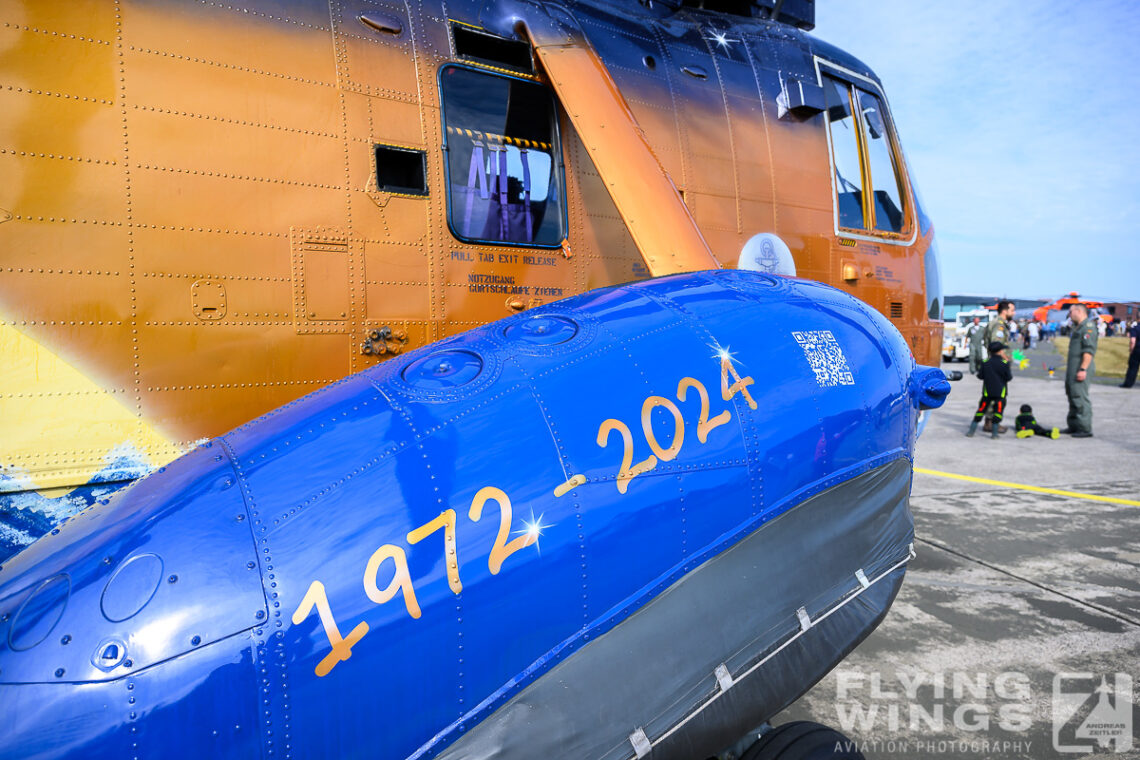
Despite demanding operations, only two Sea Kings were lost during their service. One helicopter was lost in 1998 during a transport mishap in the North Sea, and another in an earlier accident, both subsequently replaced. In recent years, the fleet was gradually reduced, leaving only six flight-ready Sea Kings. The last two, 89+58 and 89+63, received commemorative liveries for their final missions.


The 89+63 was painted in silver and orange to honor the early SAR color scheme, while 89+58 received a dramatic farewell design. This included the inscriptions “Farewell Sea King” and “Goodbye King,” along with a sunset over stormy seas, and silhouettes of Sea Kings and rescue vessels. The liveries celebrated both the helicopter’s history and its contributions to maritime safety.


Over its lifetime, 349 crew members served aboard the Sea King, including 199 pilots, 88 flight officers, and 62 onboard mechanics. Technicians also played a key role in the final flights, signing the rotor heads of the special liveries and joining crews for a final simulated evacuation exercise. Squadron Leader Thomas Richter led the last formation landing at 15:30 in Nordholz, marking the official end of the Mk.41’s operational service.
After the final landing, one Sea King was repurposed for military aid. Repainted in camouflage, it was later sent to Ukraine, joining a previous fleet of helicopters provided for international support. The SAR anniversary helicopter remains at Nordholz as a tribute to the “King of the Air,” serving as a lasting reminder of five decades of life-saving missions and the enduring legacy of the Sea King Mk.41.


The retirement of the Sea King marked not just the end of an aircraft’s service, but the closing of a chapter in German maritime aviation history. Its influence on SAR operations, training, and international aid missions will continue to be felt for years to come, inspiring future generations of pilots and rescue crews.
German Navy Sea King Retirement – Photo Gallery


A more extensive version of this report with in-depth coverage has been published in Air Forces Monthly and Flugzeug Classic magazines.