P-51 Mustang “Little Rebel”: Honoring History Over Pilsen
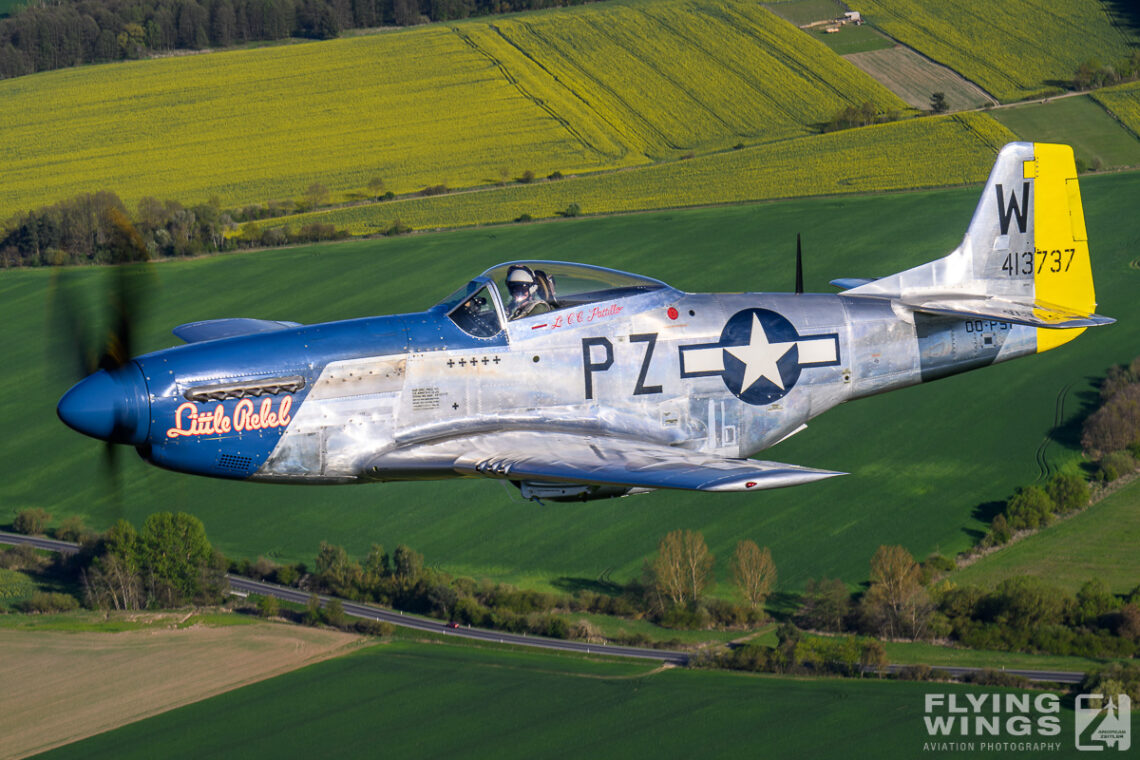
Every May, the skies over the West Bohemian capital of Pilsen resonate with a sound that defines an era. As the city commemorates its 1945 liberation, the deep, rhythmic hum of a Rolls-Royce Merlin engine signals the arrival of a legend: the North American P-51D Mustang “Little Rebel.” For spectators gathered below, the silver fighter is not just an aircraft; it is a powerful symbol of the freedom returned to the city over eighty years ago.

Pilsen occupies a unique place in European history. On May 6, 1945, the 3rd Army under General Patton reached the city, marking the furthest eastern point of the Allied push into the continent. While the P-51 Mustang “Little Rebel” has no direct historical link to Patton’s ground units, the presence of an American warbird during the Liberation Festival serves as a tribute to the air superiority that paved the way for the Allied victory. For pilot and owner Stephen Stead, flying this mission is a profound responsibility, ensuring that the connection between technology, history, and memory remains tangible for future generations.
The Pilot’s Perspective: From Spitfire to Mustang
Stephen Stead belongs to an elite group of pilots capable of handling the most demanding high-performance historical aircraft. His journey through the world of warbirds has seen him at the controls of the Russian Yak-3 and the British Spitfire, before ultimately settling into the cockpit of the American Mustang. Stead notes that each aircraft represents a different philosophy of flight. While the Spitfire, which was famously stationed in Pilsen until 1948, is a nimble, fast-climbing interceptor, the P-51 Mustang was built for the endurance of long-range escort missions.
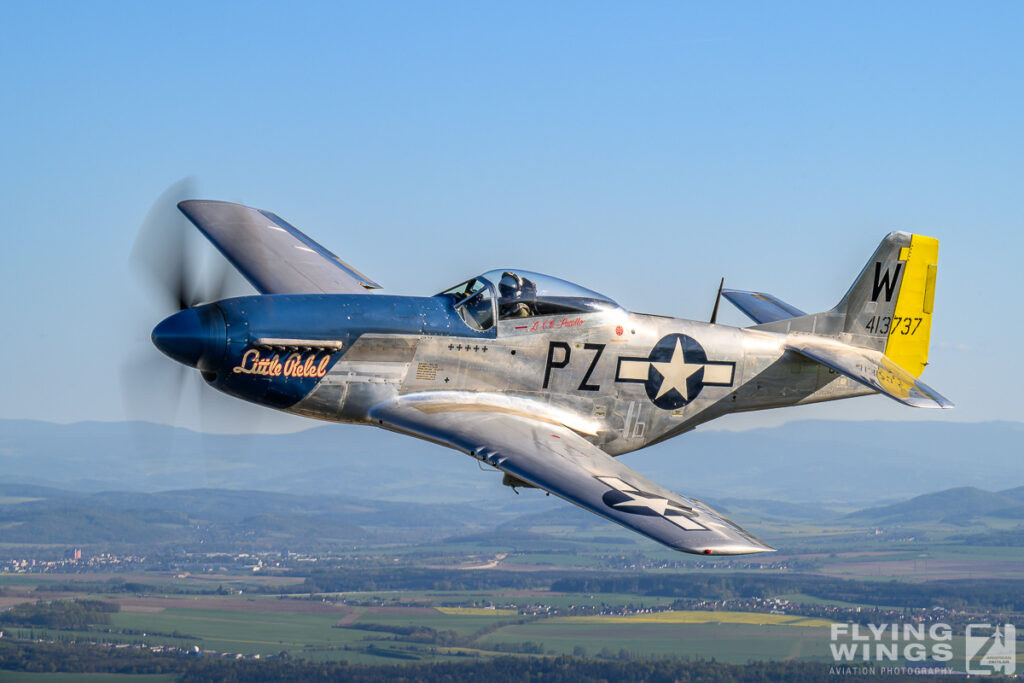
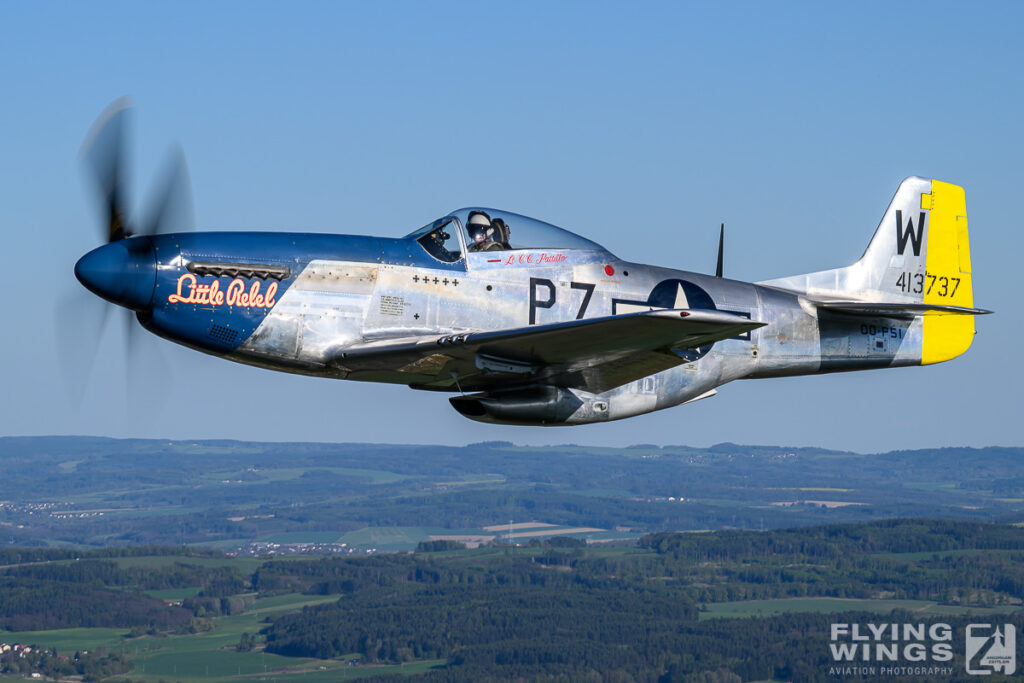
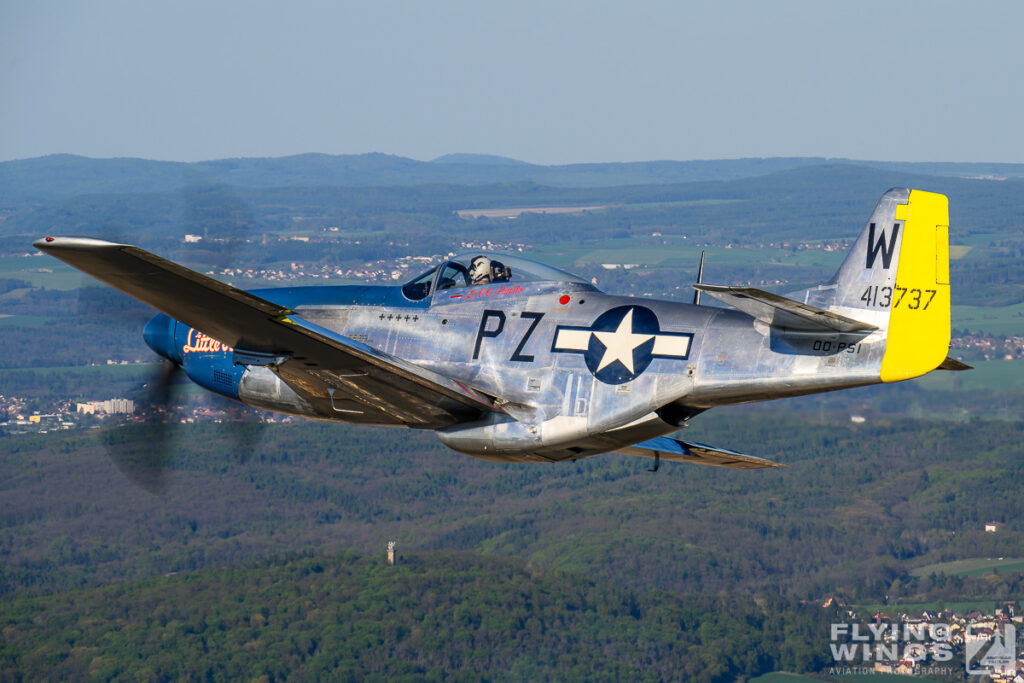
Operating the Mustang “Little Rebel” requires precision and respect, particularly during the challenging ground phases and slow-flight maneuvers. Despite being heavier and requiring higher control forces than the agile Spitfire, the Mustang excels in stability and speed. In the context of the Pilsen flyover, these characteristics allow for a steady and solemn display, providing a professional and respectful tribute that matches the gravity of the Liberation Day celebrations.
The History of P-51D Mustang “Little Rebel”
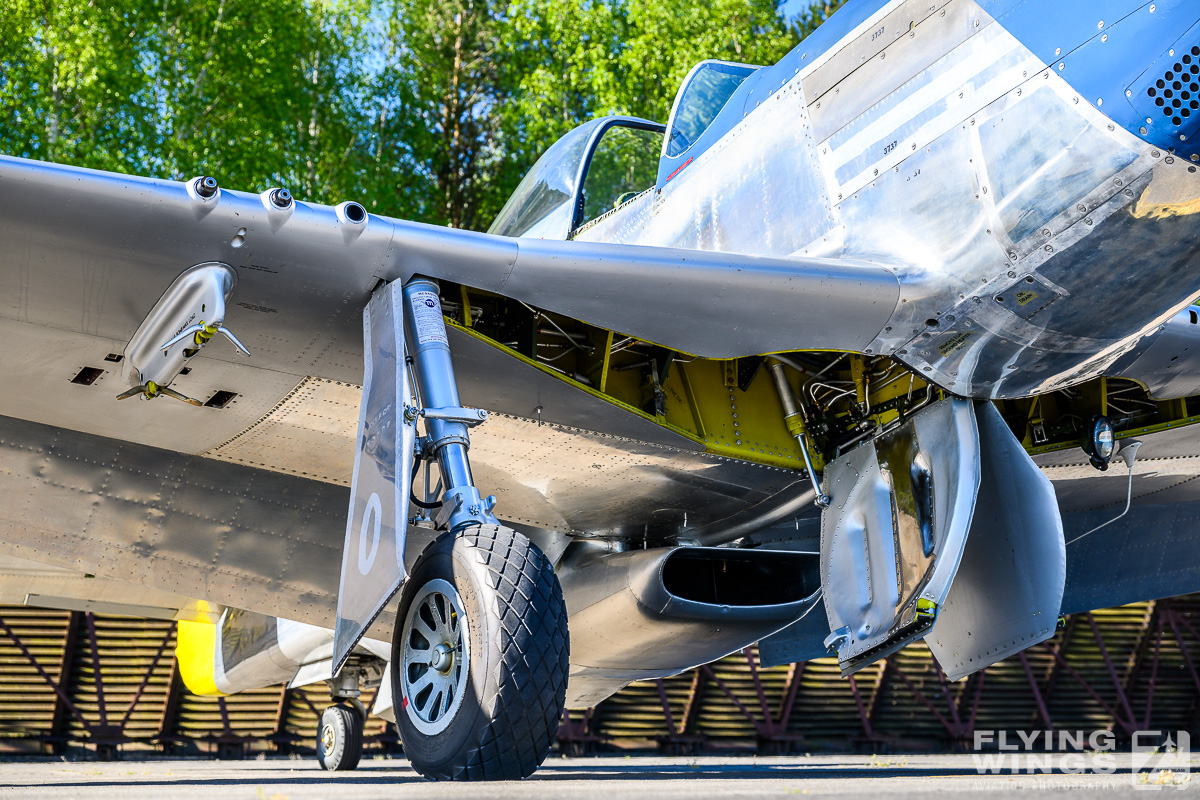
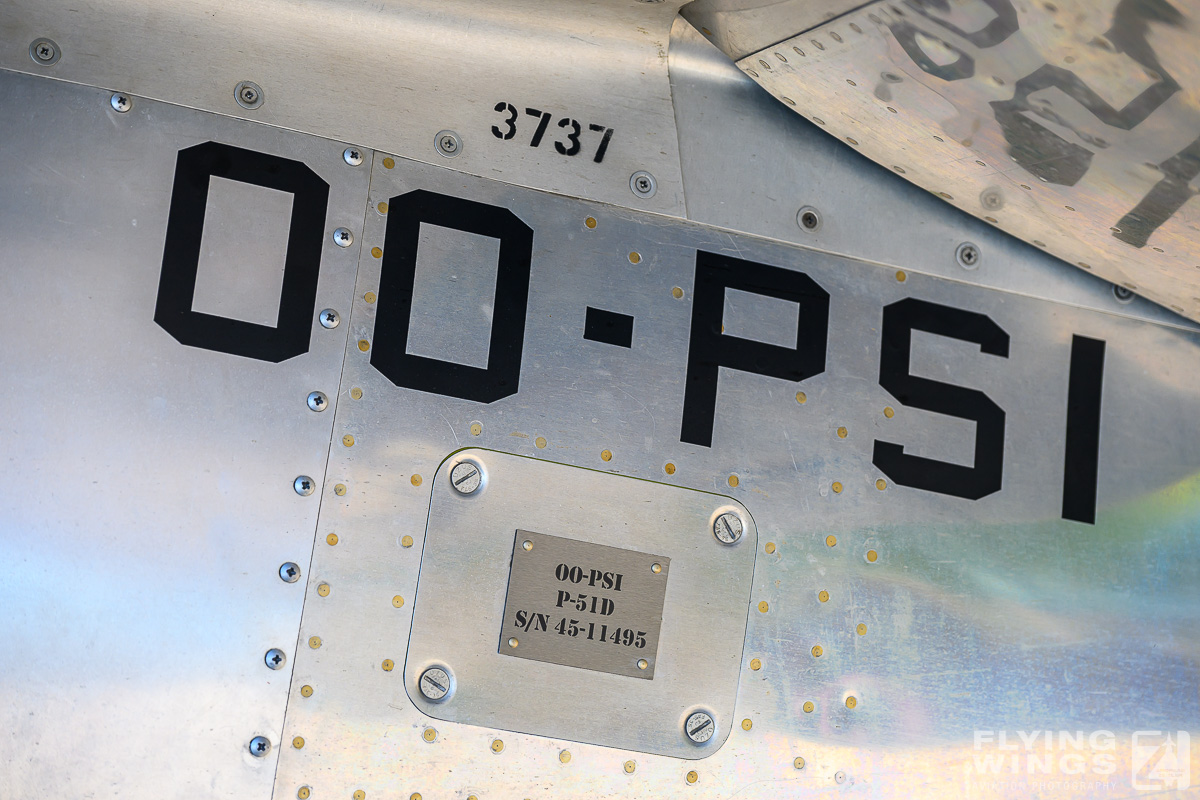
The story of this specific P-51D (Construction Number 124-48248, USAAF Serial Number 45-11495) is one of remarkable survival and meticulous restoration. Built in 1945, the aircraft was originally delivered to the Royal New Zealand Air Force (RNZAF) as NZ2406. It served through the early 1950s with various units, including the Central Flying School, before being retired from military service in 1955. For several decades, the airframe remained in a dormant, incomplete state, changing hands as a project without a clear future.
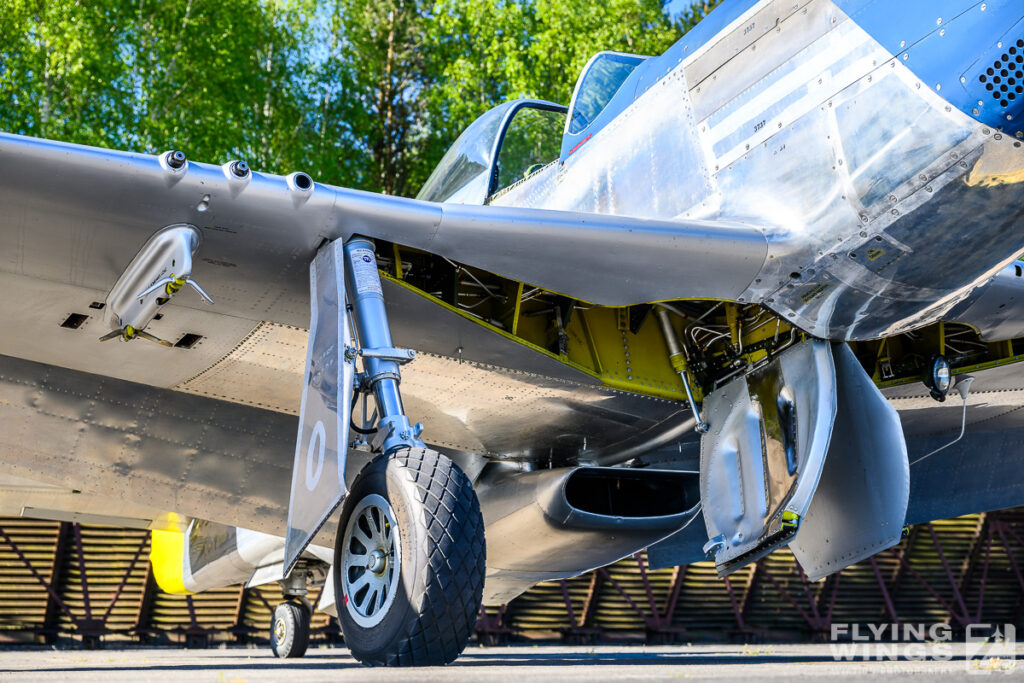
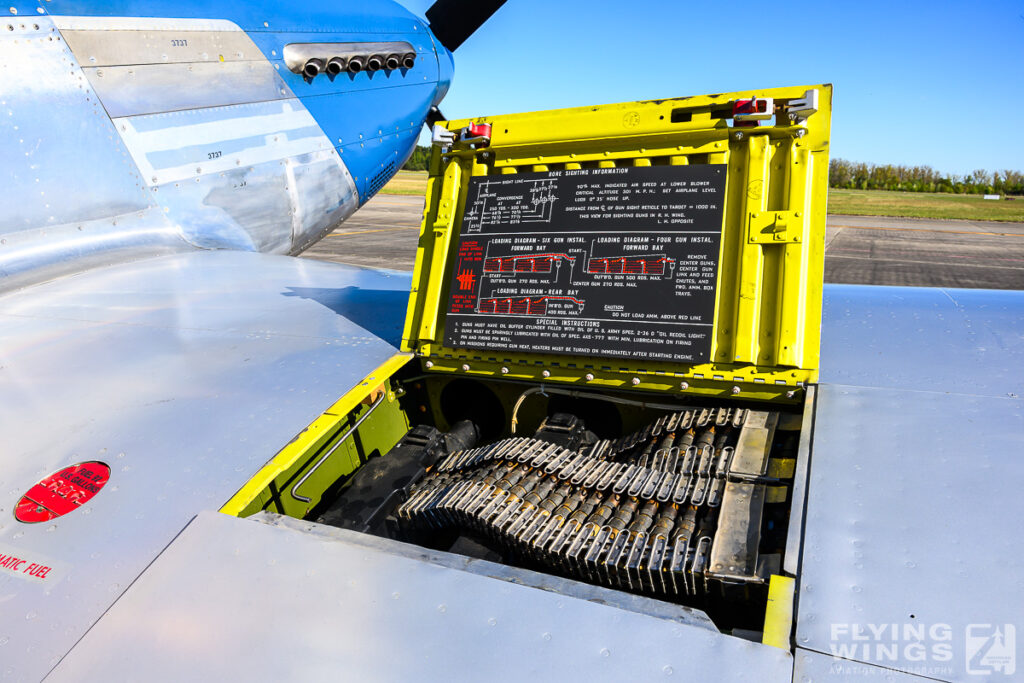
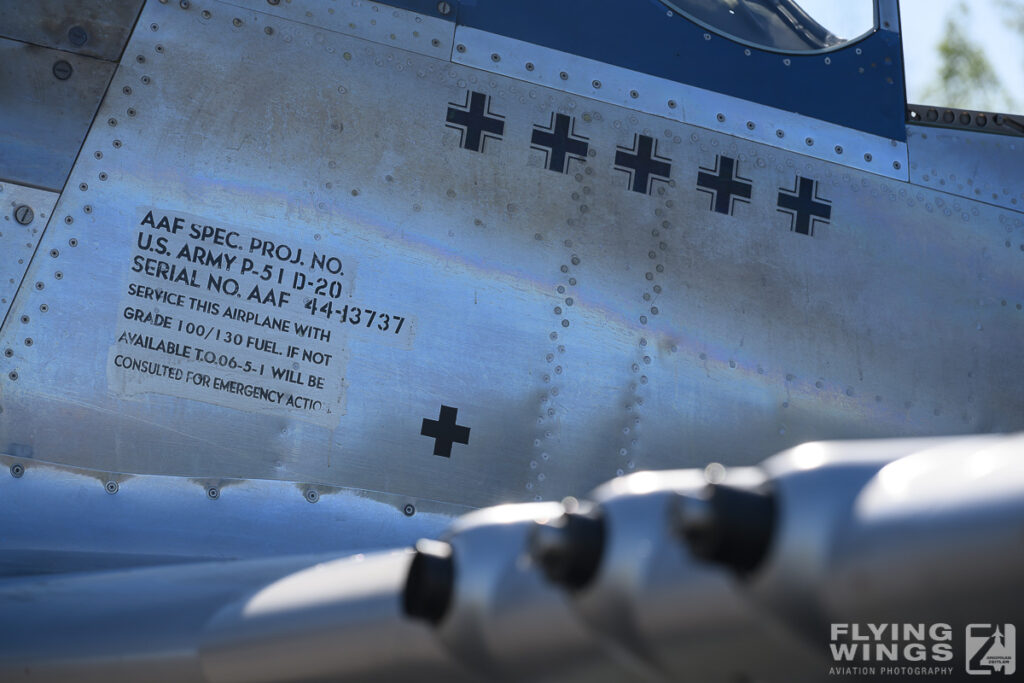
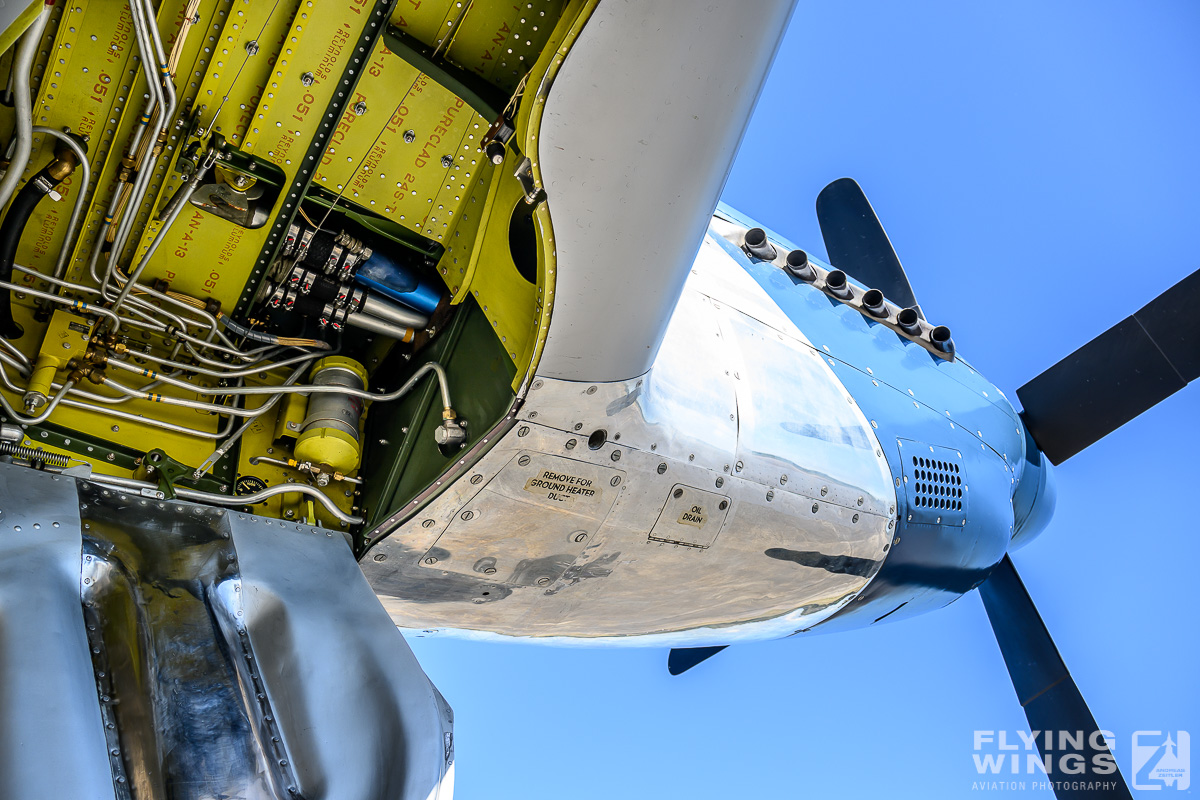
A new chapter began in 2004 when the aircraft was acquired by American restorer Bob Baker. Over nine years, Baker transformed a fragmentary fuselage into an award-winning masterpiece. In 2009, the aircraft was honored with the “Best P-51 Award” at EAA AirVenture in Oshkosh. Since being acquired by Stephen Stead in 2022, “Little Rebel” has found its home at the Plzeň-Líně airfield. Maintenance is now handled by the specialists at Fast Aero in Belgium, ensuring that its Packard-Merlin V-1650-7 engine and airframe remain in peak flying condition for the European airshow circuit.
The Legacy of the Pattillo Brothers
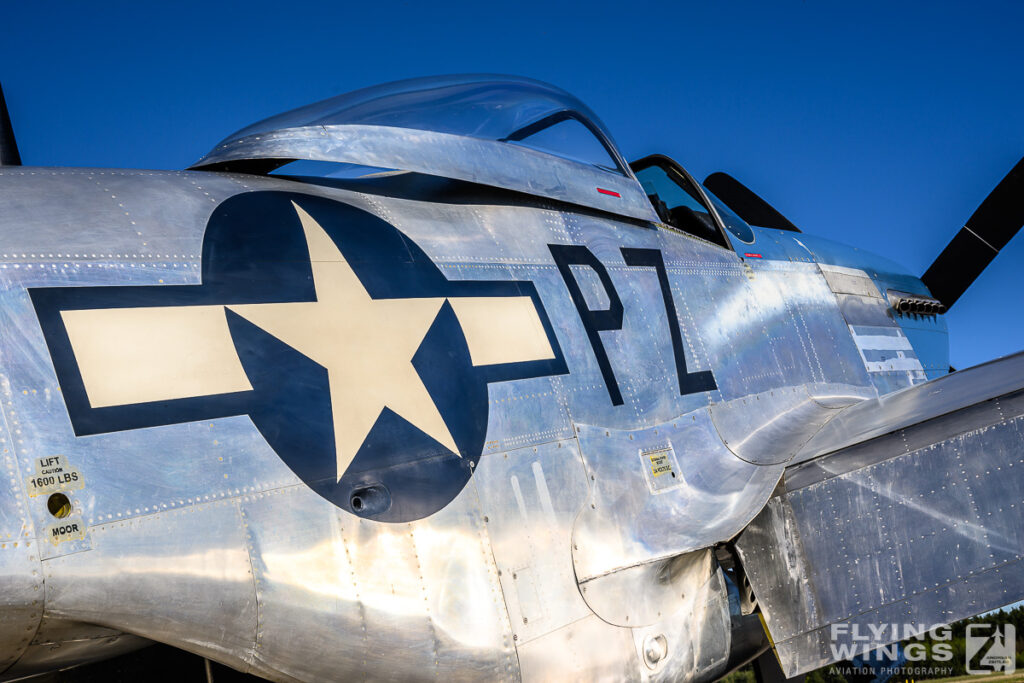
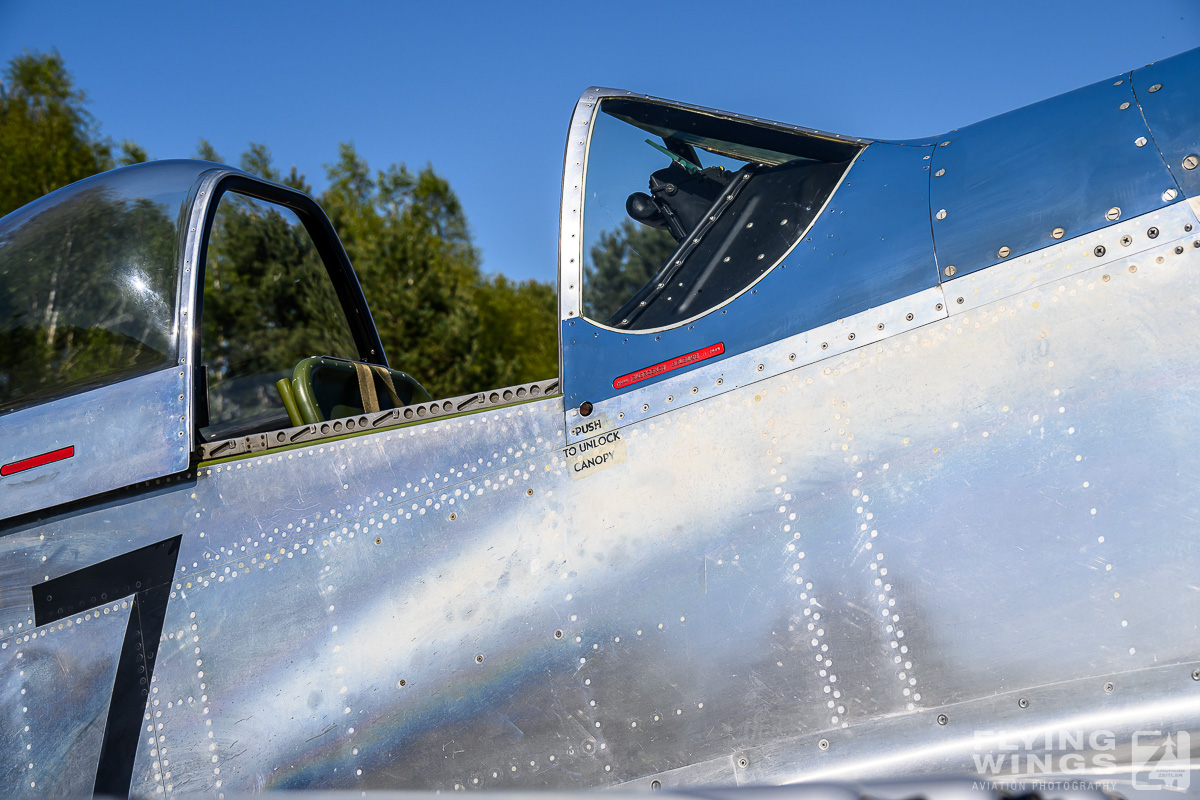
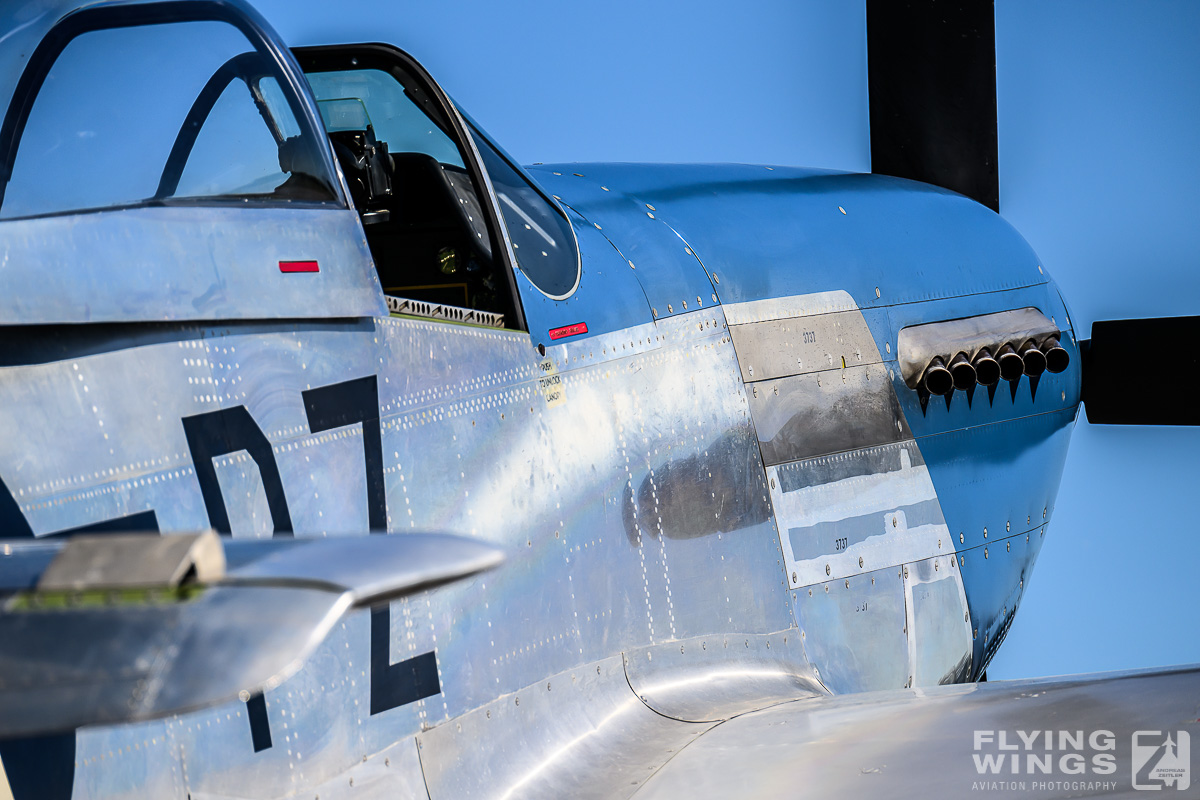
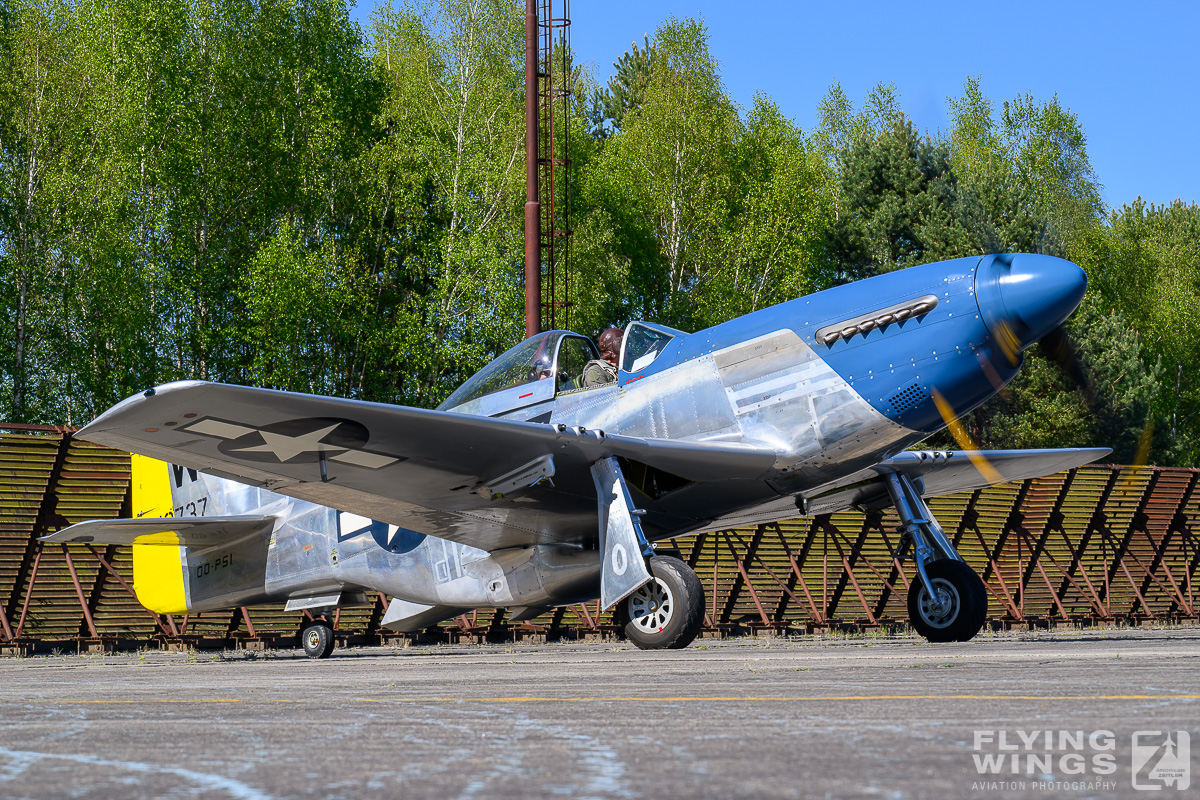
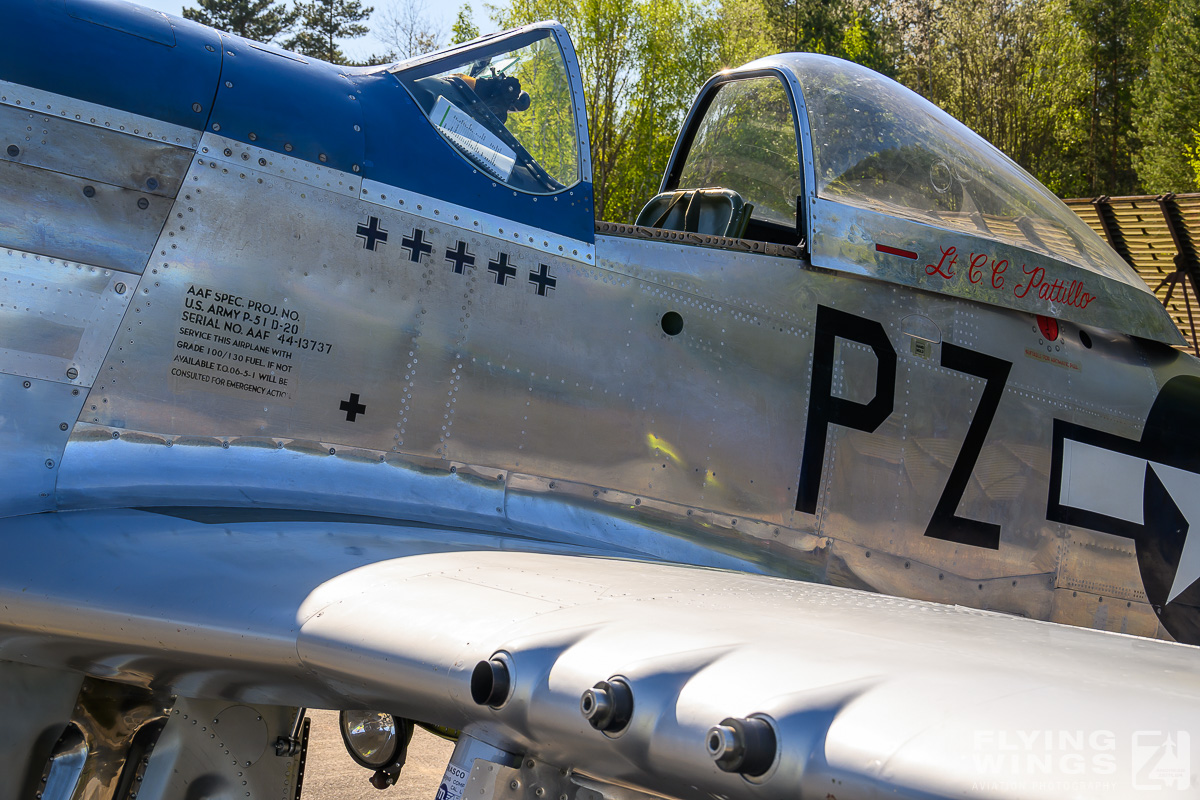
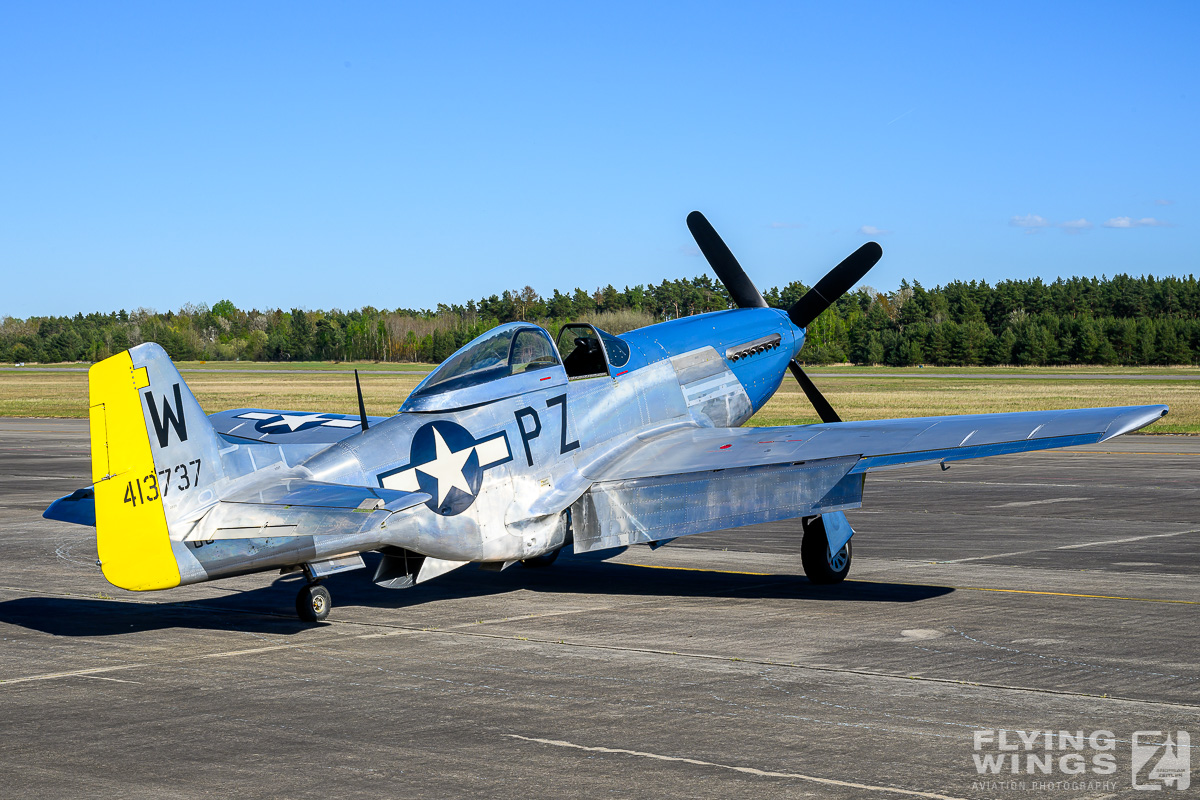
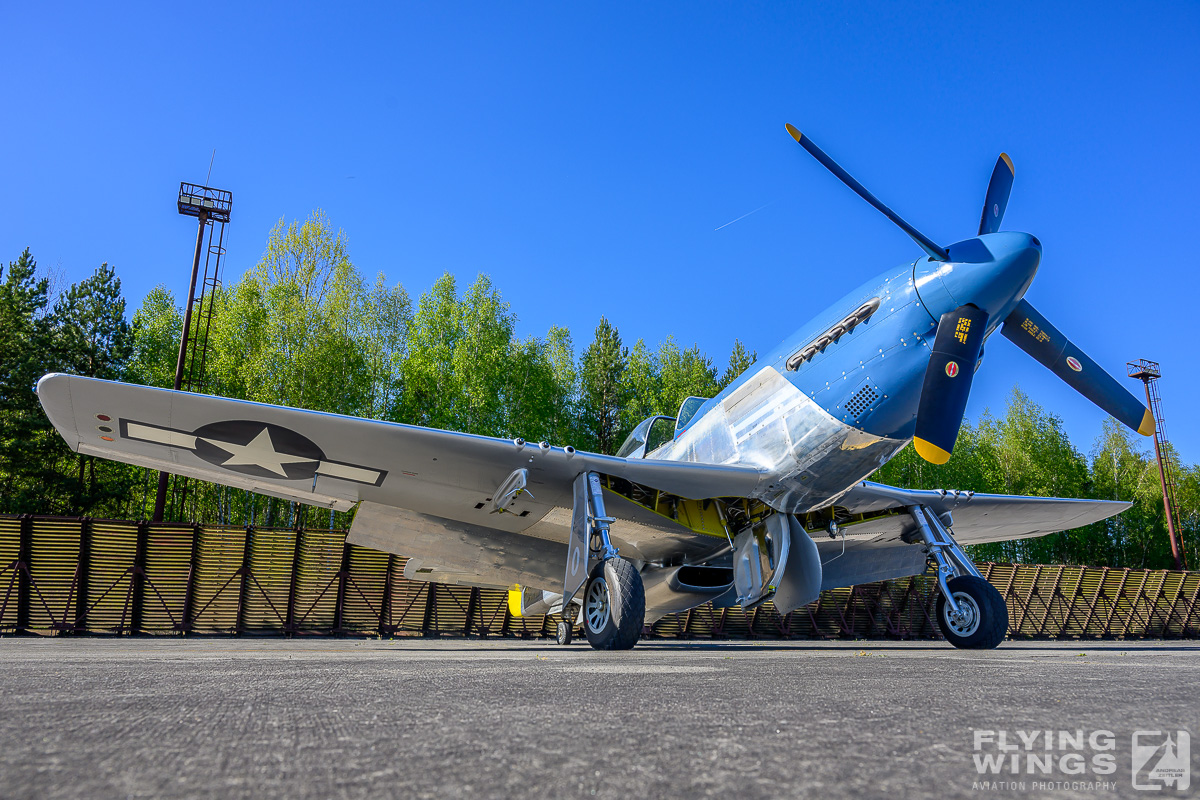
The striking livery of “Little Rebel” is far more than a decorative choice; it is a historical tribute to Lieutenant Charles “Buck” Pattillo. Buck and his twin brother, Bill, were legendary pilots of the 352nd Fighter Group, known as the “Blue-Nosed Bastards of Bodney.” While Bill flew the Mustang “Sweet & Lovely,” Buck’s original machine bore the name “Little Rebel.” The blue nose and bright yellow rudder on the modern aircraft are exact replicas of the colors Buck flew during combat missions over Europe at the end of the war.
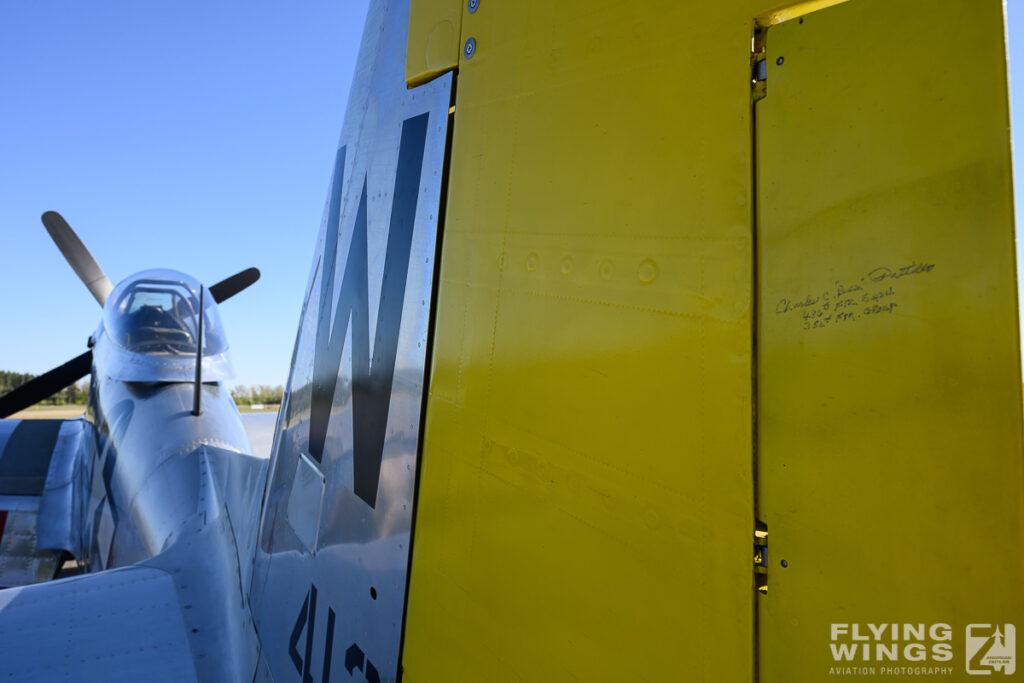
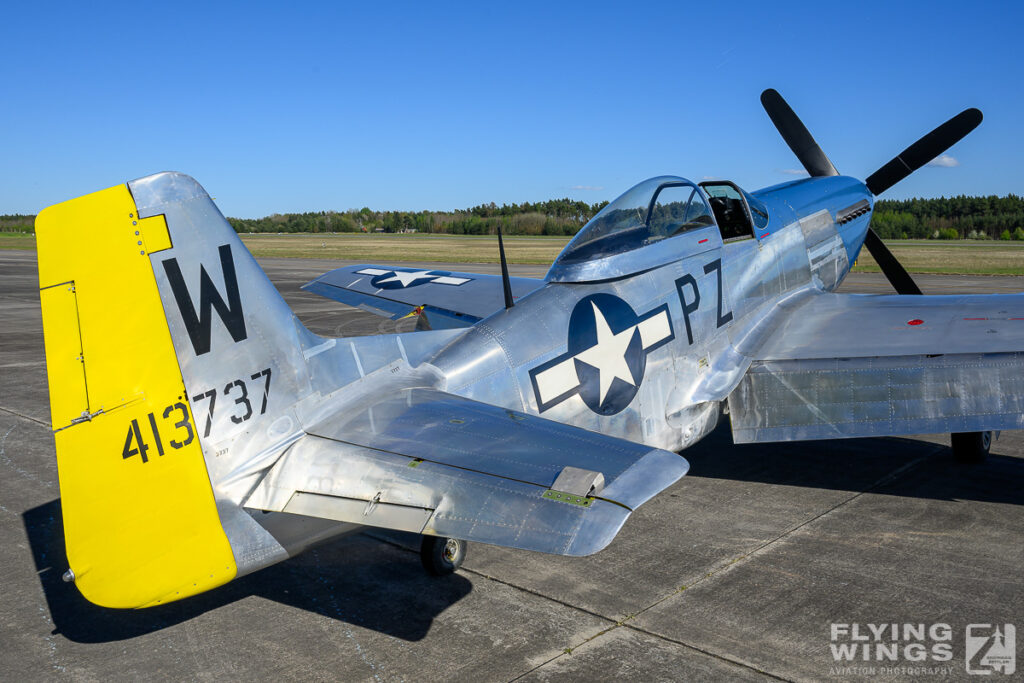
The Pattillo brothers continued to influence aviation long after 1945, helping to develop the early US demonstration teams that eventually became the world-renowned Thunderbirds. A highlight of the aircraft’s modern history occurred in 2009 when both brothers, then in their 80s, were able to see this Mustang restored in their original colors. By maintaining this livery, Stephen Stead keeps the personal stories of these pilots alive, turning every flight into a living history lesson.
The 2026 Liberation Festival in Pilsen
The 2026 Liberation Festival marked another major milestone for the city, with the Convoy of Liberty featuring over 300 historical vehicles, including the M24 Chaffee light tank and the M36 Jackson tank destroyer. While the ground parade winded through the streets, “Little Rebel” performed a precise, low-level flyover. In 2026, the event also highlighted the “Hurvínek Path,” a tribute to the resistance efforts of puppeteer Josef Skupa, further weaving cultural heritage into the military commemorations.
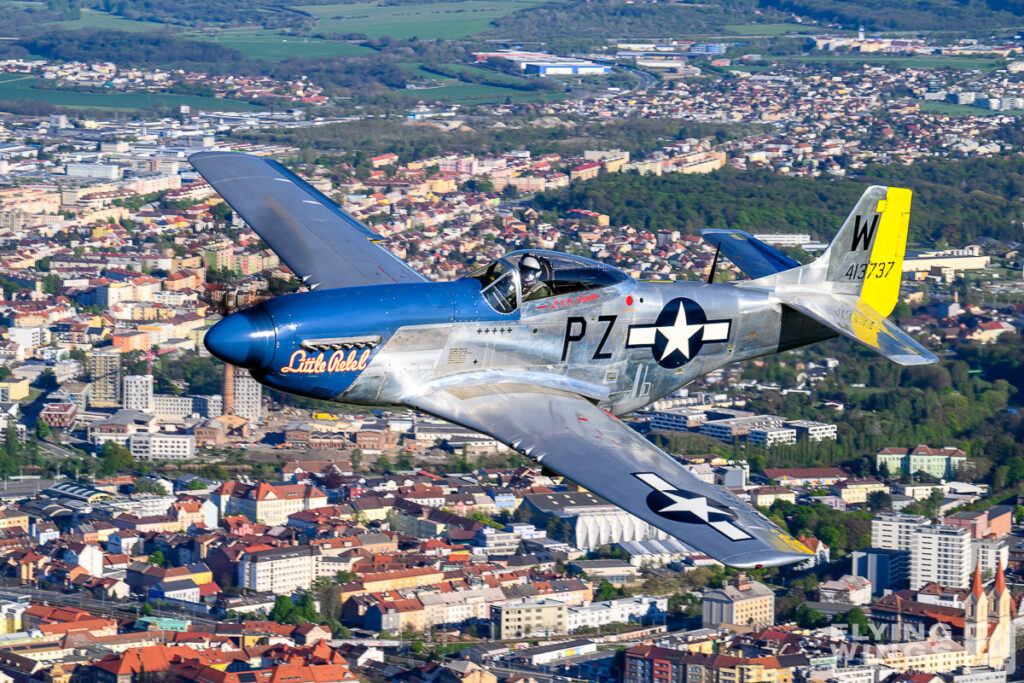
As the engine falls silent after landing at Plzeň-Líně, “Little Rebel” leaves behind more than just the smell of aviation fuel and the echoes of a V12 engine. It leaves a lasting realization that history is not just a collection of dates in a book—it is a tangible experience preserved through the dedication of those who keep these magnificent warbirds in the sky.
To learn more about flight opportunities or the history of this aircraft, visit the official website at www.p51littlerebel.com.
P-51D Mustang “Little Rebel” – Photo Gallery



You May Also Like
Bavarian Tiger on the prowl

Junkers F13 flying over Munich