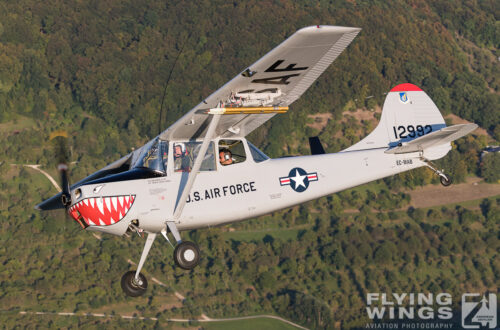
Bücker Fly-In Rangsdorf 2023
A Farewell to the Birthplace of Bücker Aircraft
Friday afternoon, June 23, 2023. Dark rain clouds still hung low over Rangsdorf while heavy showers repeatedly swept across the former airfield. Flying was out of the question. Low ceilings and poor visibility affected much of Germany, preventing many participants from even starting their journey. It was hardly the beginning the organisers had hoped for.
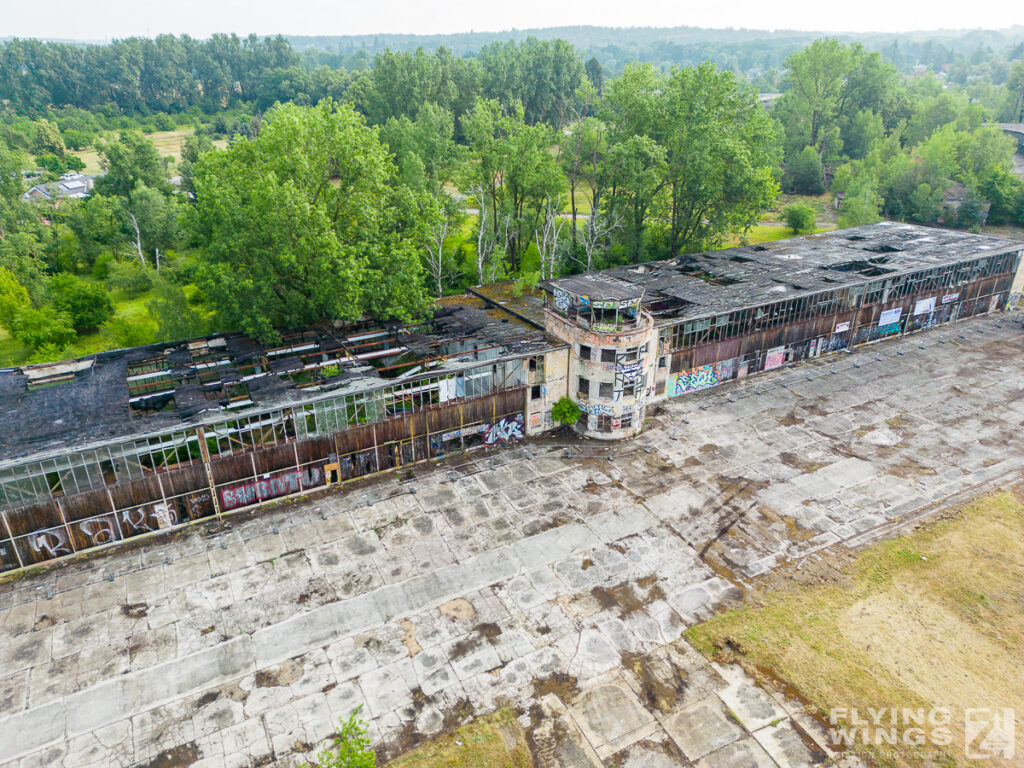
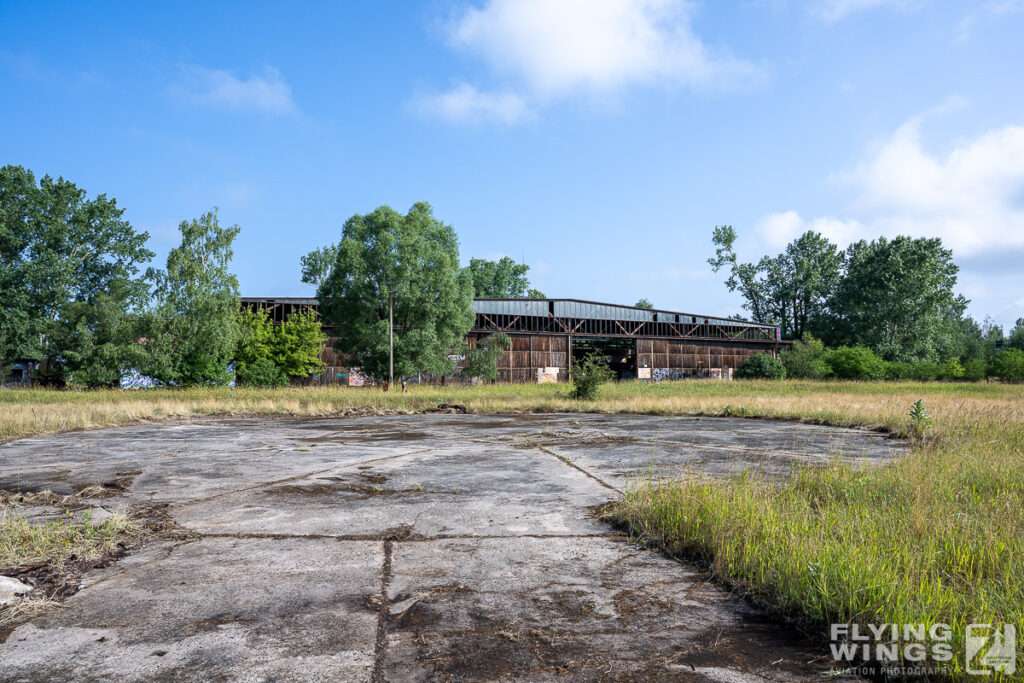
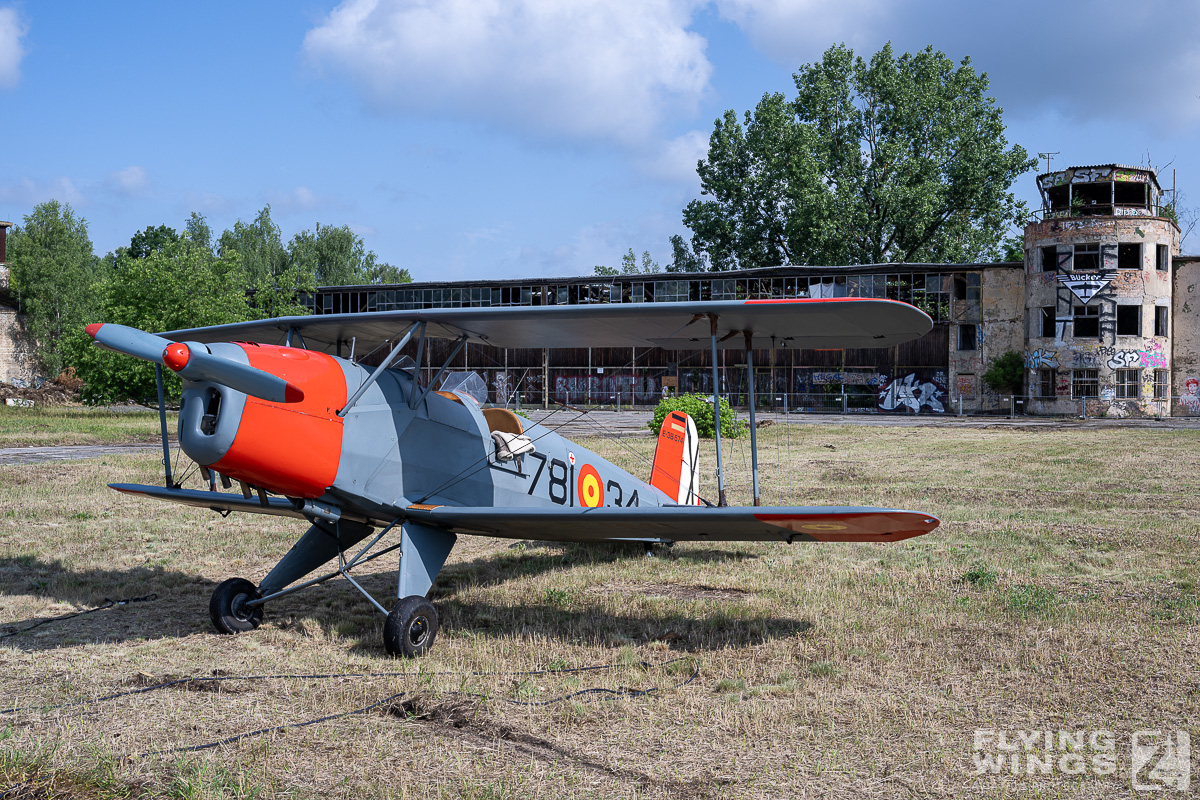
The relentless rain also revealed the fragile state of one of the site’s most historic buildings. The former Bücker assembly hall, erected during the 1930s, had effectively become a swimming pool. Used by Soviet forces after the Second World War and abandoned for more than three decades, the once-impressive structure now bears the unmistakable signs of neglect. Large sections of its roof have disappeared, allowing more daylight than weather protection to enter the building.

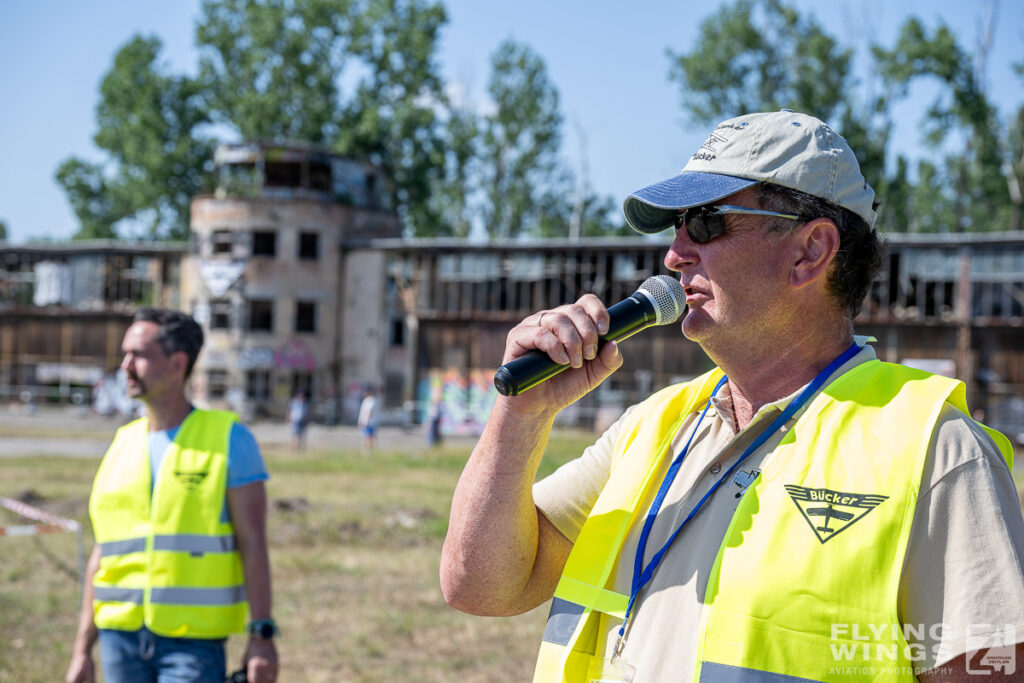
For Knut Hentzschel and Ralf Gaida, the driving forces behind the 2023 Bücker Fly-In, the miserable weather was only a temporary setback after months of preparation. As Vice Chairman of the Bücker Museum Rangsdorf, Hentzschel has spent years preserving the history of the famous aircraft manufacturer, while retired air traffic controller and Bücker Bü 181 Bestmann owner Ralf Gaida contributed not only his passion for classic aviation but also decades of operational experience.
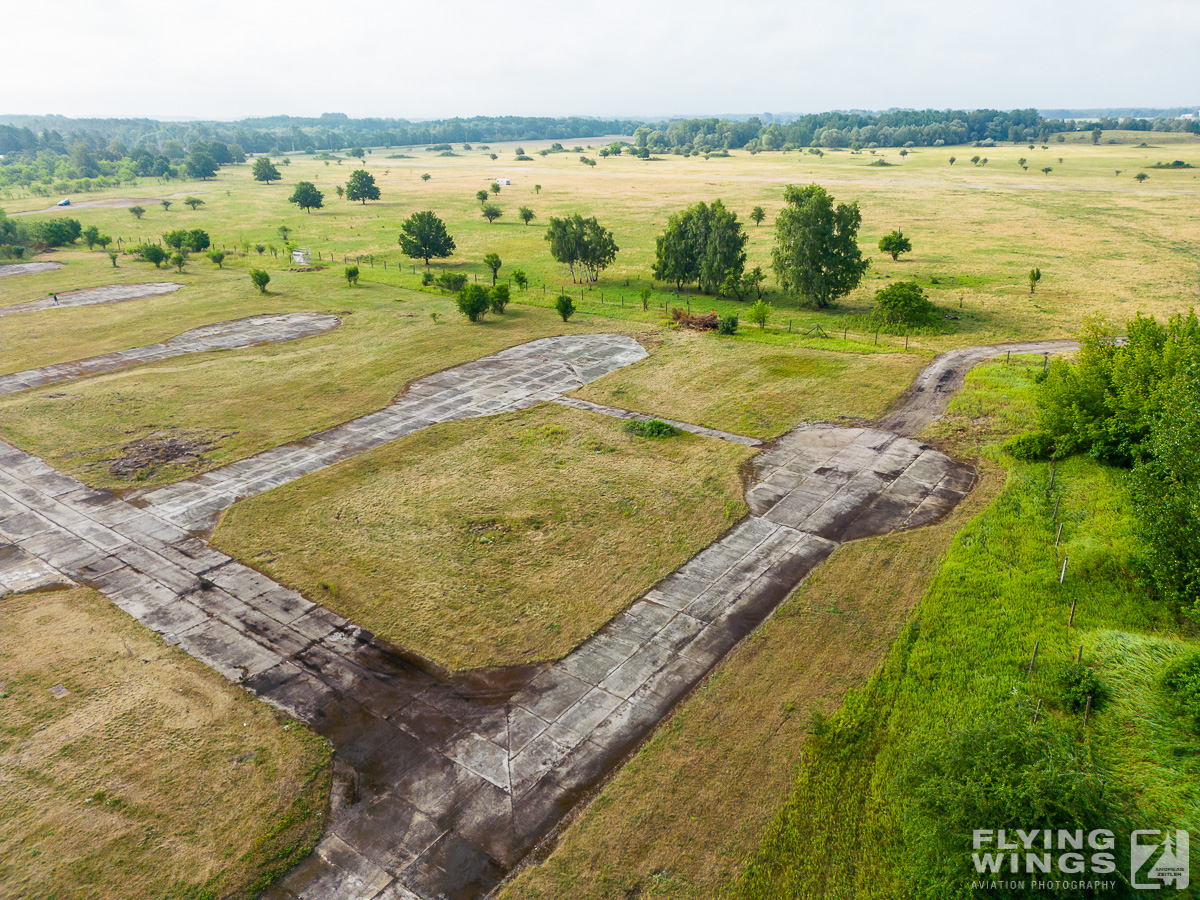
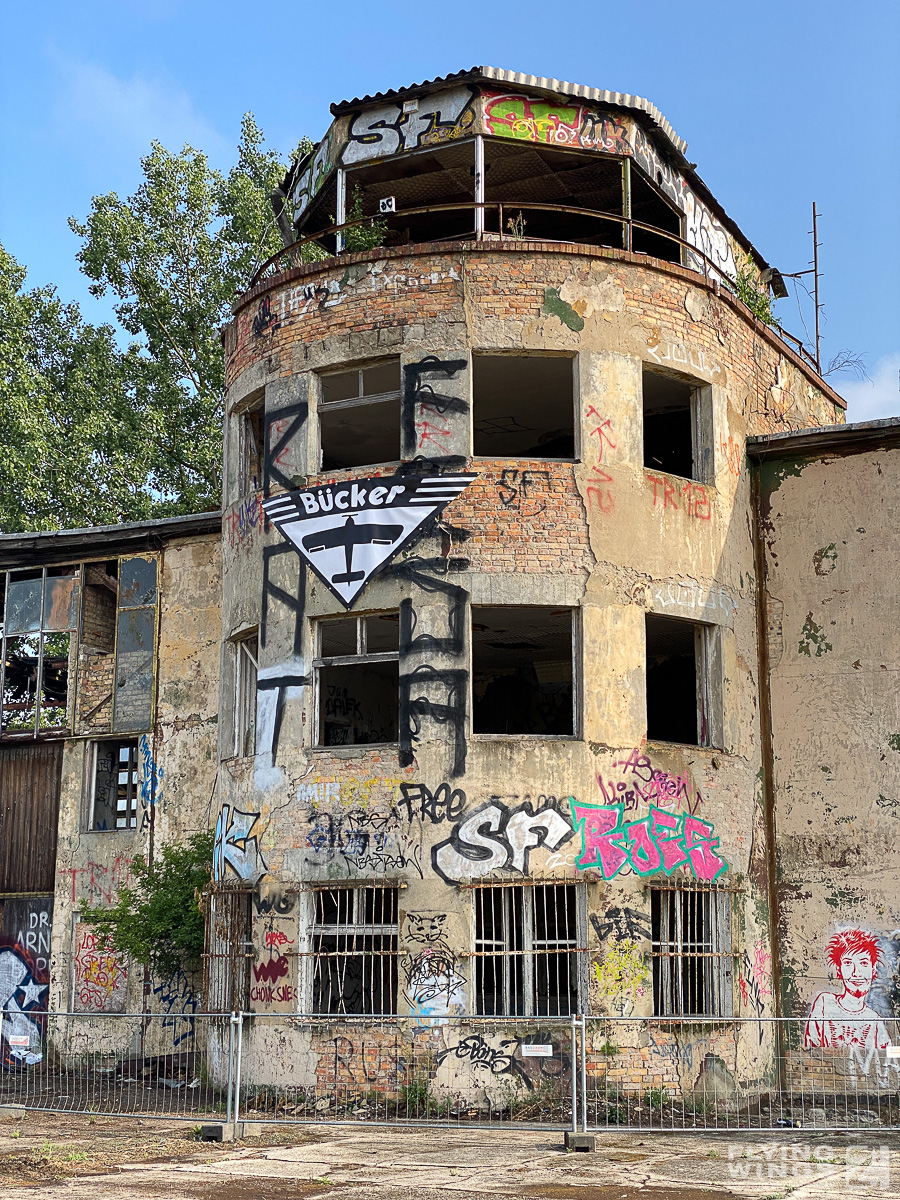
Both men had followed the gradual transformation of the former Bücker factory site for many years. Soon, the historic grounds south of Berlin will become a modern residential development. While several landmark buildings—including the iconic assembly hall and the distinctive control tower—will remain protected as historic monuments, large parts of the former airfield infrastructure will disappear forever. The surviving museum collection is also expected to return to its historic home as part of the redevelopment.
Against this backdrop, the idea emerged to bring aviation back to Rangsdorf one final time.
Although a Bücker gathering had already taken place on the airfield in 2005, the historic factory complex itself had not been included. The 2023 event therefore became something entirely different: a farewell to the birthplace of one of Germany’s most influential aircraft manufacturers before the site enters its next chapter.
Making this possible required far more than enthusiasm. A temporary 700-metre grass runway had to be prepared with the help of numerous volunteers, while the location itself presented significant regulatory challenges. Rangsdorf lies within the control zone of Berlin Brandenburg Airport (BER), requiring close coordination with aviation authorities, environmental agencies and BER air traffic control. Thanks largely to Gaida’s professional background, the complex approval process was successfully completed—although the final permission arrived only two days before the event.

Ironically, Friday’s weather prevented a single aircraft from using the newly established airfield. Yet the heavy rain also had one unexpected advantage: it thoroughly soaked the freshly prepared grass strip, providing ideal conditions for the busy flying programme expected over the weekend.
The transformation on Saturday could hardly have been more dramatic.
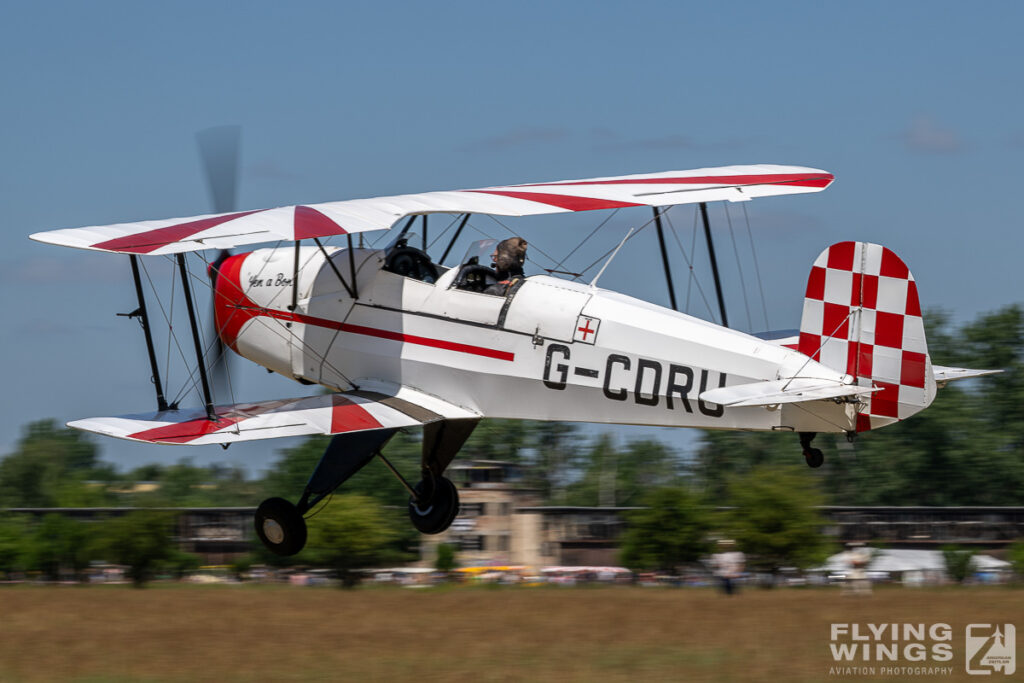
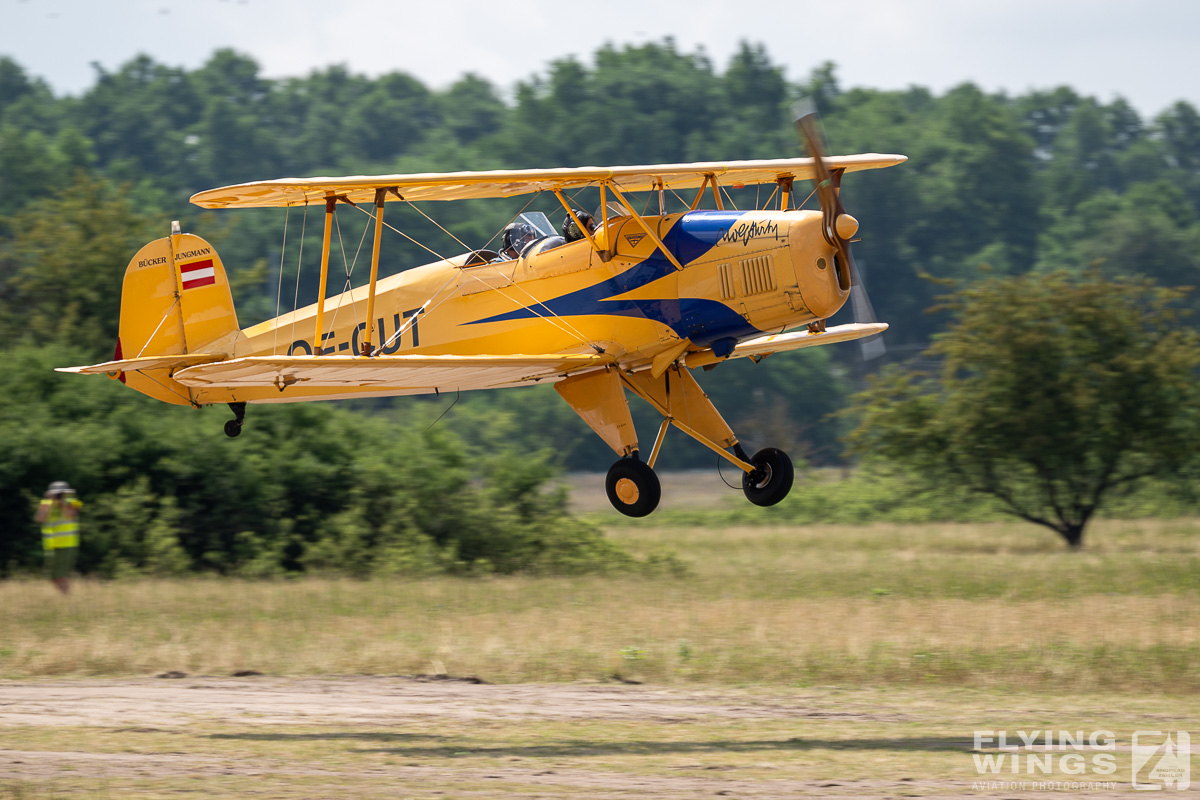
Under brilliant blue skies and temperatures approaching 30 degrees Celsius, the temporary airfield came alive. Arrivals were permitted from 9 a.m., and shortly afterwards the first call crackled across the radio. One after another, aircraft appeared on the southern horizon, following the nearby railway line before joining the circuit and touching down on the grass runway where Bücker aircraft had first taken to the skies decades earlier.

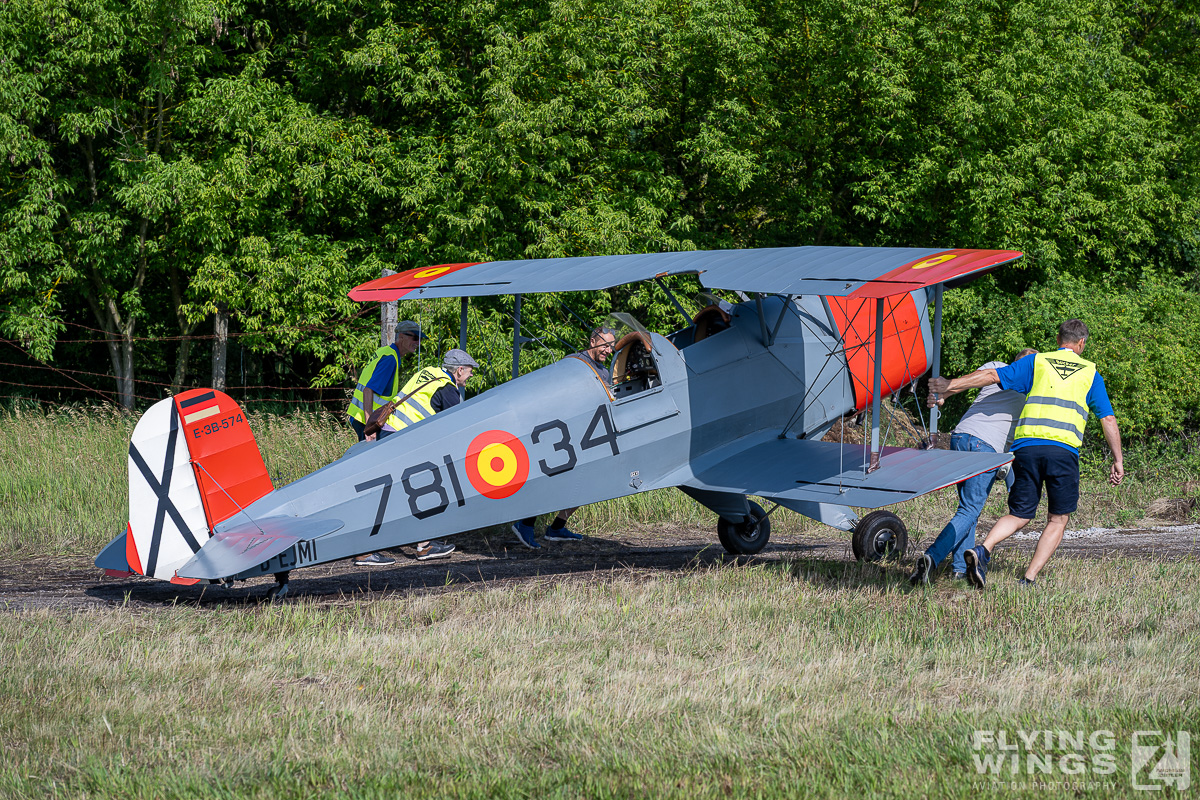
Most visiting aircraft arrived during the afternoon, creating a constant flow of movements that kept the volunteer ground crews fully occupied. Without modern towing equipment, every aircraft had to be pushed by hand into its designated parking position. Working under the summer sun quickly became physically demanding, but nobody seemed to mind.
The Airfield at Rangsdorf
Located just south of Berlin, Rangsdorf occupies a unique place in German aviation history. Established in 1935 on the shores of Rangsdorfer See, the airfield quickly became one of the country’s most important centres for sport aviation, aircraft manufacturing and, later, military flying.
Only months after construction began, the young Bücker Flugzeugbau GmbH relocated its factory from Berlin-Johannisthal to Rangsdorf. Here, the company built two of the world’s most famous training aircraft, the Bü 131 Jungmann and Bü 133 Jungmeister, both of which earned an international reputation for their outstanding flying characteristics. Thousands of pilots received their first aerobatic or military flying experience in aircraft produced at Rangsdorf, making the airfield synonymous with high-quality pilot training long before the Second World War.
Officially opened as the Reichssportflughafen on 30 July 1936, just one day before the opening of the Berlin Olympic Games, Rangsdorf combined civilian aviation with the increasingly militarised ambitions of the German aviation industry. Besides serving as Bücker’s factory airfield, it was also home to the Reich School for Powered Flight and became a centre for sport flying during the late 1930s. Among the many pilots associated with Rangsdorf were actor Heinz Rühmann and pioneering aviator Beate Uhse, who both learned to fly here.
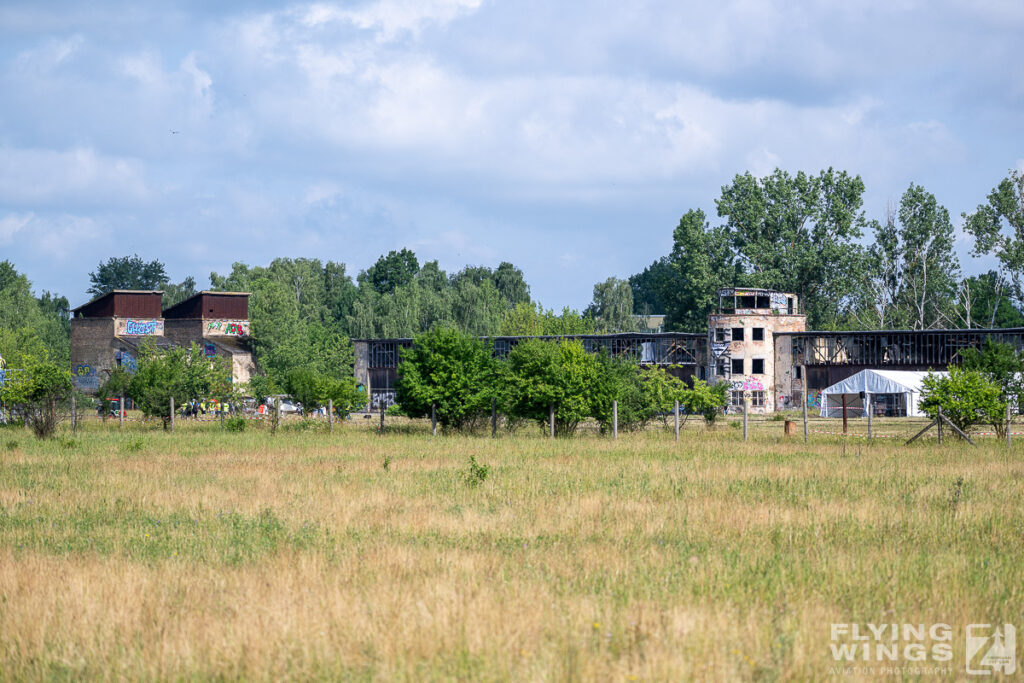
With the outbreak of the Second World War, the airfield’s role changed significantly. Rangsdorf became an alternate airport for Berlin Tempelhof, from where Deutsche Lufthansa operated scheduled services to numerous European destinations. For a limited period, even Aeroflot maintained flights between Berlin and Moscow.
As the war progressed, military operations increasingly dominated the airfield. Luftwaffe training units were based at Rangsdorf, while Bücker expanded production beyond its own trainers. The factory manufactured the Bü 181 Bestmann, components for the Junkers Ju 87 Stuka and Focke-Wulf Fw 190, as well as the DFS 230 assault glider and parts of the Henschel Hs 293 guided weapon. On 20 July 1944, Colonel Claus Schenk Graf von Stauffenberg departed from Rangsdorf on his historic flight to the Wolfsschanze headquarters, returning to the airfield later that same day following the failed assassination attempt on Adolf Hitler.
Production ceased in April 1945, shortly before the end of the war in Europe. Soviet forces occupied the airfield without resistance on 22 April, beginning almost five decades of military use. Initially employed for the overhaul of piston and jet engines, the former Bücker factory later became a major maintenance facility for Soviet military helicopters. The airfield remained under Soviet control until the withdrawal of Russian forces from Germany in 1994.
Following reunification, aviation activities came to an end and the site passed into public ownership. Several key buildings—including the distinctive 1939 control tower, the former assembly hall and the final assembly building—were granted listed status, preserving important elements of Germany’s aviation heritage. Although decades of vacancy led to significant deterioration and vandalism, the historic structures survived.
In 2018, the former airfield was acquired by a private developer. Under the BUC-36 redevelopment project, a new residential district is being created on the site. While most of the former airfield infrastructure will disappear, the open grassland of the historic flying field and the landmark Bücker buildings will remain as visible reminders of Rangsdorf’s remarkable aviation legacy. The long-term plans also include a permanent home for the Bücker Museum Rangsdorf, ensuring that the history of the famous aircraft manufacturer continues to be preserved at the place where it all began.
For the crews, the routine was familiar. Flying jackets were exchanged for lighter clothing, the traditional post-flight beer was enjoyed with friends, and the polishing cloths soon appeared. After all, this was not simply another fly-in. This was the birthplace of Bücker aircraft, and every owner wanted to present their machine at its very best.
The social aspect proved equally important. Pilots who normally meet only once or twice each year spent hours exchanging stories, technical advice and memories. For many, the thought that departure would already take place on Sunday was deliberately pushed aside. Everyone wanted to enjoy every remaining hour in Rangsdorf.
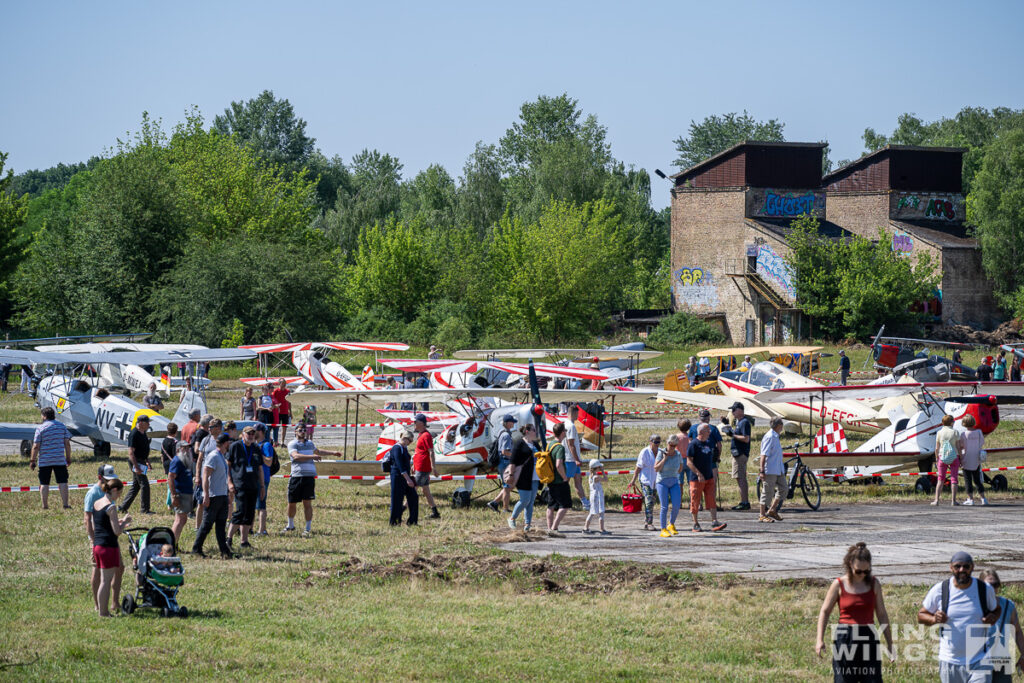
Remarkably, the organisers had done little advertising before the event. Nevertheless, more than 4,000 visitors found their way to the former factory during the weekend. Throughout Saturday and Sunday, the site remained busy with a constant stream of aviation enthusiasts, local residents and families eager to experience a place that had remained largely inaccessible for decades.
For many people from Rangsdorf, it was their first opportunity to enter the former airfield. During Soviet occupation and long after military operations had ceased, public access had been extremely limited. Older visitors recalled the constant sound of helicopter engines, encounters with Soviet personnel in the town, and the strict separation between the military base and everyday civilian life. Others remembered an even earlier chapter of Rangsdorf’s history as Germany’s prestigious Reichssportflughafen before the Second World War.
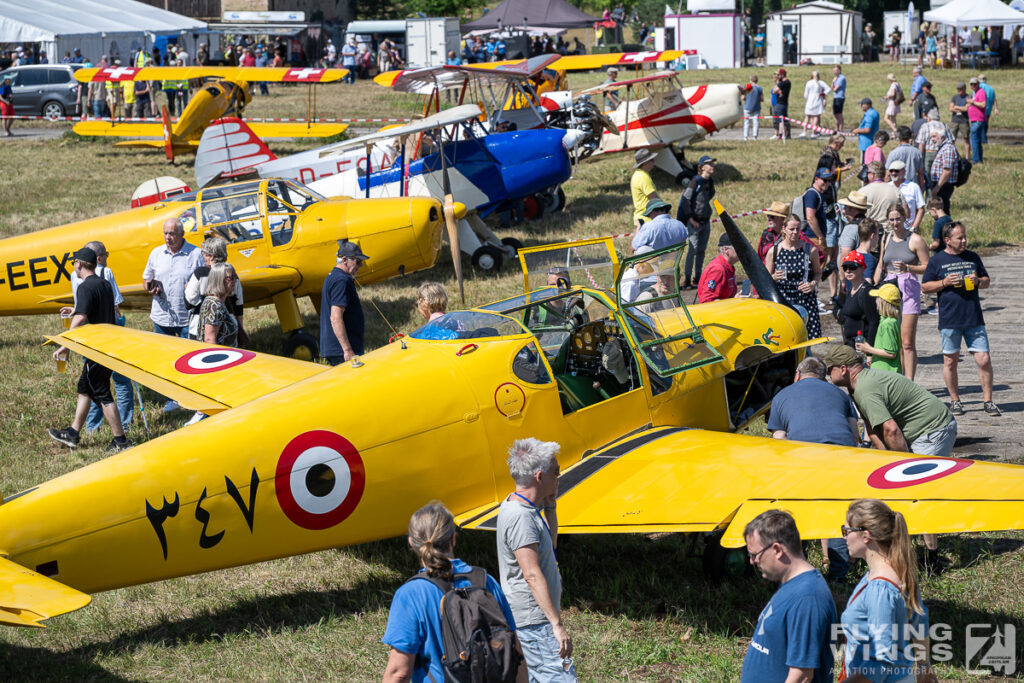
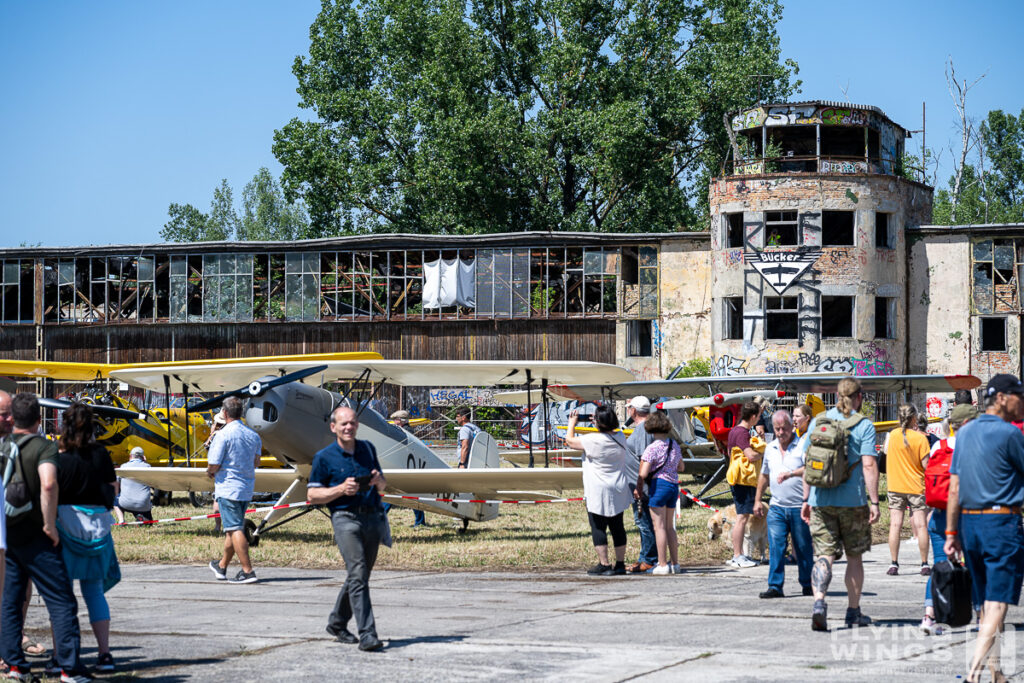
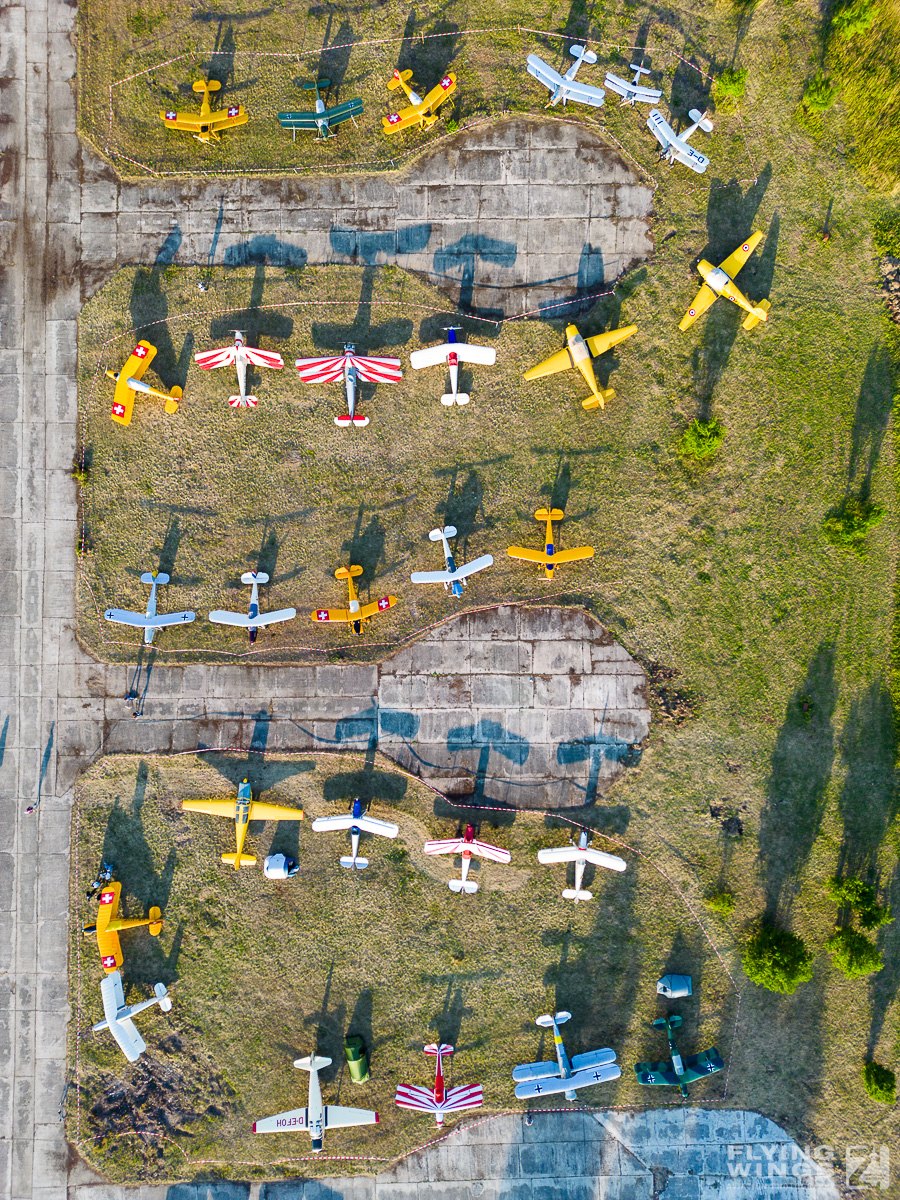
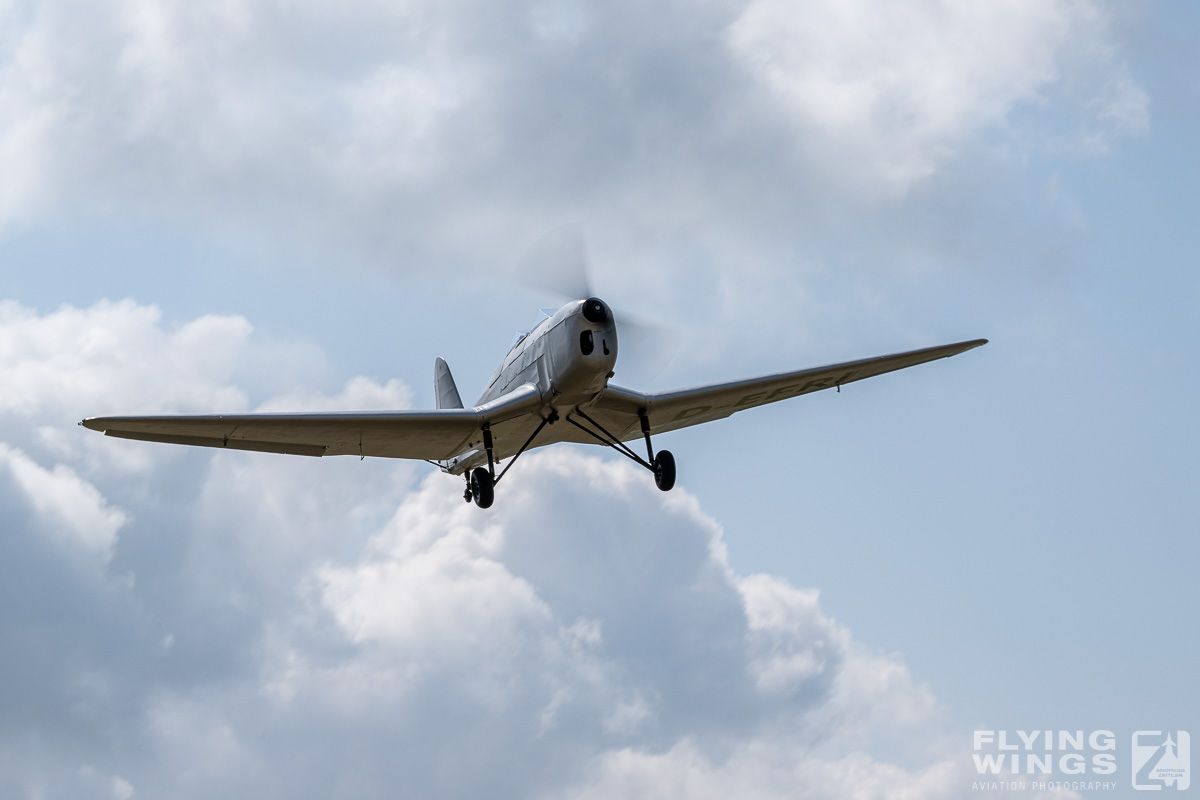
In total, 53 aircraft connected with the Bücker legacy gathered at Rangsdorf. Original Bü 131 Jungmann and Bü 133 Jungmeister aircraft stood alongside faithful reproductions built in Poland and modern ultralight interpretations from the Czech Republic. Several Bü 181 Bestmann trainers attended, including the Egyptian-built Gomhouria variant, while a Saab 91 Safir represented the work of Anders Johan Andersson, the former Bücker chief designer whose influence extended well beyond the company itself.
By Sunday afternoon, the unique atmosphere that had filled the historic airfield throughout the weekend slowly faded. One by one, the aircraft departed, leaving behind only memories and the quiet certainty that this gathering would never be repeated in quite the same way. For the organisers, the event was a dream becoming true, amassing so many Bücker aircraft to their birthplace and giving their pilots to opportunity to land at this very special airfield for a last time.
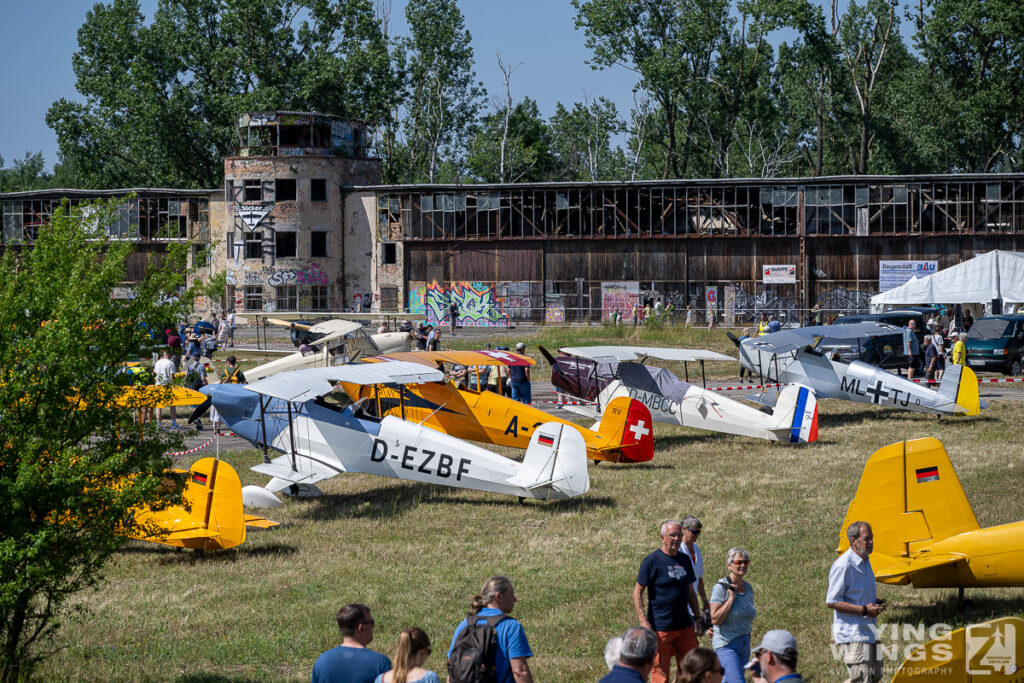
For many owners, the experience had been deeply personal. Their aircraft had been built at Rangsdorf more than eighty years earlier, and being able to enter “Rangsdorf” into their logbooks once again seemed almost unimaginable only a few years before.
After every visiting aircraft had departed, Knut Hentzschel performed the final take-off from the temporary airfield. It was an emotional conclusion to months of planning, countless volunteer hours and years of determination to give this historic place one last opportunity to fulfil its original purpose.
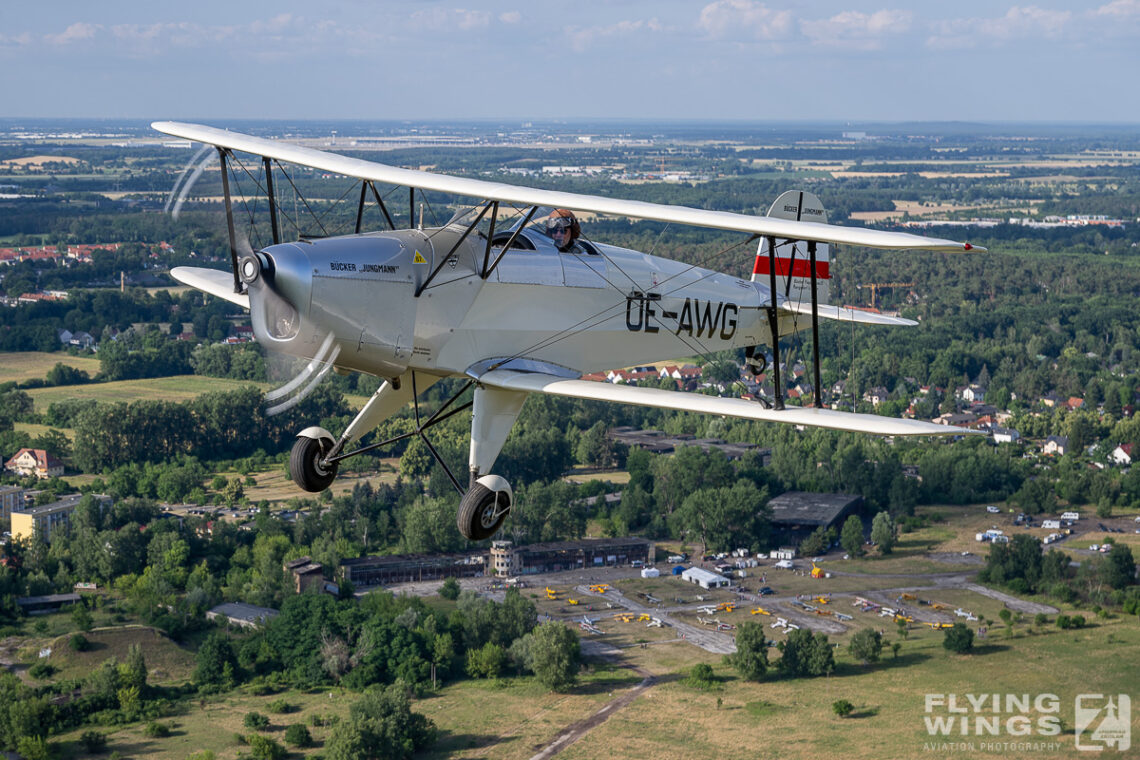
On Saturday evening, I also took the opportunity for a photo flight, capturing a Jungmann over Rangsdorf and watching the impressive scene from above. Thank you Anne, Gerhard, Knut and Ralf!
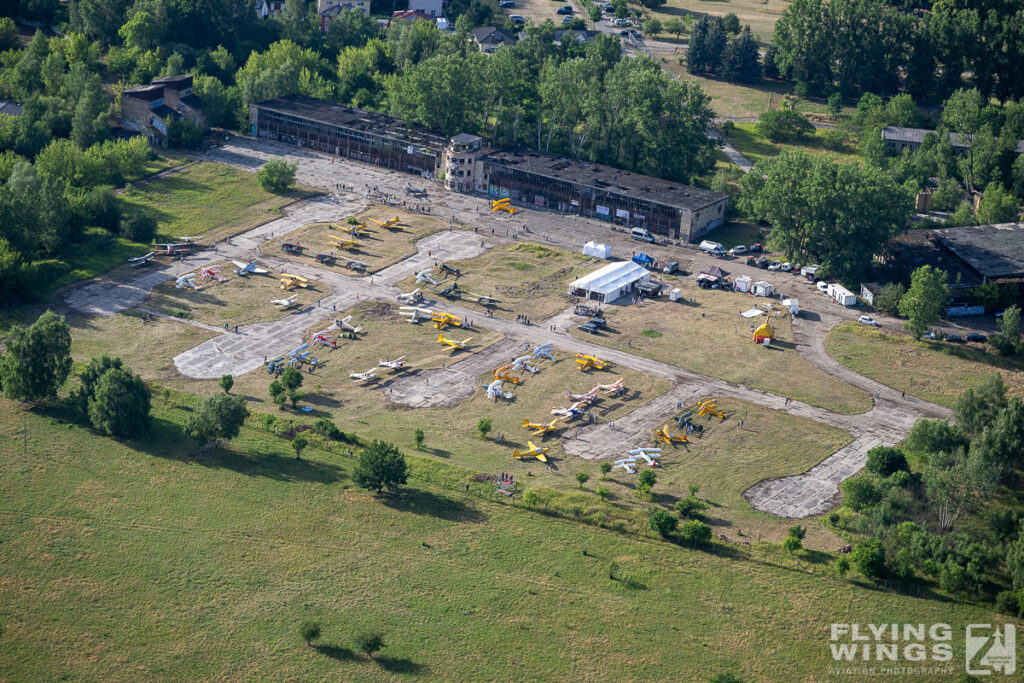
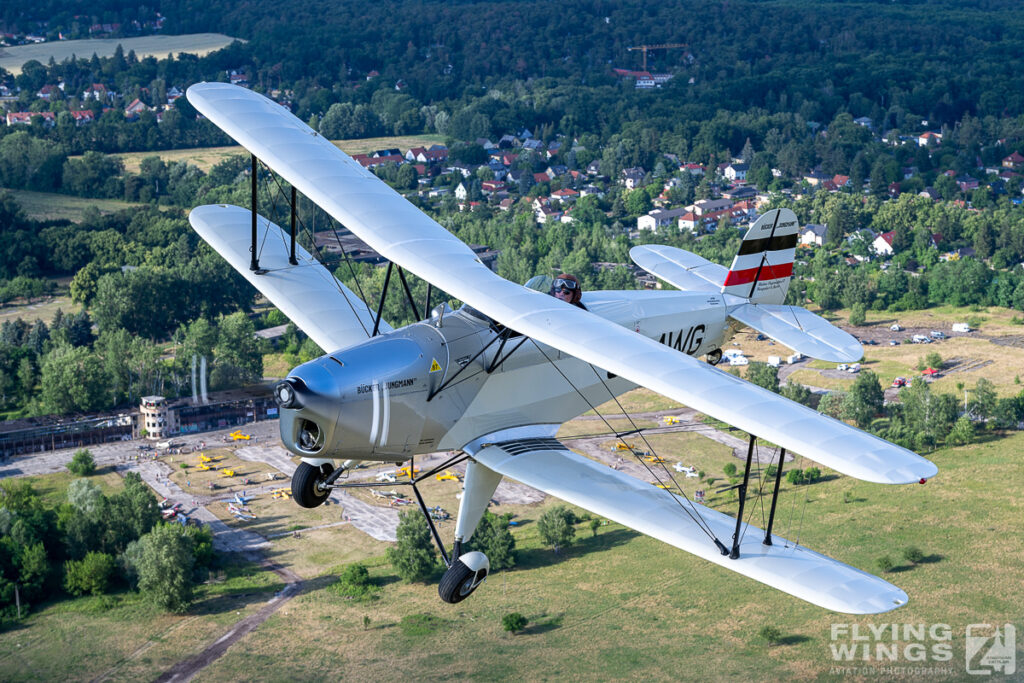
Together with dozens of volunteers from the Bücker Museum, Hentzschel and Gaida succeeded in doing far more than organising another fly-in. For one memorable weekend, they brought aviation back to the birthplace of Bücker aircraft and allowed history to come alive once more before the former airfield enters an entirely new future.
For more information about Bücker aircraft and the German Bücker scene and Rangsdorf visit: https://www.buecker-museum.de
Bücker Biplanes at Rangsdorf 2023 – Photo Gallery







You May Also Like
F-AZJU – La Ferté-Alais’ Ju-52/3m
High Performance Glider – DG-800S