
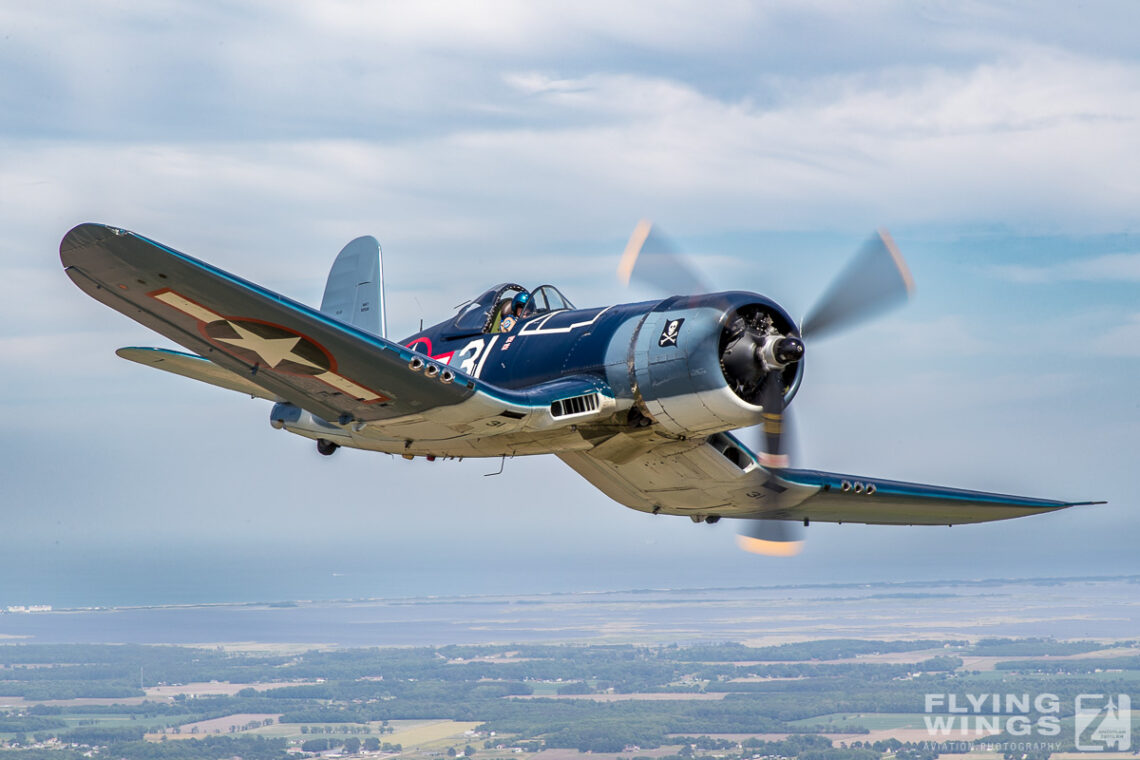
Corsair Love Affair! Flying the FG-1D at the Military Aviation Museum
The aviation bug was planted early in John Glen Fuentes’s life. In 1962, astronaut John Glenn became the first American to orbit Earth. His parents were so inspired by the achievement that, when their son was born in August 1963, they gave him the unusual name John Glenn.
By the time this profile was written, Fuentes had logged more than 22,000 flying hours, most of them as an airline pilot. Around 3,000 more were in a wide range of Second World War aircraft. In the early 1990s, the Commemorative Air Force’s Boeing B-29 Superfortress FiFi and Consolidated B-24 Liberator Diamond Lil entered his logbook. A few years later he flew the Collings Foundation’s North American B-25 Mitchell Tondelayo and began building hours on the North American T-6, the classic trainer used to prepare pilots for warbirds.
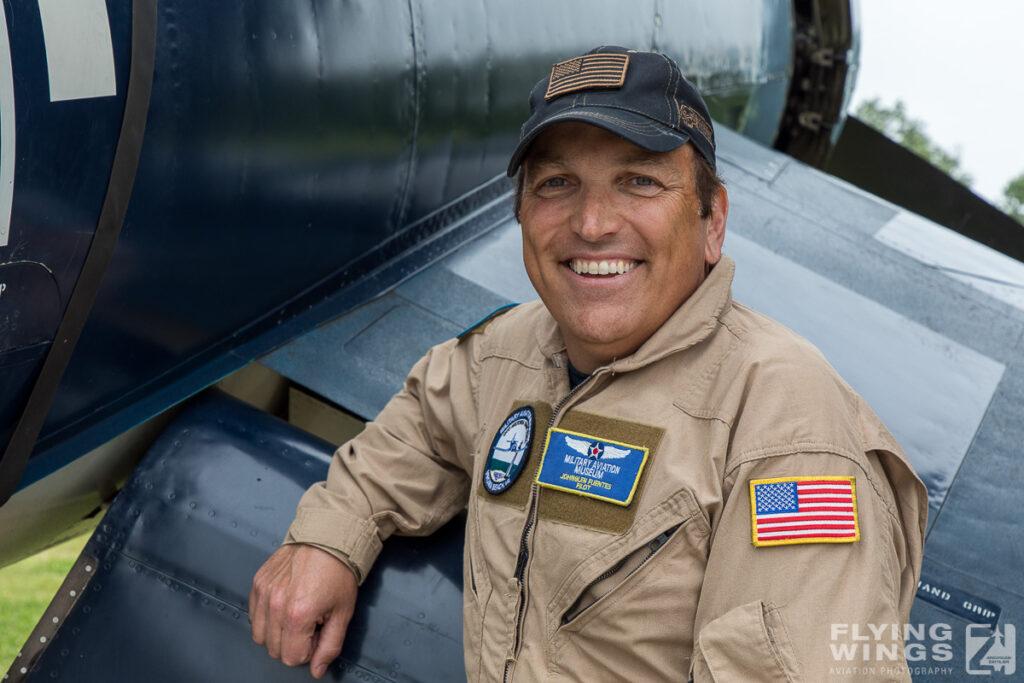
That experience brought Fuentes to Jerry Yagen’s Military Aviation Museum (MAM) in Virginia Beach in 2005. Since then, he has flown a varied collection that includes the Hawker Hurricane, Bf 108 Taifun, SNJ-2 and PT-17 Stearman Kaydet. He also serves as co-pilot on the North American B-25 Mitchell Wild Cargo.
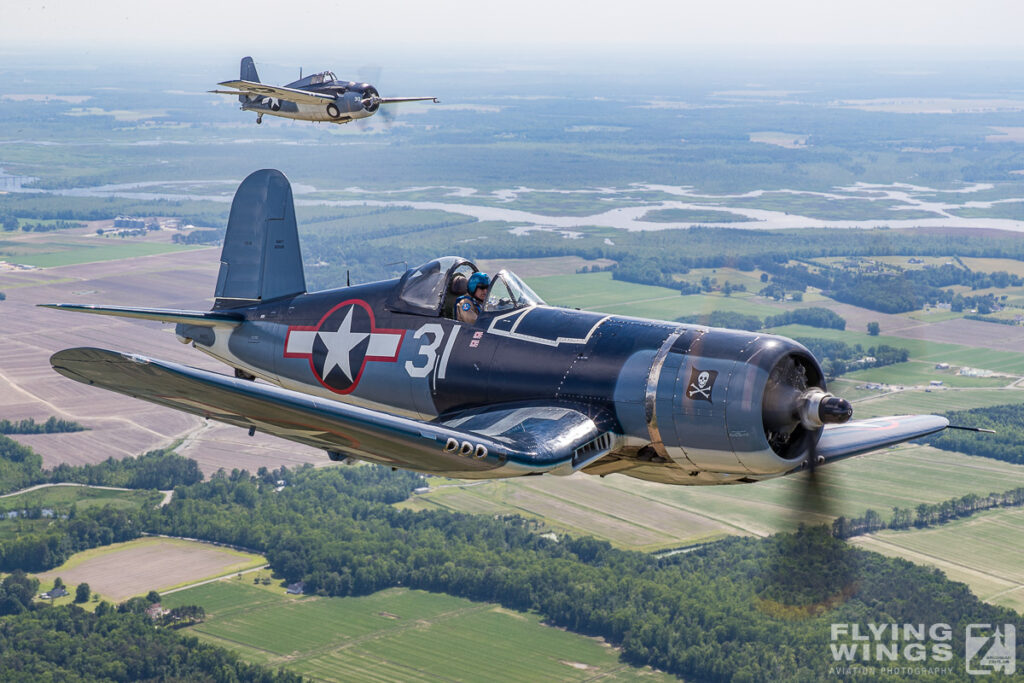
His particular interest, however, is in the US Navy’s wartime aircraft. Fuentes flies the Corsair and is also checked out on the TBM Avenger and the FM-2 Wildcat, the Corsair’s predecessor in Navy service. Having flown all three, he has a rare chance to compare them from the cockpit.
From a Wildcat to a Corsair
The Wildcat and Corsair were both important aircraft for US forces in the Pacific during the Second World War. Fuentes’s first broad comparison is memorable: “The Avenger is a diesel truck; the Corsair is a nimble Ferrari.”
His description of the Wildcat is more detailed. “The Wildcat is a design from the mid-1930s, so it still has a lot in common with the biplanes of that period.” To him, it is spartan, with simple systems that do only what is necessary. The landing gear, for example, is operated by a hand-cranked chain mechanism. The flaps are powered pneumatically using suction from the engine, and the wings are folded and unfolded by hand.
In the air, Fuentes finds the Wildcat’s controls heavy but its manoeuvrability impressive. “I can throw it around quite well and fly very tight turns,” he says.
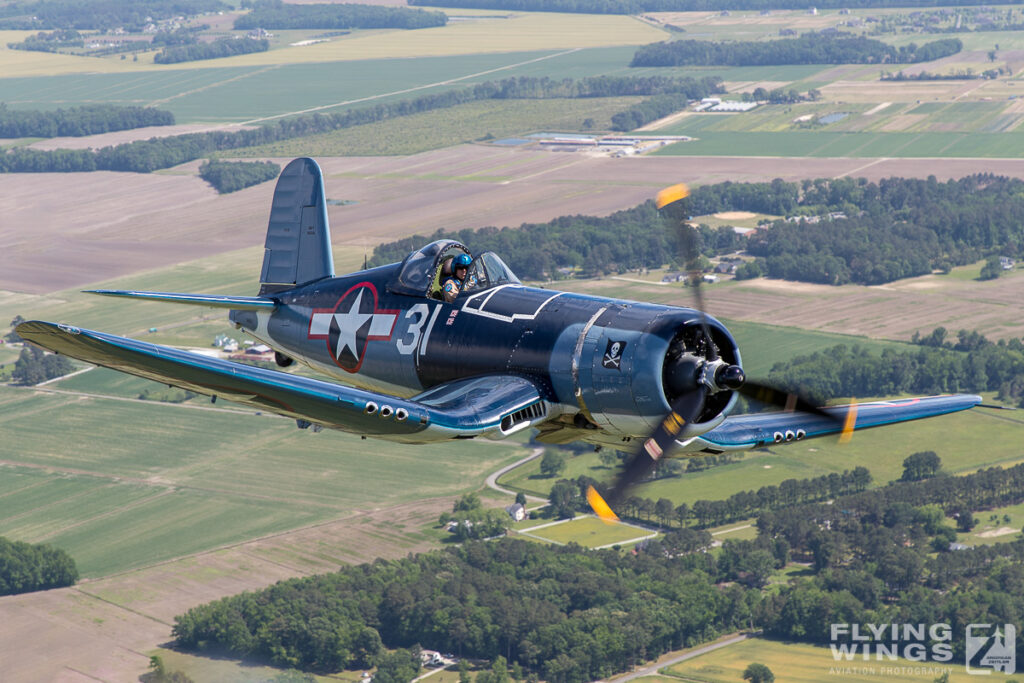
Even so, it is clear that the Corsair is his favourite. “It was designed in the late 1930s and early 1940s, and it is a dream to fly.” Although it followed the Wildcat by only a few years, the Corsair offered a significant aerodynamic advance. “The control forces and aerodynamics are very well balanced. It flies without requiring a lot of effort.”
The larger Corsair cannot match the smaller Wildcat’s tight turning circle, and on the ground it is a cumbersome aircraft. “From the cockpit I have no direct view straight ahead, so I have to taxi in pronounced S-turns,” Fuentes explains. “The brakes can also overheat easily if I have to use them too much before take-off.”
There is plenty of power to manage. The Corsair’s Pratt & Whitney R-2800-8W produces 2,000 horsepower, and starting the engine is only the beginning of a carefully controlled take-off sequence.
Managing 2,000 horsepower
Fuentes can sometimes be seen above the cockpit rim, helmet on, working methodically through the Corsair’s checklist. He checks the fuel, hydraulic fluid and oil for the planned flight, sets the controls and flaps for take-off, and adjusts his seat so he can reach the wheel brakes properly.
After the engine-start procedure, one terse line in the otherwise detailed checklist reads: “Continue cranking…” Fuentes knows the checklist by heart, but he follows it closely, especially when bringing the engine up to power. The manifold pressure must be increased in stages, up to a maximum of 52 inches, with engine speed limited to 2,700 rpm. The gradual power increase helps keep the torque from the Corsair’s four-metre propeller under control.
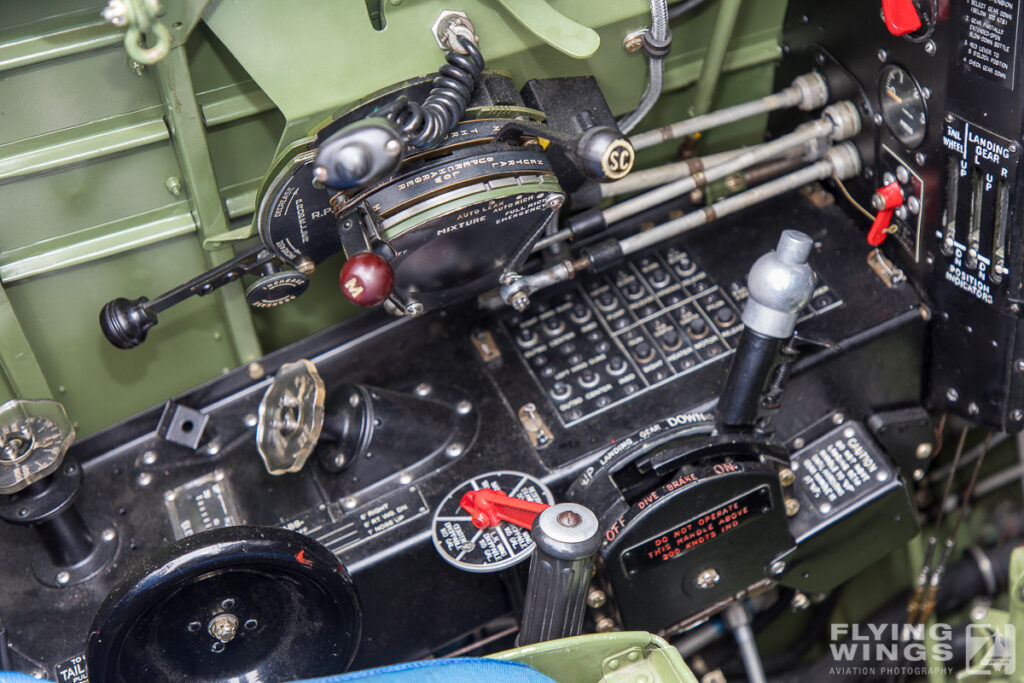
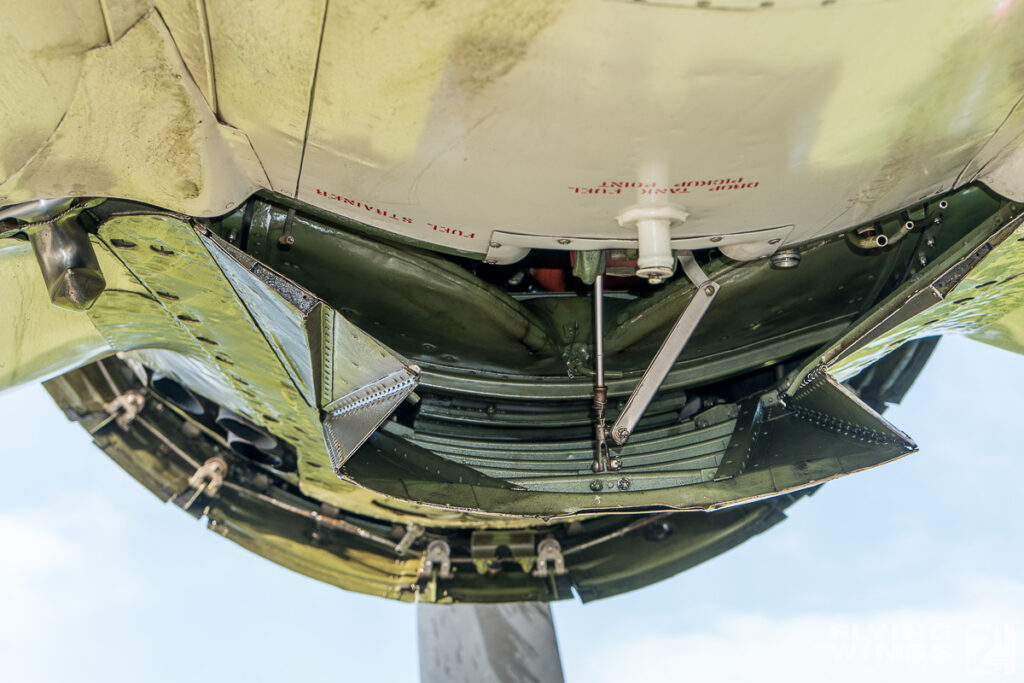
For take-off, the flaps are set to 30 degrees and the aileron and rudder trim to six degrees. As airspeed builds, the controls become effective enough to counter the engine’s torque. The Corsair lifts off at about 77 knots.
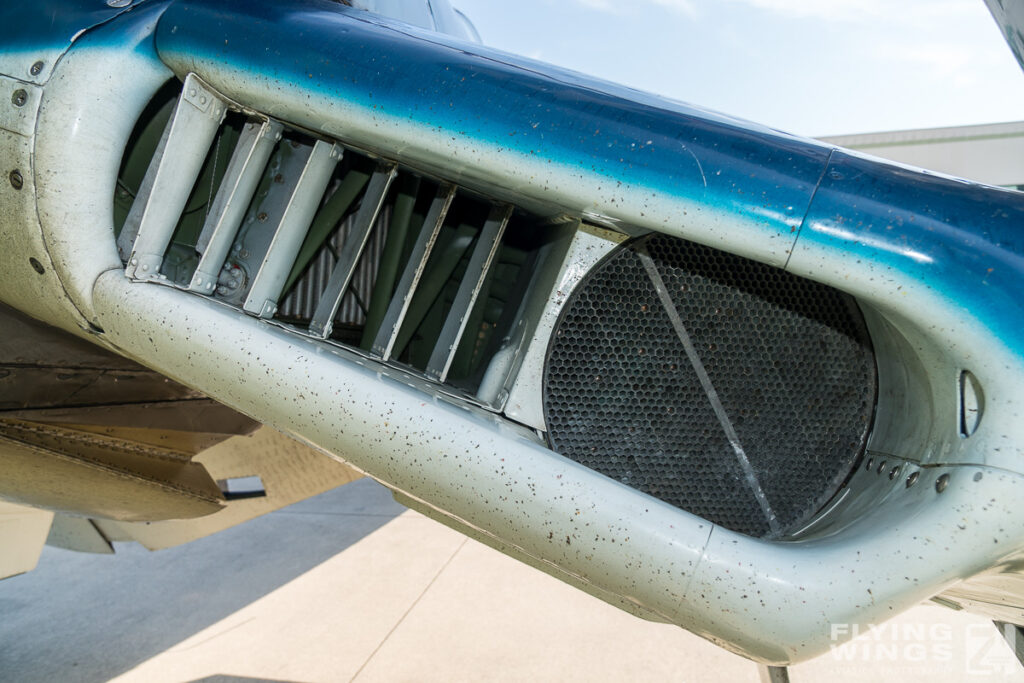
Once airborne, the landing gear and flaps are operated hydraulically—a welcome reduction in workload compared with the Wildcat. Hydraulic power also operates other systems, including the cowl flaps and wing-folding mechanism. This makes the Corsair easier for its pilot to manage, though its more complex systems require additional attention from the ground crew.
A careful routine in the air
For the best rate of climb, Fuentes sets 44 inches of manifold pressure and 2,550 rpm, maintaining 125 knots. The Corsair’s checklist identifies several engine-speed and manifold-pressure ranges to avoid. These include 2,200 rpm at 30 to 35 inches of manifold pressure, and the range between 1,750 and 1,950 rpm.
The aircraft is generally smooth to fly, but vibration becomes pronounced in those ranges. It is not considered dangerous, but it is uncomfortable and undesirable, so pilots avoid operating there.
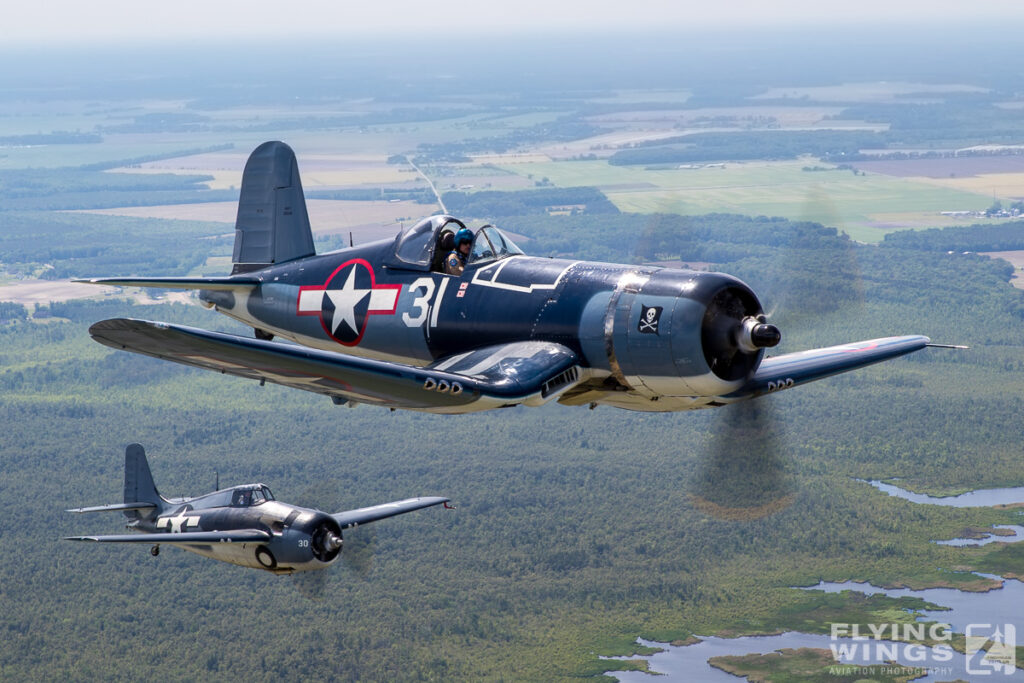
At cruise, Fuentes reduces power to 28 inches and 2,000 rpm. For maximum range, the Corsair can cover ground at 150 knots and just 1,300 rpm. In practice, flights are usually kept close to the museum’s airfield for safety and to ensure that pilots remain current on their assigned aircraft.
In the event of an engine failure, the best glide speed is 140 knots, with a glide ratio of 13:1. Fuentes typically spends about an hour in the Corsair before returning to land on the MAM’s grass runway.
Six Corsairs and two Zeros
Those local flights have helped Fuentes learn the Corsair’s handling, but some of his most memorable experiences have come at airshows. At Thunder over Michigan, he joined a formation of six Corsairs and two original Mitsubishi Zeros.
“The chance to fly with several aircraft of the same type from that period—and with two of its main opponents—is more than rare,” he says.
The return flight to Virginia Beach was memorable for another reason. The air distance from Thunder over Michigan was about 850 kilometres, and Fuentes covered it non-stop in two hours. Given the conservative engine settings normally used, he needed a substantial tailwind to make that time.
The Corsair remains at the top of his list of favourite Second World War aircraft, thanks to its excellent flying qualities. “It will always be my childhood sweetheart,” he admits. The B-25 Mitchell comes second, followed—perhaps unexpectedly—by the Bf 108 Taifun. The choices make clear that speed and engine power are not the only things that matter to him in an aircraft.
The Military Aviation Museum’s FG-1D Corsair
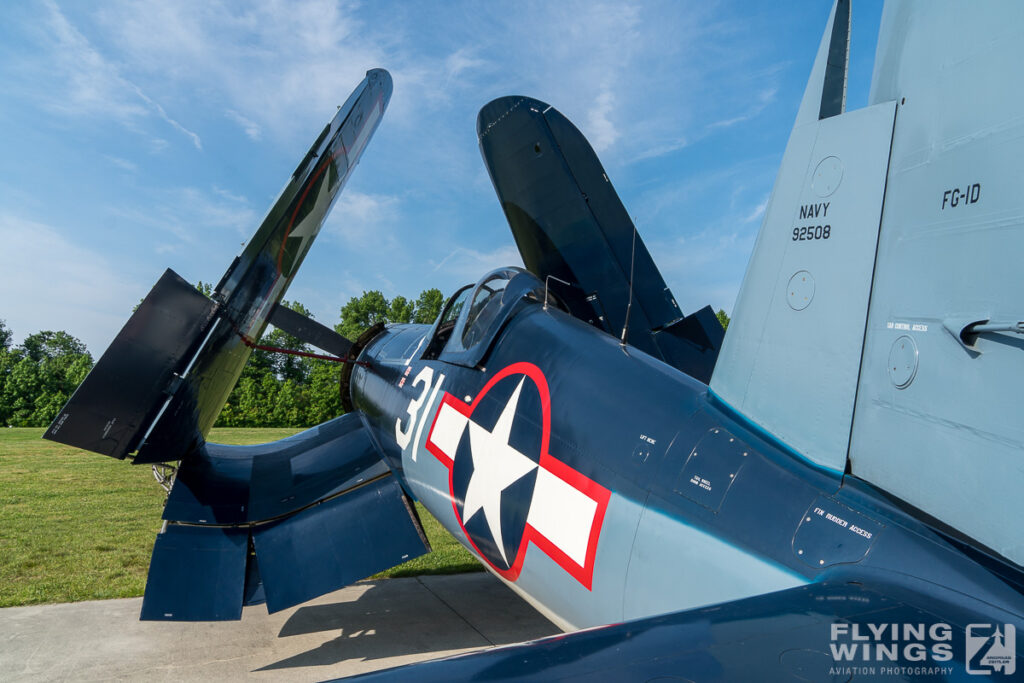
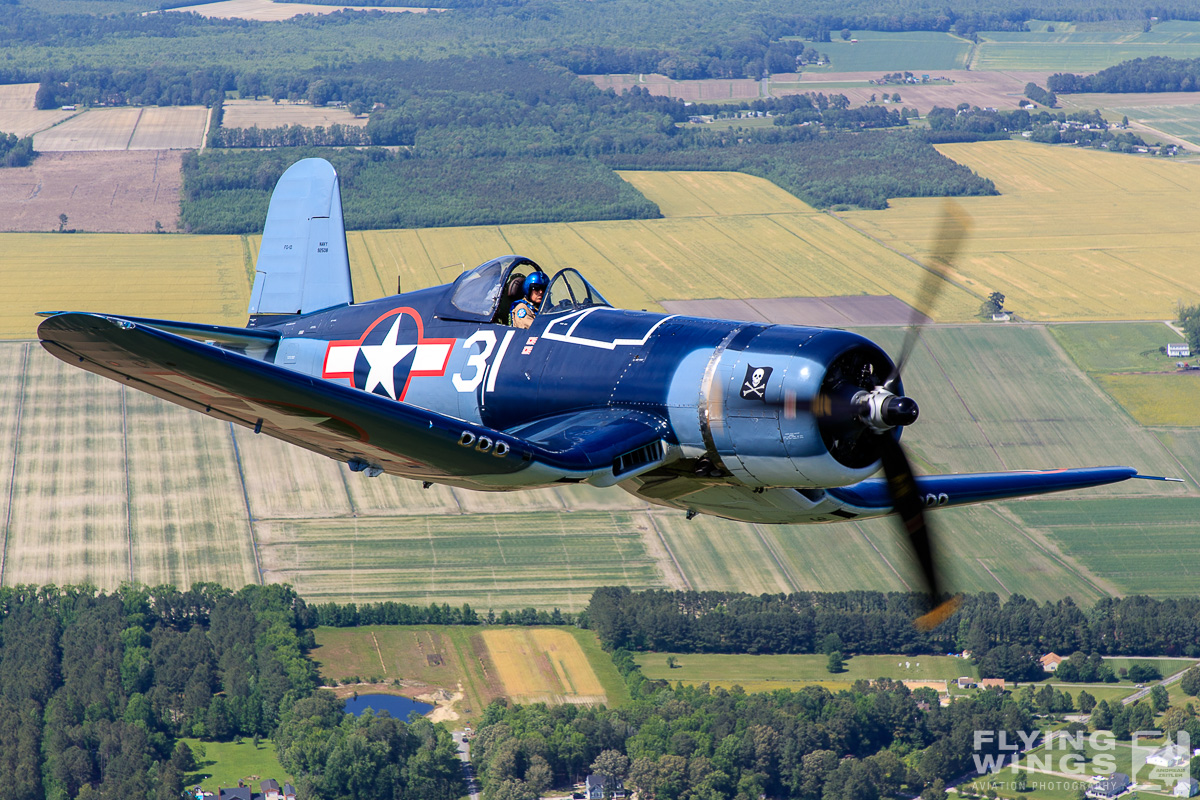
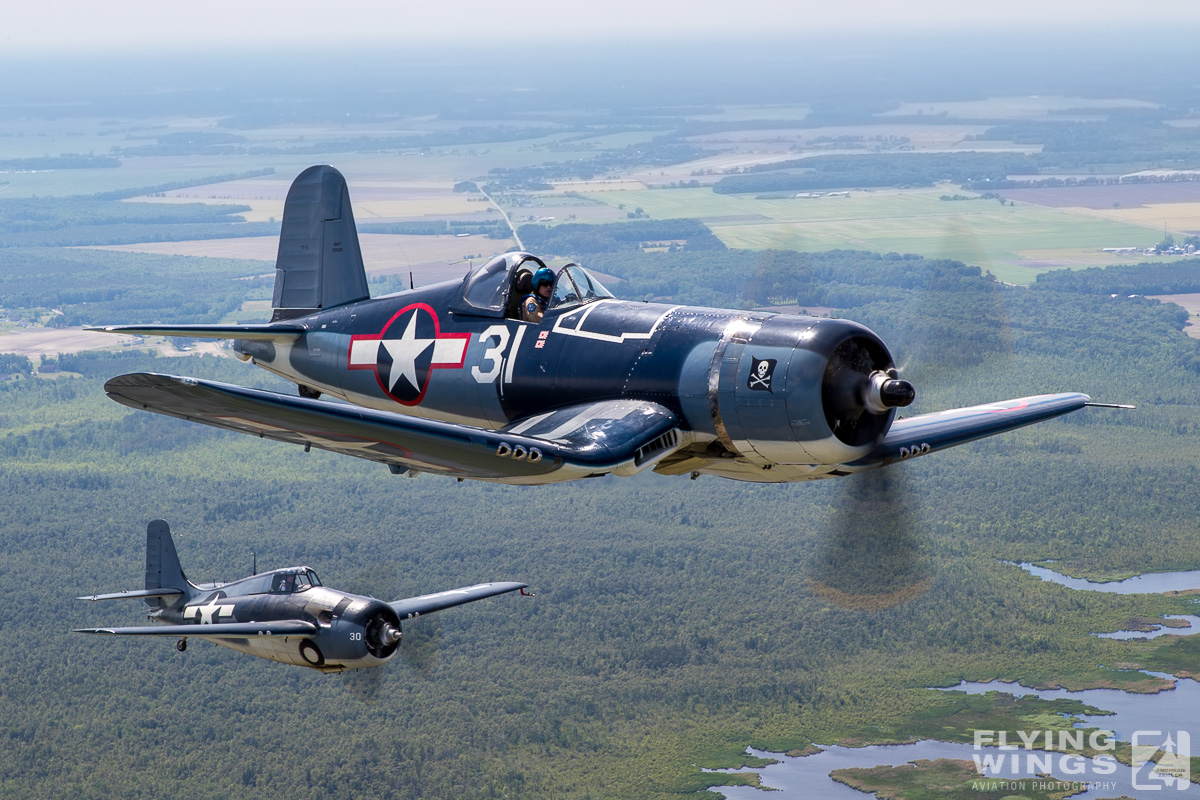
The MAM’s Corsair, BuNo 92508, was built by Goodyear under licence from Vought as an FG-1D, the Goodyear-built version of the F4U-1D. Delivered shortly before the end of the war, it almost certainly did not see combat. The detailed records that might confirm its early service have not survived.
Historical photographs show that the aircraft was stationed for a time in San Diego, California, and also served as a trainer with a New York Naval Air Reserve Squadron. Like many warbirds, it was removed from the military register in 1956. After a period in storage, it was sold to a civilian owner in 1964.
The Corsair’s first major public appearance came in 1968, when it took part in the opening parade of the Reno Air Races. After several changes of ownership, it reached Oklahoma City, where a former US Marine Corps pilot painted it in the colours of his service.
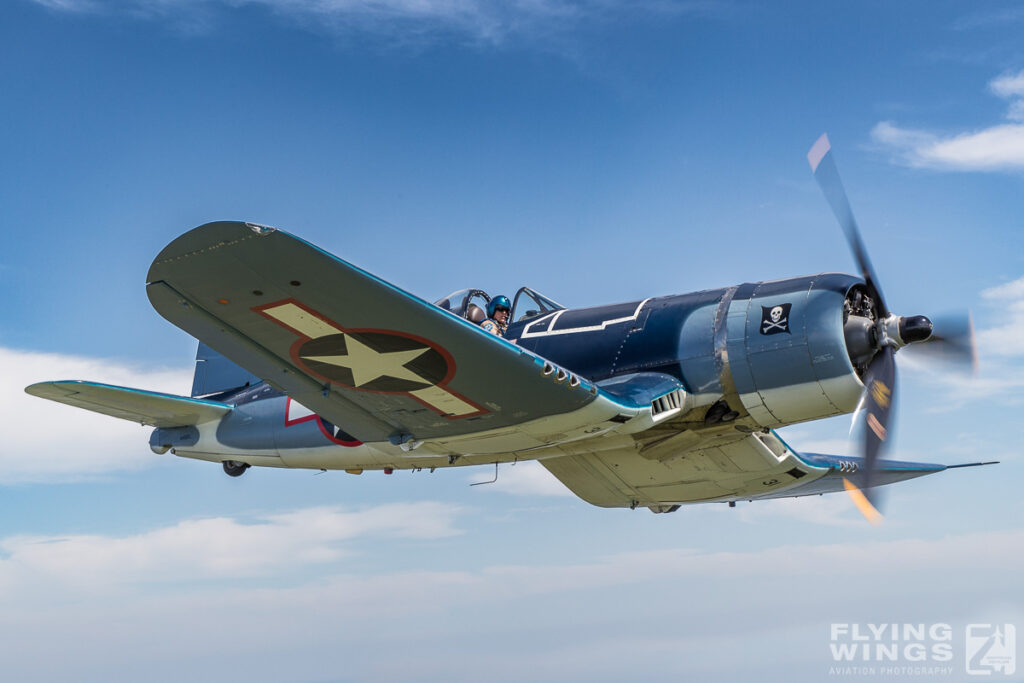
The Military Aviation Museum acquired the aircraft in 1999. In 2002, it was painted to represent the Corsair flown by Ray Beacham, a Virginia Beach veteran who served with US Navy fighter squadron VF-17, the “Jolly Rogers.” From October 1943, the squadron was based at Ondongo and Bougainville. On 1 November, Beacham—known to his fellow pilots as “the Kitty Hawk Kid”—scored what became the young squadron’s first aerial victory, shooting down a Japanese Zero.
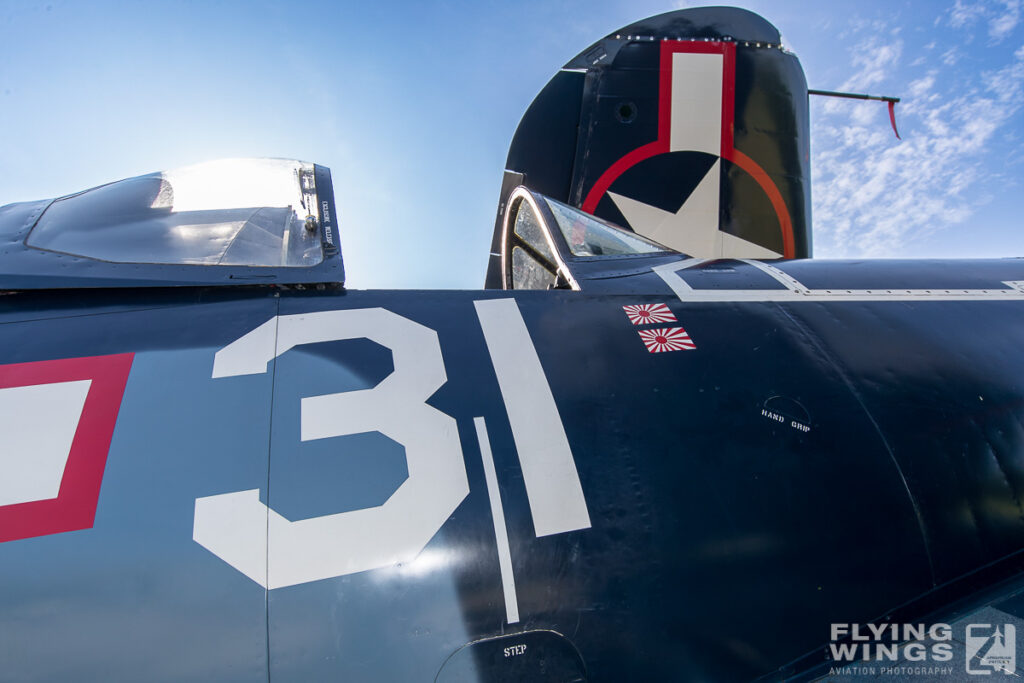
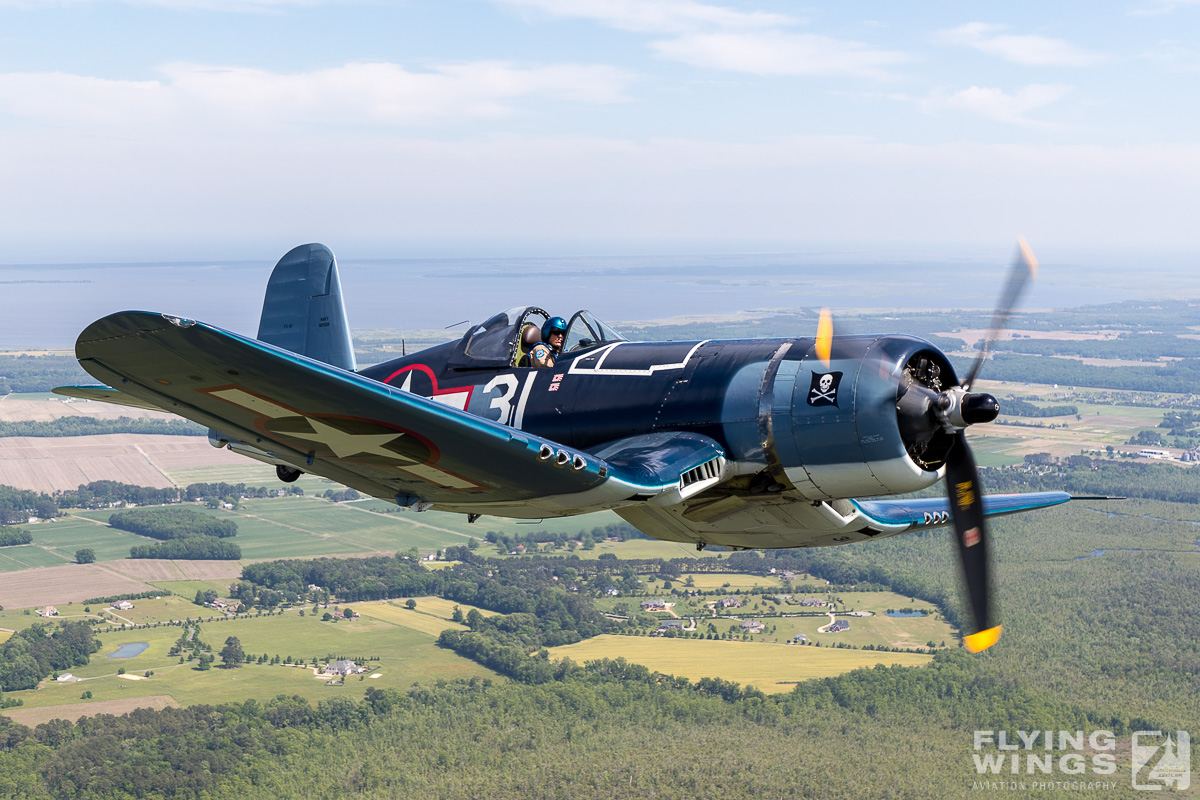
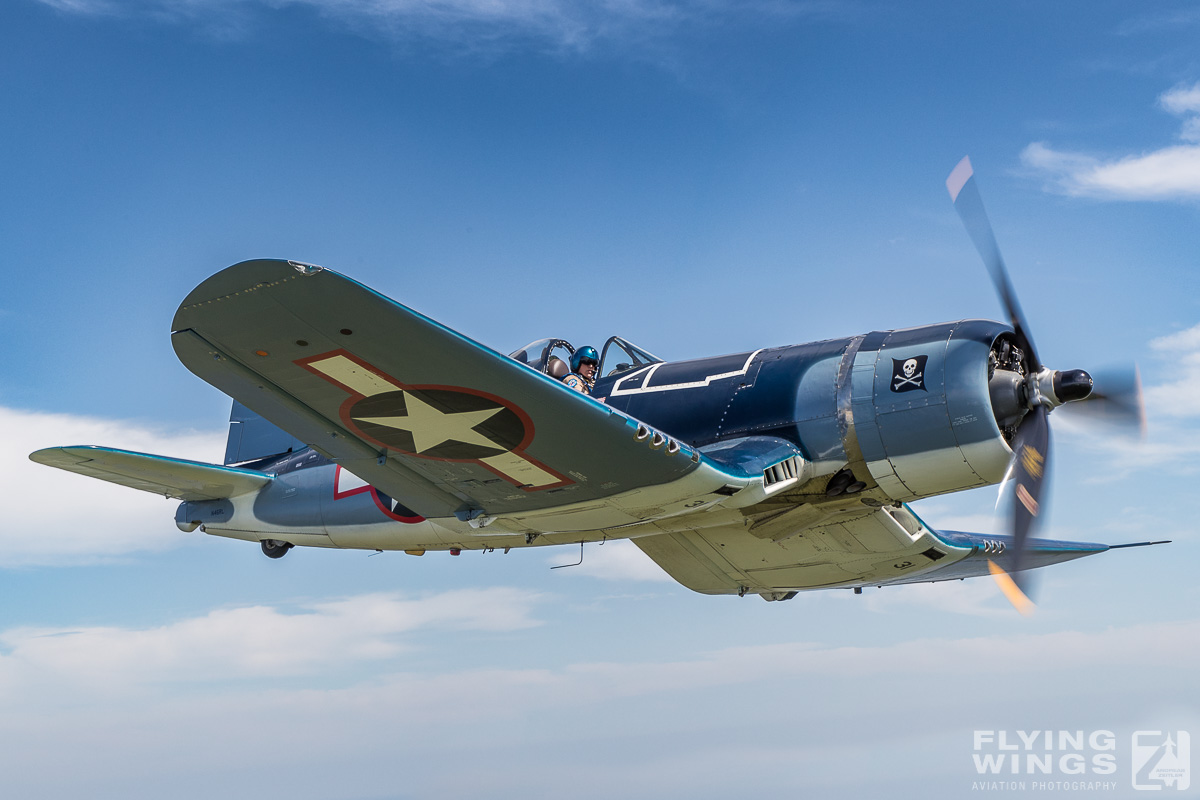
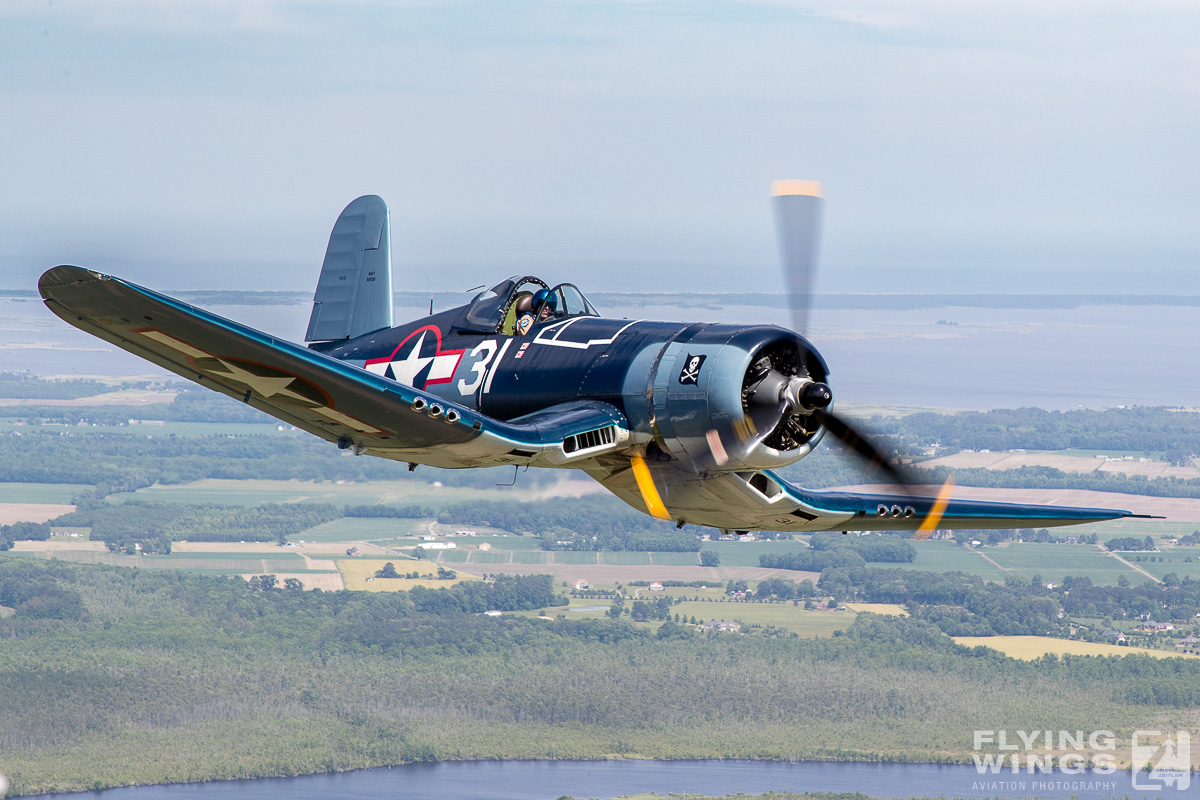
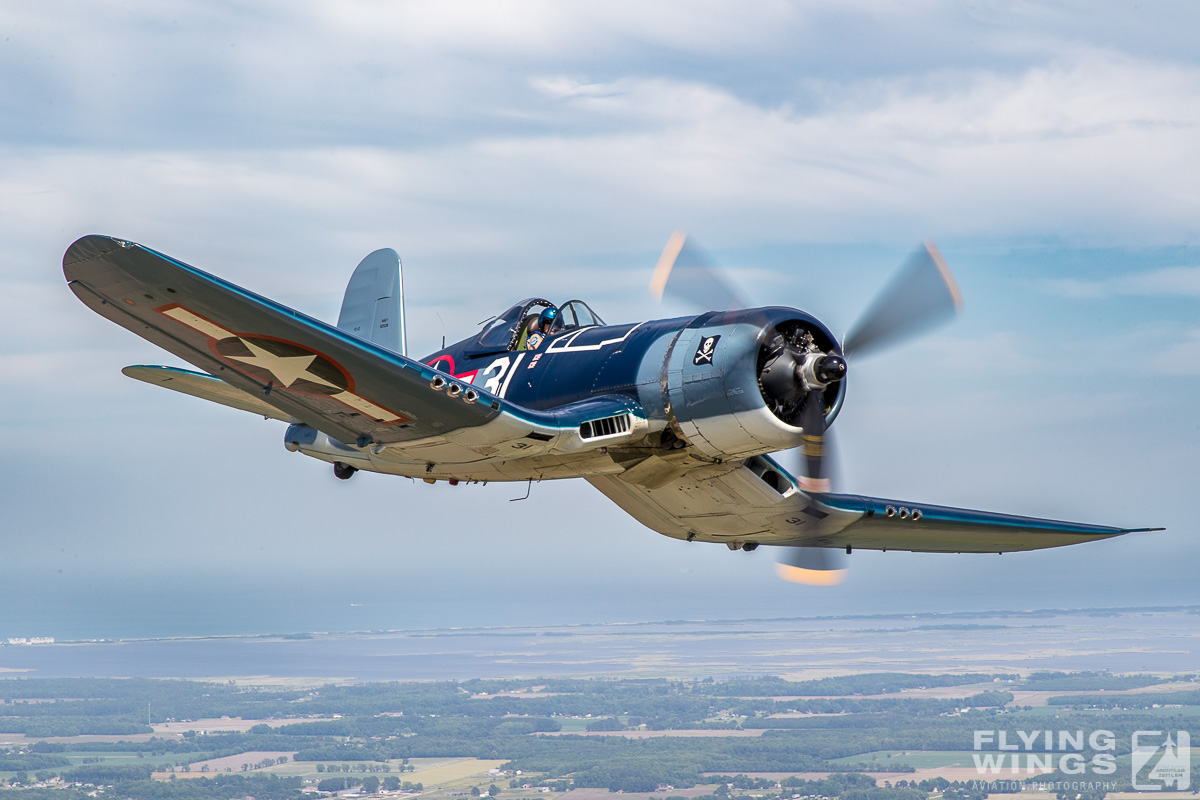
Two flags of the Imperial Japanese Navy beneath the cockpit mark Beacham’s two victories over Japanese Zeros. The squadron’s black skull-and-crossbones insignia on the engine cowling is even more conspicuous. The Jolly Rogers are now a legendary unit and fly modern Super Hornets from NAS Oceana, only a short distance from the museum.
Beacham did not live to see “his” Corsair restored in the squadron’s markings. He died in 1997 and was buried near his childhood home in Kitty Hawk. Today, the FG-1D at the Military Aviation Museum connects his story with the history of the Jolly Rogers—and with John Glen Fuentes’s enduring love of the Corsair.
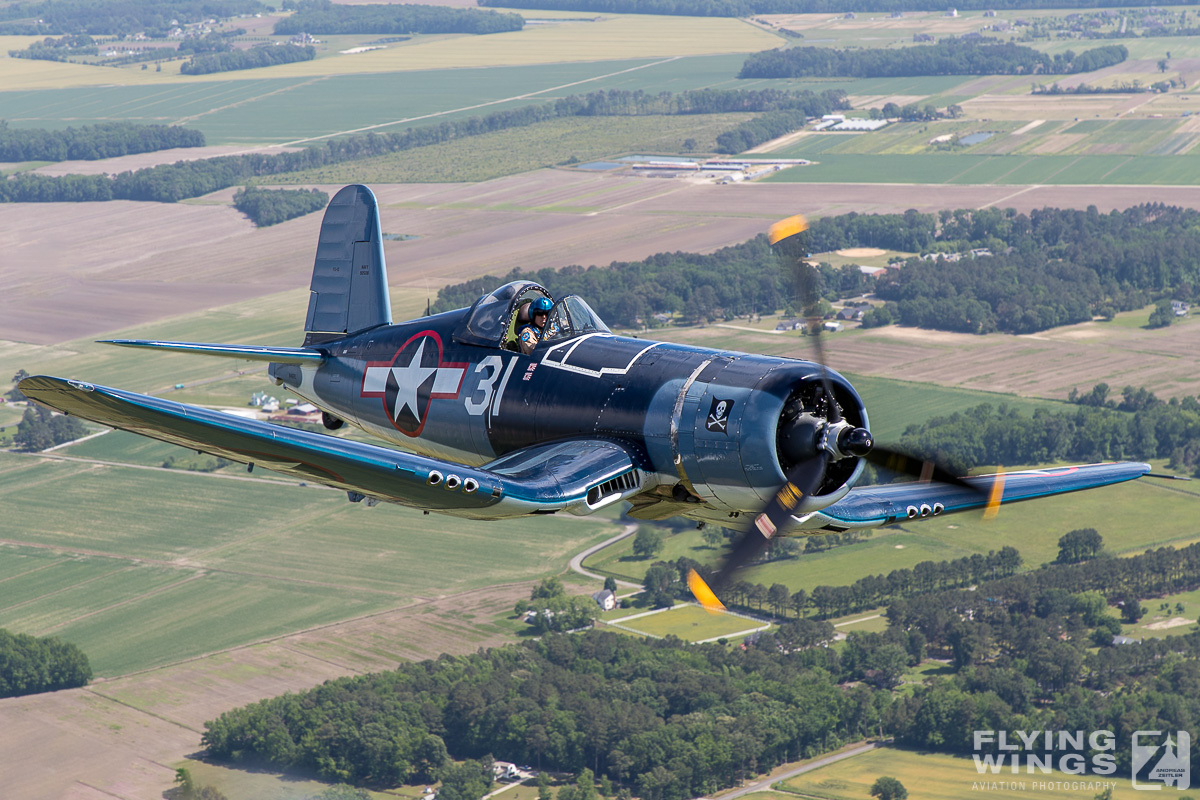
VF-17 “Jolly Rogers” FG-1D Corsair BuNo 92508 – Photo Gallery





You May Also Like
Cobra Flight! Bell P-39 & P-63 in Formation

Boeing PT-17B Kaydet
