
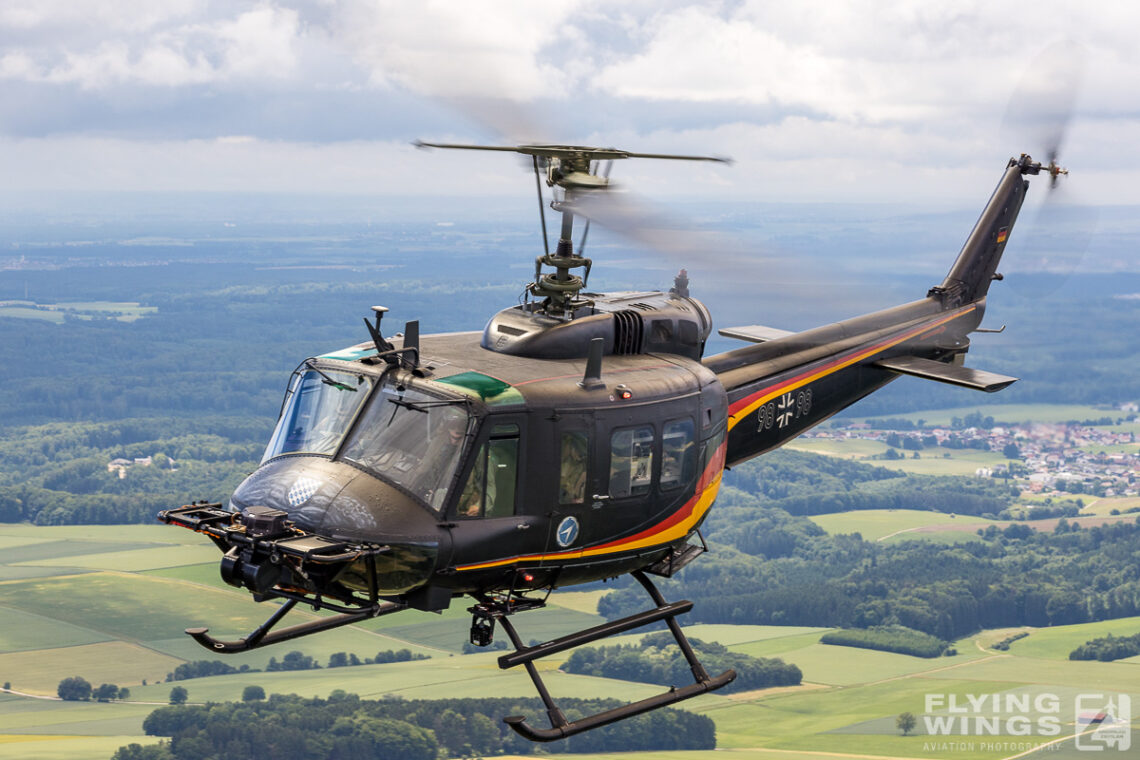
Flying Laboratory: The WTD 61 Bell UH-1D MAT
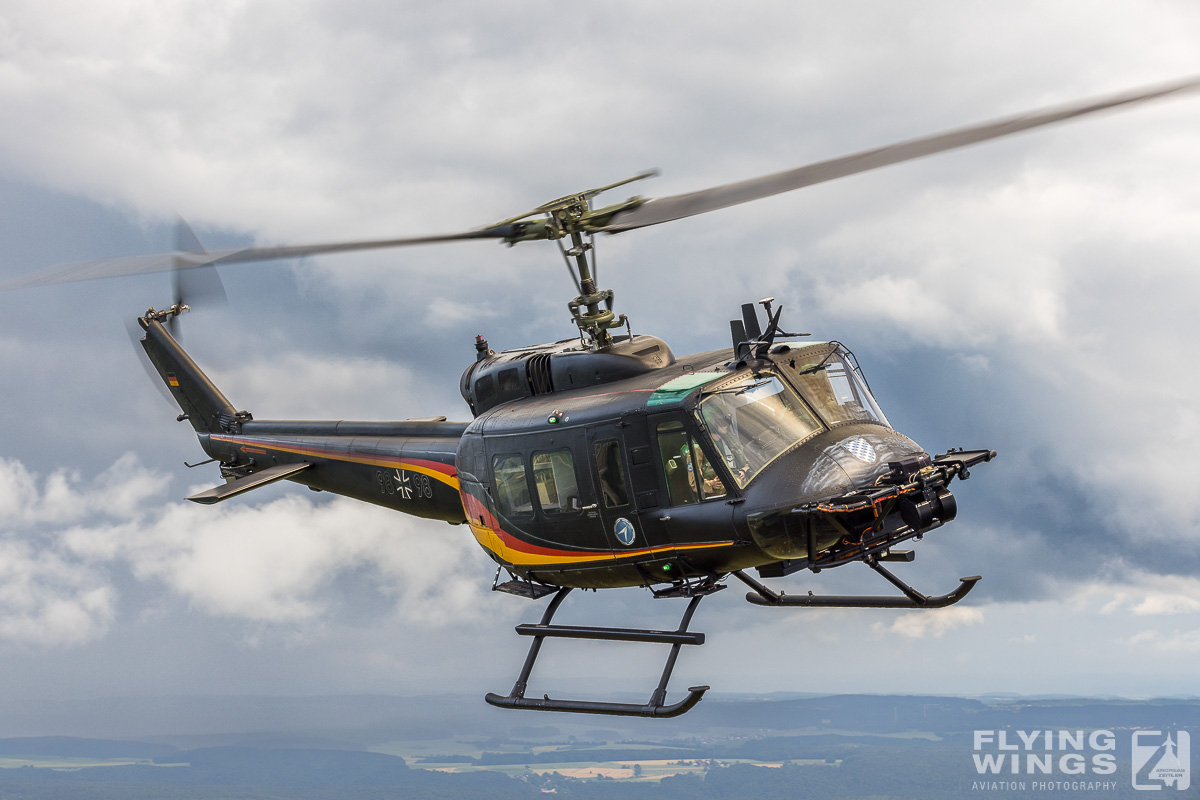
Few helicopters are as instantly recognisable by sound as the Bell UH-1D. The characteristic beating of its two-bladed rotor earned the Huey the German nickname Teppichklopfer – carpet beater. At WTD 61, the Bundeswehr Technical and Airworthiness Centre for Aircraft at Manching, however, one extensively modified UH-1D performed a role far removed from that of a conventional transport helicopter. Designated 98+98, it served as the Missionsausrüstungsträger, or MAT: a flying testbed for new avionics and sensor systems.
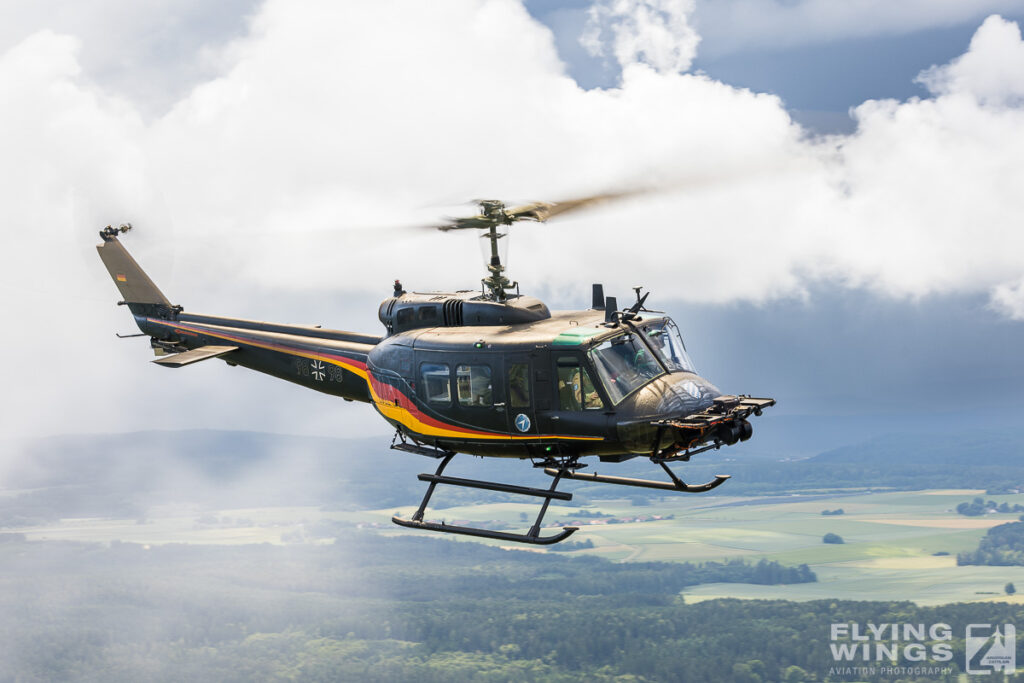

On 25 June 2021, I had the rare opportunity to photograph this unique aircraft during an air-to-air sortie. The timing was particularly significant. Only two days earlier, the German Army had conducted its final official flight with the Bell UH-1D. At WTD 61, however, the type remained active until July 2022, bringing more than five decades of Huey flight-test operations to a close.
From Transport Helicopter to Testbed
Externally, the MAT differed considerably from a standard UH-1D. Every modification served a practical purpose: the helicopter had to accommodate a wide range of test equipment without requiring a completely new aircraft conversion for each programme.
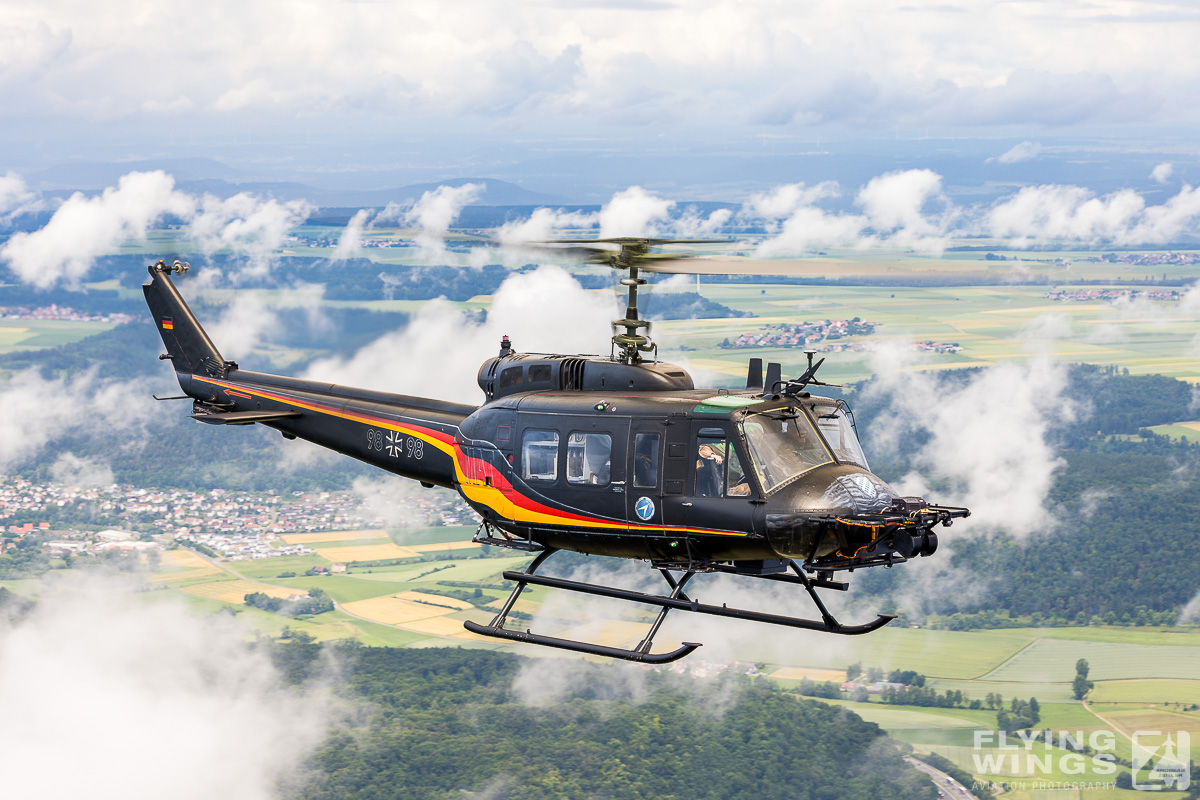
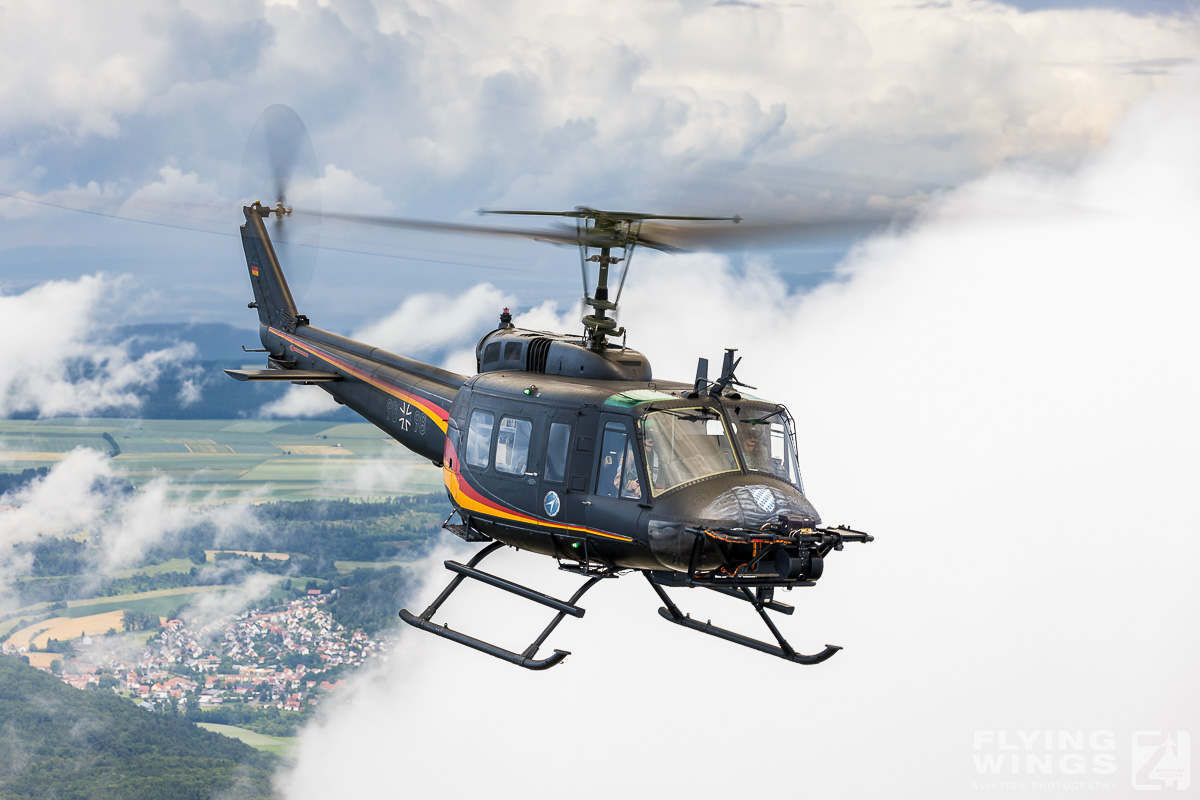
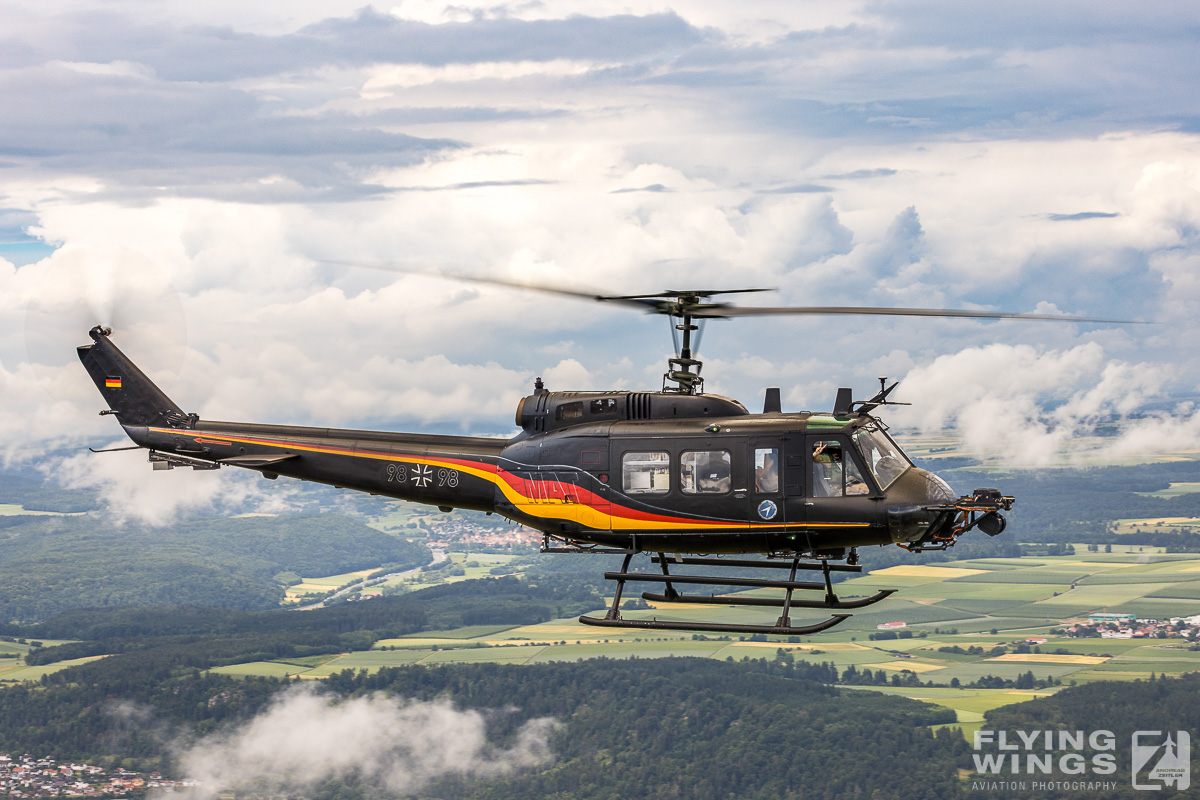
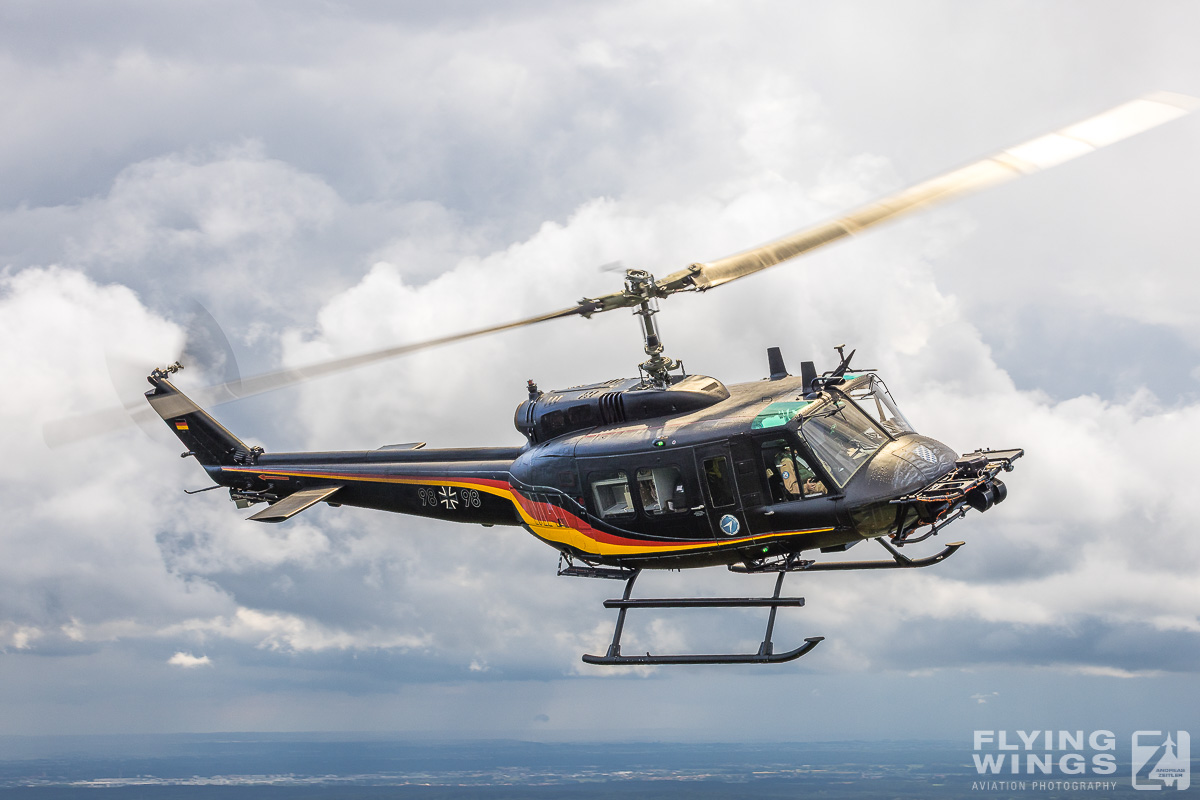
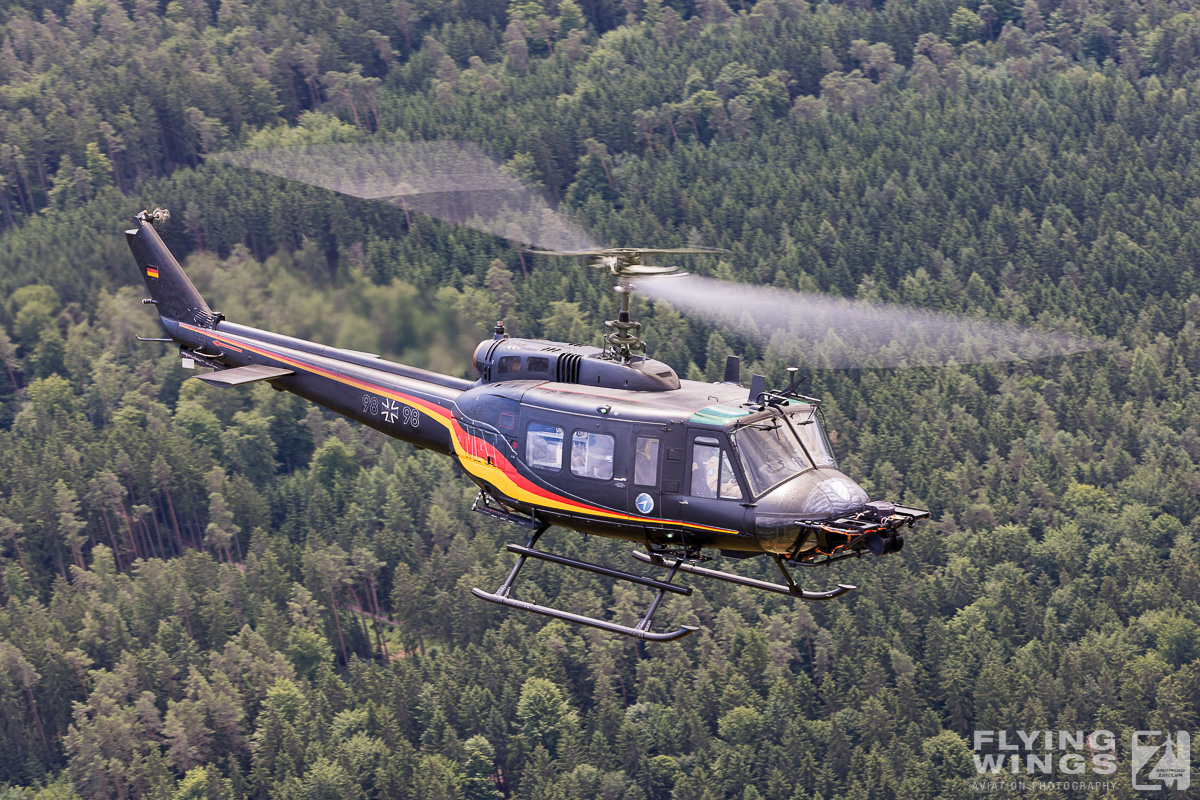
Inside the cabin, space was available for computers, recording equipment, operator stations and other elements of the mission system under evaluation. Sensors could also be installed at several points outside the fuselage. One of the MAT’s most distinctive features was its raised skid undercarriage, which created additional clearance beneath the cabin. This allowed cameras, sensors and other test equipment to be carried with an unobstructed field of view.

Additional equipment could be mounted around the nose and elsewhere on the airframe. As a result, the appearance of 98+98 changed according to its current assignment. External cables, antennas, brackets and sensor housings clearly identified it as an experimental aircraft rather than an operational transport helicopter.
Testing Avionics for a New Generation
The robust and comparatively straightforward design of the UH-1D made it particularly suitable for this task. New components could be integrated and tested under realistic flight conditions before the intended operational aircraft was fully available or cleared for extensive trials. This reduced technical risks and avoided consuming valuable flying hours on newer helicopters.
The equipment evaluated aboard the MAT ranged from avionics and electro-optical devices to a variety of sensor systems. Its work supported developments associated with more modern helicopters, including the NH90 and Tiger. The veteran Huey thus became an important link between different generations of German military rotorcraft: a design originating in the 1950s helped prepare technology for aircraft developed several decades later.
The MAT was operated by WTD 61 and supported on the industrial side by ESG Elektroniksystem- und Logistik-GmbH. ESG assisted with the integration of test equipment and the adaptation of the helicopter for changing research and evaluation programmes. Even during the final years of its career, 98+98 therefore remained a useful development platform rather than simply a historic aircraft approaching retirement.
Meeting the MAT over Bavaria
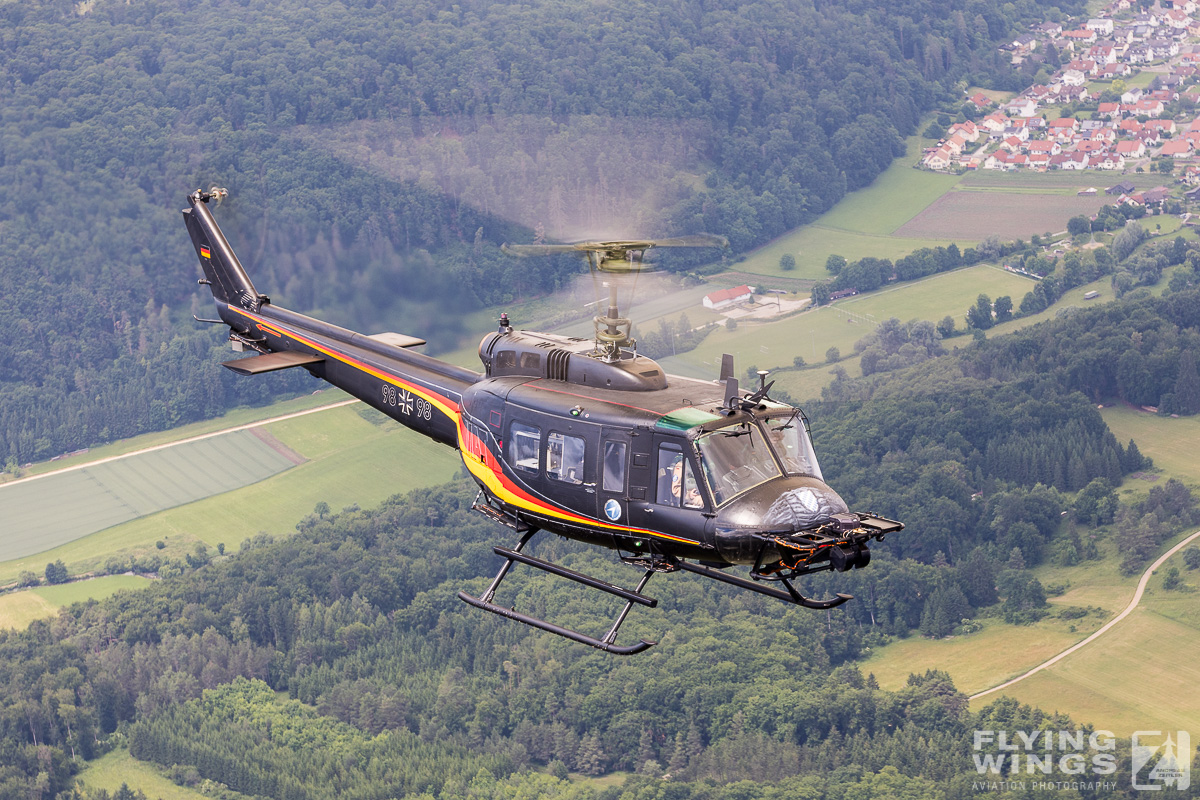
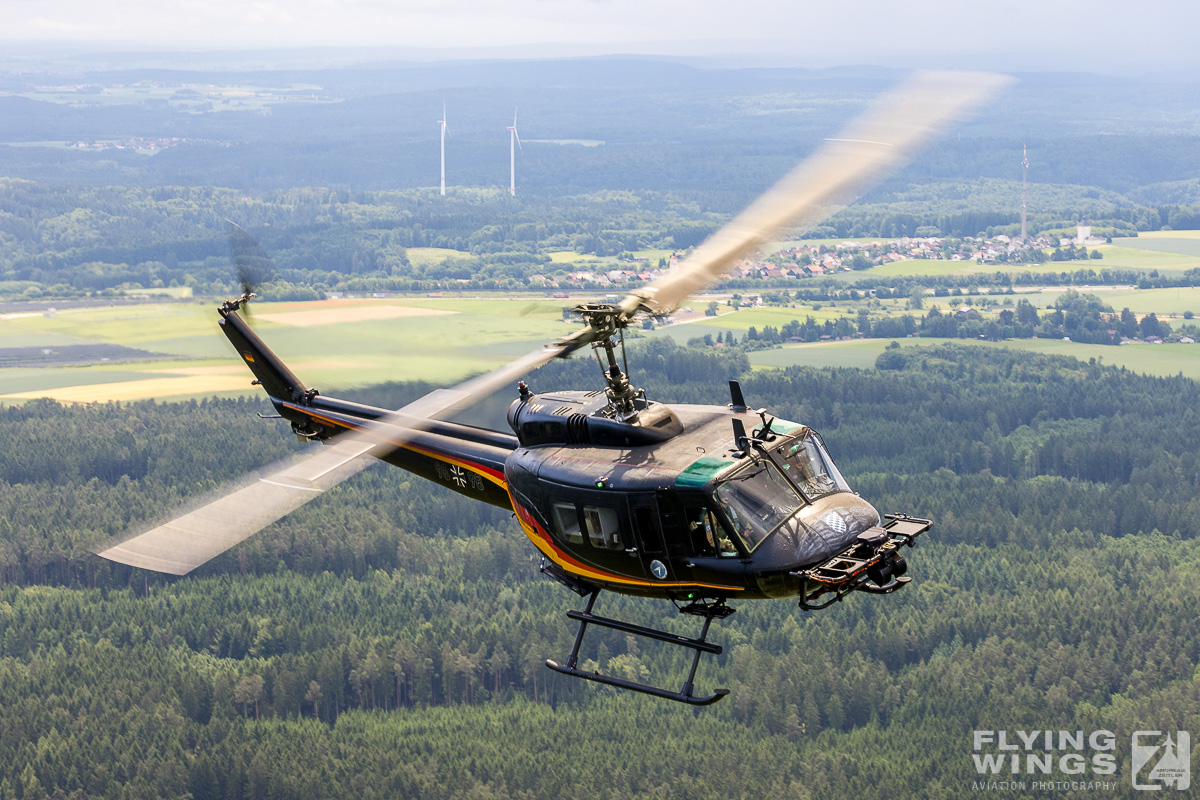
The photo flight on 25 June 2021 took place as the MAT returned from a test mission. We met the helicopter near the Altmühl Valley, where fields, forests and the open landscape of southern Bavaria provided a fitting background for this unusual aircraft.
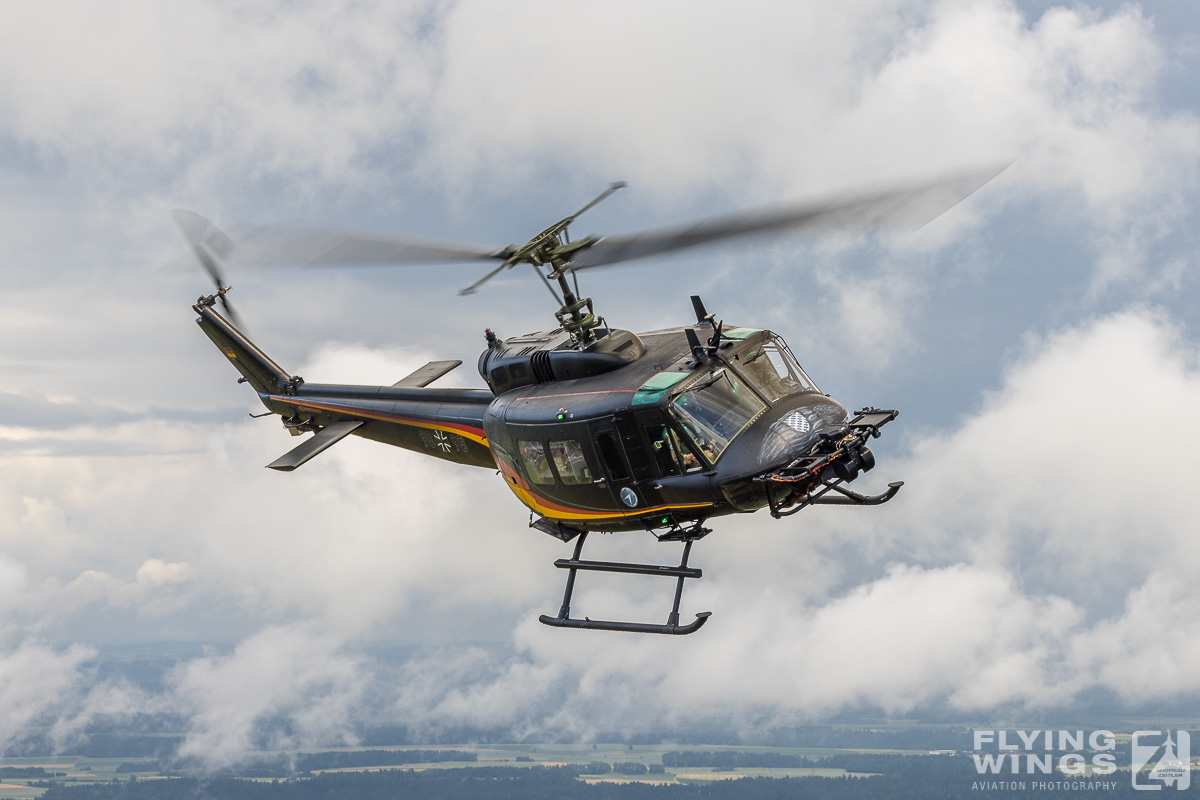
From the air, the distinctive proportions of 98+98 were clearly visible. The raised skids made the fuselage appear unusually elevated, while the external installations emphasised its experimental role. Despite these modifications, the familiar silhouette of the Huey remained unmistakable. It was precisely this contrast between the classic airframe and its conspicuous test equipment that made the MAT such a fascinating photographic subject.
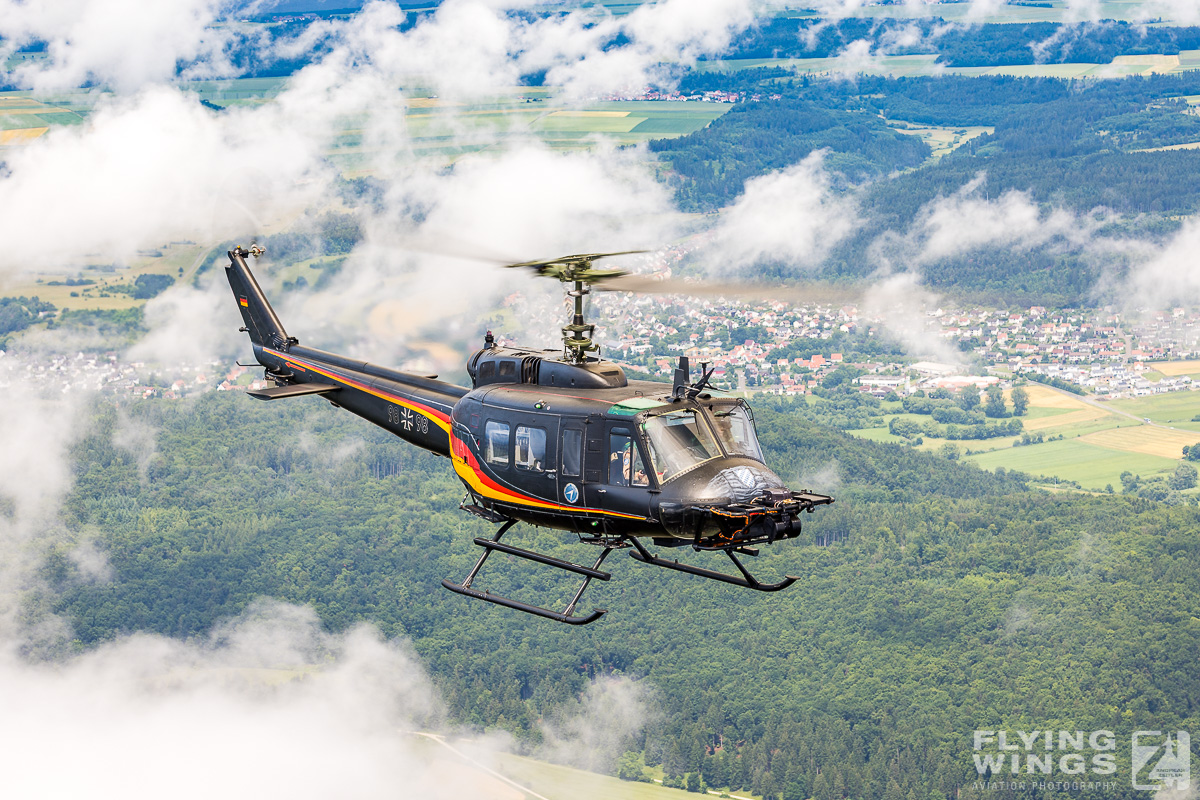
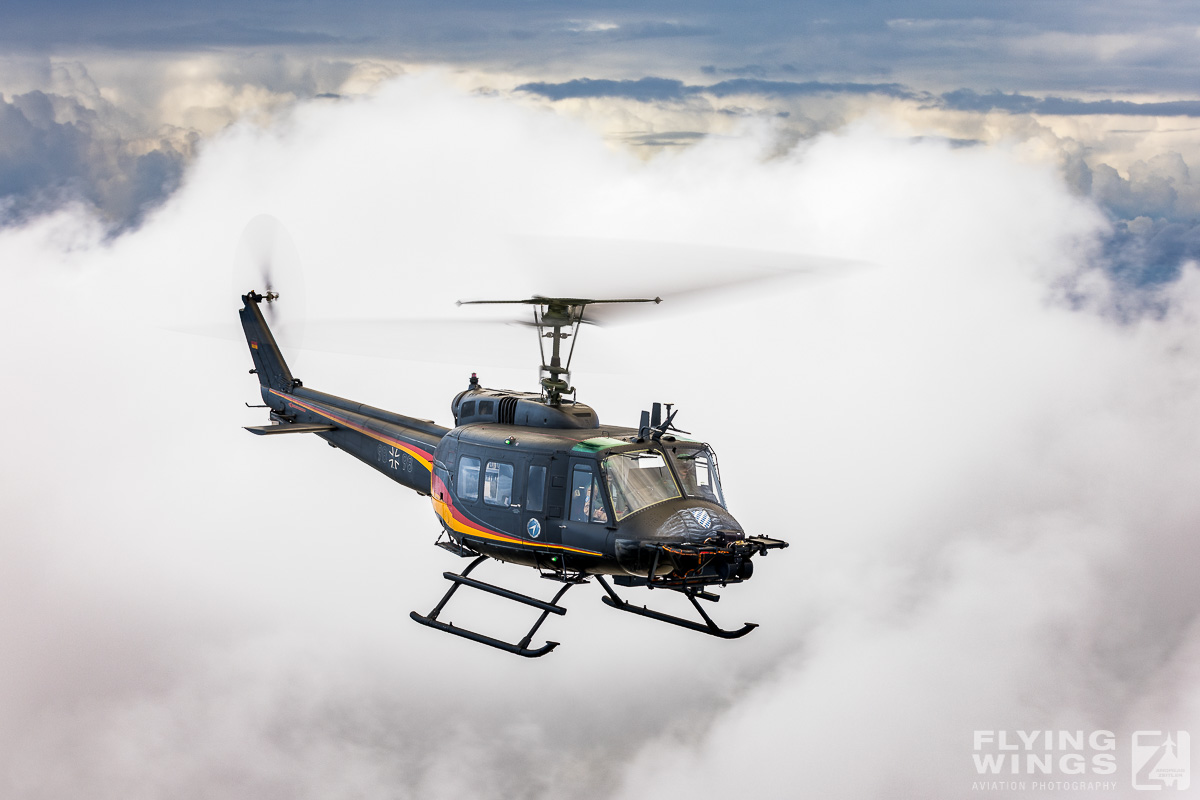
The main challenge was not positioning the aircraft, but selecting the correct shutter speed. With a two-bladed rotor, a fast exposure freezes the blades and makes a helicopter appear almost stationary. My aim was therefore to create a nearly complete rotor circle, commonly known as a full disc.


Achieving this required shutter speeds as slow as 1/25 second. Photographing from another moving aircraft meant compensating for vibration and the relative movement of both helicopters. Even the slightest camera shake could ruin an otherwise perfectly composed image, while the shutter speed also had to correspond with the rotor speed to produce the desired effect.
Not every attempt succeeded. In several photographs, however, the rotor formed an almost complete circle above the helicopter. These images captured the Huey as it should be seen: not as a static technical object, but as a working aircraft with the movement of its unmistakable two-bladed rotor still clearly visible.
Images from the Final Chapter
At the time of the photo flight, the German Bell UH-1D was already approaching the end of its long military career. While regular Army operations had effectively ceased, the MAT continued to fulfil its specialised role at WTD 61. It remained an active test platform whose adaptable design was still being used to evaluate modern technology.
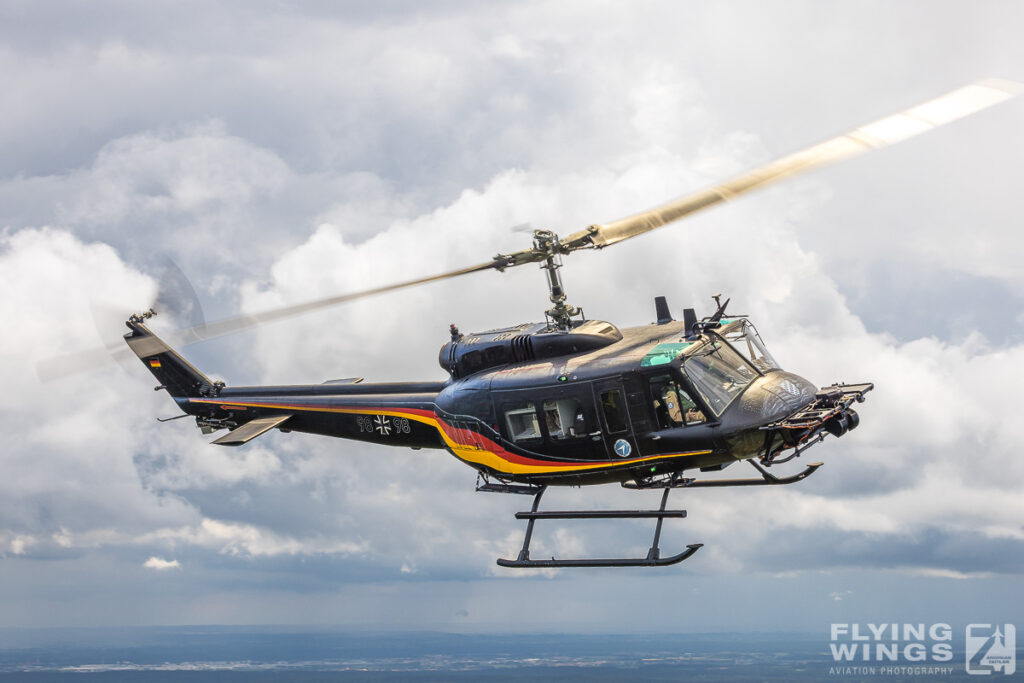
The photographs taken during the sortie document one of the final chapters in the story of this exceptional aircraft. They were subsequently used extensively for press and public-information work surrounding the MAT’s last major avionics trials. As a result, the images became more than a personal record of a rare air-to-air opportunity: they also formed part of the public documentation of the helicopter’s final test programmes.
When the last Hueys of WTD 61 were retired in July 2022, the type’s active service with the Bundeswehr finally came to an end. The MAT left behind a distinctive legacy as a classic helicopter that helped prepare the technology of a new generation.
WTD 61 Bell UH-1D MAT 98+98 Photo Gallery


You May Also Like

Serbia’s Flag 2024: Air Power Showcase with MiG-29s and Helicopter Strength
Blue Flag 2019 at Ovda
