
Ethiopia’s Airpower Exposed – Black Lion Airshow 2026
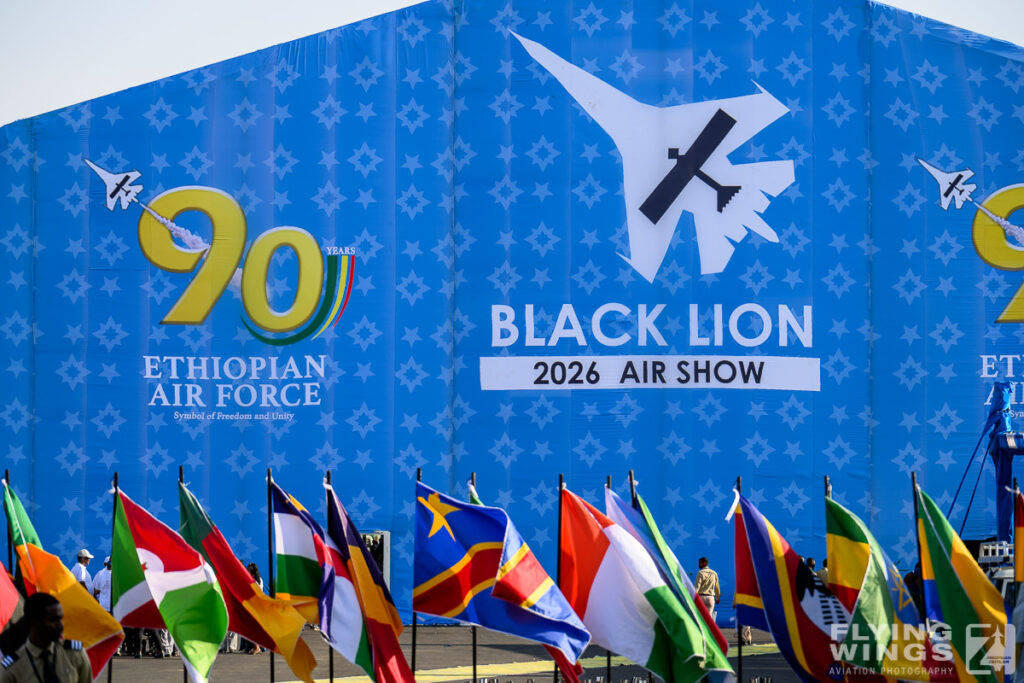
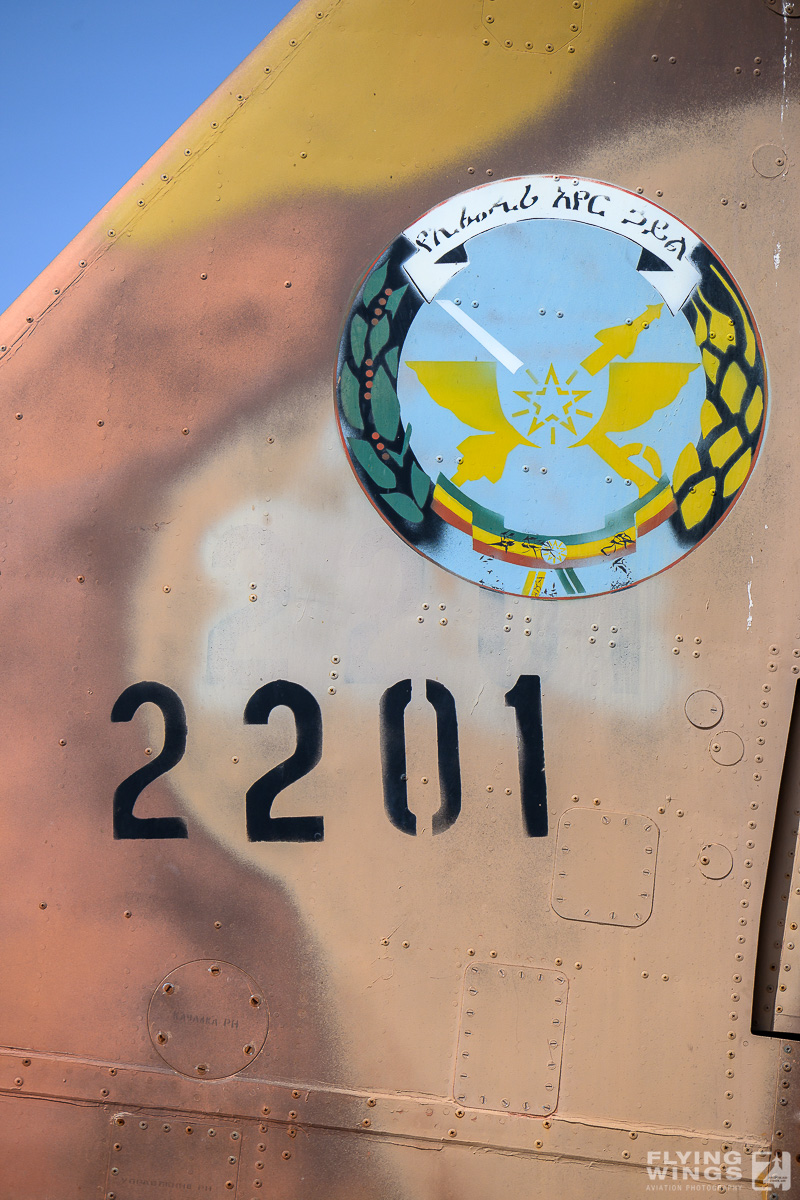
From January 23 to 27, 2026, Ethiopia opened one of its most strategically important military institutions to the public. Under a clear blue African sky, Debre Zeit (Harar Meda Air Base), located roughly one hour south of Addis Ababa, hosted the Black Lion Airshow 2026. The event marked the 90th anniversary of the Ethiopian Air Force (Ye Ityopya Ayer Hayl, EtAF) and provided an unprecedented public look at a service that has traditionally operated with limited visibility.

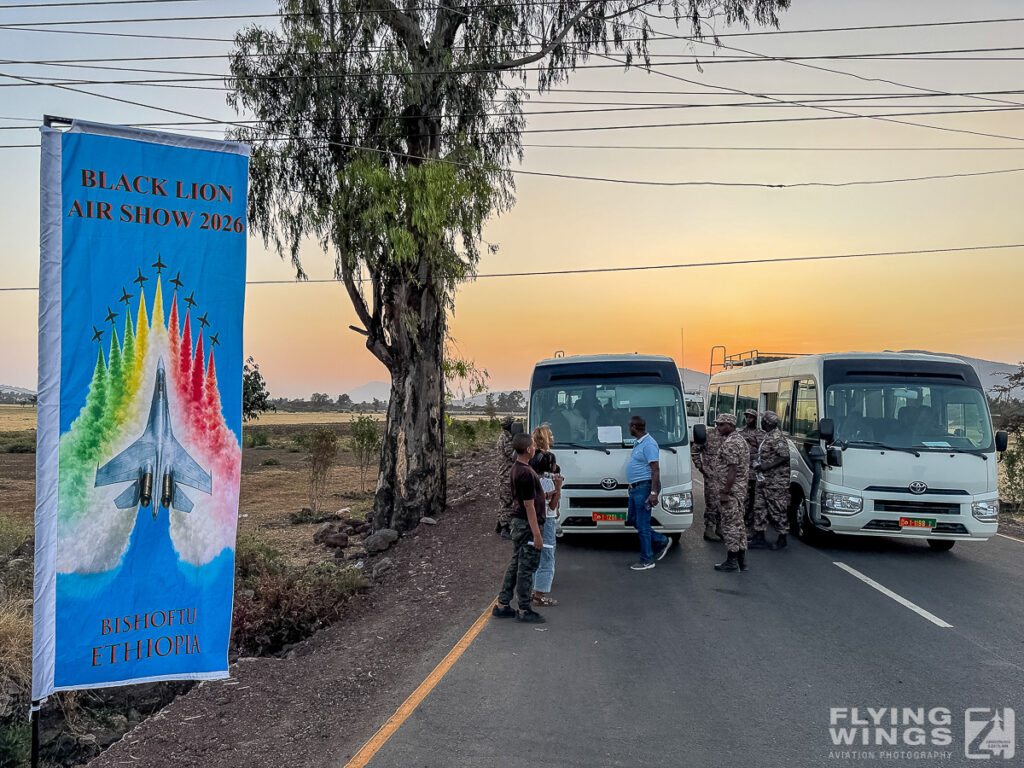
Tickets were sold for all days, making it a fully public event. Yet despite the historic nature of the show, the number of private visitors remained relatively low. The distance from the capital, a comparatively high entrance fee by local standards, and international travel advisories for large parts of the country likely played a role. In addition, reports of Marburg virus cases in Ethiopia’s southern regions shortly before and during the show may have discouraged some international aviation enthusiasts from attending. Further challenges can be Ethiopia’s customs officers at the airport, who strictly ban the import of any binoculars or professional video cameras. However, photo equipment and larger telephoto lenses are not on their list of prohibited items.
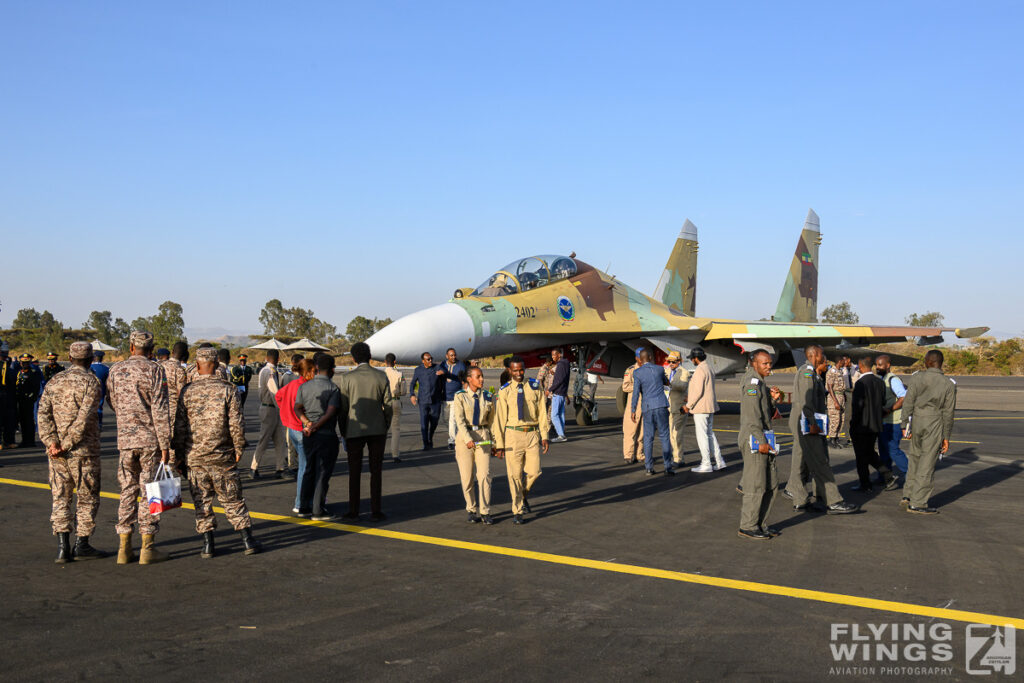
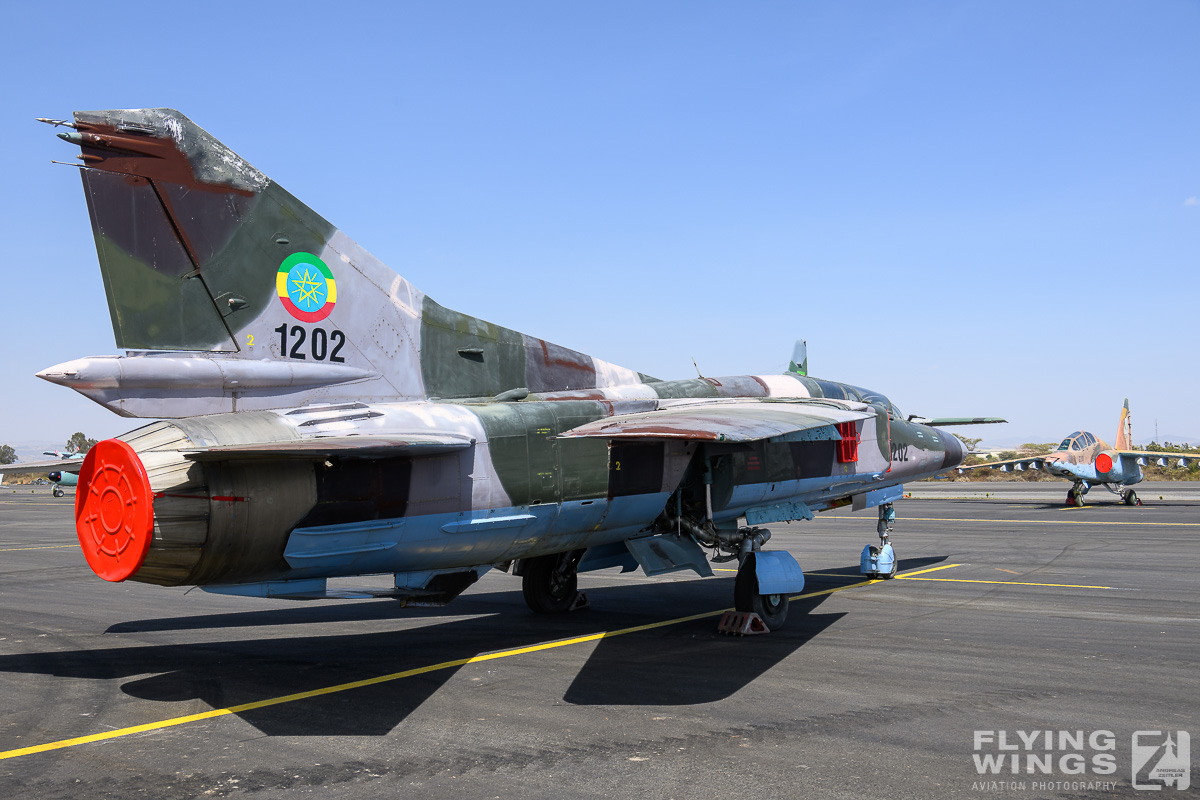
I took note of the event only a few days prior and decided to give it a go for the first two days of the airshow. I knew it could be a hit or miss not to attend during the whole length of the event, but upon return I knew I was rewarded with unusually close access to aircraft and personnel. There were no ropes on the first day, and visitors could approach fighters, helicopters, and drones at a distance rarely experienced at military events elsewhere. The atmosphere was surprisingly relaxed—at least away from the VIP zones and the static display and flying and flying on the first two days were more extensive than for the rest of the show.
The Ethiopian Air Force at 90 Years
The 90th anniversary was more than ceremonial. The Ethiopian Air Force has evolved under conditions of strategic necessity rather than alliance dependency. Throughout imperial, socialist, and contemporary political systems, it has retained a strong emphasis on territorial defense, centralized command, and operational autonomy. In today’s volatile Horn of Africa, airpower is not a prestige symbol—it is a core instrument of sovereignty.
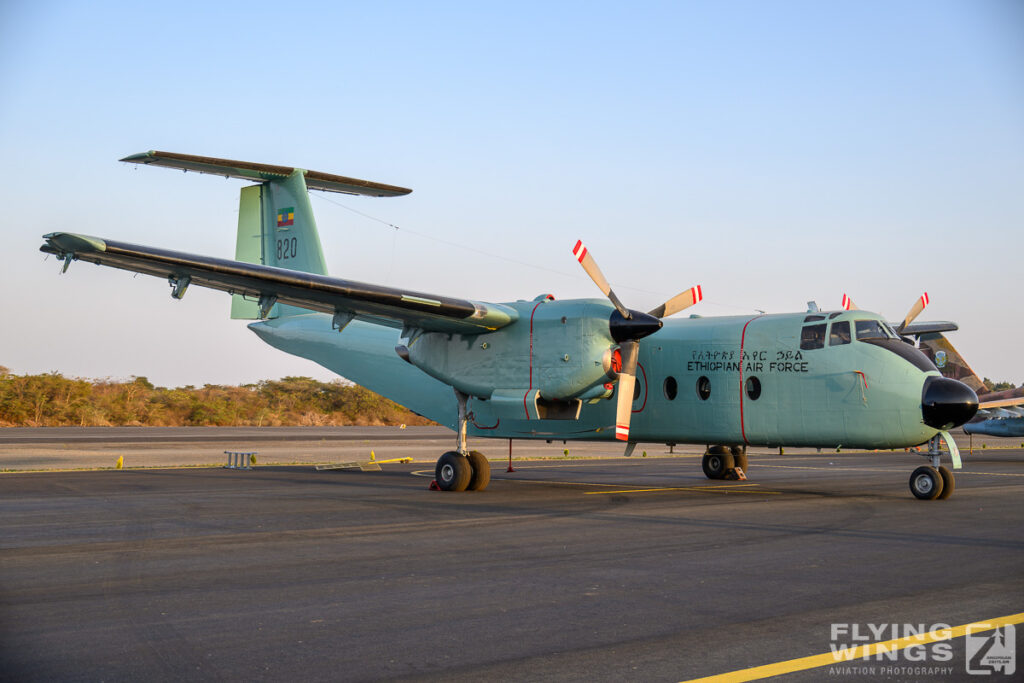
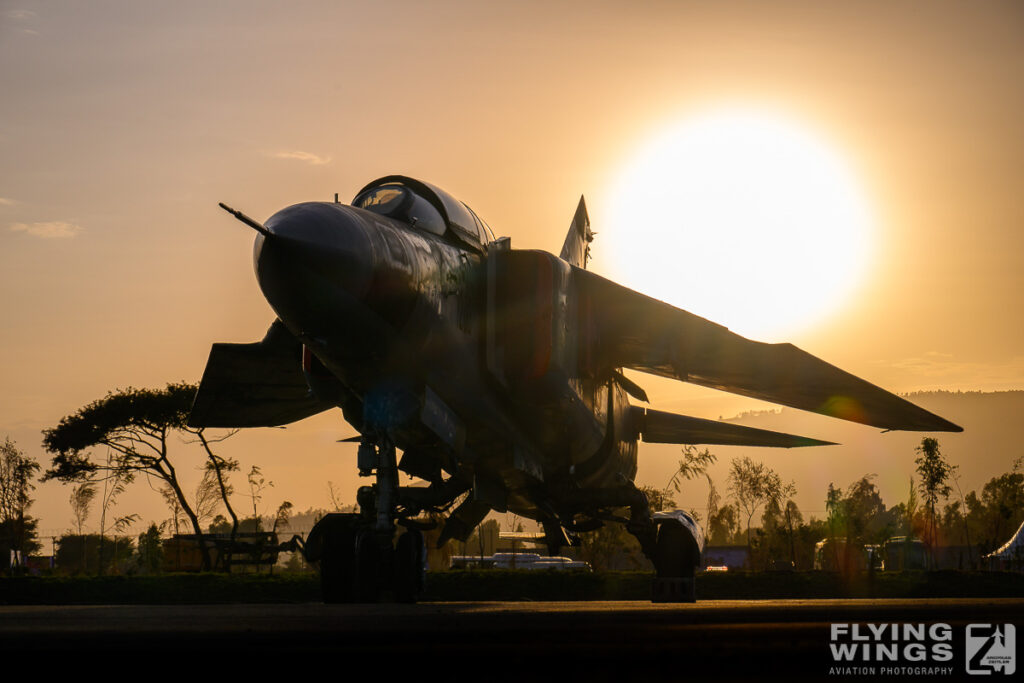
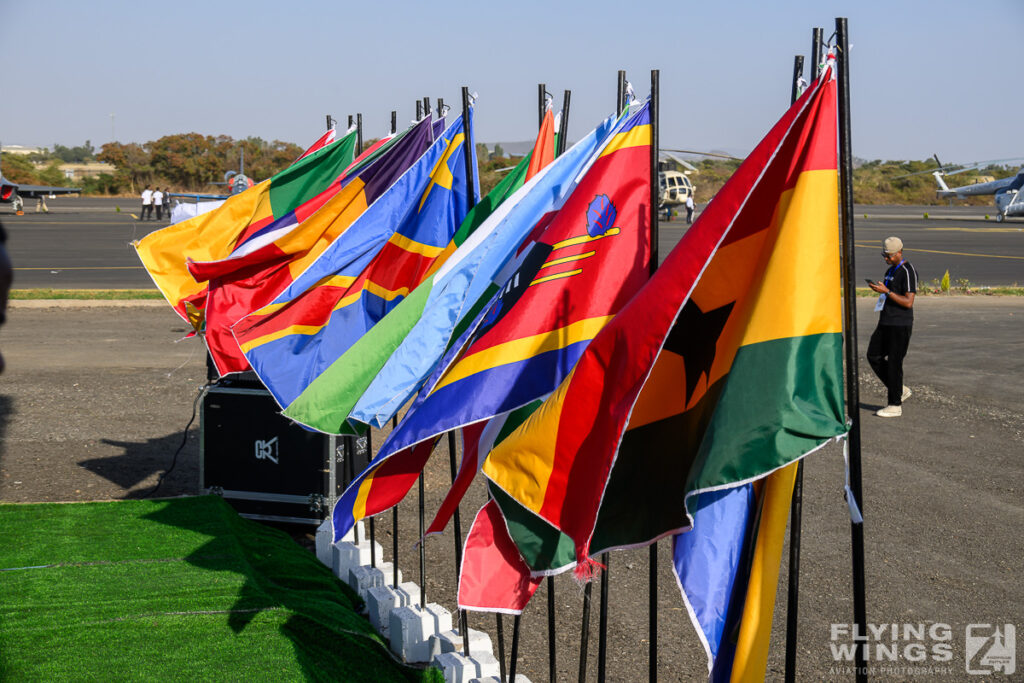
The official opening, attended by Prime Minister Abiy Ahmed and First Lady Zinash Tayachew, underscored this political dimension. Their presence, combined with extremely tight security on the first and second days, made clear that the event was also a strategic statement. The EtAF presented itself as a disciplined, modernizing force at the center of Ethiopia’s national defense architecture.
Ethiopian Air Force Aircraft and Helicopters on Display
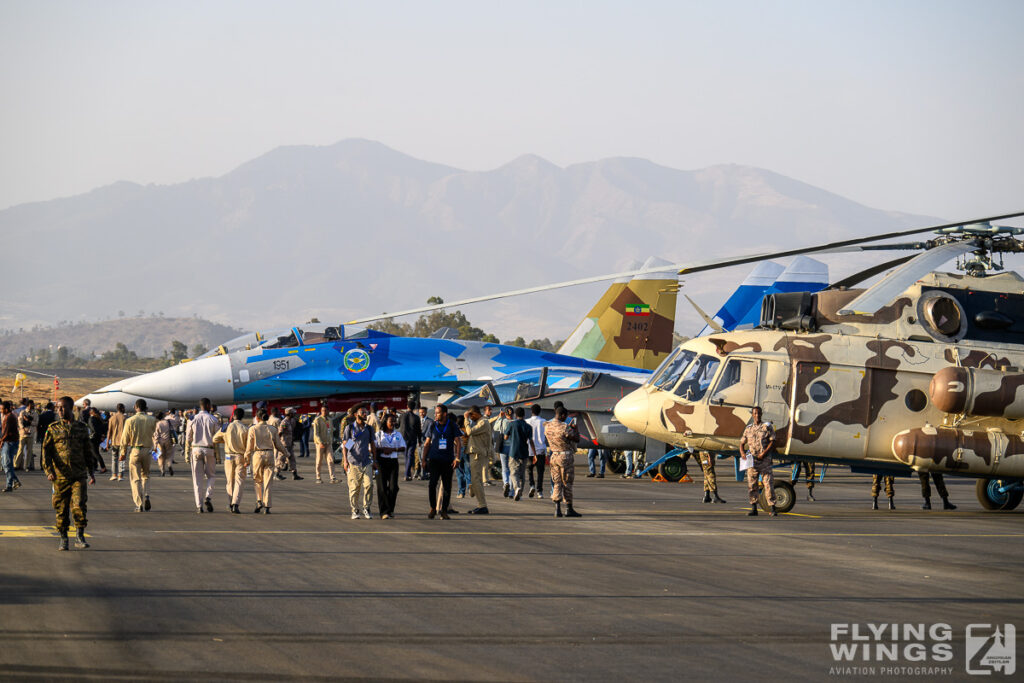
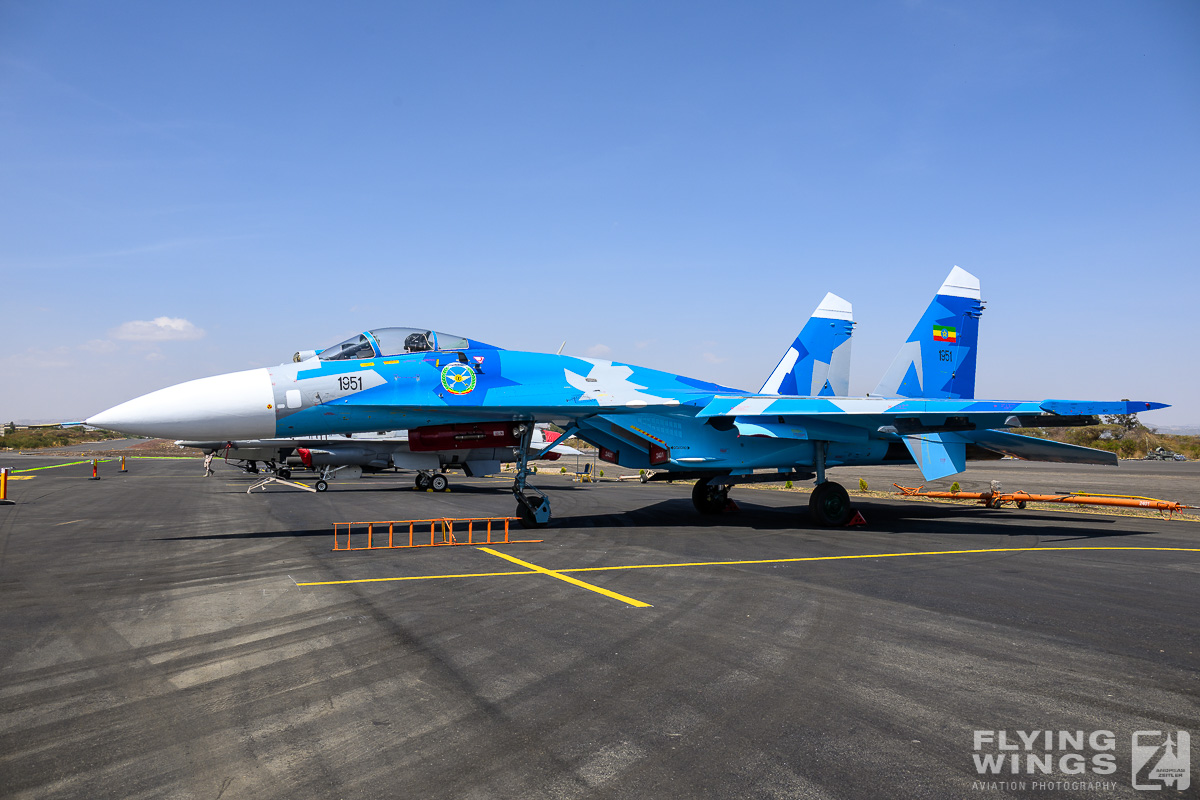
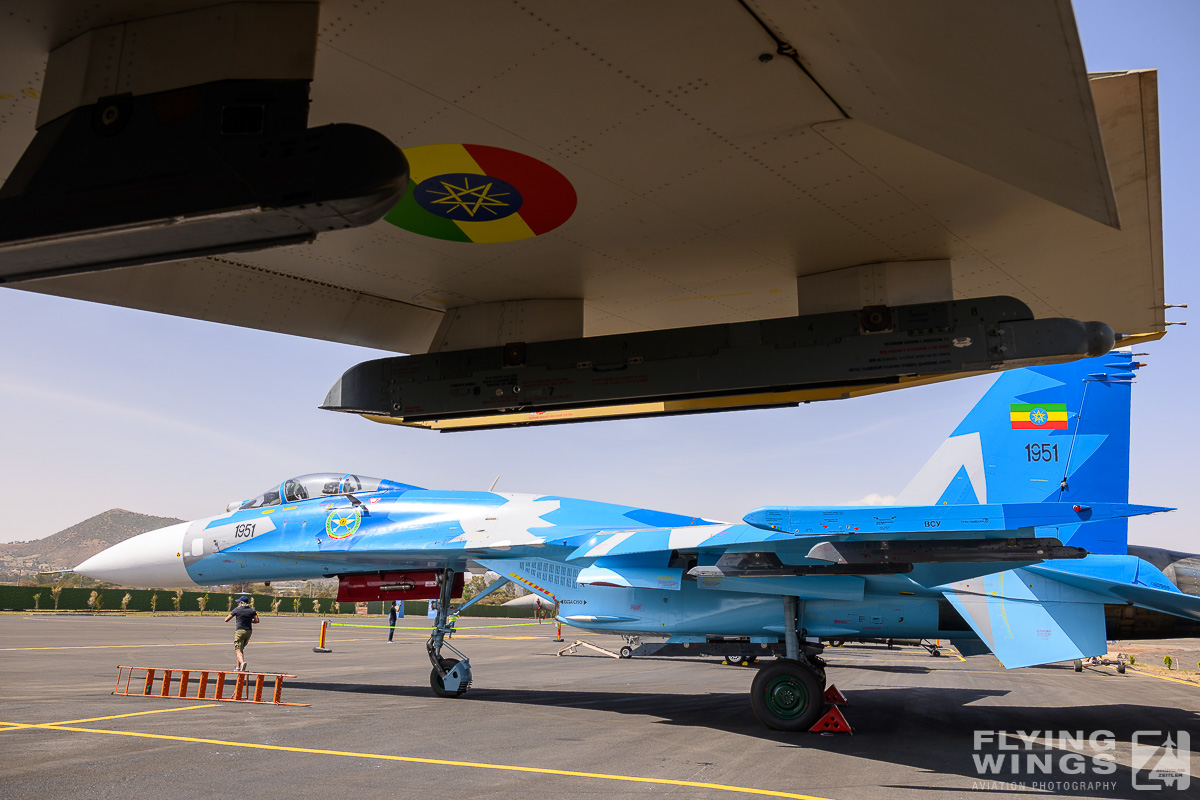
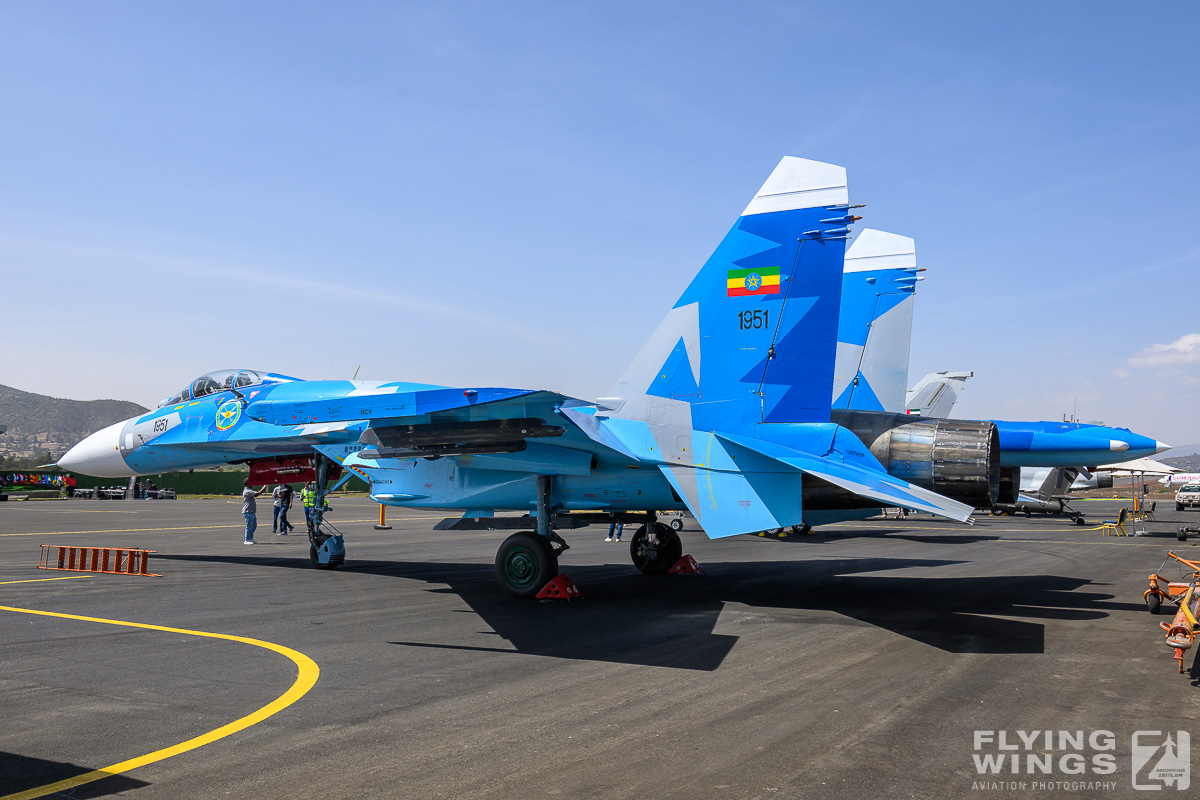
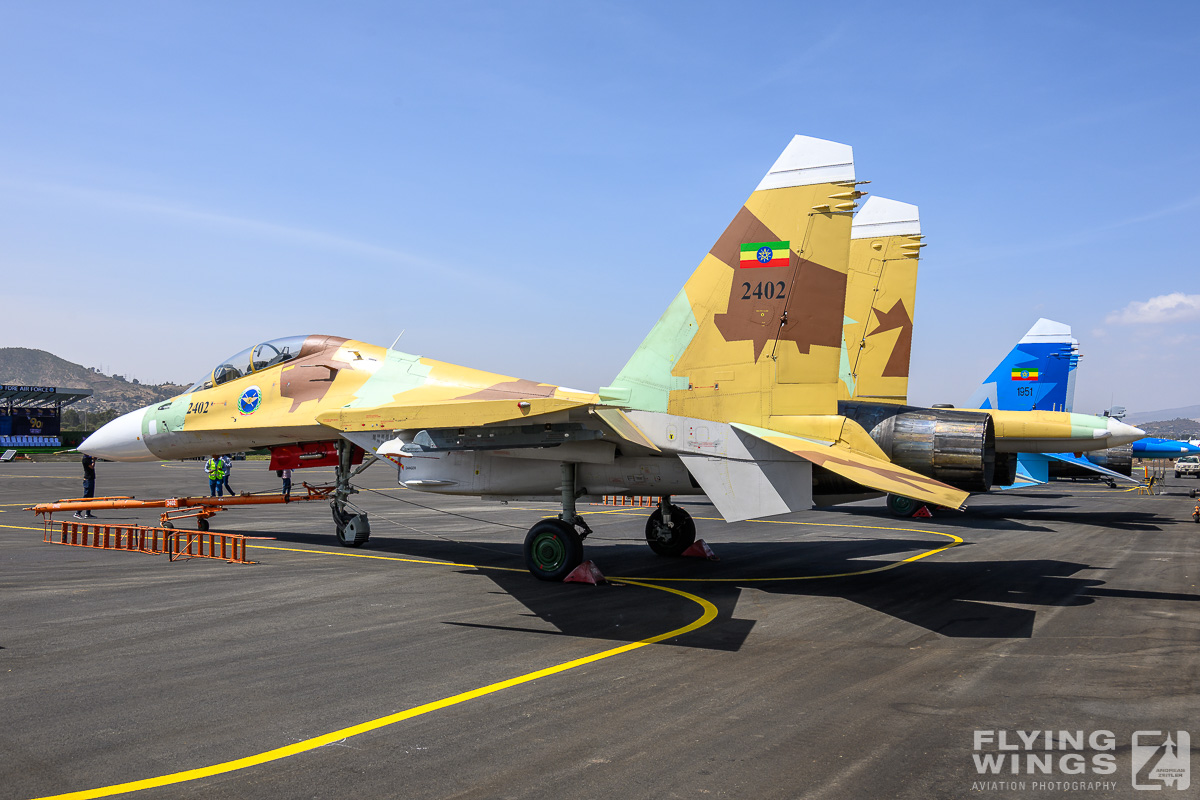
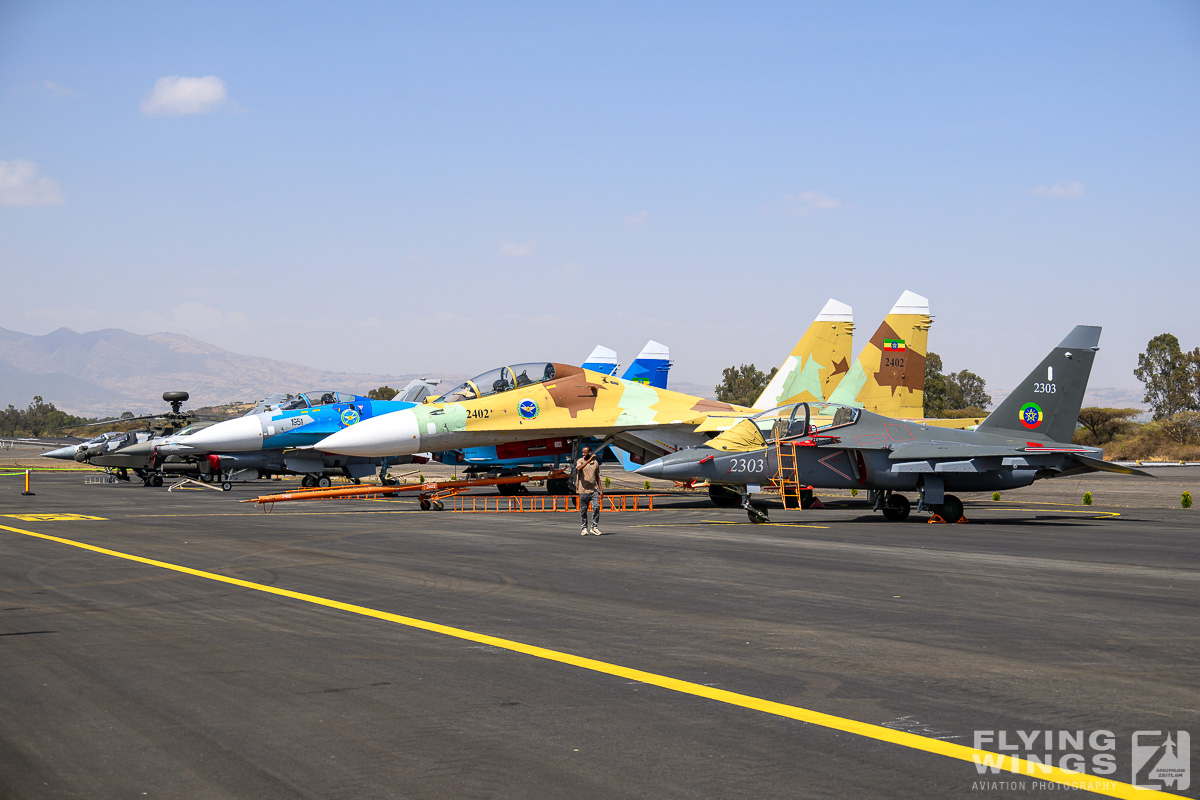
The static display on Friday, January 23, formed the operational heart of the airshow. Virtually all modern EtAF assets were presented to senior leadership. In contrast, on subsequent days, sensitive platforms such as the Su-30K, Su-27SK, and Mi-35P were withdrawn from unrestricted access.
Su-27 and Su-30K Fighters: Backbone of Ethiopian Airpower
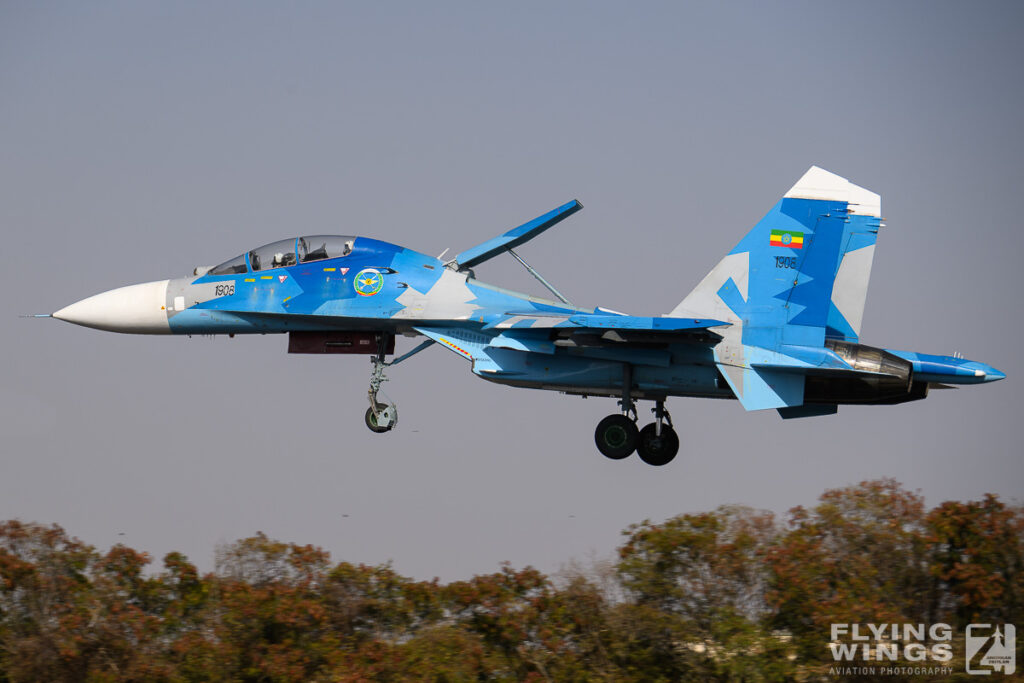
The Sukhoi Su-27 family remains the backbone of Ethiopian air defense. Multiple Su-27UBK and Su-27SK aircraft were visible, some with combat markings referencing the 1998–2000 war with Eritrea. These aircraft represent proven air superiority capability rather than symbolic hardware.
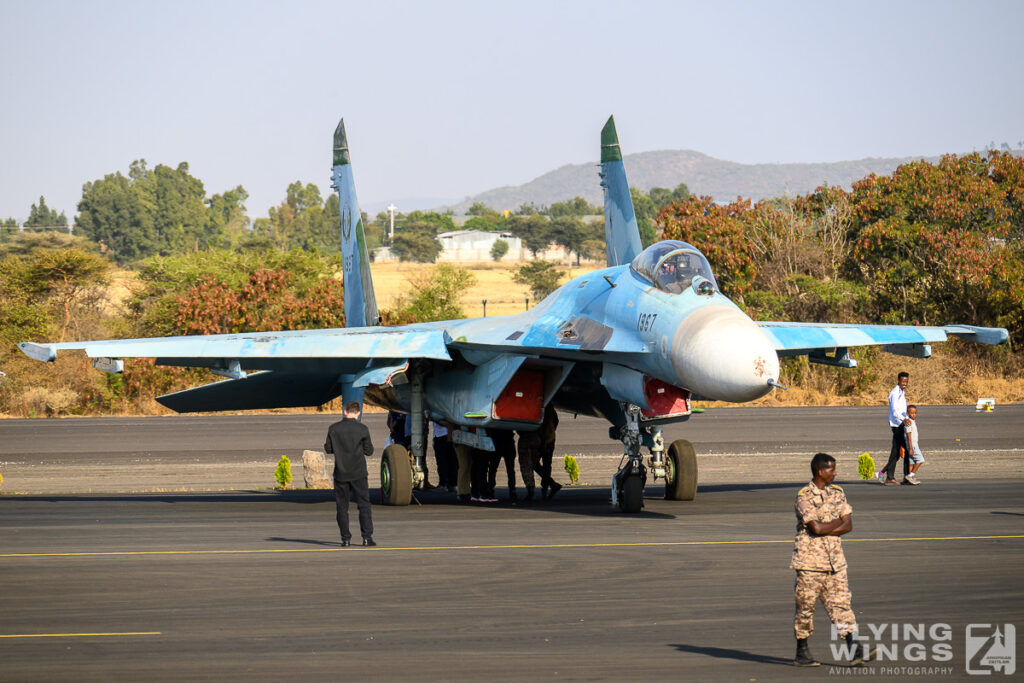
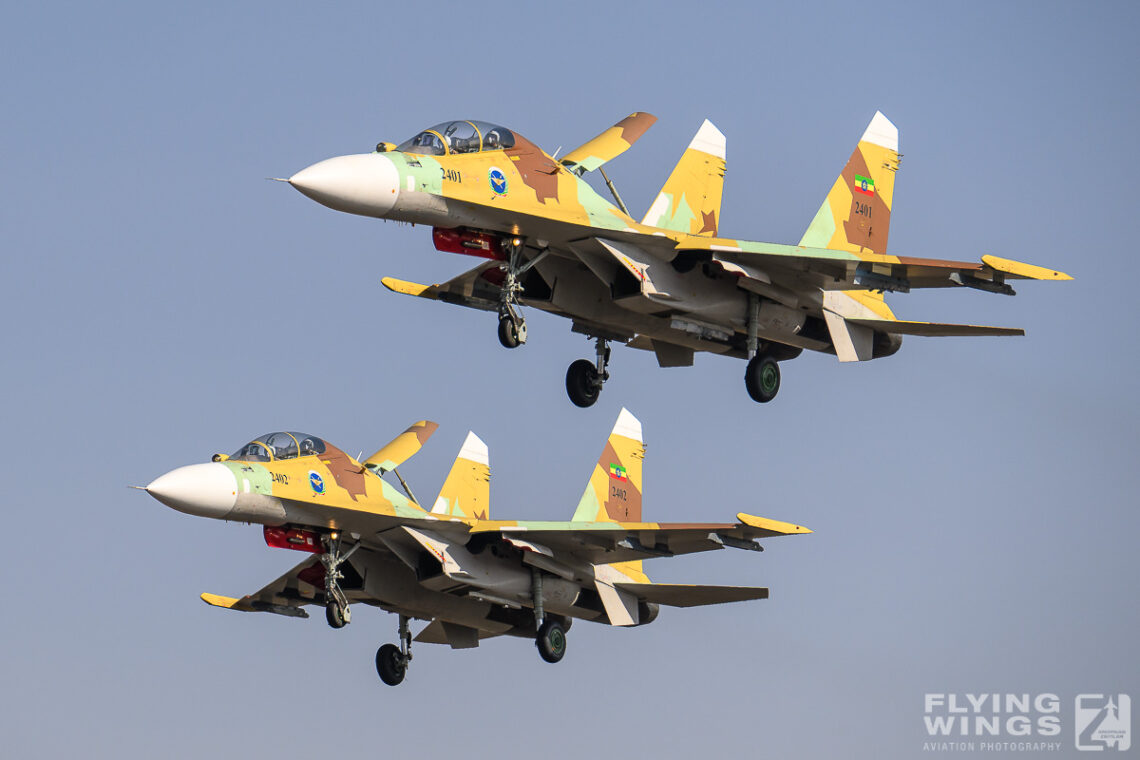
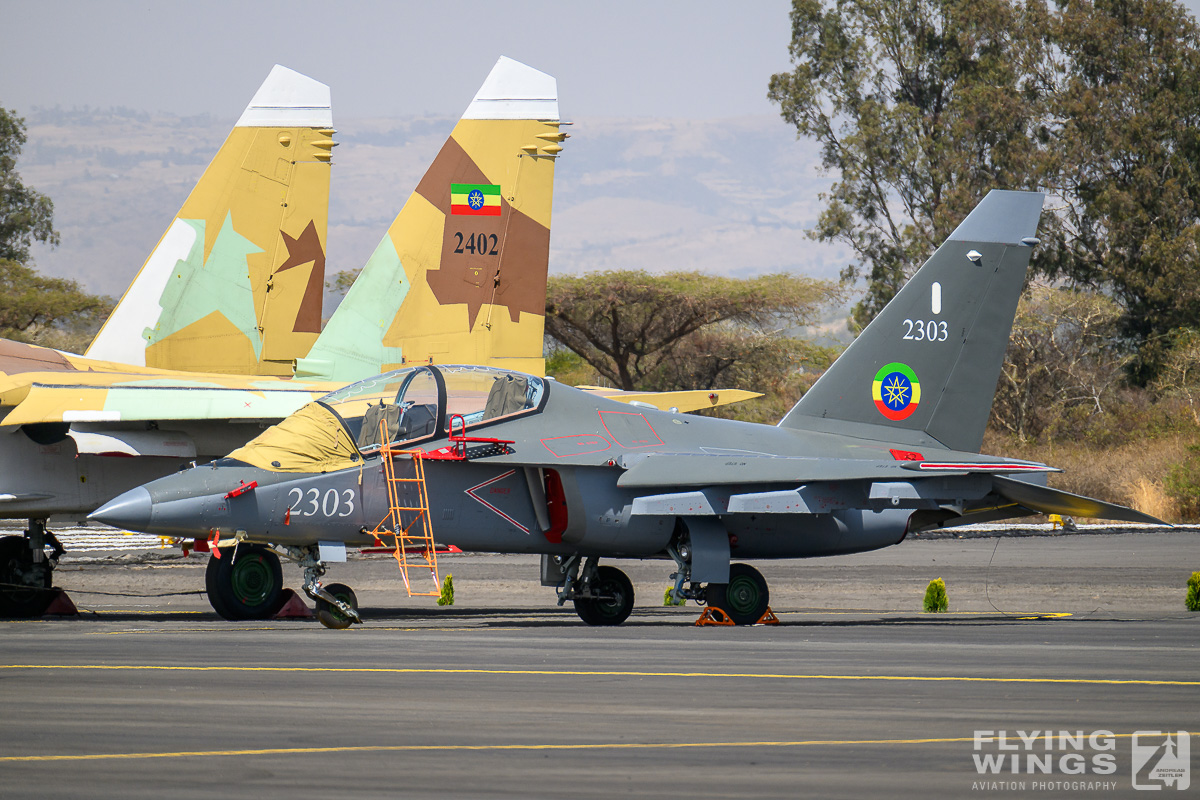
Particular attention centered on the two Su-30K multirole fighters delivered in January 2024. Originally built for the Indian Air Force and later stored in Belarus, these aircraft—serials 2401 and 2402—feature a refueling probe, side-mounted IRST, and reinforced landing gear. Their presence signals a qualitative step toward expanded multirole operations, combining air-to-air and air-to-ground precision capability.
Training and Modernization: Yak-130, L-39 and G 120TP
The Yak-130 advanced jet trainer was publicly revealed as part of the anniversary celebrations. Four aircraft participated in the flying display, with indications that up to six may have been delivered. The Yak-130 strengthens the advanced training pipeline while offering light combat flexibility.
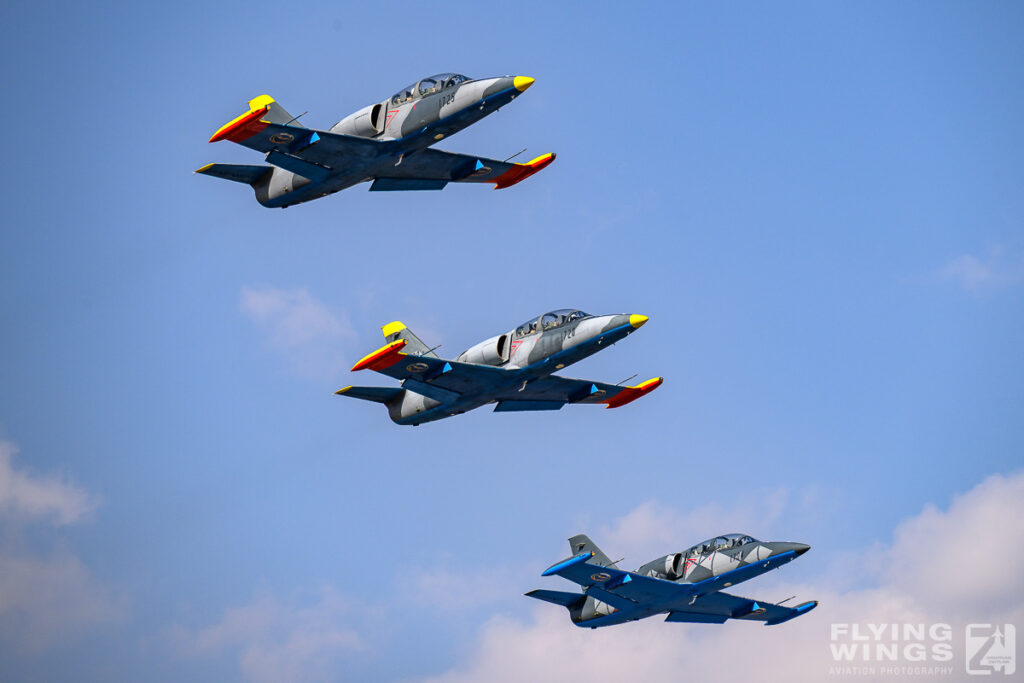
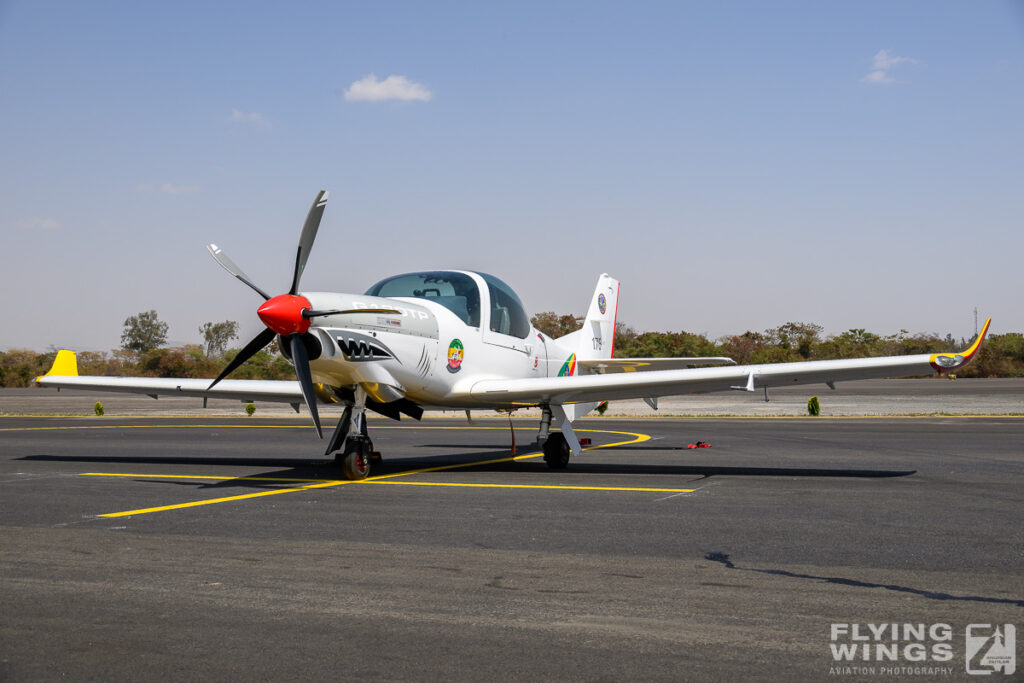
The L-39C Albatros remains active with 17 Squadron at Debre Zeit. Several aircraft wore a fresh camouflage scheme reminiscent of the L-39NG demonstrator, and some cockpits featured digital display upgrades. At the basic level, Grob G 120TP turboprops form the foundation of pilot training.
Helicopters and UAV Capabilities
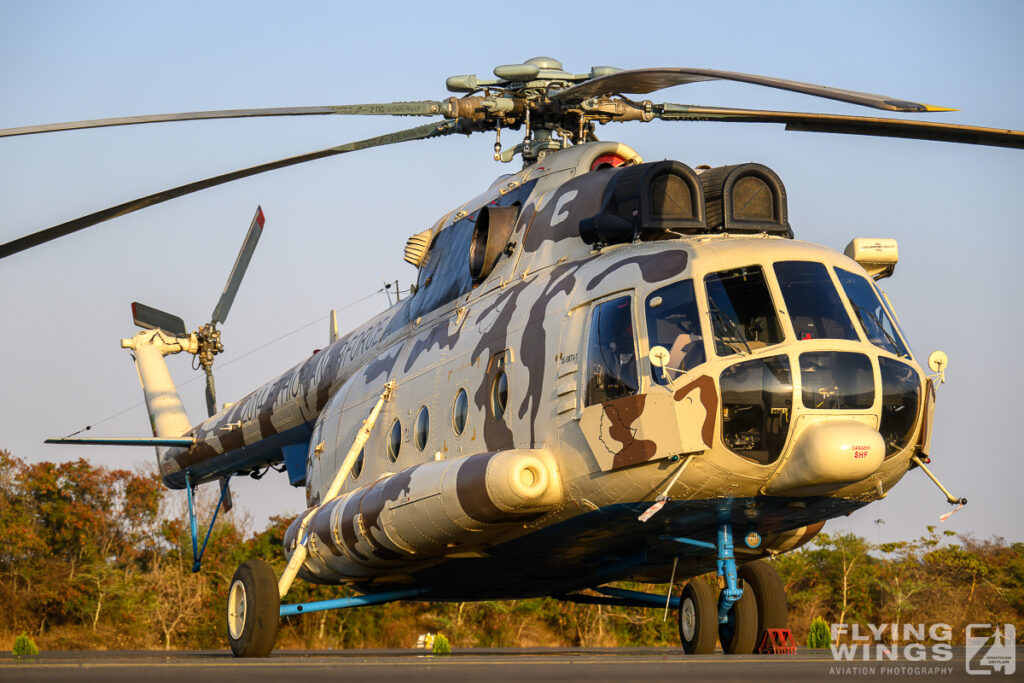
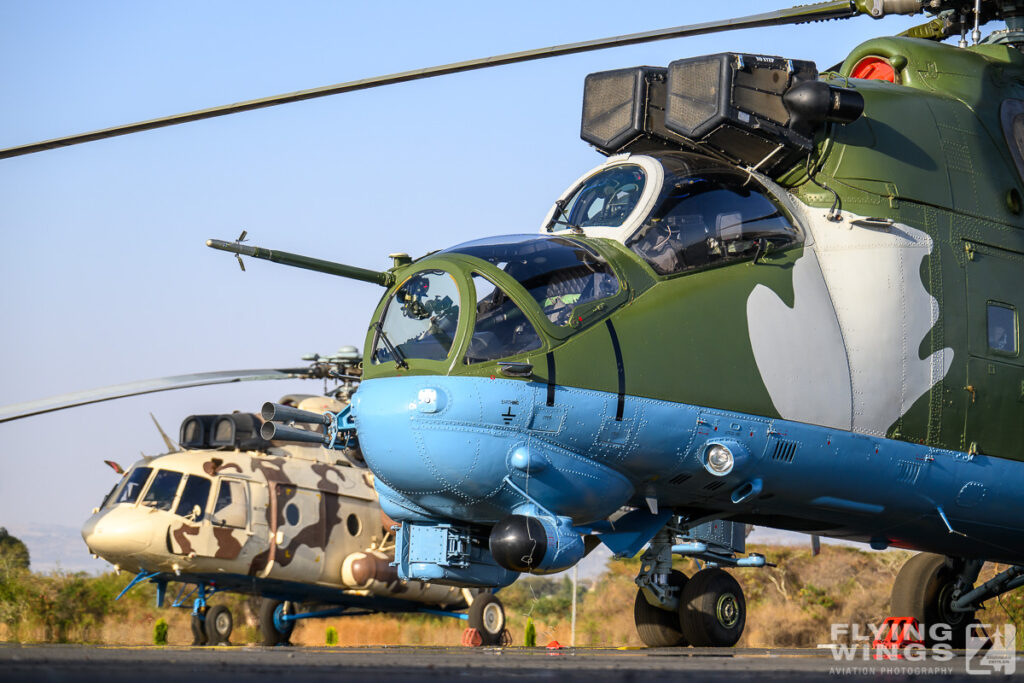
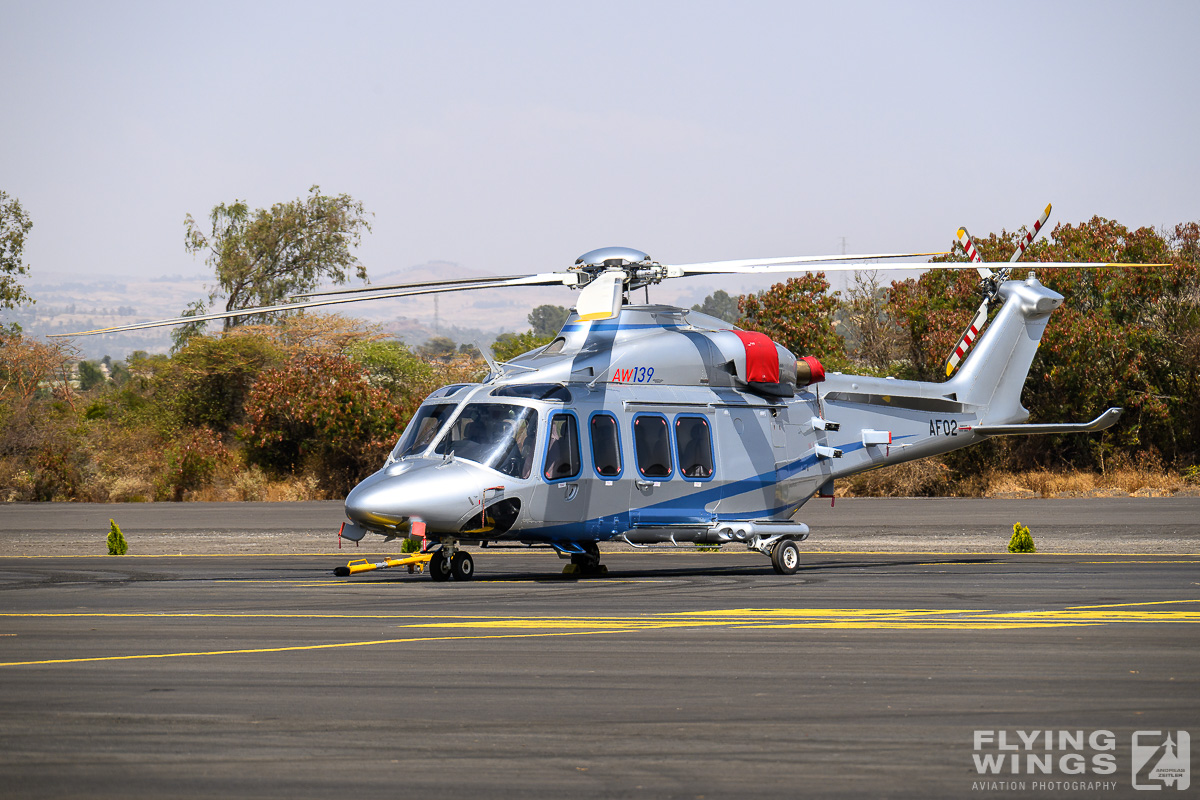
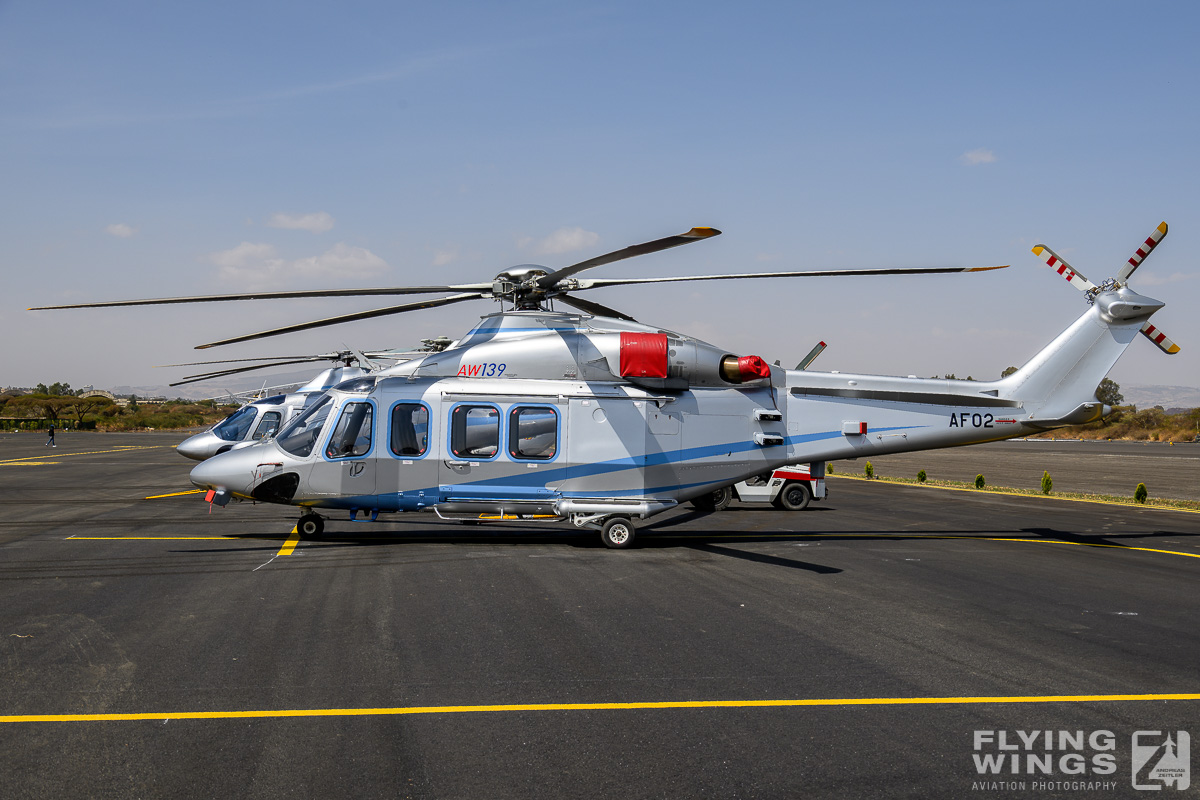
Rotary-wing aviation was strongly represented. Mi-35 attack helicopters, Mi-8MTV-1 assault helicopters, and Mi-17 variants illustrated the EtAF’s focus on mobility and close support in complex terrain. One Mi-171 prepared for UN markings highlighted Ethiopia’s continued contribution to peacekeeping missions.
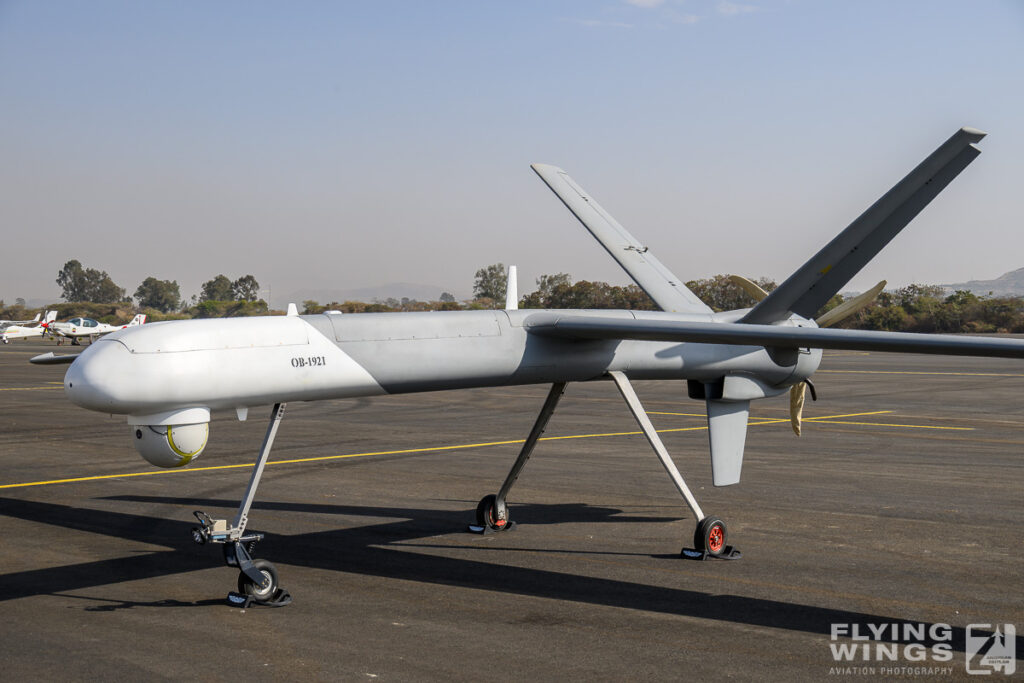
The drone inventory drew significant attention. The Orion MALE UAV appeared publicly for the first time as an export system. It complements a diverse unmanned fleet that includes Bayraktar TB2 and Akıncı systems from Türkiye, Iranian Mohajer-6 drones, and Chinese Wing Loong UAVs. The emphasis on ISR and precision strike capability reflects Ethiopia’s modernization priorities.
The Flying Display at Black Lion Airshow 2026
The flying program confirmed in the air what the static display had already suggested on the ground: the Ethiopian Air Force was determined to demonstrate operational capability, discipline, and confidence. The aerial segment of the opening ceremony on Saturday was carefully choreographed and clearly designed to blend symbolism with tactical messaging, especially as it was held in front of the Prime Minister and Ethiopia’s First Lady.
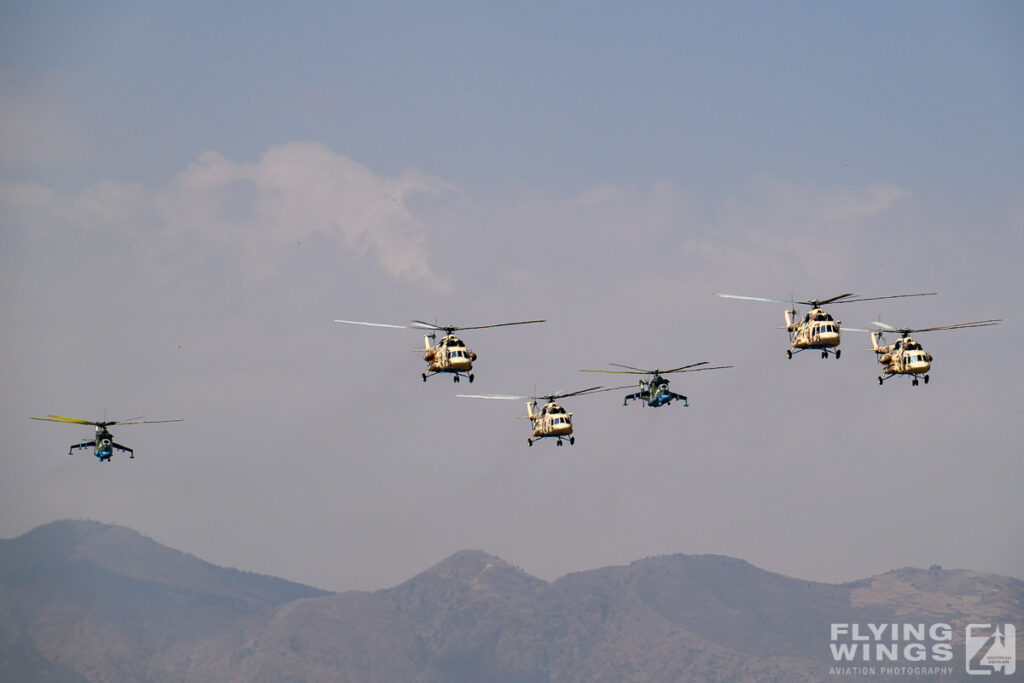
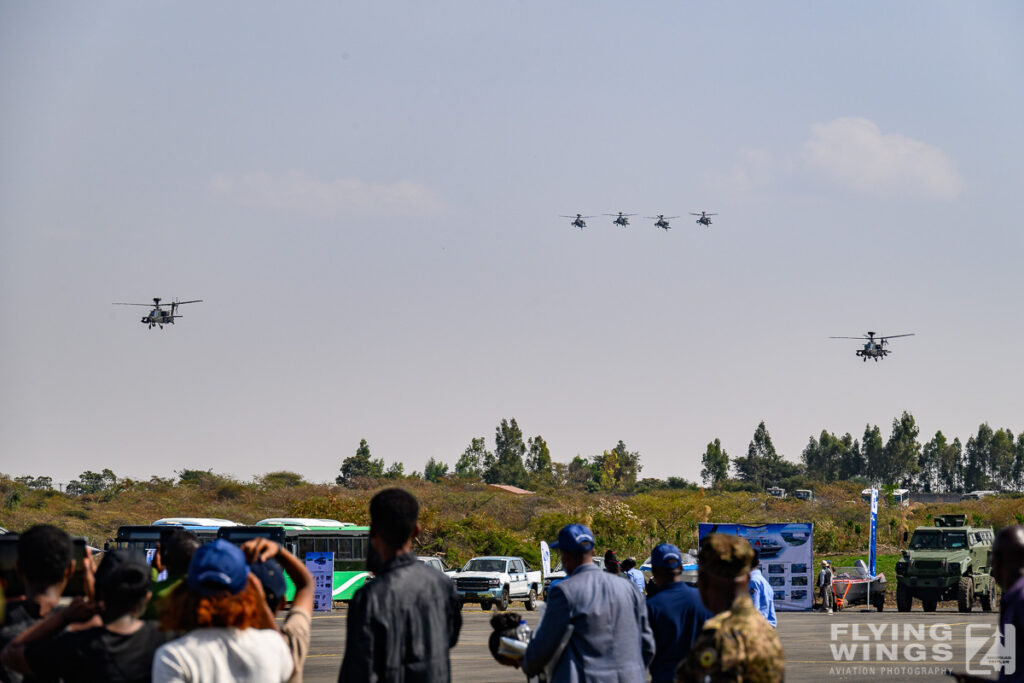
The sequence began with a six-ship helicopter formation consisting of Mi-35 attack helicopters alongside Mi-8 and Mi-17 transport variants. Flying in tight formation, the helicopters carried large Ethiopian and UAE flags underslung beneath their fuselages, creating a visually striking opening tableau against the highland backdrop of Debre Zeit. The formation highlighted not only national pride but also the central importance of rotary-wing aviation in Ethiopia’s security architecture, particularly in a country defined by rugged terrain and dispersed operational environments.
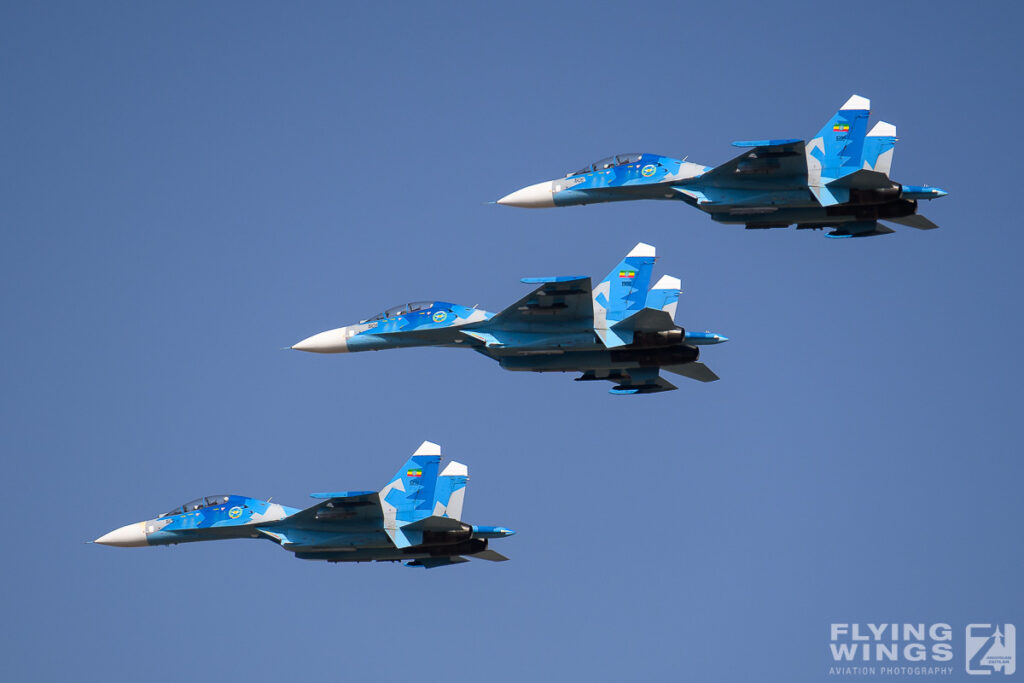
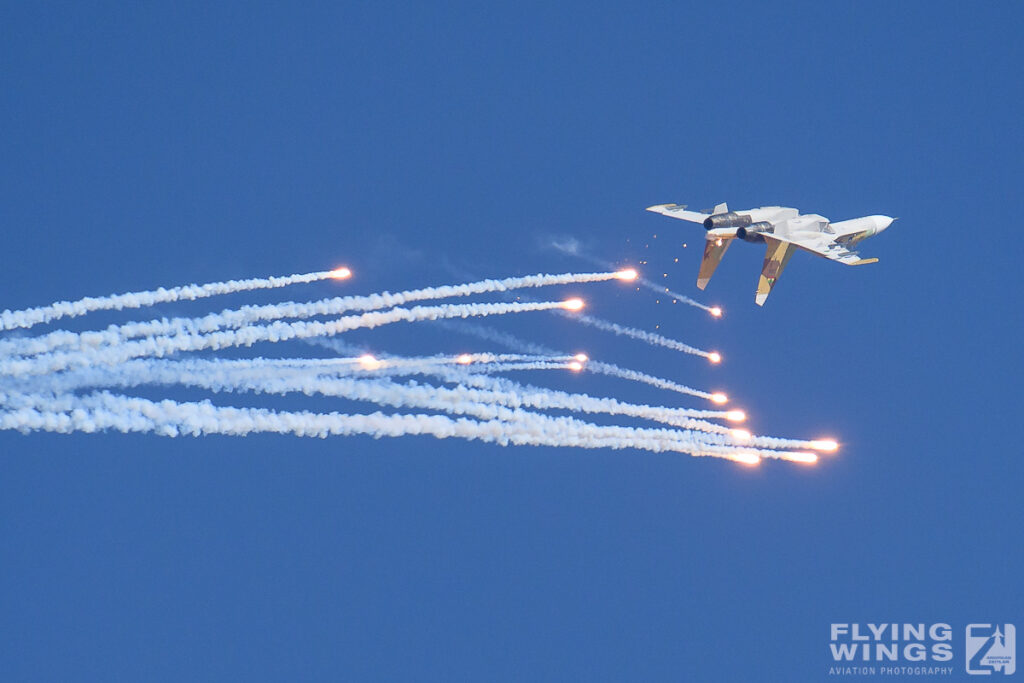
Following the helicopter pass, attention shifted to fixed-wing combat aviation. Three Su-27UBK two-seat fighters entered in echelon formation, maintaining disciplined spacing and stable geometry throughout their fly-by. The formation emphasized cohesion and squadron-level proficiency rather than aggressive maneuvering. Later on, a single Su-27SK took center stage for a solo routine that combined high-speed passes, tight banking turns, and vertical maneuvers. The pilot punctuated the display with controlled flare releases, visually reinforcing the aircraft’s air combat pedigree and operational readiness.
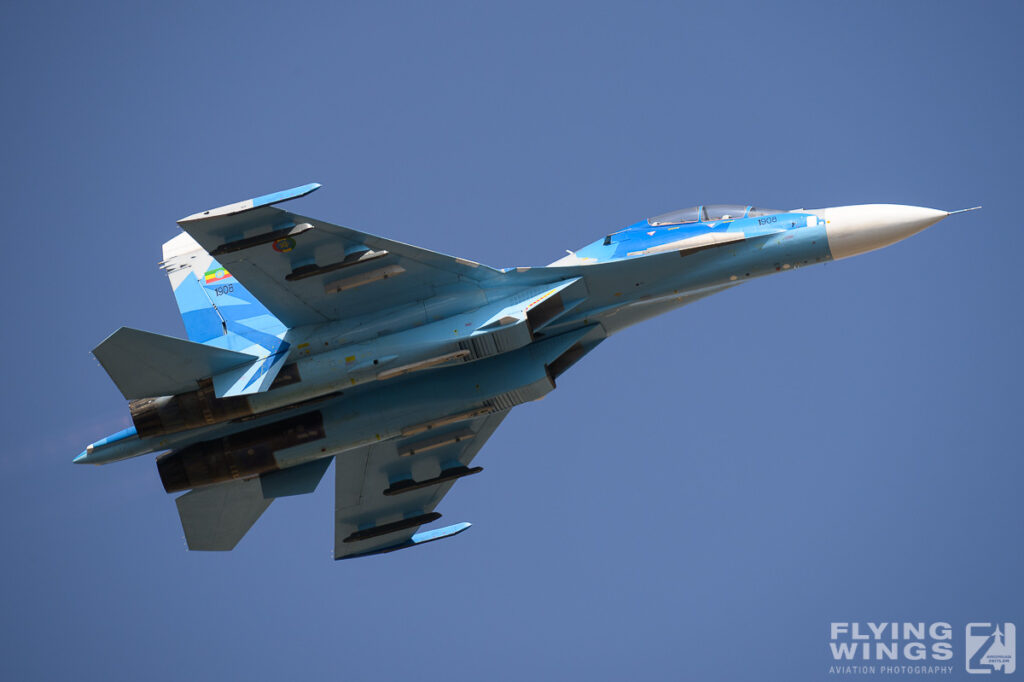
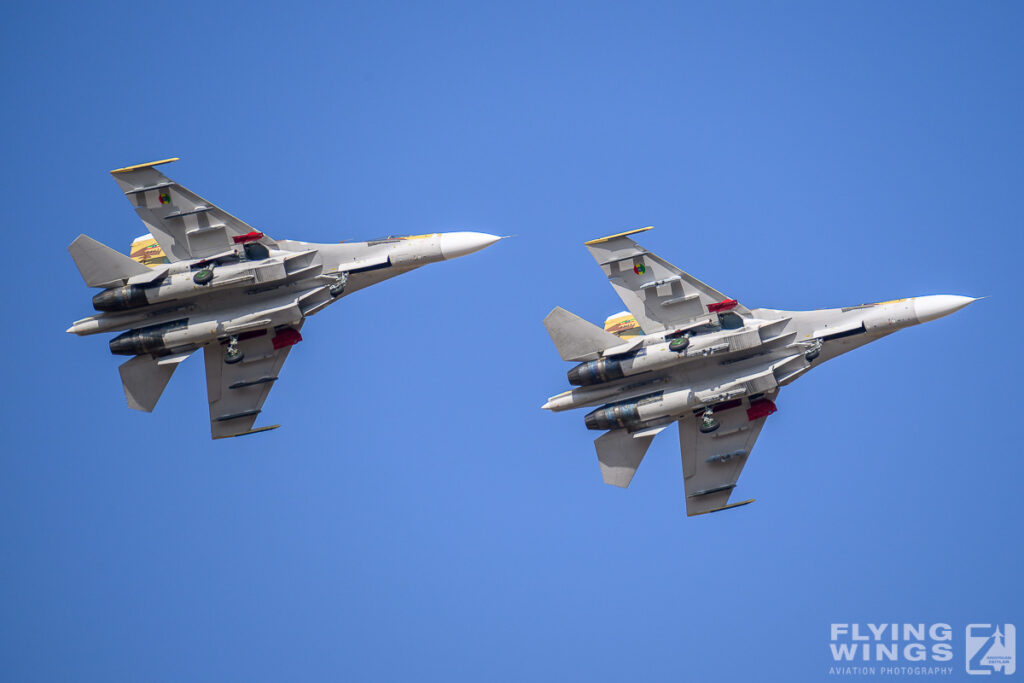
The appearance of the Su-30K pair represented a qualitative highlight. Flying as a coordinated two-ship element, the aircraft demonstrated smooth formation transitions, synchronized turns, and controlled separation maneuvers that subtly underscored their multirole character. While the routine avoided overly complex aerobatics, it clearly conveyed stability, power, and expanded mission capability. In the context of Ethiopia’s recent acquisition of these aircraft, the display functioned as a deliberate signal of modernization and future-oriented force development.
Trainer aircraft were integrated seamlessly into the program. L-39 Albatros jets performed formation fly-bys that showcased precision flying and the continuity of Ethiopia’s jet training tradition. Even more striking was the immaculate four-ship Yak-130 formation. Maintaining tight alignment and consistent spacing, the Yak-130s executed coordinated passes that reflected a structured and increasingly modern training pipeline. Their presence symbolized not only pilot instruction but also the technological transition underway within the EtAF. These trainers and light combat aircraft have also supposedly only arrived a few weeks before the event in Ethiopia,
The principal flying displays were concentrated on January 24 and January 27, primarily during the late afternoon hours when lighting conditions enhanced visibility and photographic opportunities. This scheduling also allowed the earlier parts of the day to focus on static viewing and exhibition activities. The result was a balanced program that combined spectacle with structured messaging—less an aerobatic extravaganza and more a measured demonstration of organized, combat-relevant airpower.
International Presence: UAE Air Force Participation
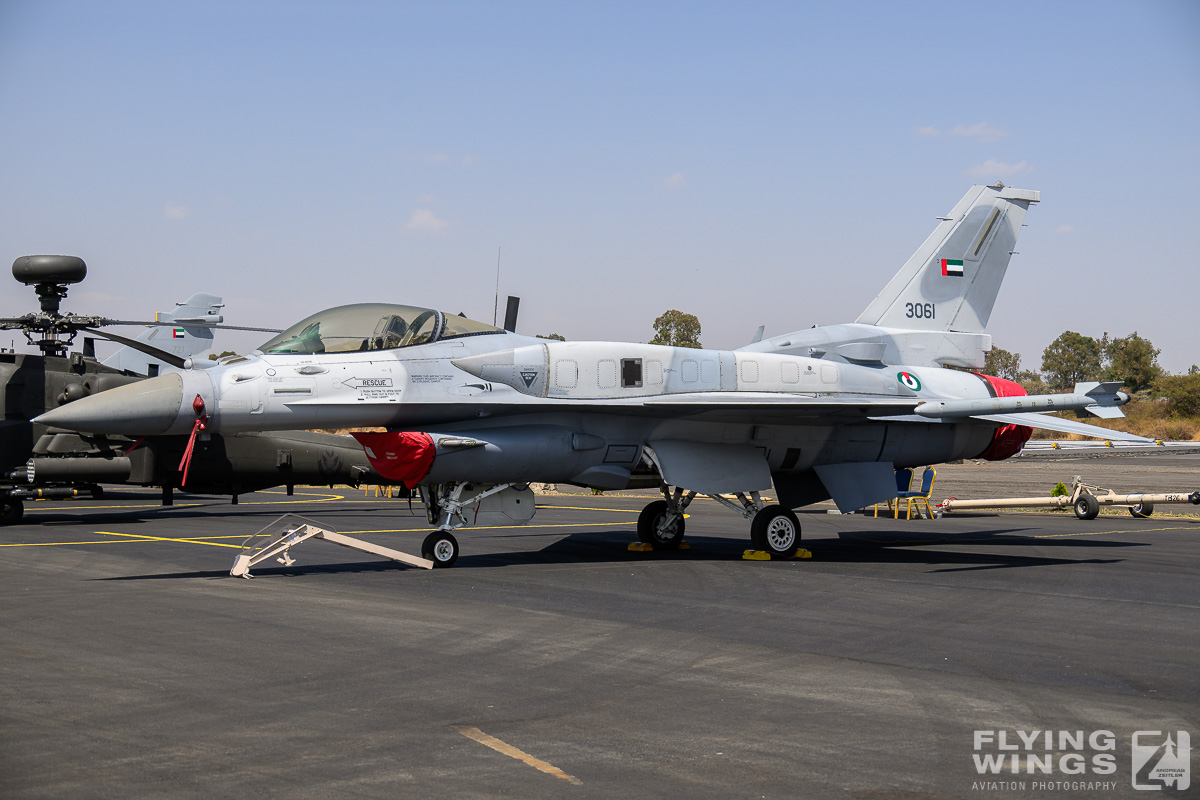
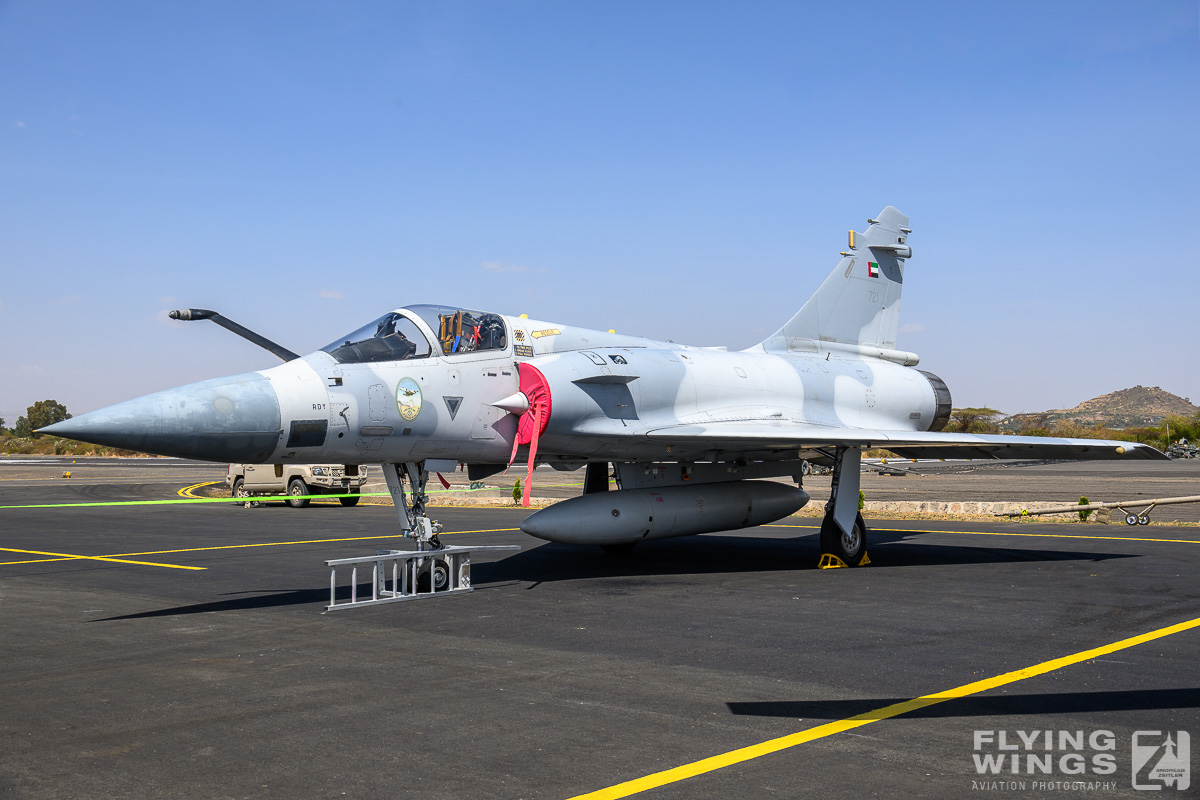
The international dimension of Black Lion Airshow 2026 was clearly underscored by the participation of the United Arab Emirates Air Force. Emirati aircraft took part in the multinational formations during the official opening fly-by, adding both operational depth and diplomatic symbolism to the ceremony. The combined passes over Debre Zeit created a strong visual statement of growing bilateral cooperation between Ethiopia and the UAE. The opening fly-by also saw formations of six AH-64E Apaches, three Mirage M2000-9 and three F-16E Dessert Falcons.
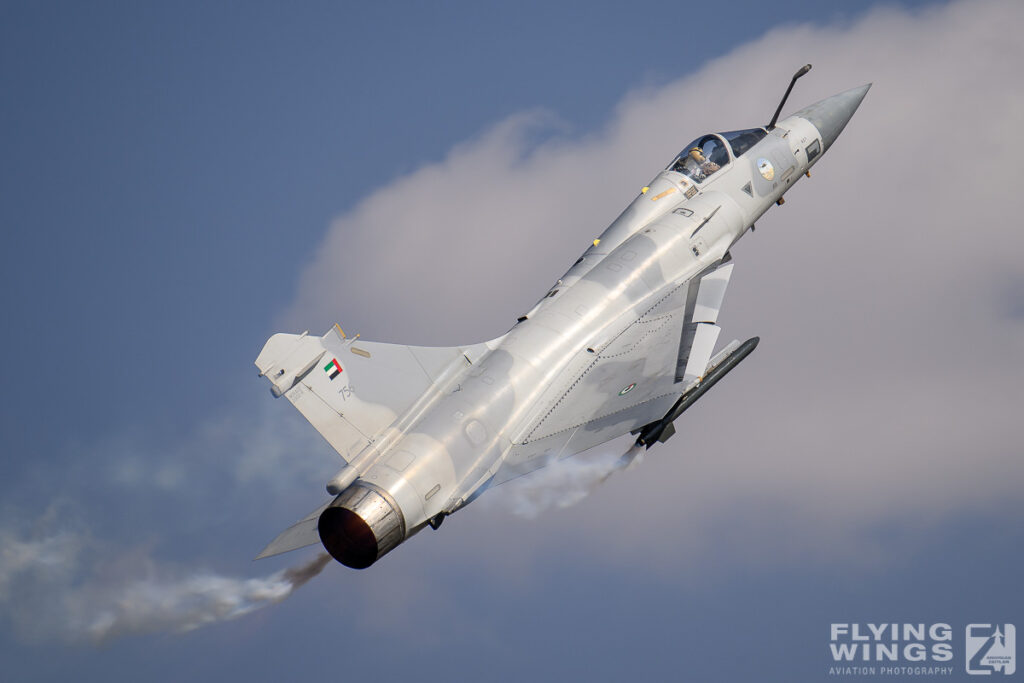
Beyond the aerial spectacle, this UAE presence carried political significance. The joint opening formations symbolized strengthening strategic ties and reflected broader defense cooperation between the two countries. In this context, the Emirati participation was more than an airshow highlight—it was a visible expression of partnership and shared security interests.
On the following show days, the UAE contribution focused on solo demonstrations. A Mirage 2000-9 performed a high-energy display featuring fast passes and elegant vertical maneuvers, showcasing the aircraft’s aerodynamic performance. The F-16E Block 60 followed with a dynamic routine that emphasized climb rate, tight turning performance, and multirole capability, underlining the technological sophistication of the Emirati fleet.
Industry, Organization and Atmosphere
The newly constructed event site stood in contrast to the more restricted 88th anniversary celebration held two years earlier. Exhibition halls featured Ethiopian defense stakeholders alongside numerous companies from China, Russia, and Belarus—many visibly eager to expand military-industrial cooperation in Africa.
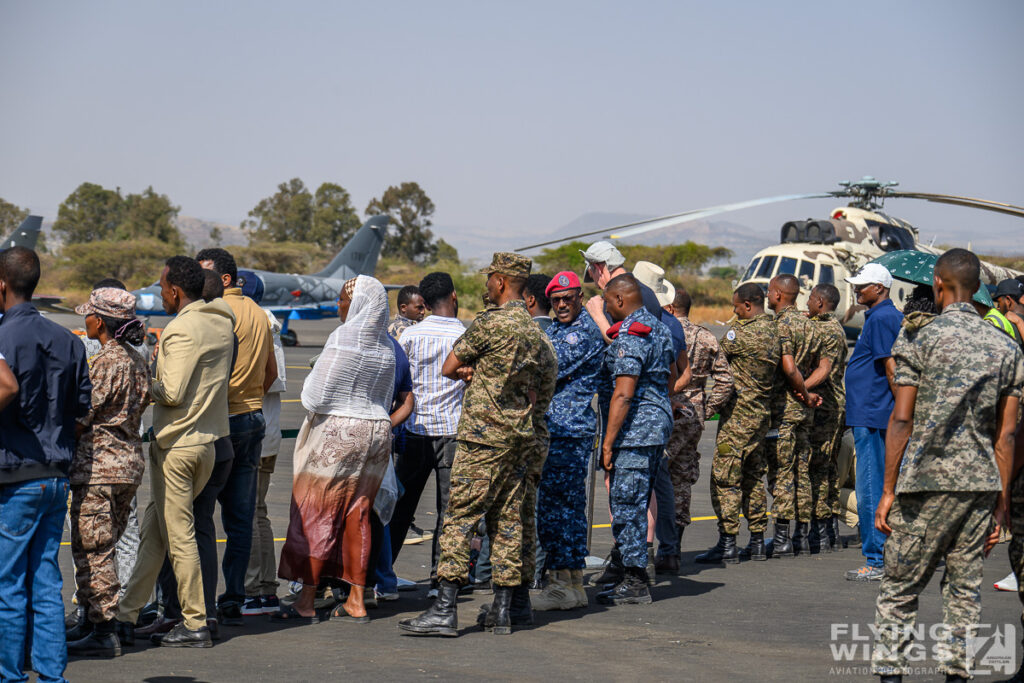
Security around VIP areas was extremely tight, yet general event organization felt at times improvised. Access procedures, entry routes, and information flow were often unclear, giving the event a chaotic undertone. Nevertheless, once inside, visitors found a surprisingly pleasant environment. A shaded food court with tents, barbecue, and inexpensive beer however offered a relaxed setting during the quieter afternoon hours.
Travel Perspective
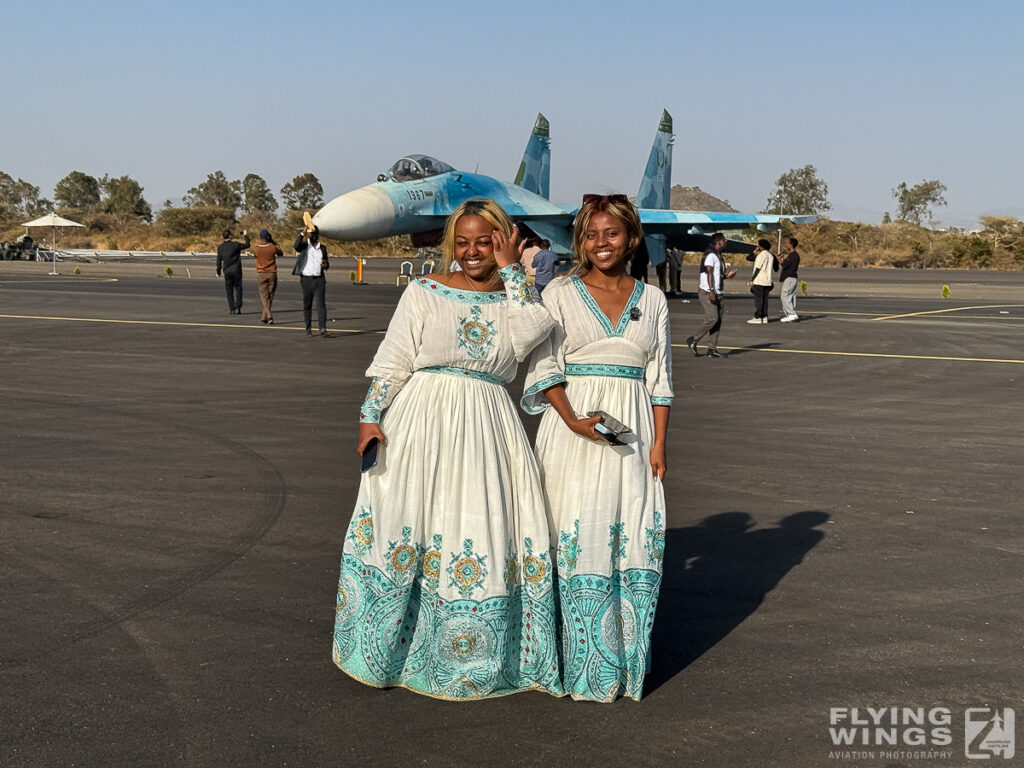
Ethiopia remains one of Africa’s most culturally rich and historically fascinating destinations. For aviation enthusiasts, combining an airshow visit with tourism would normally be highly attractive. However, widespread travel advisories and regional health concerns during the show period likely limited foreign attendance. Those who attended experienced not only rare airpower exposure but also the warm hospitality that Ethiopia is known for.
Conclusion
Black Lion Airshow 2026 was more than an anniversary celebration. It was a calculated exposure of Ethiopian airpower—combat-proven fighters, modern trainers, capable helicopters, and an expanding UAV fleet—presented with unusual openness. Despite logistical imperfections and tight security, the event projected confidence and strategic ambition.
As Ethiopia pursues long-term modernization and diversified defense partnerships, the Black Lion Airshow positioned the Ethiopian Air Force as a decisive guardian of sovereignty and an increasingly influential actor in the security landscape of the Horn of Africa.
Black Lion Airshow 2026, Debre Zeit, Ethiopia- Photo Gallery


You May Also Like
Wings over Houston Airshow 2017
NATO Days Ostrava & Czech Air Force Days 2025
