
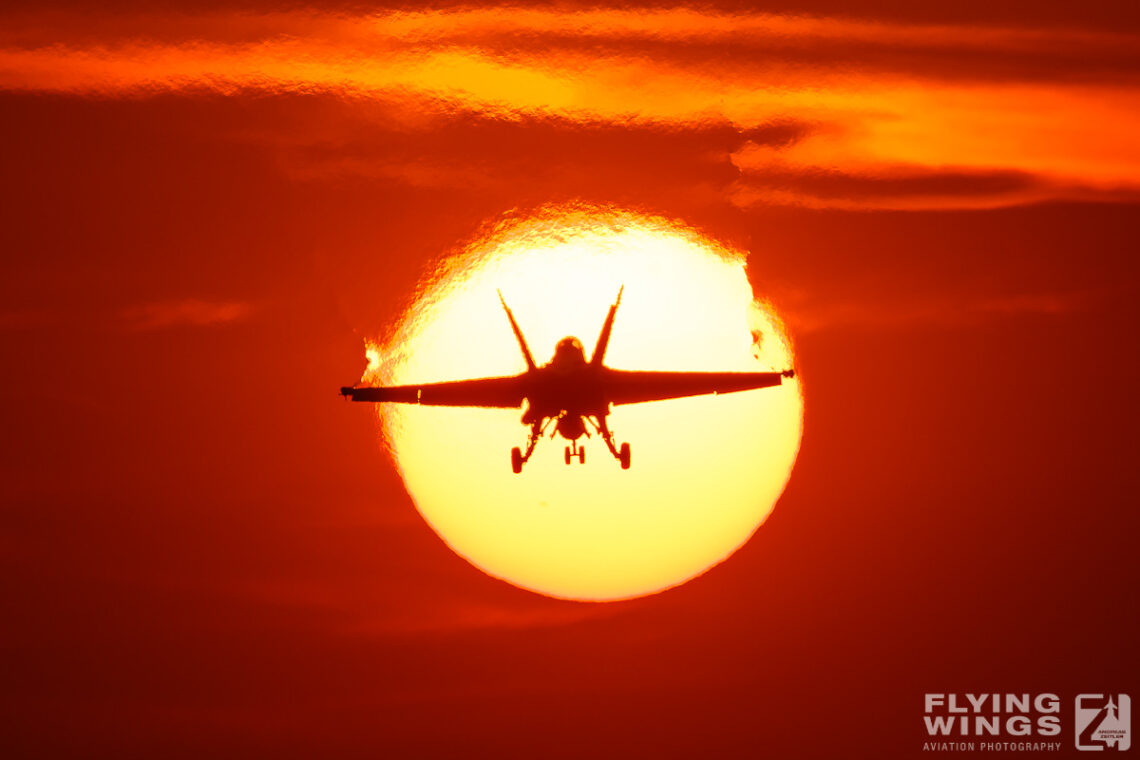
Sunset Paradise – Chasing Golden Light at Darwin
Every aviation photographer has that one image in mind before travelling to a destination. For some it is a dramatic take-off, for others a rare aircraft or unusual colour scheme. When I arrived in Darwin for Exercise Pitch Black 2026, however, it quickly became clear that one of the real highlights would not be a particular aircraft—it would be the light.
Australia’s Northern Territory is famous for its spectacular sunsets, especially during the dry season. Day after day, the tropical sky turned orange, red and gold as the sun disappeared towards the horizon. Combined with predominantly clear skies, the conditions created exceptional opportunities for aviation photography.
When the Runway Meets the Setting Sun
At Darwin, geography added another bonus. During late July and early August, the setting sun aligns almost perfectly with the extended centreline of Darwin Airport’s main runway 11/29.
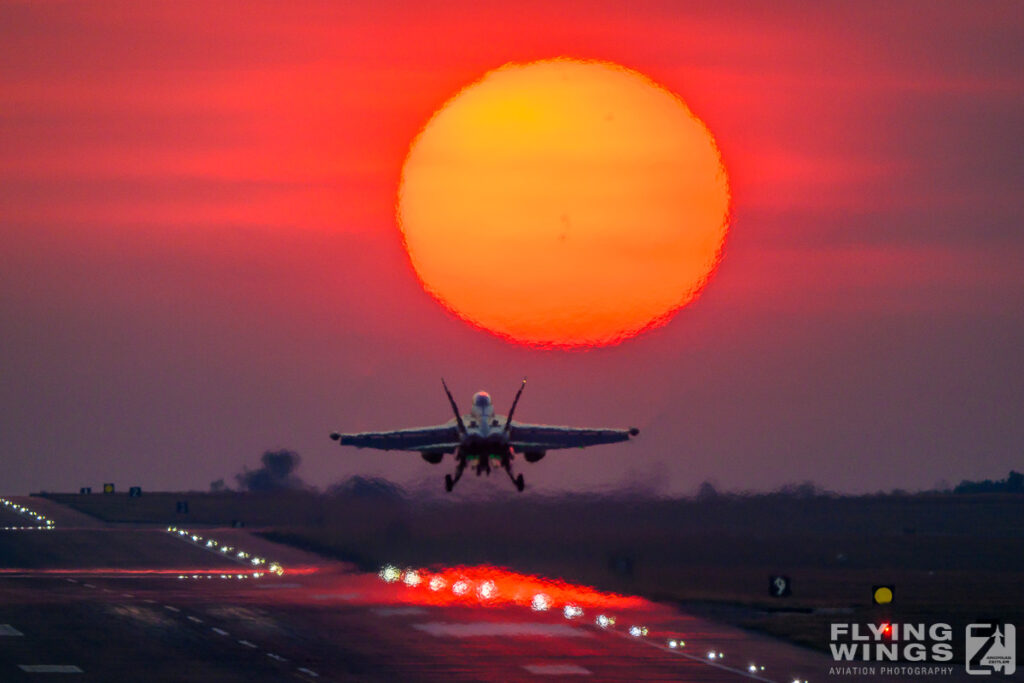
As the final afternoon missions of Exercise Pitch Black returned to RAAF Base Darwin, fighters approaching Runway 29 therefore flew almost directly towards the setting sun. For the pilots, the intense glare must have added another challenge after a demanding mission. For photographers and the many spectators gathering outside the base, it created spectacular silhouettes against the golden sky.
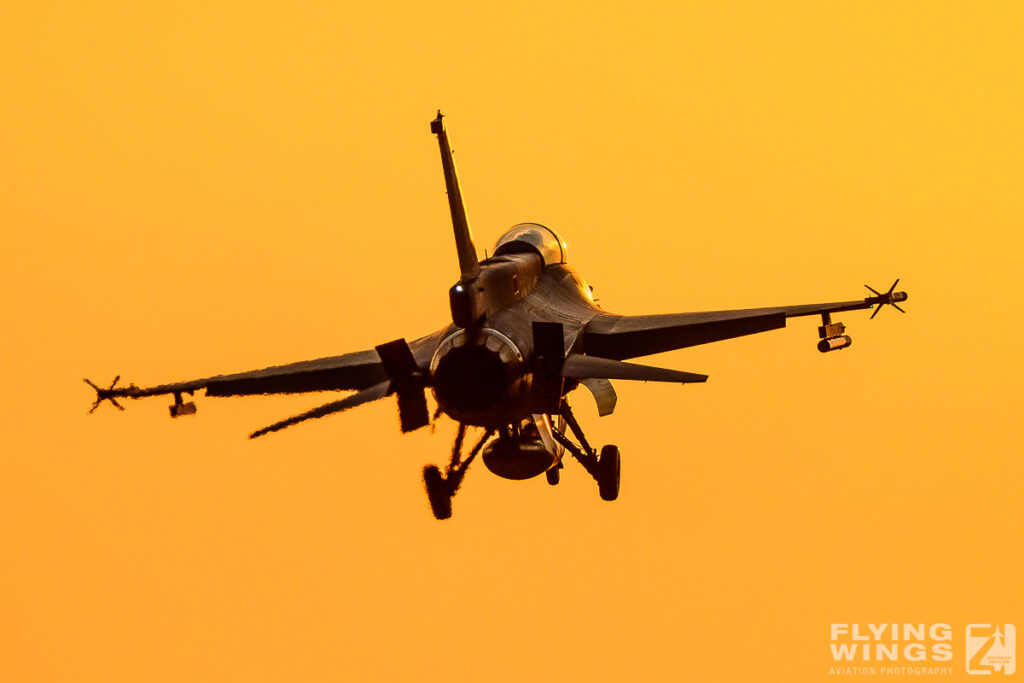
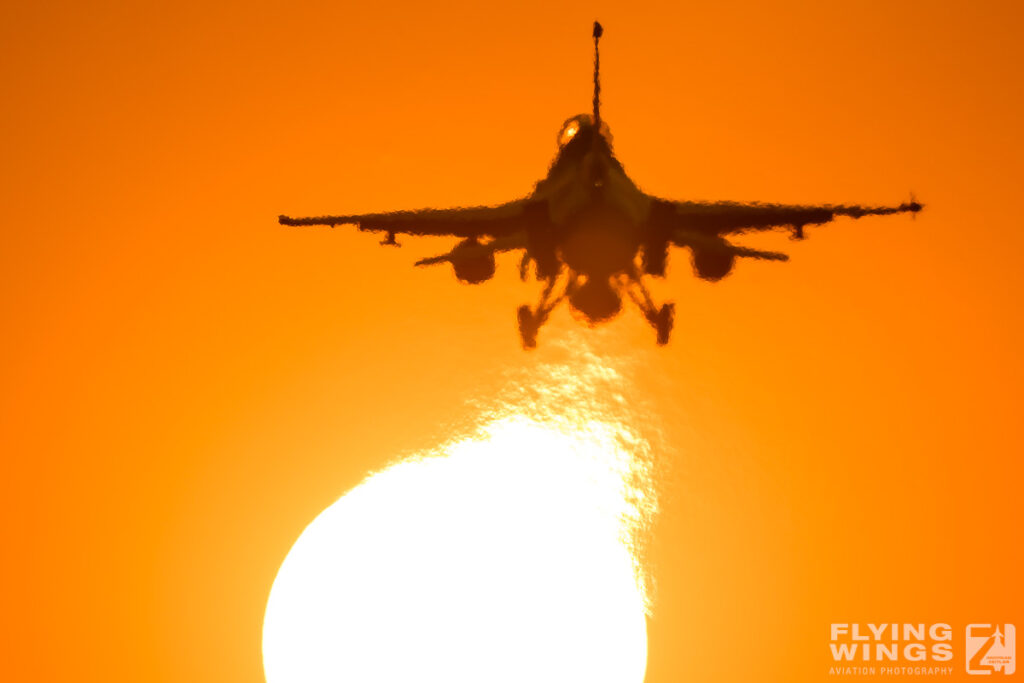
The best location was an open field beyond the eastern end of the runway. Slightly elevated above the surrounding terrain, it provided an unobstructed view towards the approach and enough space to move around in search of the ideal alignment between aircraft and sun.
Darwin’s weather also played its part with remarkable consistency. On many days the wind shifted during the afternoon, resulting in a runway change for the later missions. What initially produced rather unfavourable photographic conditions became a gift towards sunset: the aircraft now returned on Runway 29, almost directly towards the sinking sun.
A map showing the photography location can be found at the end of the gallery below.
Thirty Minutes of Perfect Light
Timing was everything. The really spectacular light lasted for only around 30 minutes. Once the sun disappeared below the horizon, the magic faded almost as quickly as it had arrived.
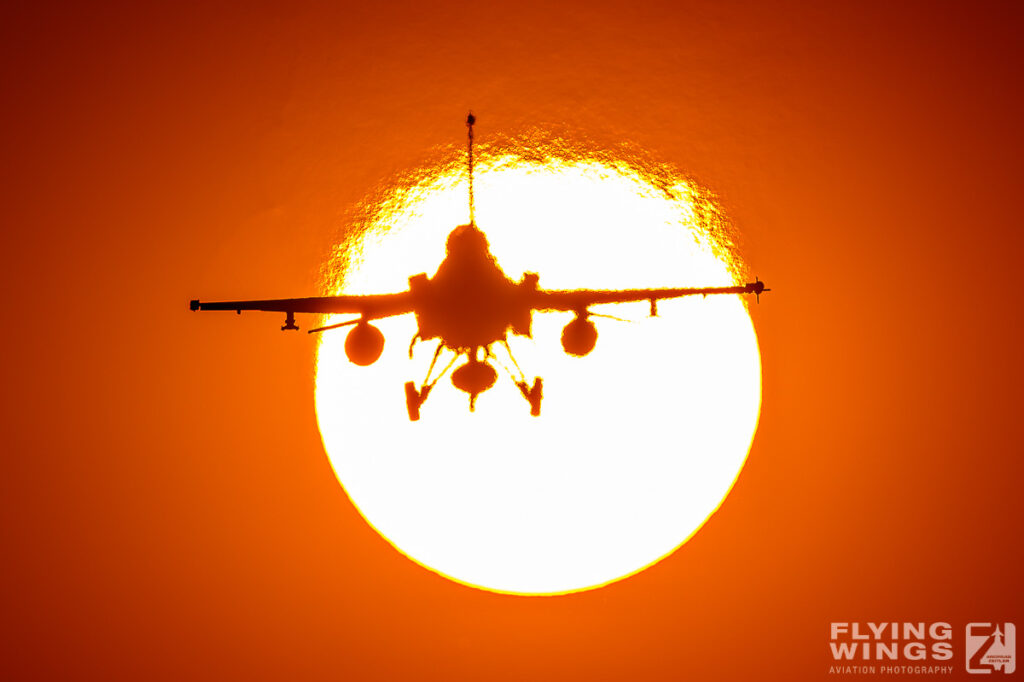
Fortunately, this short window often coincided with the recovery of the final afternoon mission. F-16s, F/A-18F Super Hornets, Eurofighters, Rafales and other Pitch Black participants appeared one after another, creating a steady procession of silhouettes against the glowing horizon.
Among the most memorable moments were RAAF Super Hornets returning in pairs, their lights piercing the golden haze on final approach. With the colours changing minute by minute, no two landings produced exactly the same photograph.
Forget the Conventional Aircraft Shot
These conditions also required a different photographic approach. With the aircraft flying directly into the light, markings, camouflage and small details disappeared into shadow. Instead, composition became everything.
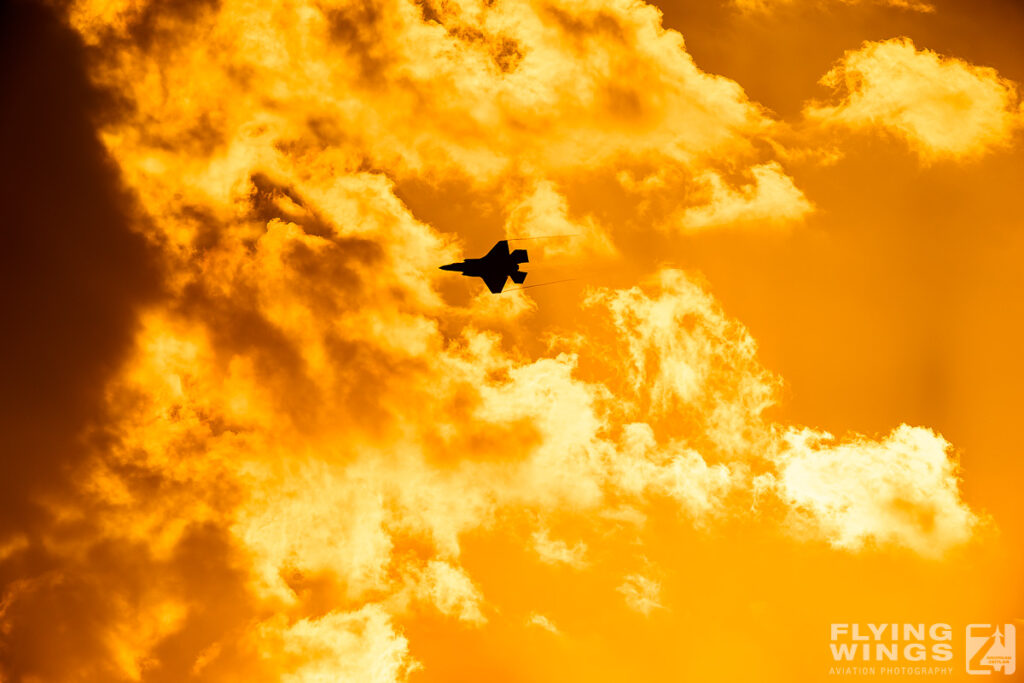
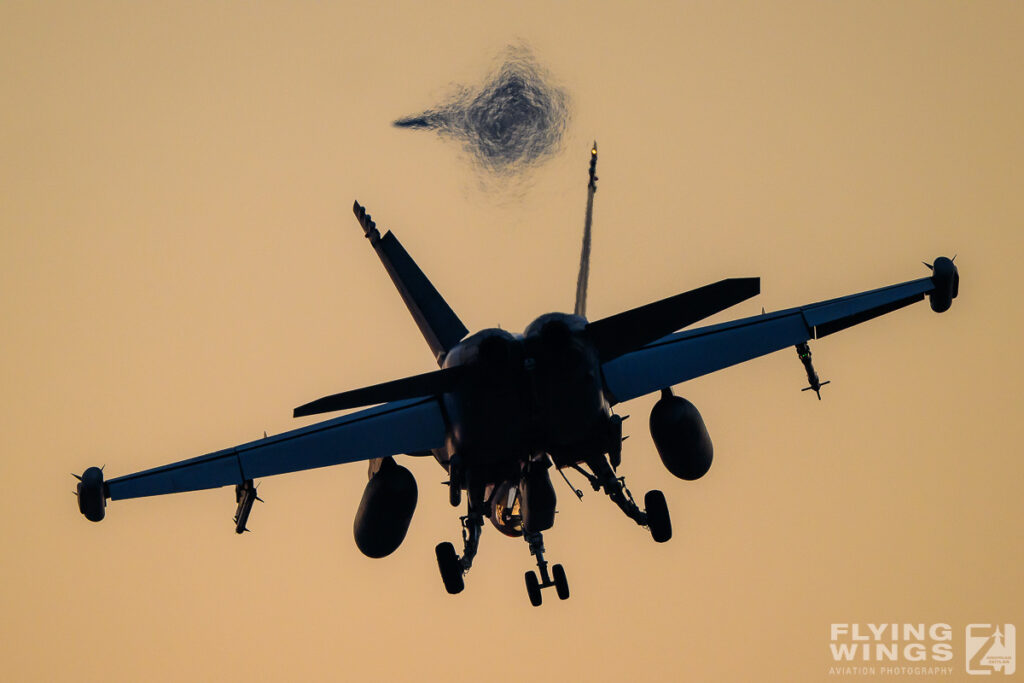
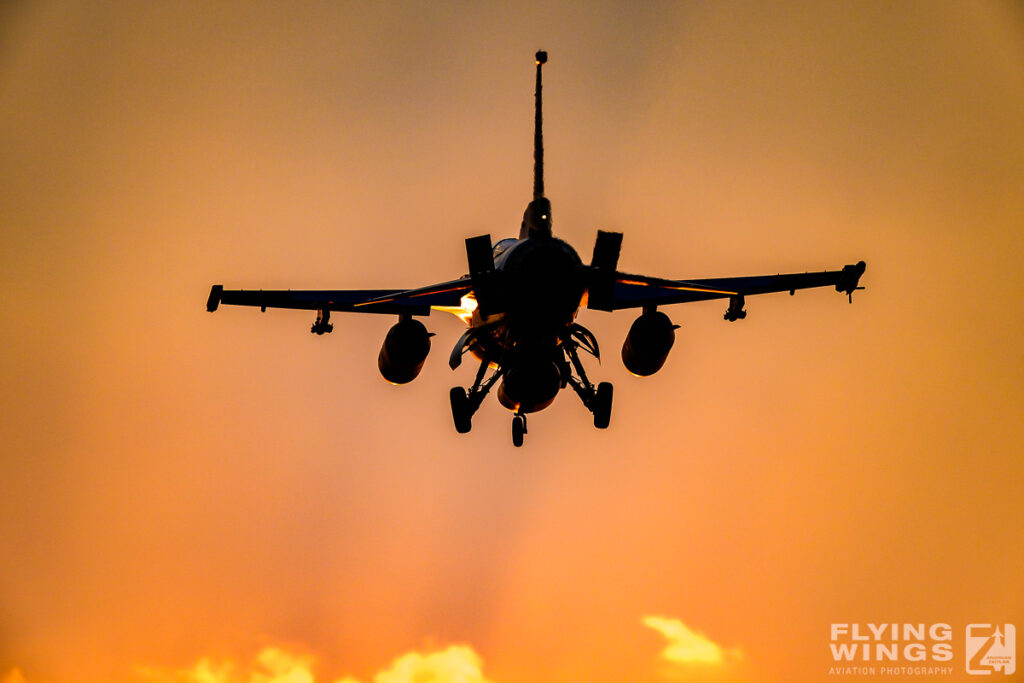
The objective was no longer the perfectly illuminated aircraft portrait. Clean silhouettes, shimmering heat haze, navigation lights and the contrast between a dark fighter and the intensely coloured sky created the strongest images.
Moving only a short distance across the field could significantly alter the alignment between aircraft and sun. But with the perfect light lasting only minutes, there was little time for experimentation.
A Touch of Top Gun in Northern Australia
As the final fighters approached through the warm evening light, it was difficult not to think of the sunset imagery from the original Top Gun. The only thing missing was the soundtrack.
The combination of high-performance fighters, tropical temperatures and a glowing Australian sky produced scenes that appeared almost cinematic. Yet these were operational aircraft returning from another mission during one of the world’s largest multinational air combat exercises.
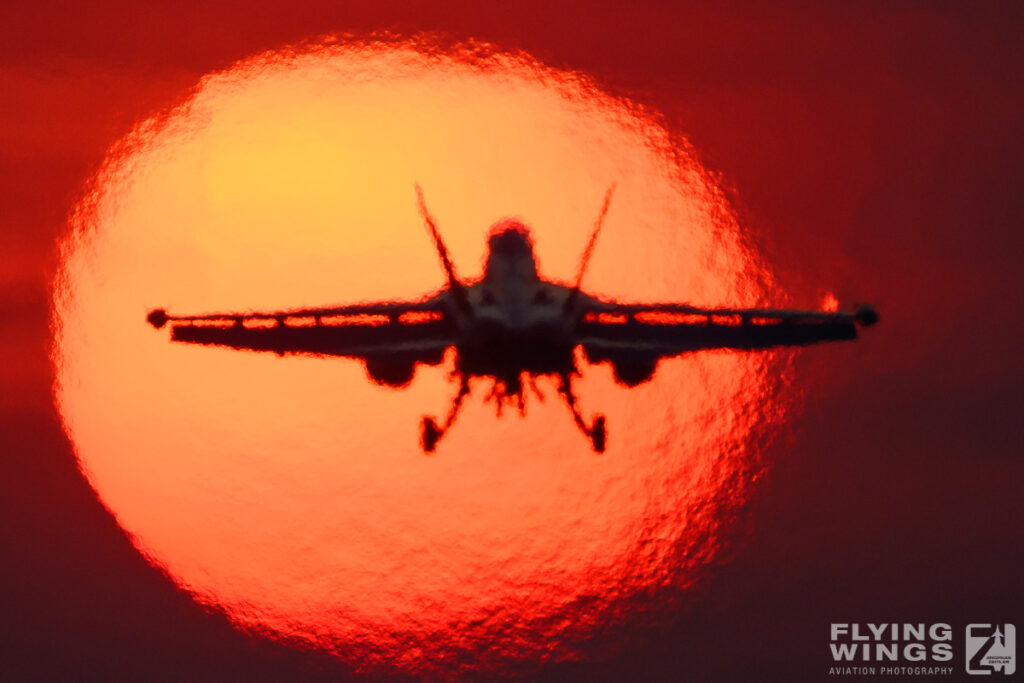
Exercise Pitch Black is rightly known for its complex multinational flying operations. Yet some of my strongest memories—and photographs—came after those missions were effectively over.
What initially appeared to be an inconvenient afternoon runway change ultimately created one of the photographic highlights of the entire trip. For half an hour each evening, aircraft and light came together almost perfectly.
Darwin had become a genuine sunset paradise for aviation photography.
Below is a selection of my sunset photographs from Darwin Airport during Exercise Pitch Black 2026. At the end of the gallery, you will also find a map showing where these photographs were taken.
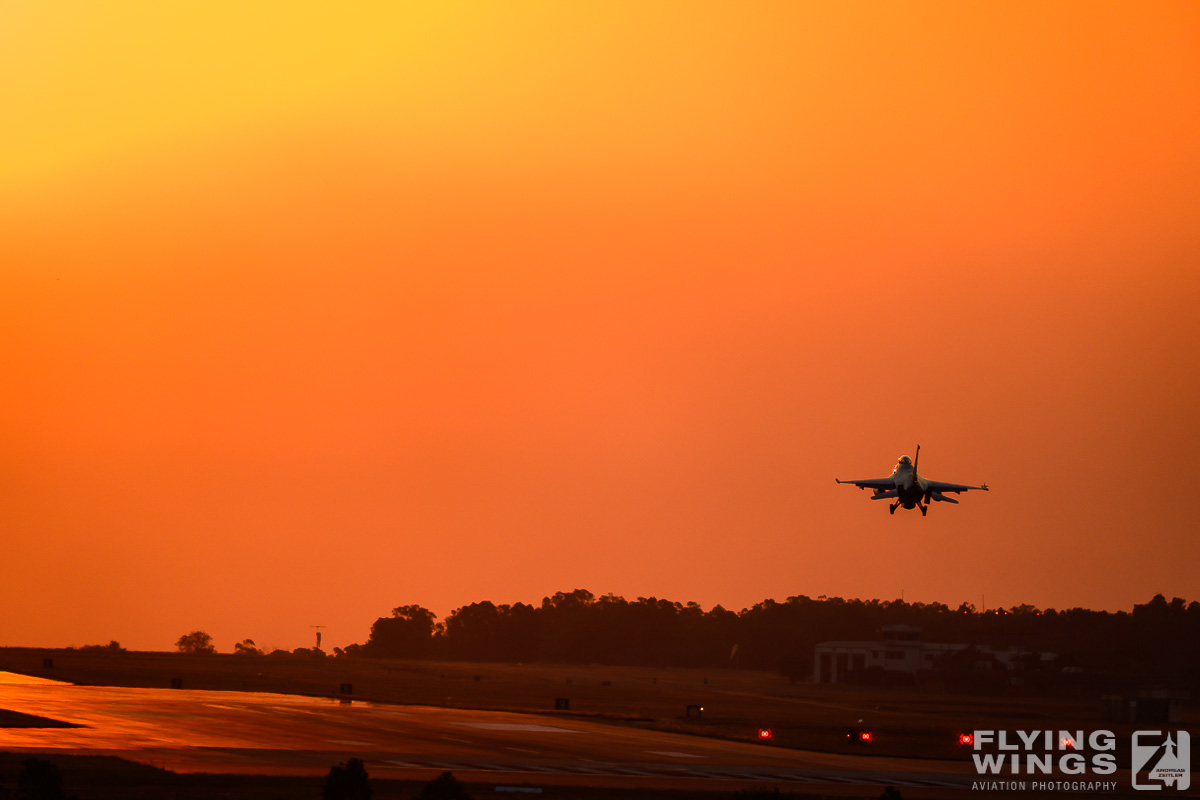
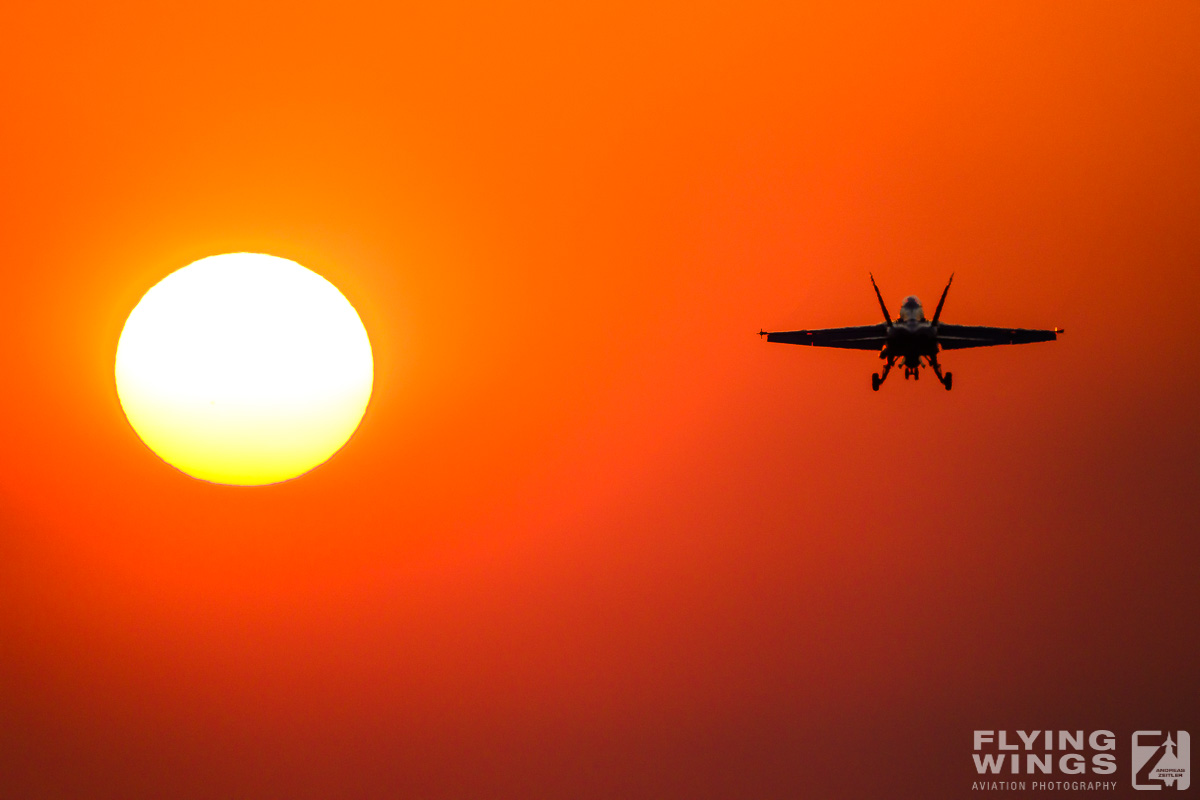
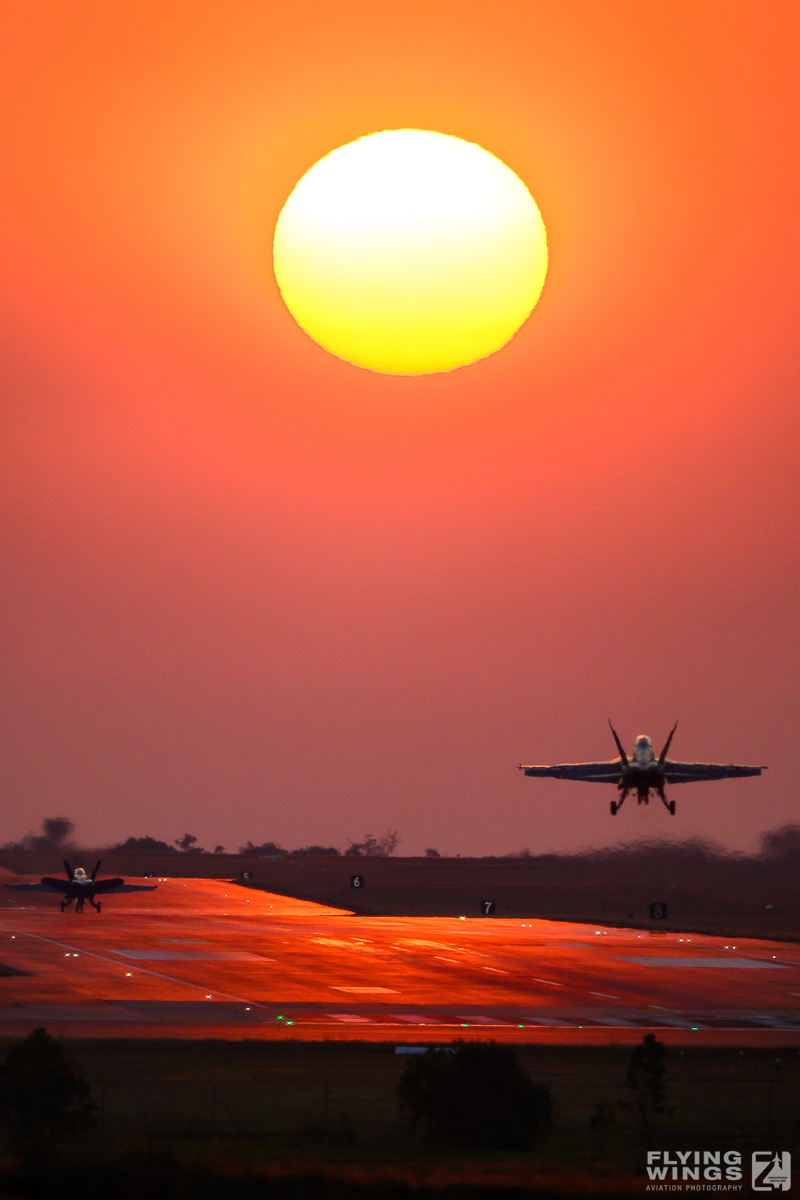
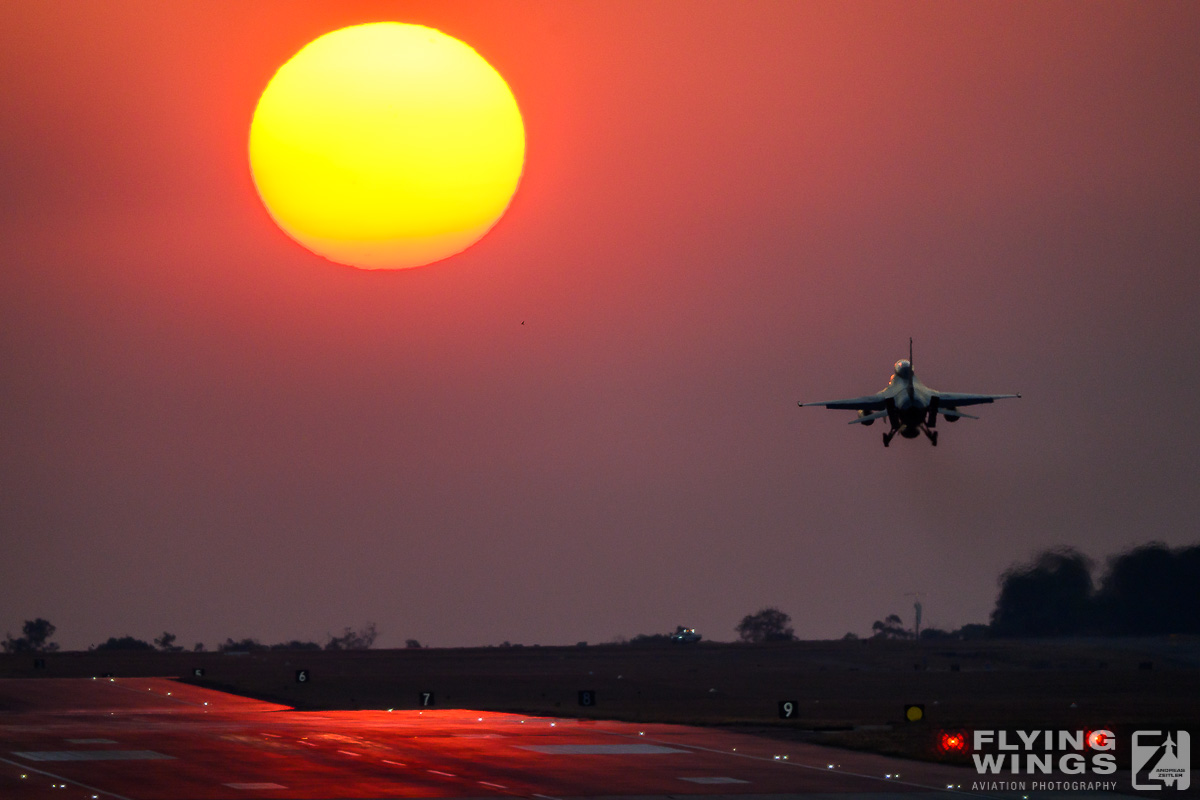
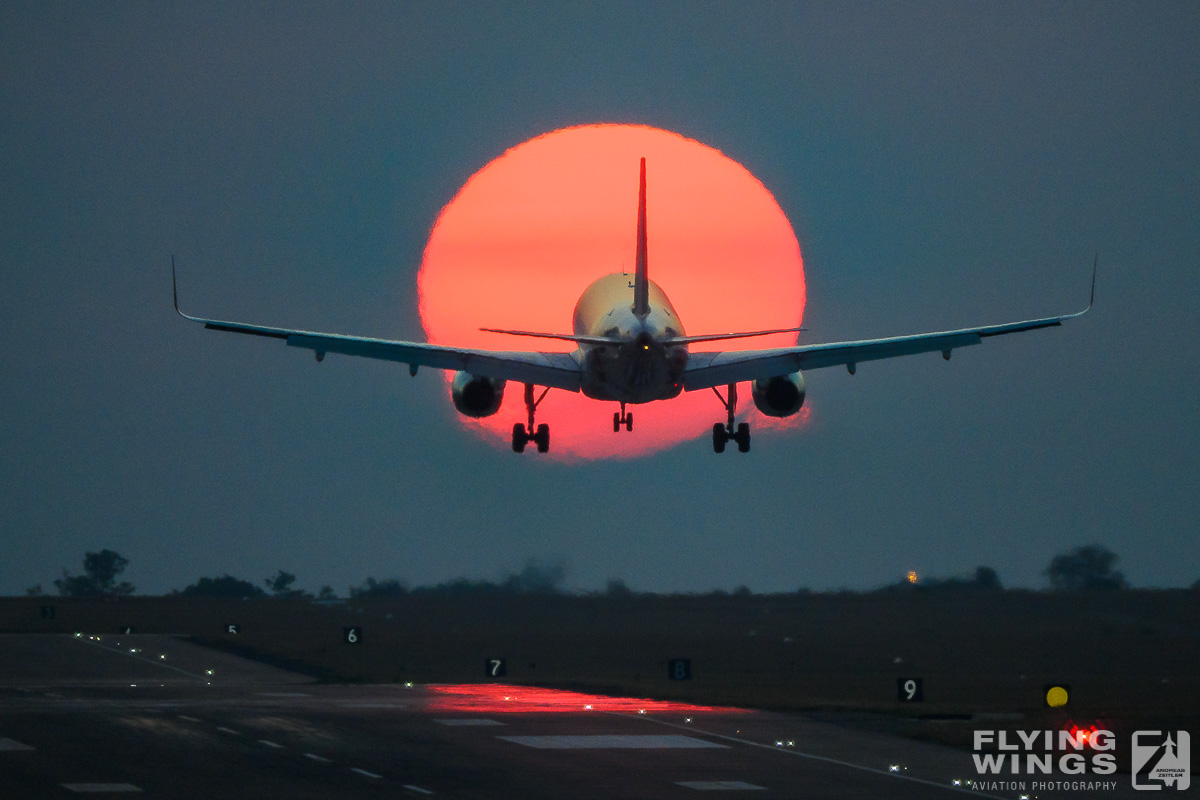
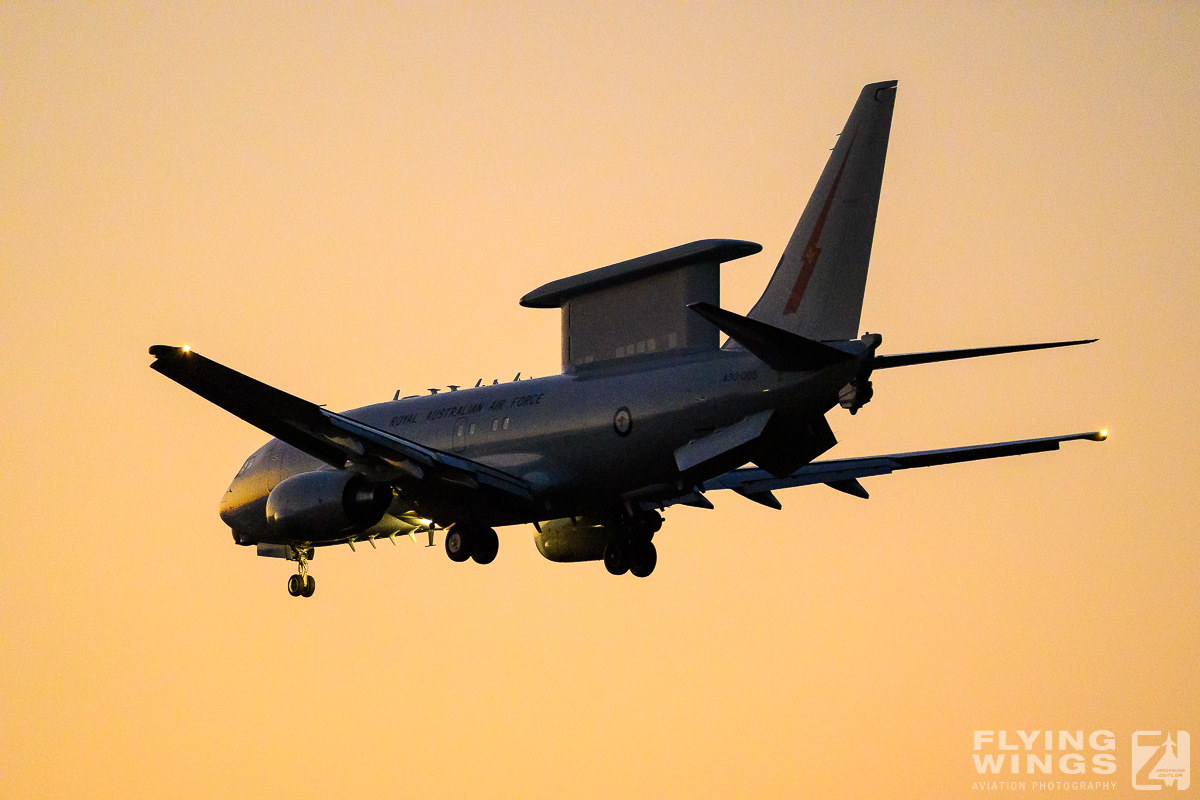
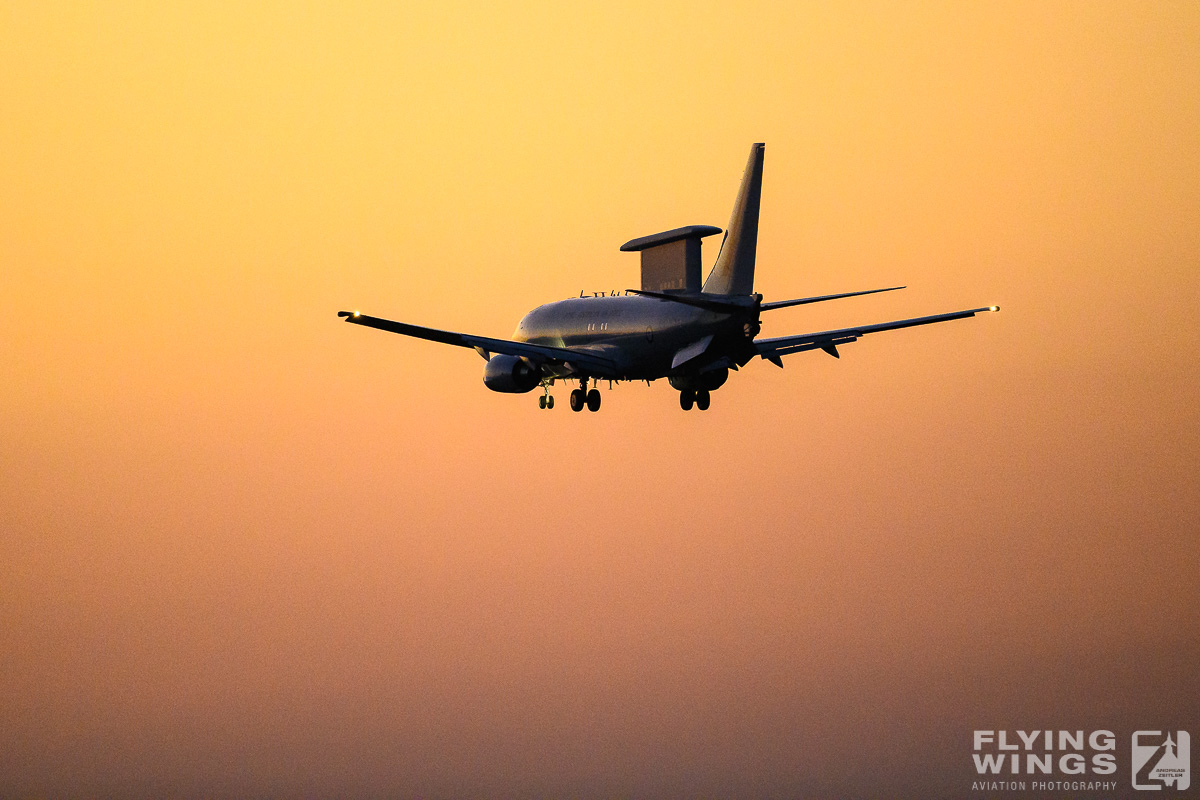
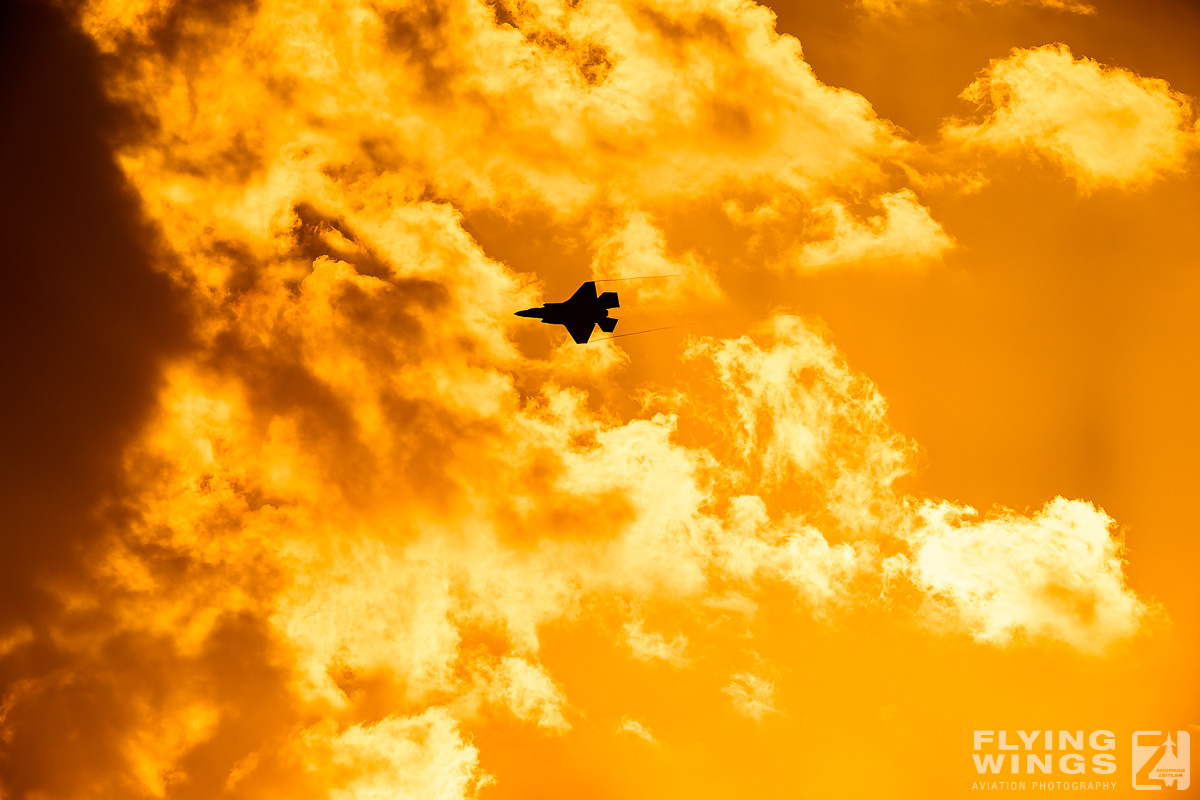
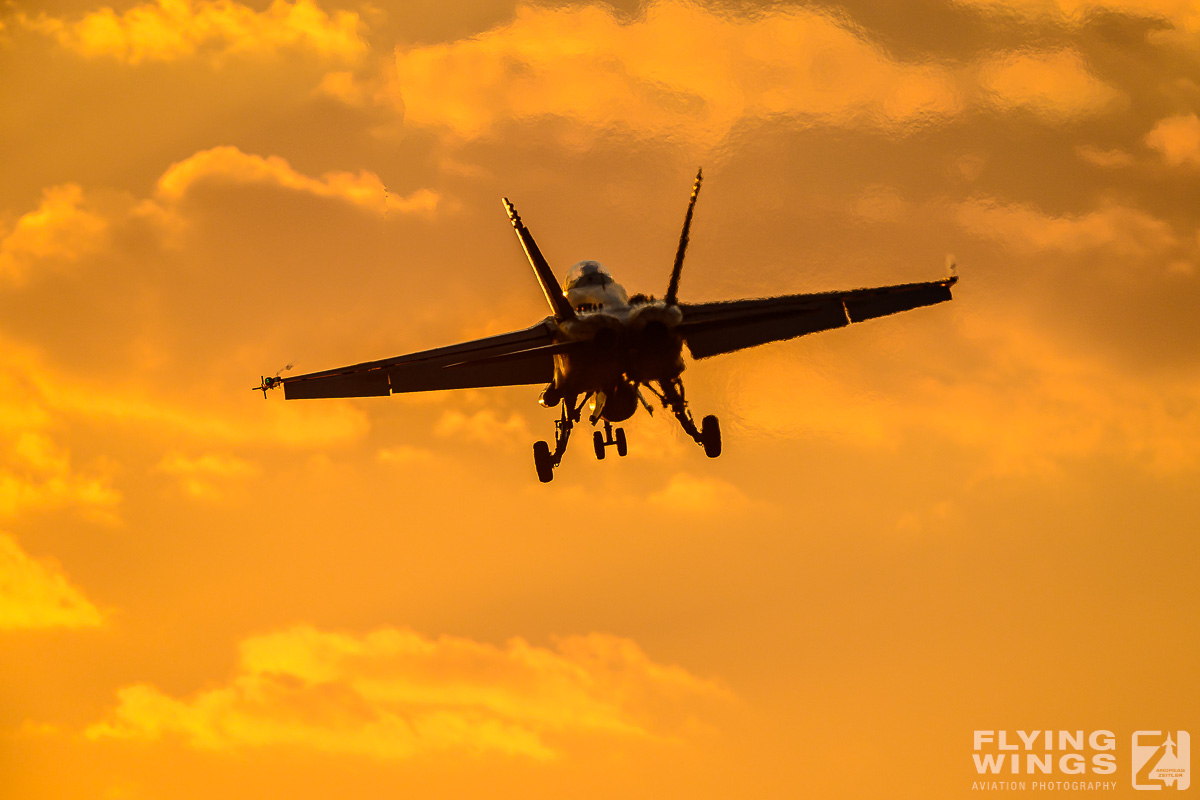
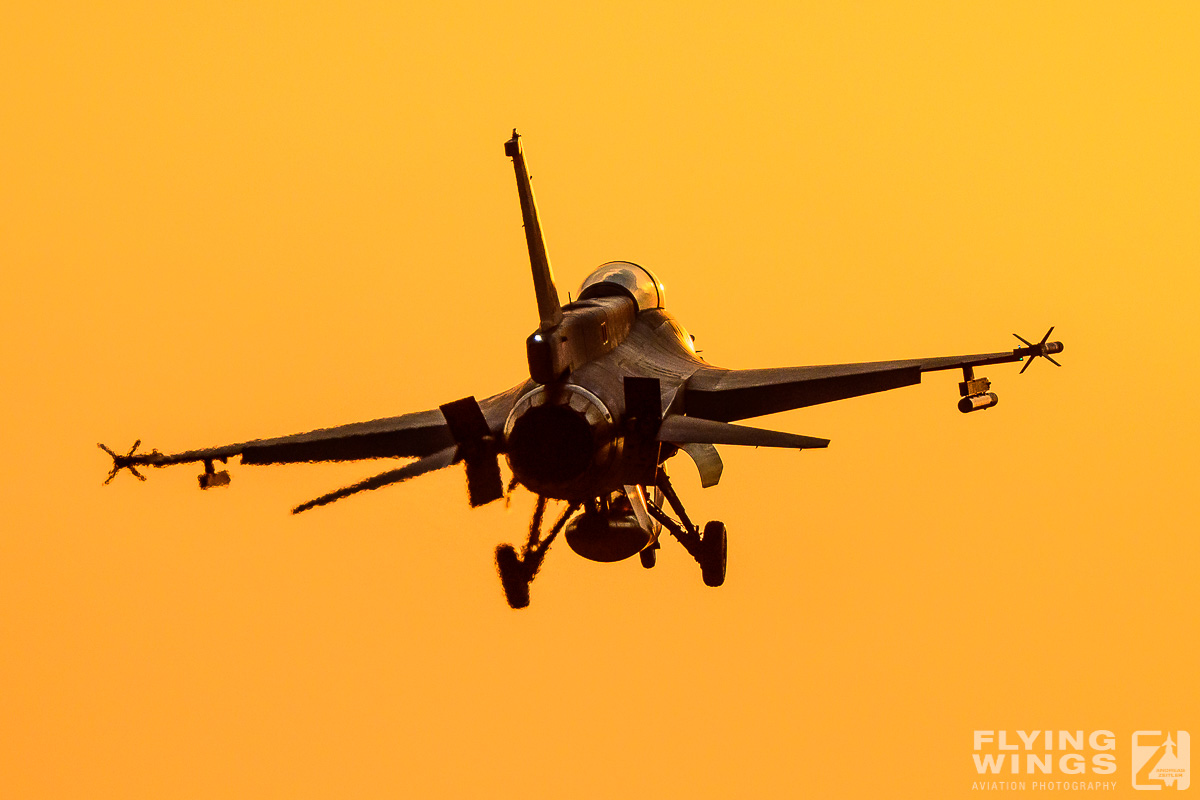
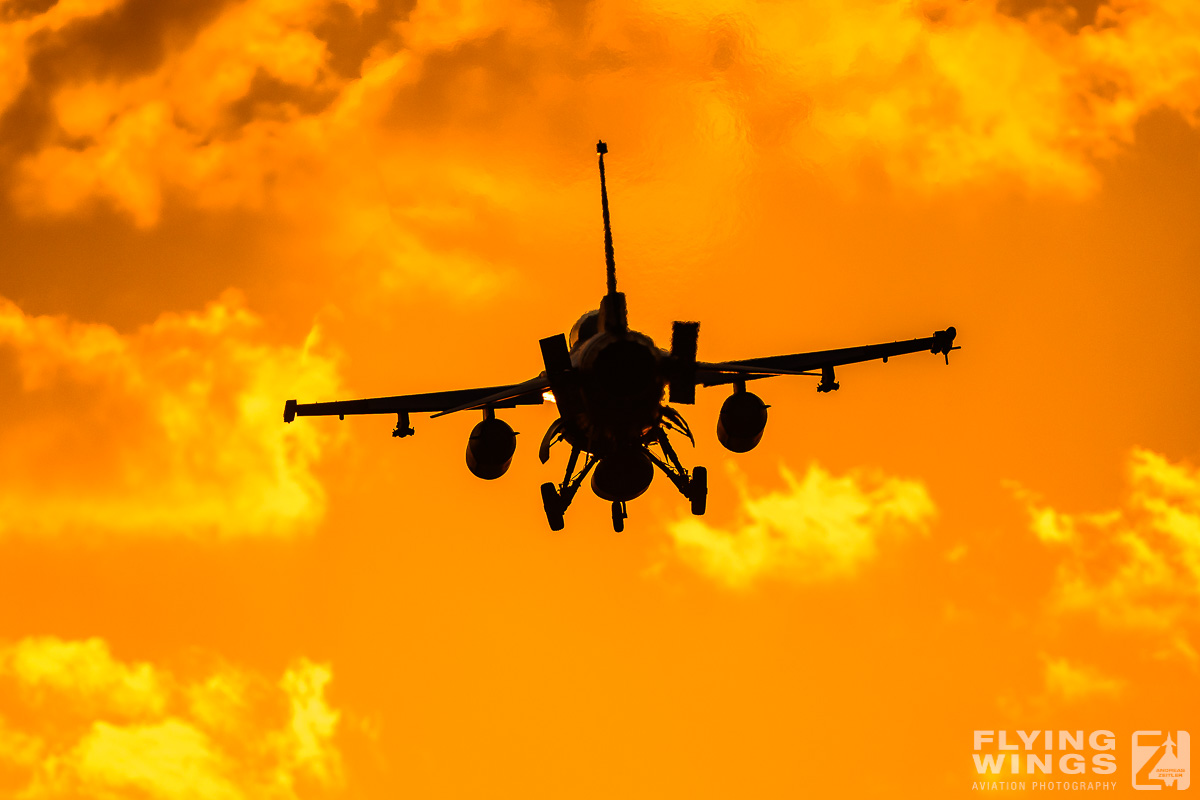
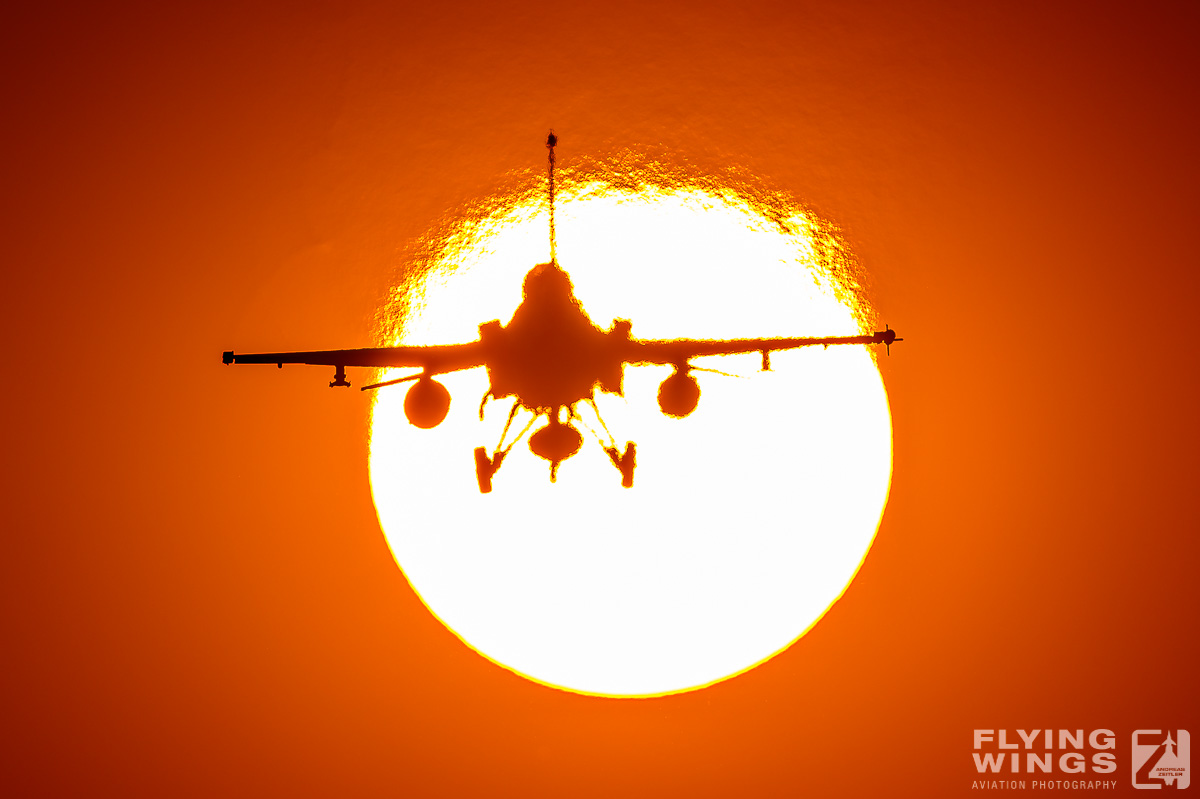
Photo Spot for Sunset Recoveries at Darwin Airport / DRW RWY 29
My recommendation is to stay along the road, preferable on the airport side as passing cars will not block your view. Then reach for an elevated position (stepladder, pickup truck), and place yourself along the road according to the position of the sound and the motive you are aiming for.


You May Also Like

Piper Fly-In 2026: Cubs Gather in Landshut
Going mirrorless – and my move from the Canon EOS R3/R5 to Nikon’s Z8 and Z9
