Albania’s Cold War Aircraft – The Armed Forces Museum near Tirana
For aviation enthusiasts visiting Albania, the Armed Forces Museum between Dobresh and Bërzhitë near Tirana offers a rare opportunity to discover the country’s largely forgotten Cold War aviation history. Seven aircraft and three helicopters form the centrepiece of the aviation collection, surrounded by an extensive display of tanks, artillery, military vehicles and naval equipment.
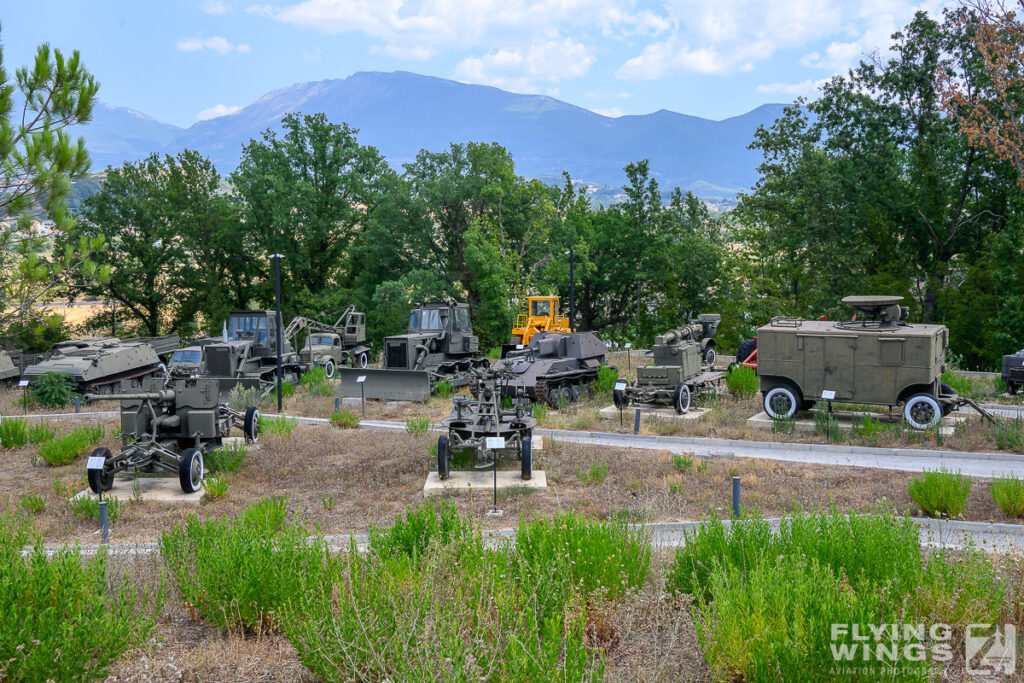
The museum moved to its present premises in 2023 and covers the history of the Albanian Armed Forces from the country’s early military traditions to the present NATO era. While the main building provides this historical background, another exhibition is dedicated specifically to the Air Force and Navy. For aviation enthusiasts, however, the highlight clearly waits outside.
Albania’s Cold War Fighter Force
Albania once maintained a remarkably substantial combat air force for a country of its size. Initially supported by the Soviet Union, the country subsequently turned towards China after relations with Moscow deteriorated. This political change is reflected particularly well by the aircraft preserved at Dobresh.
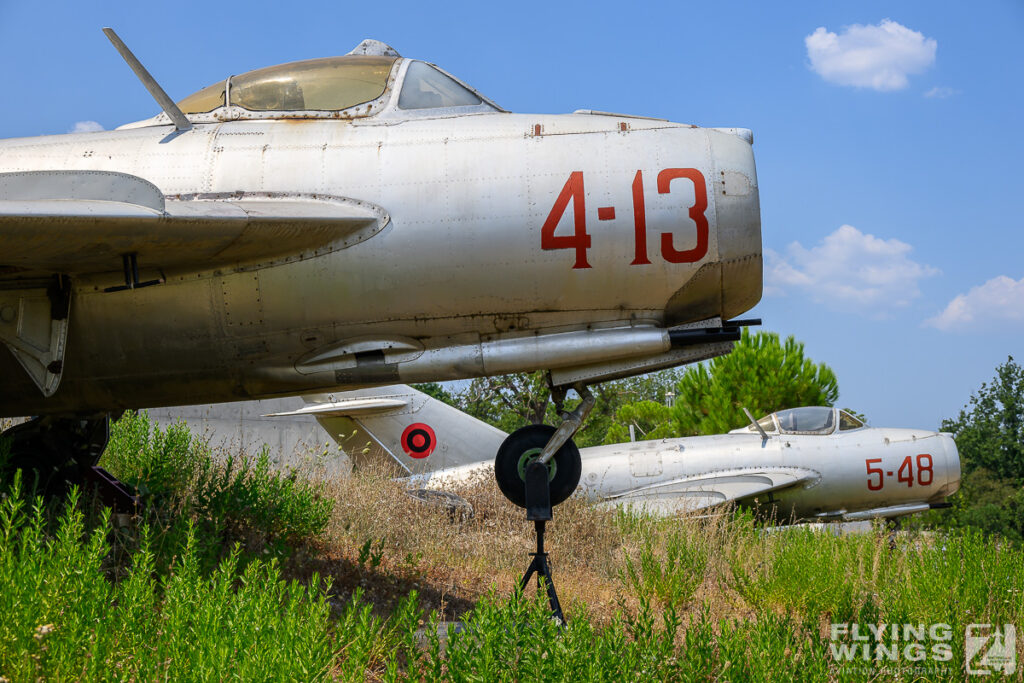
The oldest fighter on display is MiG-15bis 5-48, representing the period of direct Soviet assistance. The MiG-15 family introduced Albania to jet fighter operations during the 1950s and provides the starting point for the development represented by the more advanced aircraft parked alongside it.
The next generation is represented by Shenyang F-5 4-13. Despite its designation, the aircraft has no connection with the American Northrop F-5. It is the Chinese-built derivative of the Soviet MiG-17F and therefore looks immediately familiar. Its Chinese origin, however, is an important part of the story: by this stage Albania had turned away from Moscow and increasingly relied on Beijing for military equipment.
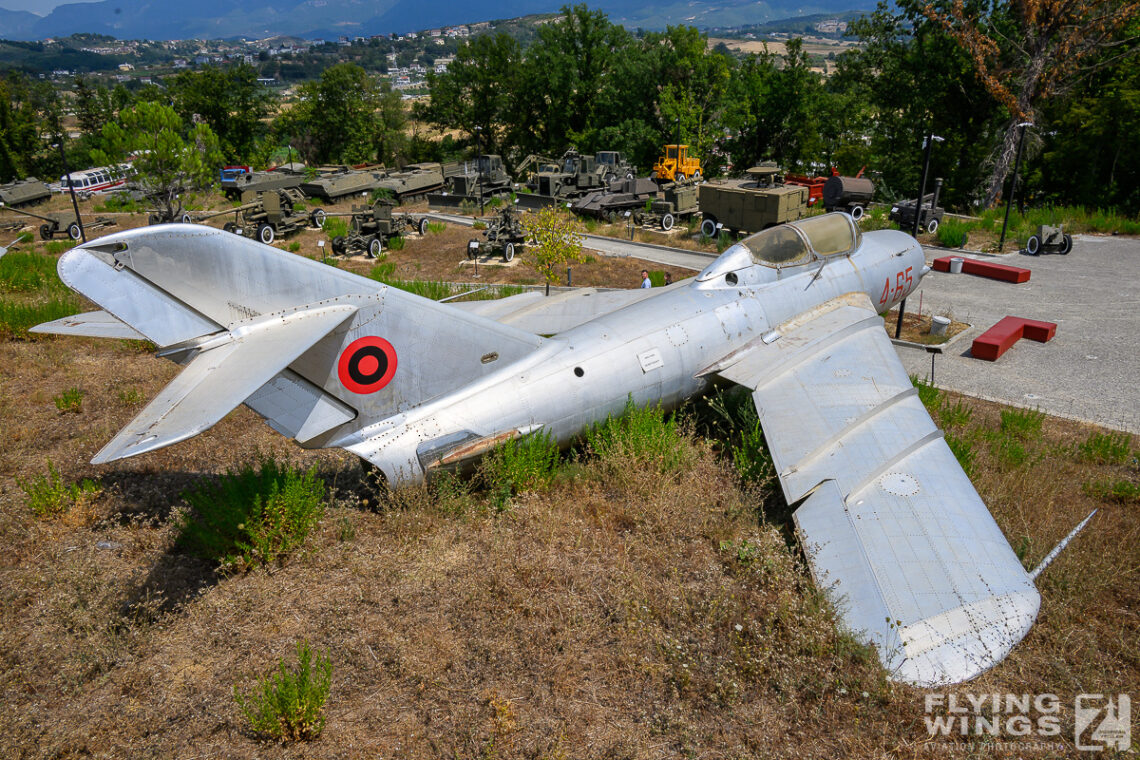
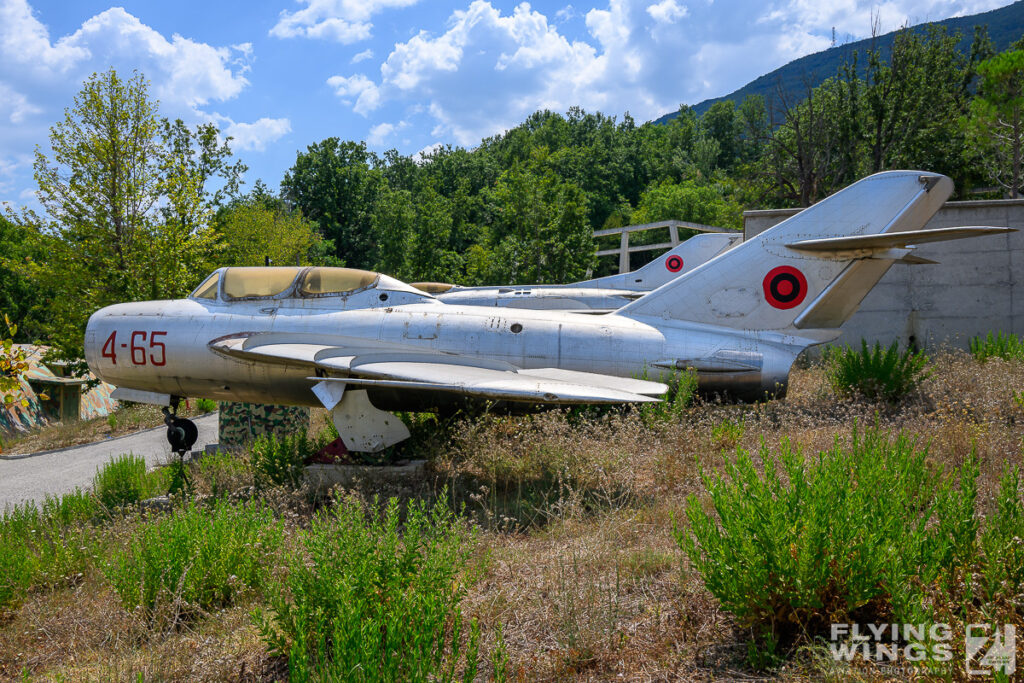
Alongside it is Shenyang FT-5 4-65, the two-seat training development of the same aircraft family. Its elongated tandem cockpit makes it easy to distinguish from the single-seat F-5 and illustrates the training infrastructure required to support Albania’s expanding fighter force.
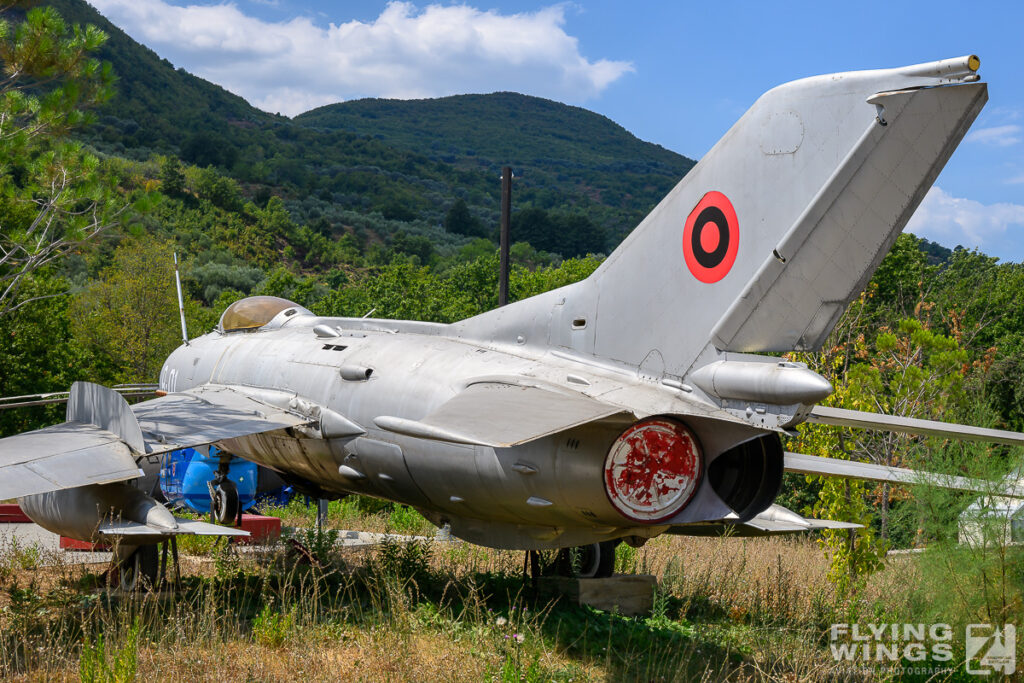
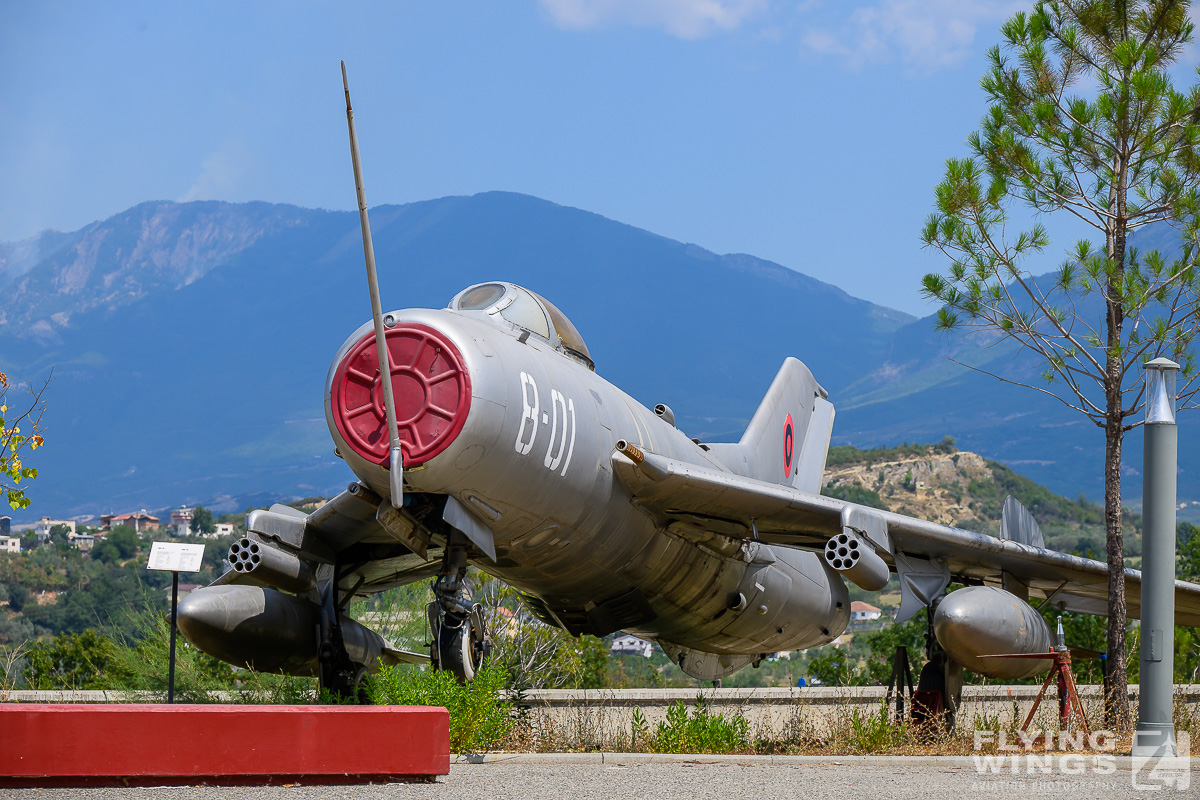
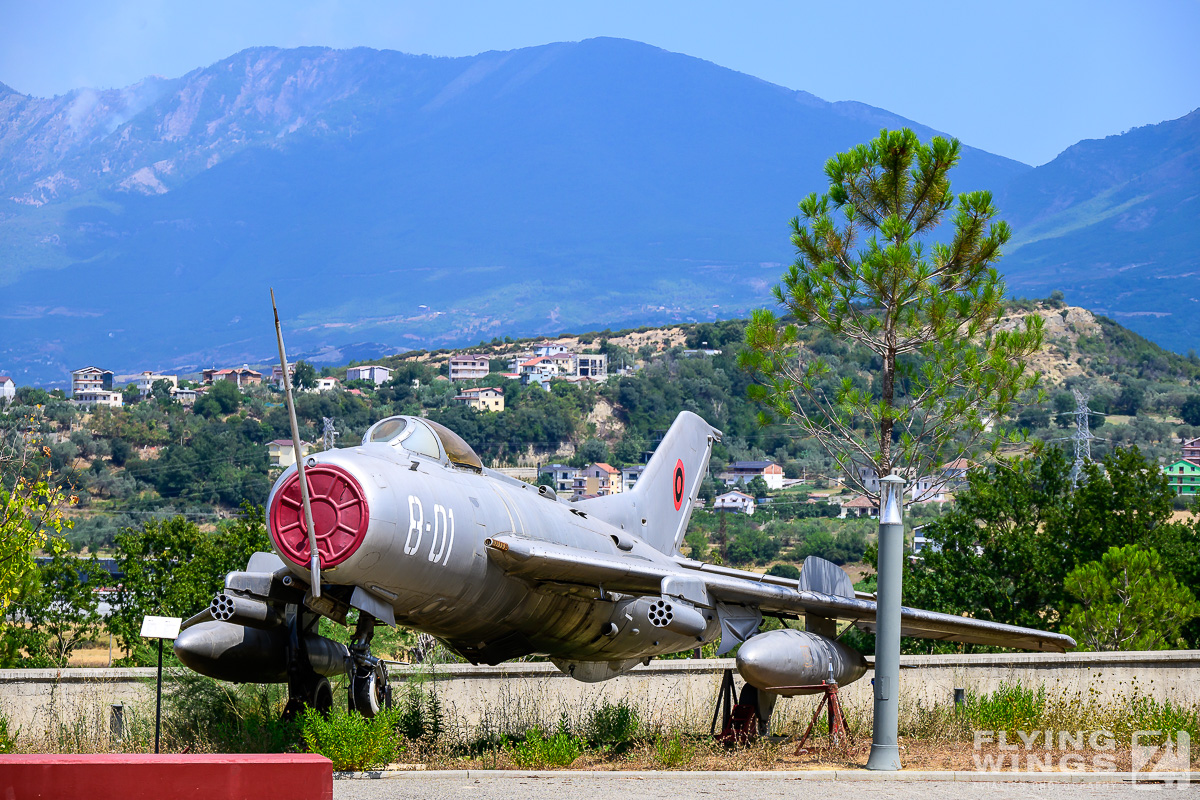
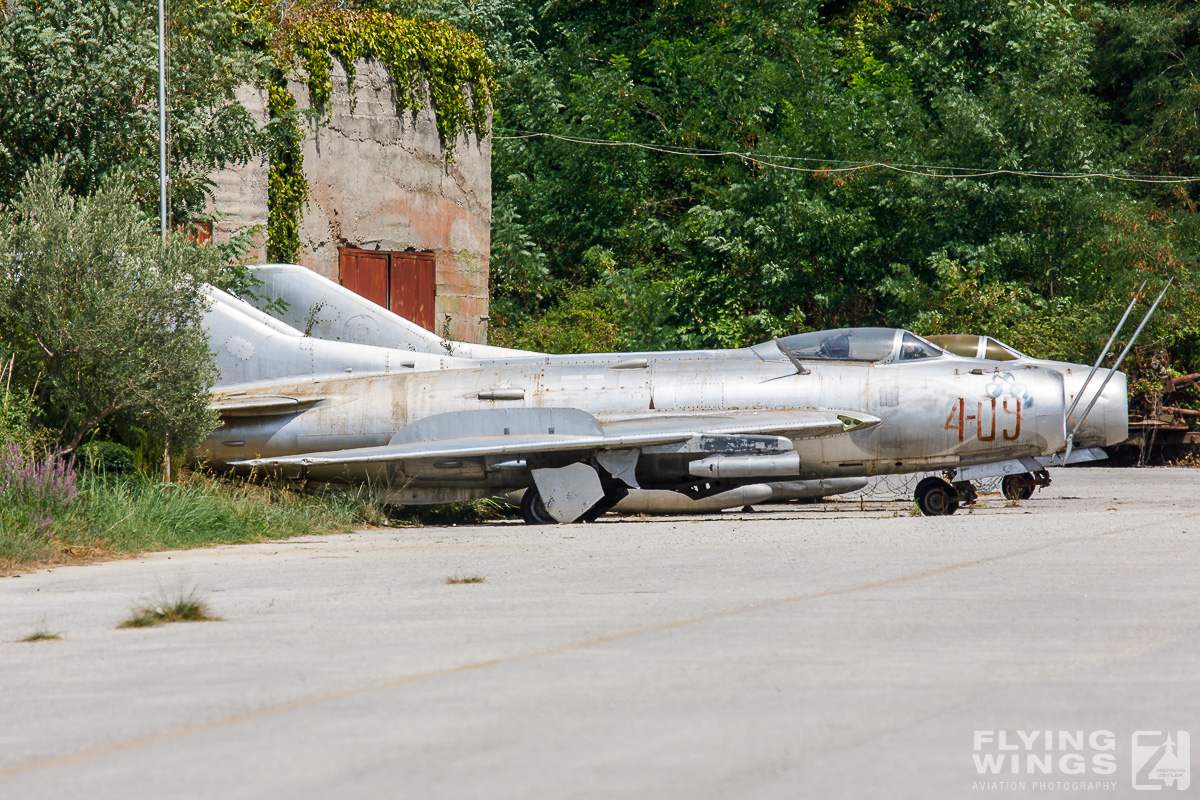
A major step forward came with the Shenyang F-6, China’s development of the Soviet MiG-19. The museum preserves two examples, F-6 4-22 and F-6C 8-01. With twin engines and supersonic performance, the F-6 represented a considerably more capable generation and became one of the most important combat aircraft in Albanian service.
The presence of two examples at Dobresh is therefore appropriate. For many years the F-6 family formed the backbone of Albania’s fighter force and was operated in substantial numbers from several bases around the country.
The F-7A – Albania’s Mach 2 Fighter
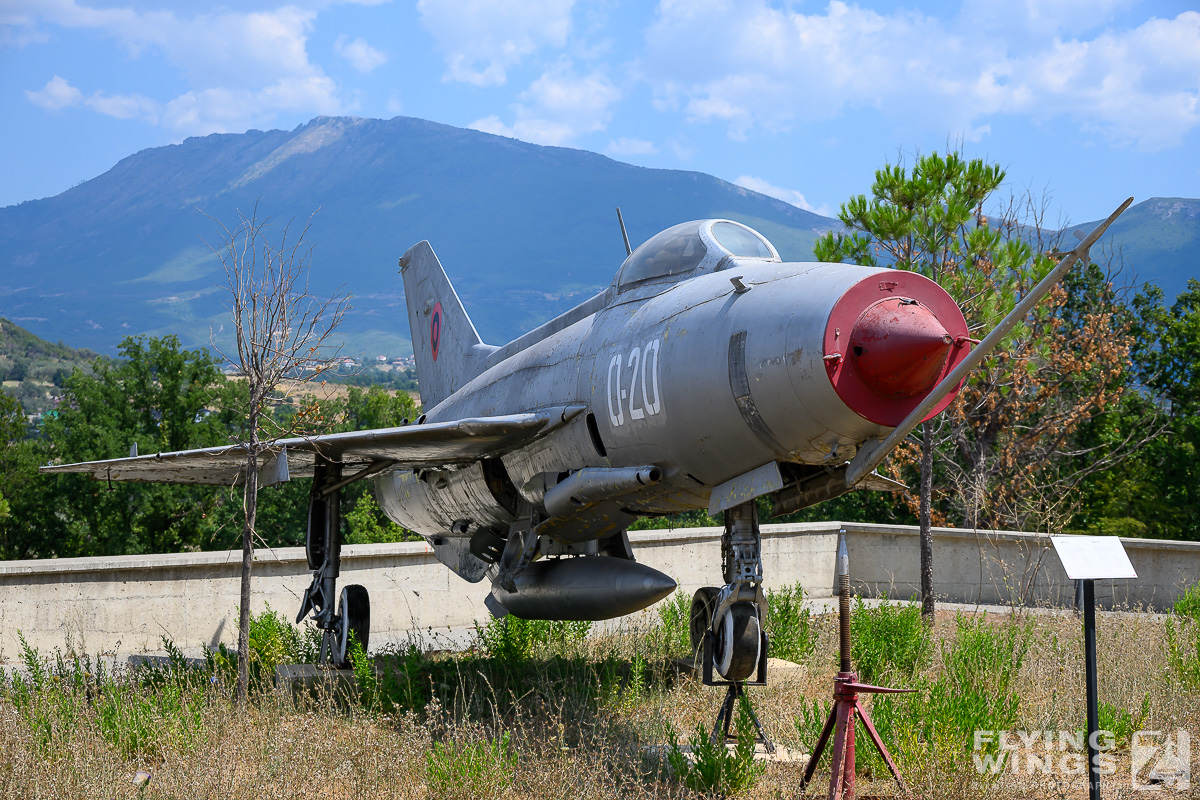
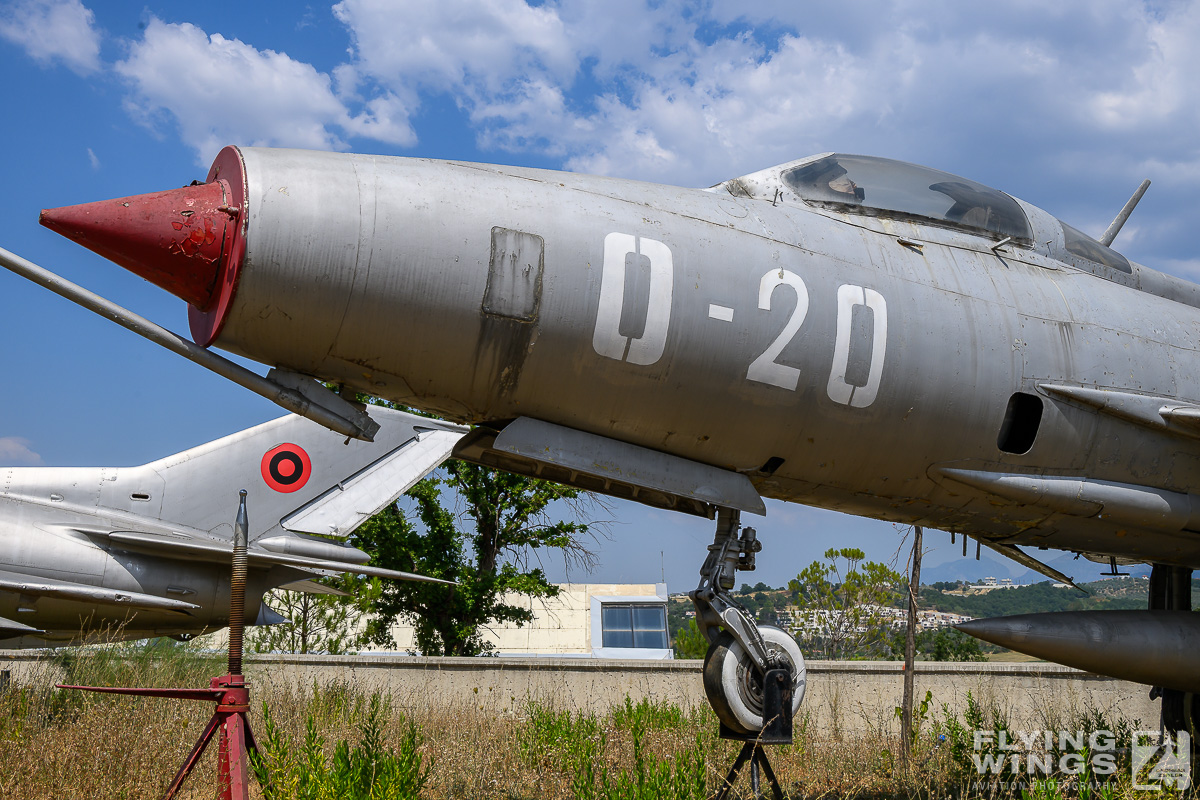
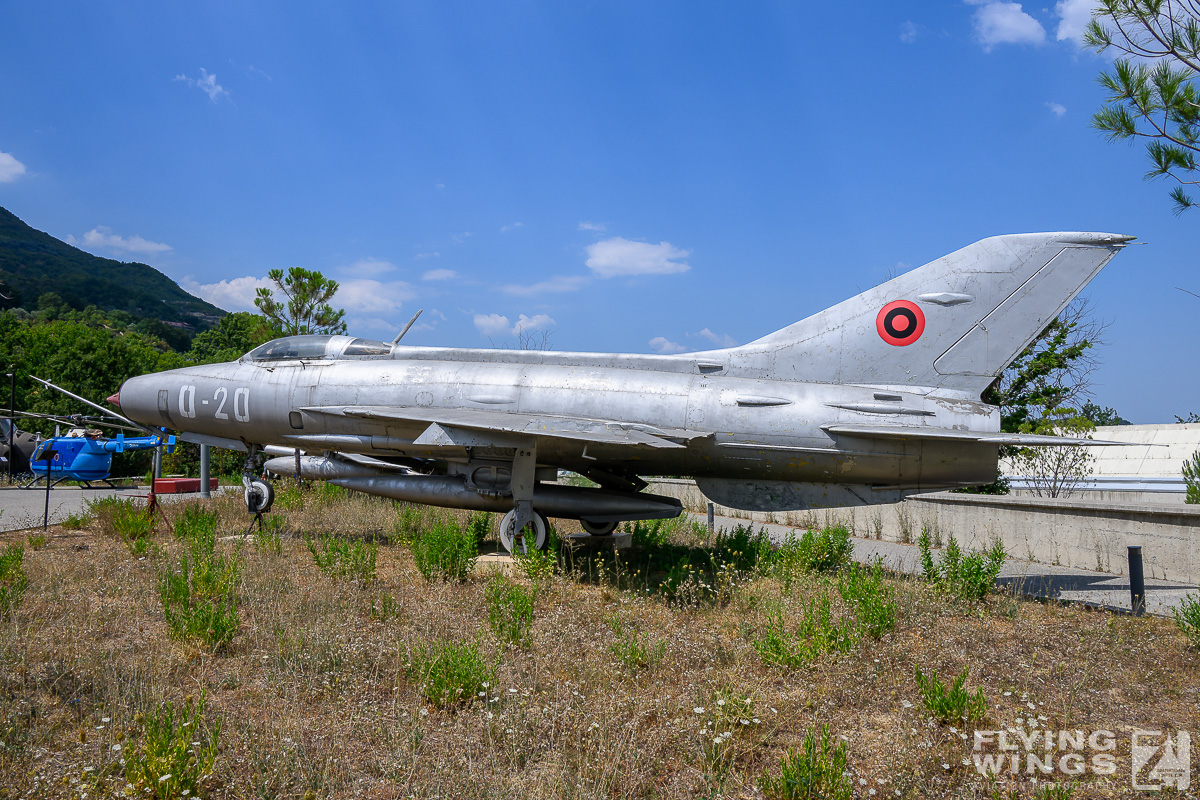
The culmination of the fighter collection is Chengdu F-7A 0209.
Its ancestry is immediately recognisable. The F-7 was developed in China from the Soviet MiG-21F-13, retaining its characteristic nose intake, compact dimensions and delta wing. It is therefore tempting to describe the museum aircraft simply as a MiG-21, but that would miss an important part of its history.
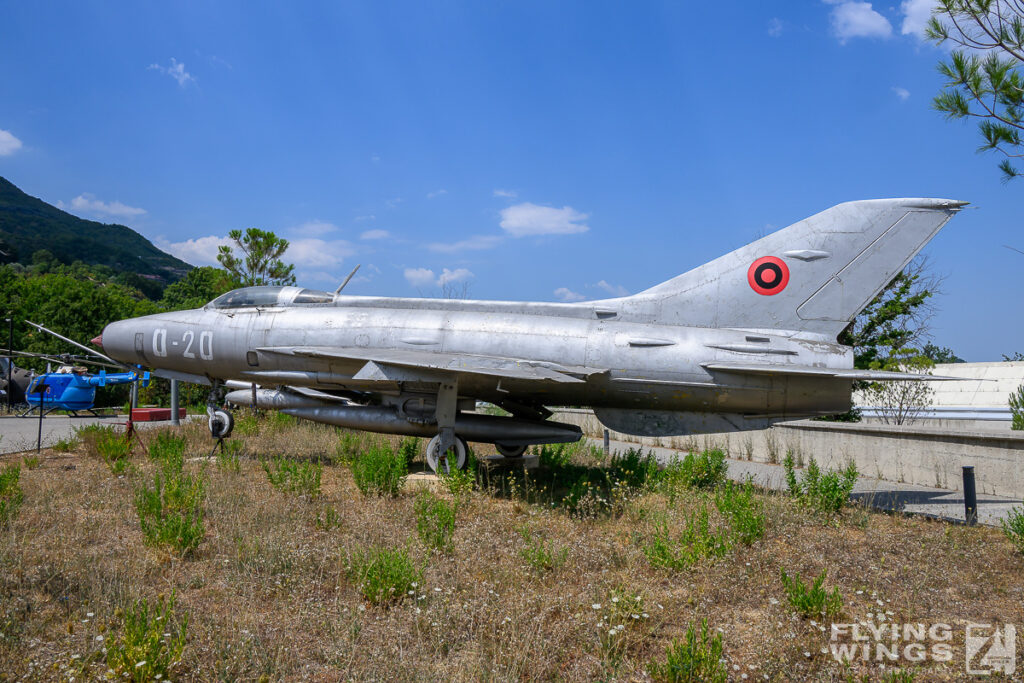
Albania received the F-7 from China rather than the Soviet Union. Capable of approximately Mach 2, it represented the most advanced generation of fighter obtained by communist Albania and a significant performance increase over the earlier F-5 and F-6.
Only a relatively small number of F-7As served with Albania compared with the much more numerous F-6 fleet, making the surviving example particularly interesting.
Seen together, the MiG-15bis, Shenyang F-5 and FT-5, two F-6s and Chengdu F-7A form a remarkably compact timeline of Albanian combat aviation. More importantly, they illustrate the country’s changing Cold War alliances through the aircraft themselves – from Soviet-supplied MiGs to Chinese-built developments of Soviet designs.
Trainers and Helicopters
Fast jets naturally attract most of the attention, but the museum also preserves an important representative of Albania’s flying training system. Nanchang PT-6 105, belonging to the Chinese CJ-6 family, looks almost modest beside the supersonic fighters, yet aircraft such as this provided the basic flying experience required before pilots could progress to more demanding types.
Another training aircraft is represented inside the museum, although not as a complete airframe. The Air Force exhibition contains the forward section of a Yakovlev Yak-18, a type associated with the early development of Albanian military pilot training.
The museum’s three helicopters cover an even broader technological range.
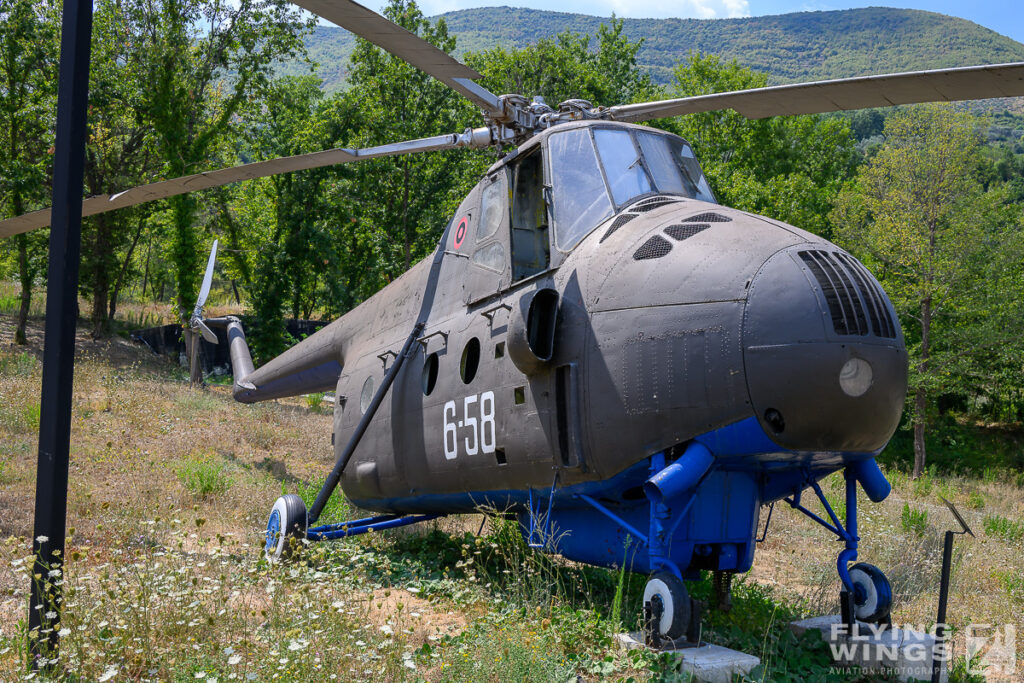
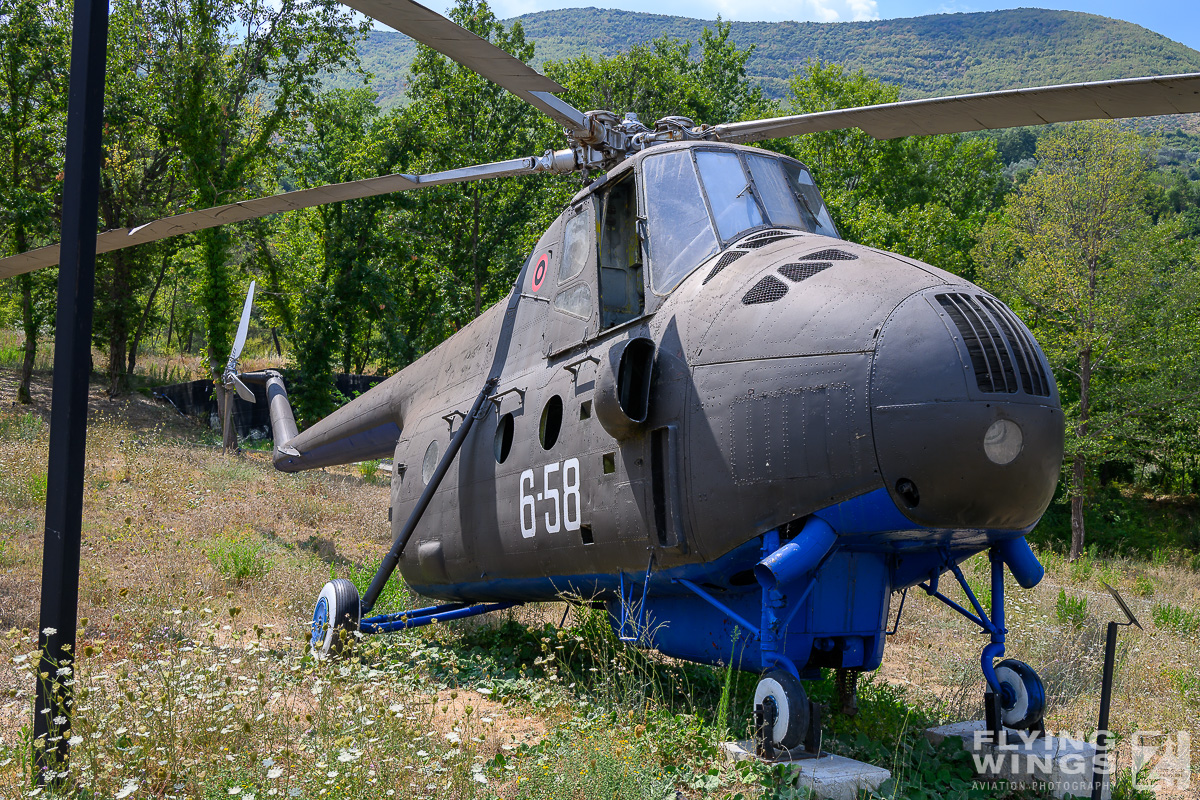
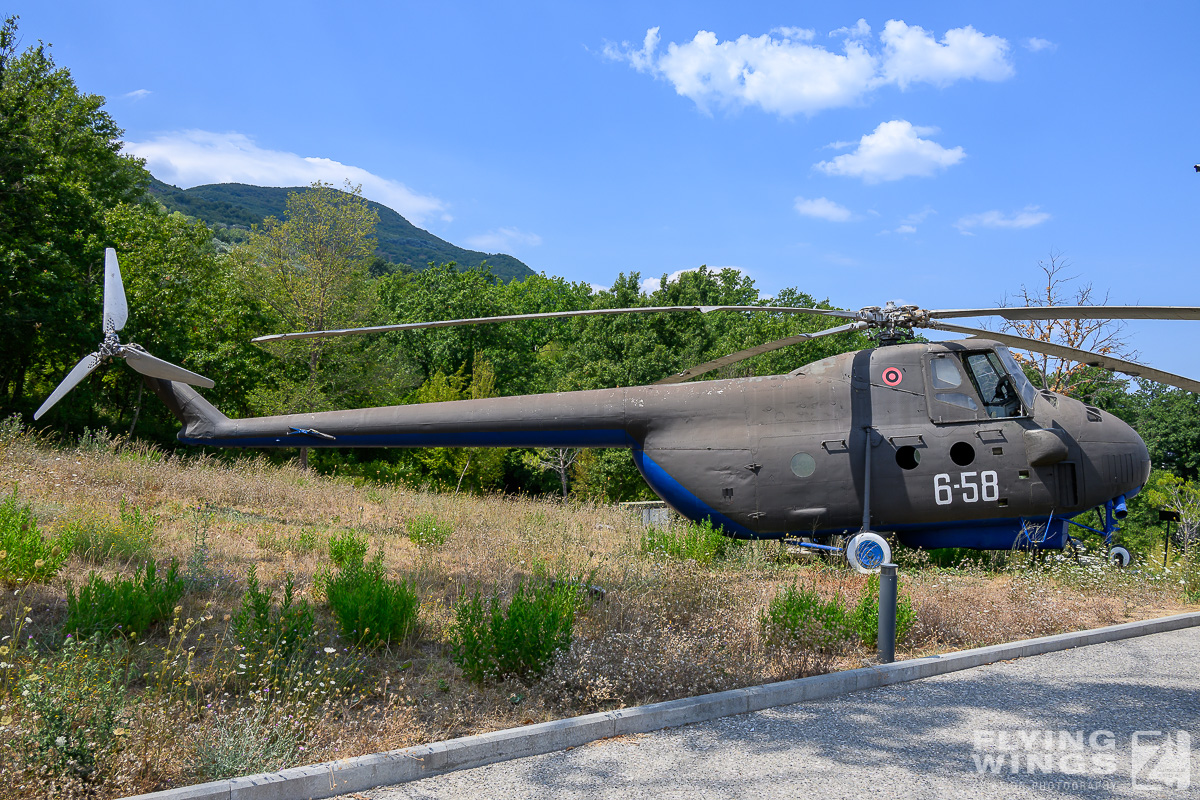
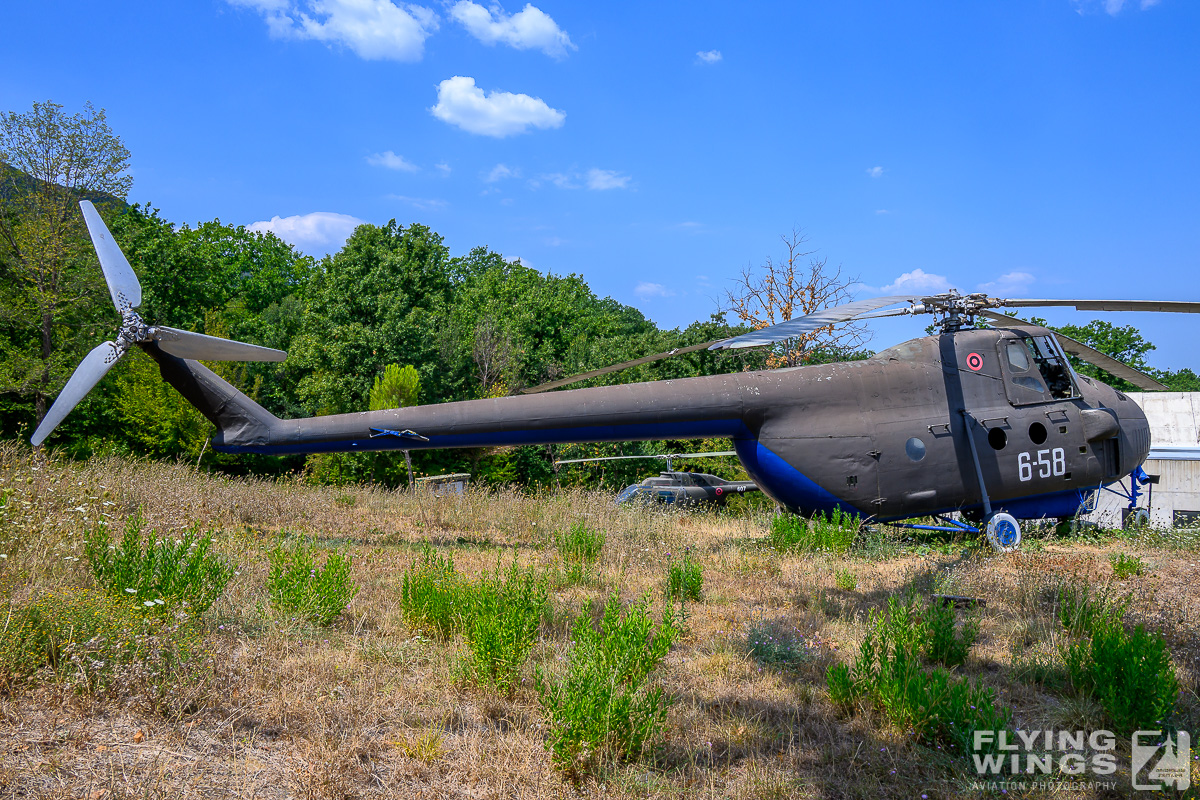
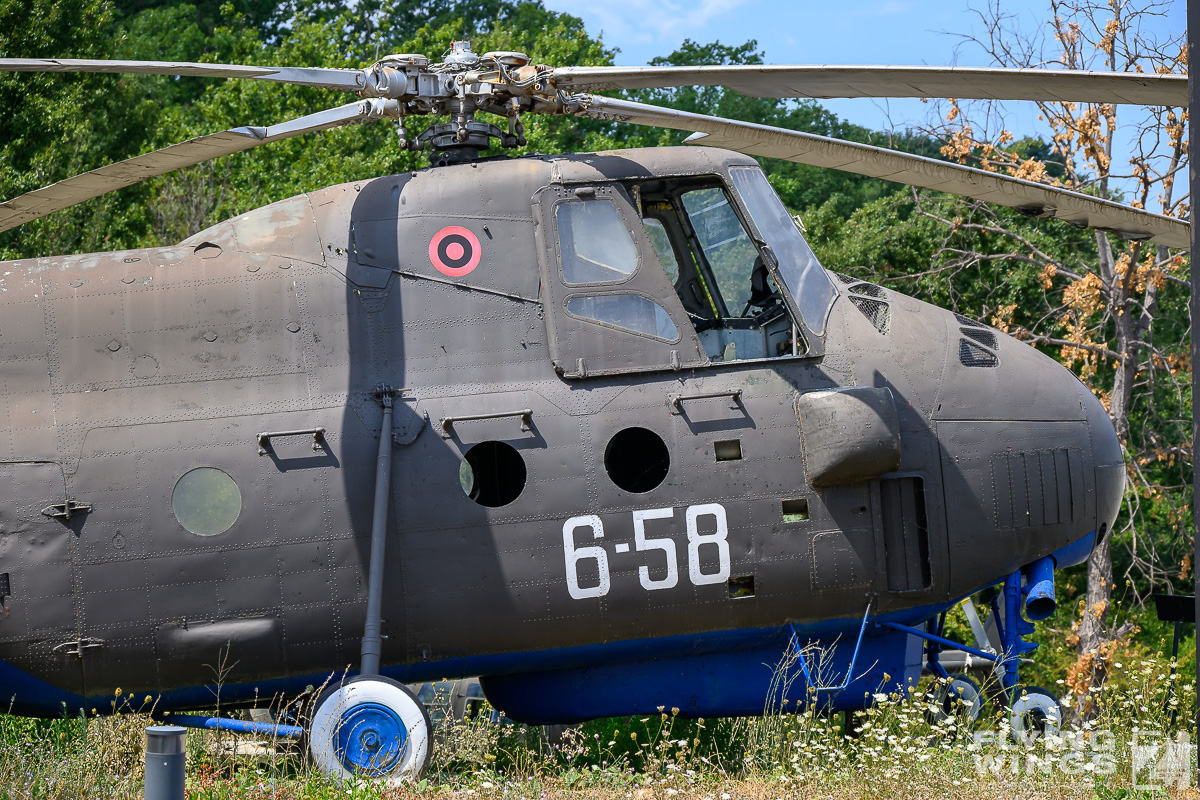
The most imposing is Harbin Z-5 6-58. Often referred to simply as a Mi-4 because of its unmistakable appearance, it is actually the Chinese-built derivative of the Soviet Mil Mi-4. Its large piston engine occupies the nose below the elevated cockpit, while the substantial fuselage provided space for troops and cargo.
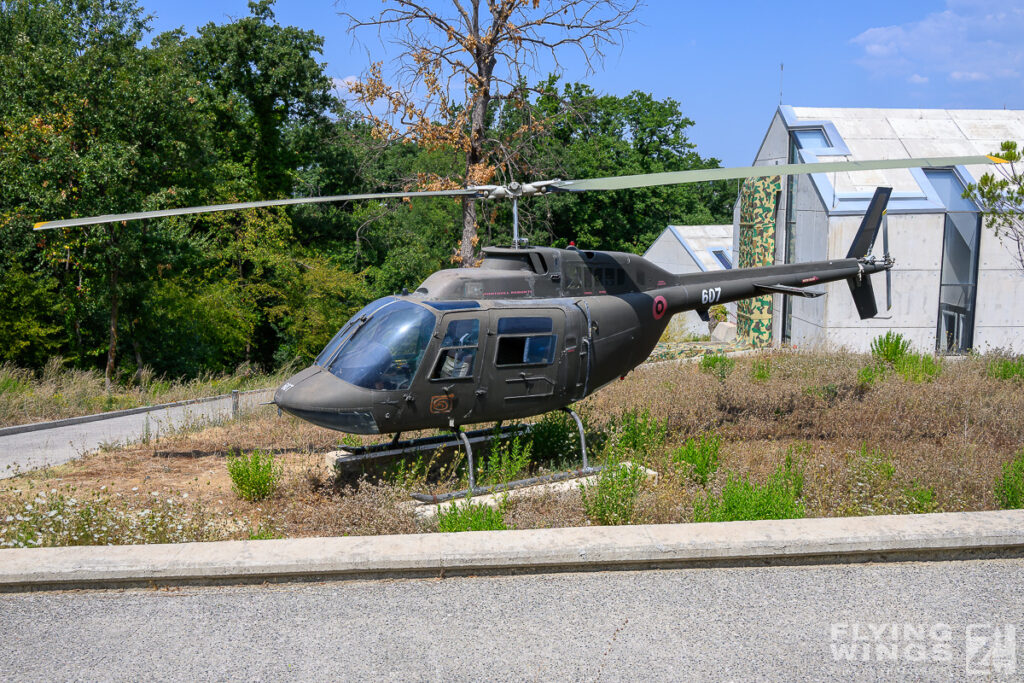
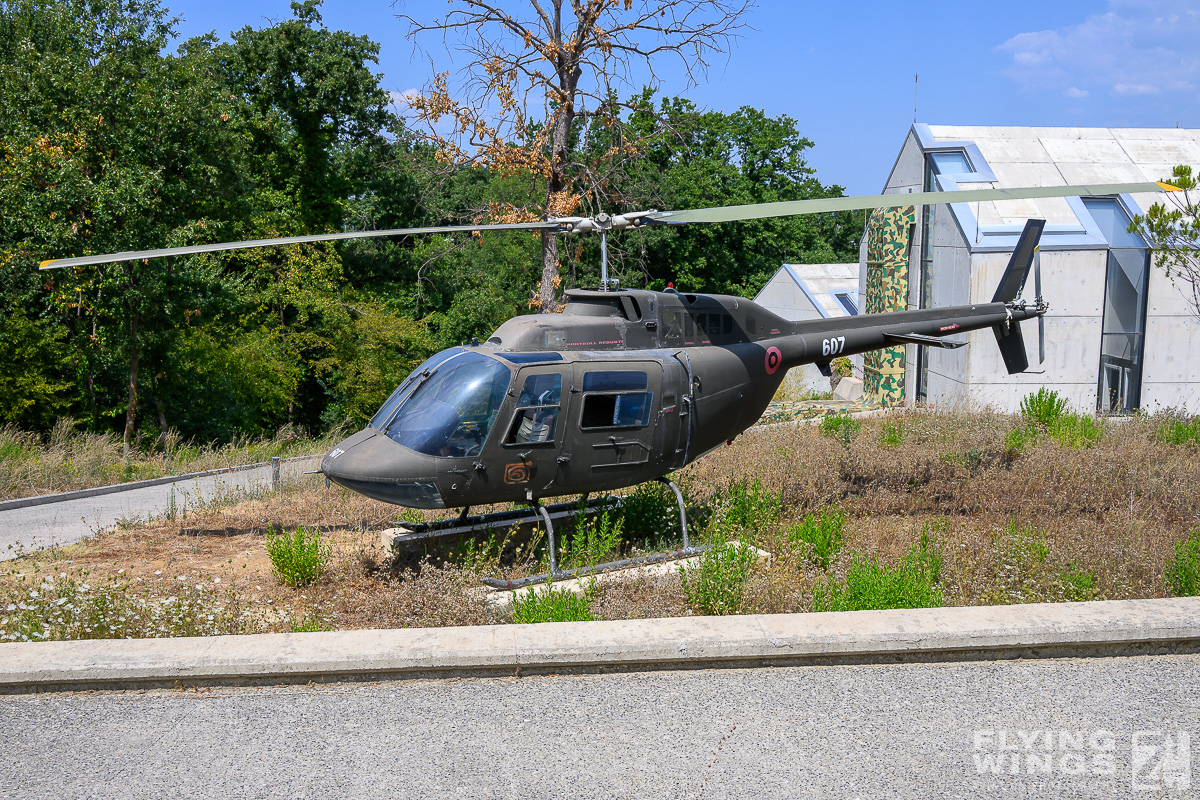
A completely different generation is represented by Agusta-Bell AB.206C-1 JetRanger 607. The small Italian-built light helicopter contrasts sharply with the bulky Z-5 and introduces Western helicopter technology into a collection otherwise strongly influenced by Soviet and Chinese designs.
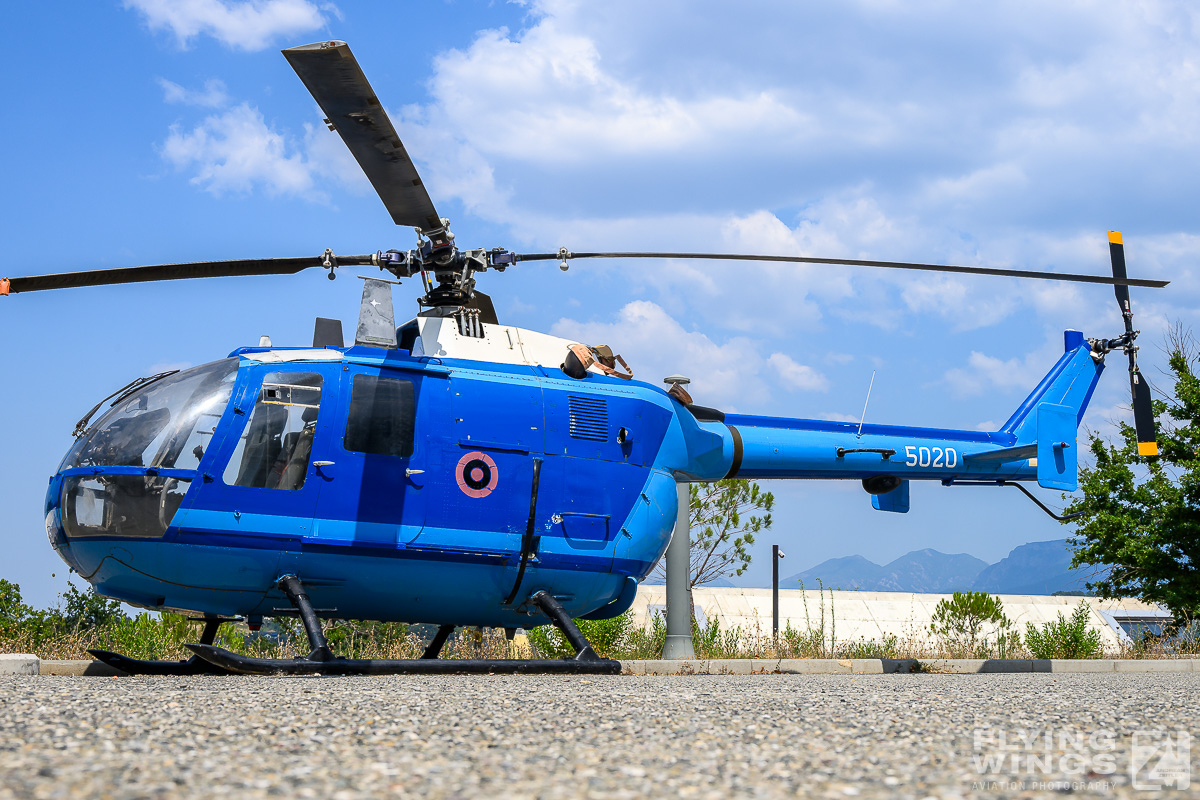
Completing the rotary-wing collection is MBB Bo 105 5020. The compact German-designed twin-engine helicopter belongs to the later period in which Albania increasingly turned towards Western military equipment. Together, the Z-5, JetRanger and Bo 105 provide a concise illustration of several decades of Albanian helicopter development.
Inside the Museum
The aviation collection forms only part of the Albanian Armed Forces Museum. The main building presents Albania’s military development through the communist People’s Army to the country’s accession to NATO in 2009.
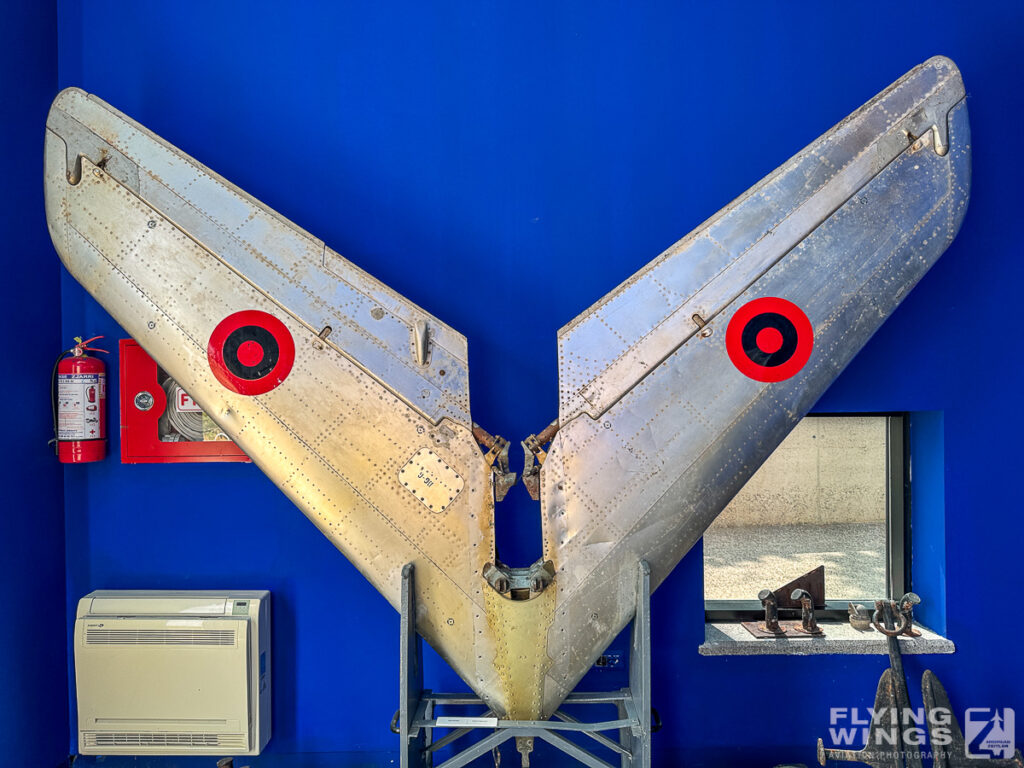
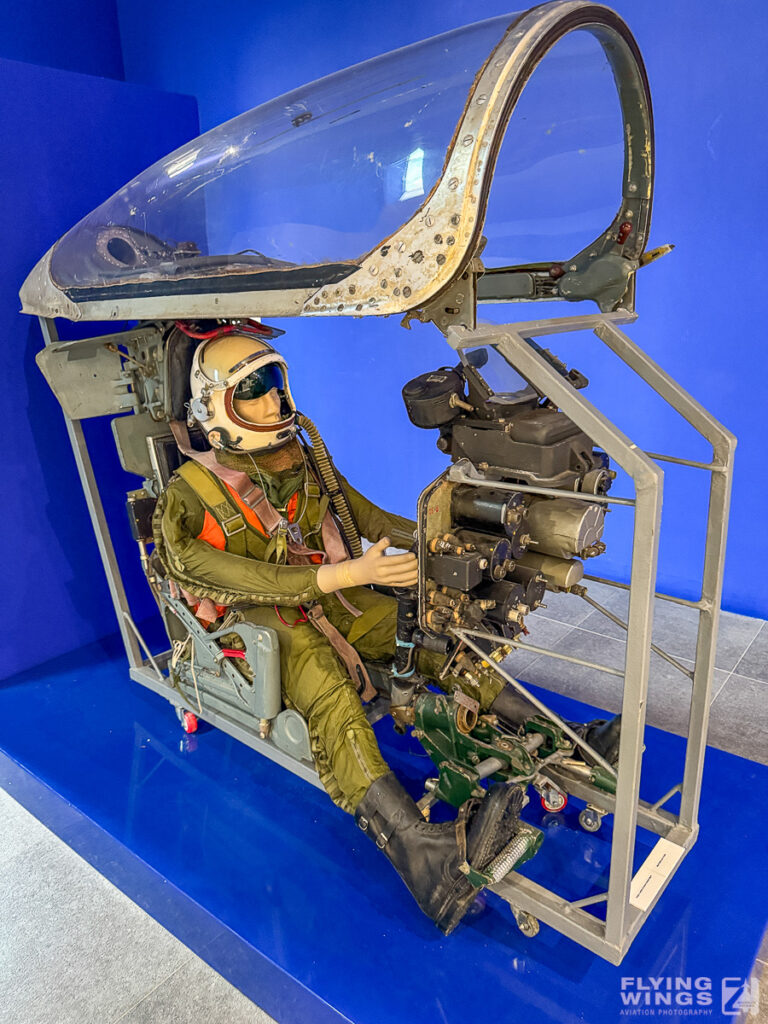
A separate building is devoted to the Air Force and Navy. In addition to photographs, equipment and historical material, its aviation exhibits include the Yak-18 forward section, a MiG-21 cockpit and a target drone.
Outside, the aircraft share the extensive grounds with numerous tanks, armoured vehicles, trucks, artillery pieces and anti-aircraft weapons. Several boats and other exhibits from the Albanian Navy are displayed as well.
Even for visitors primarily interested in aviation, exploring the wider collection is worthwhile. It puts the aircraft into the context of the large military establishment maintained by Albania during decades of Cold War isolation.
Finding the Armed Forces Museum
There is one important detail to know before visiting: the position shown on Google Maps does not lead directly to the museum’s main entrance.
The correct access is located farther to the West and not clearly signposted, making it quite easy to miss on a first visit. After entering, visitors pass a military post before continuing towards a bridge leading into the actual museum area.
The following map is centered on the car entrance, by which you get on the car park:
The Armed Forces Museum at Dobresh is most easily reached by car from Tirana.
Visitors should also be prepared for the Albanian climate. Most of the aircraft, tanks and vehicles stand outside with little shade. During summer, drinking water, a hat and effective sun protection are highly recommended, particularly when spending considerable time photographing the aircraft.
Beyond the Museum – More Traces of Albania’s Air Force
The collection at Dobresh provides the easiest way to explore Albania’s military aviation heritage, but it is by no means the only place where remnants of the country’s former air force survive. At Tirana-Rinas, Kuçovë and Gjadër, further traces of the once sizeable fighter force can still be found.
Stored Aircraft at Tirana-Rinas
Visitors arriving at Tirana International Airport may already encounter some of this history before reaching the museum. A number of retired Albanian Air Force aircraft have survived on the military side of Rinas.
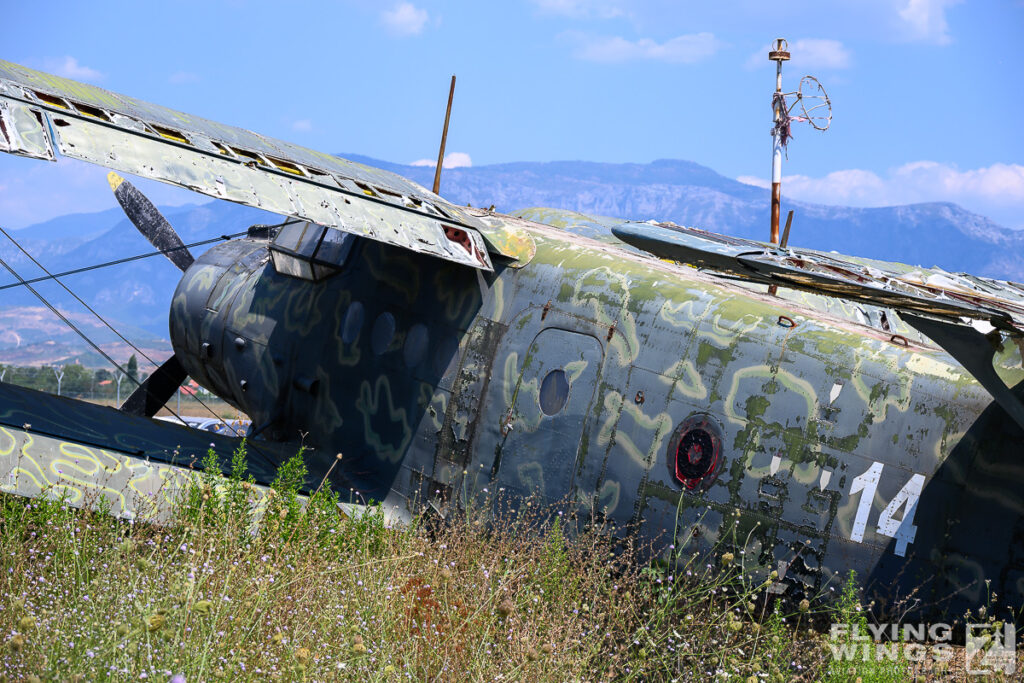
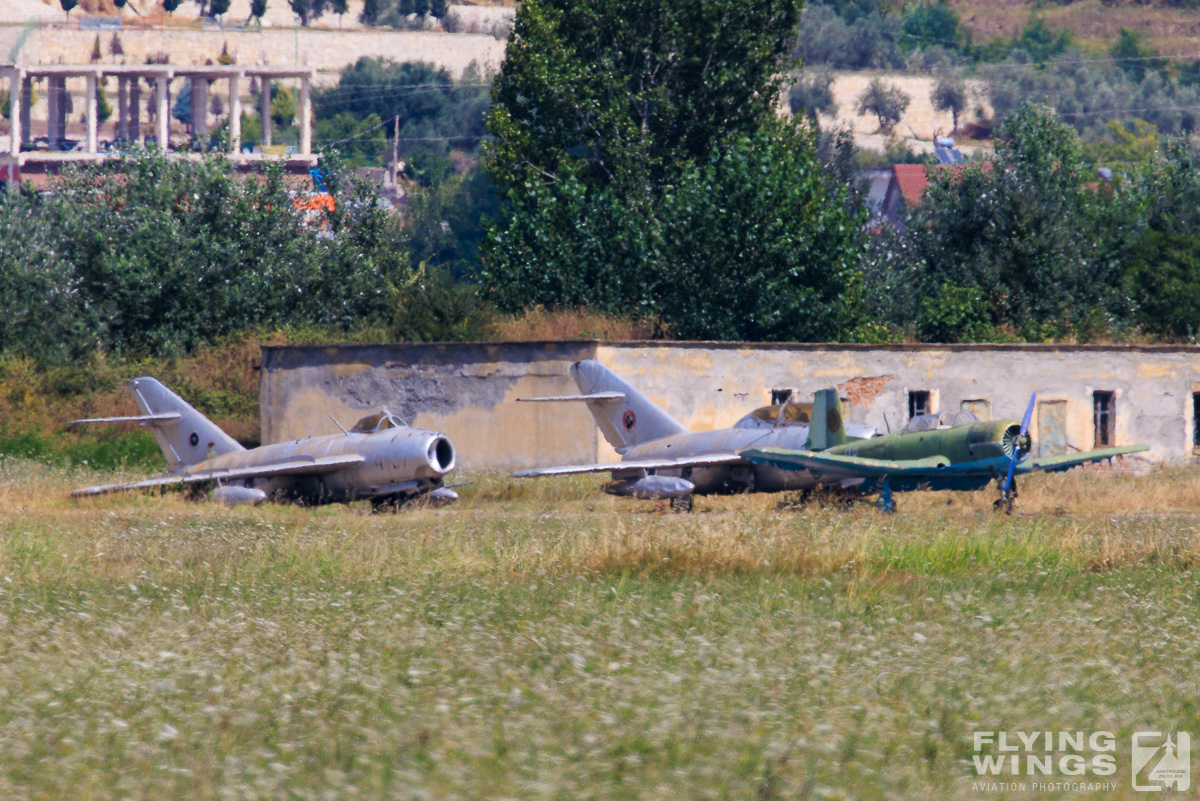
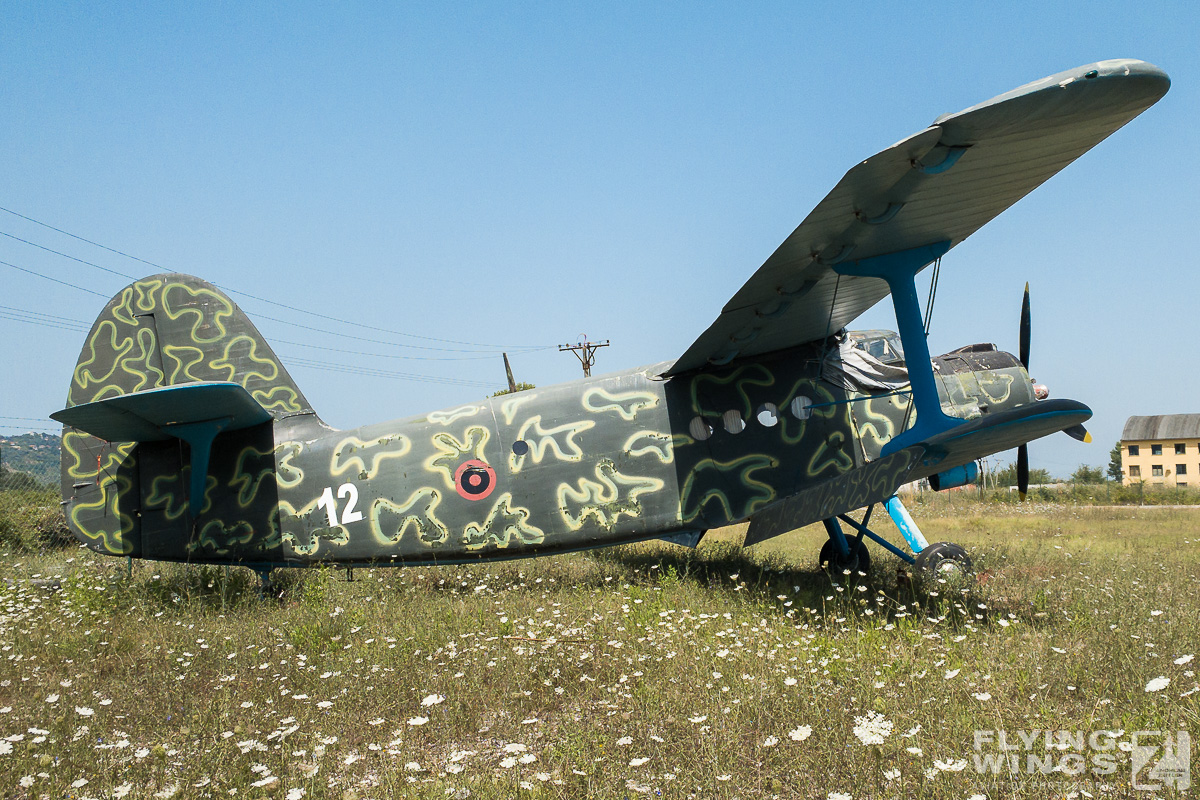
Among the most conspicuous are Harbin Y-5s, the Chinese-built version of the famous Antonov An-2 utility biplane. The rugged aircraft were used for transport and liaison duties and were among the last fixed-wing types operated by the Albanian Air Force.
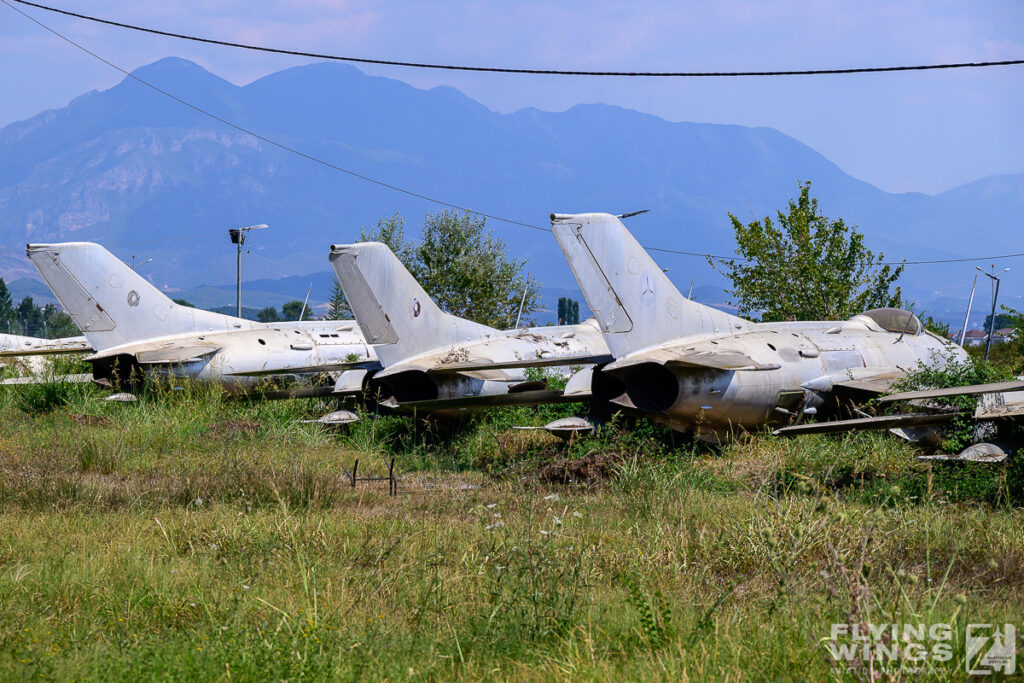
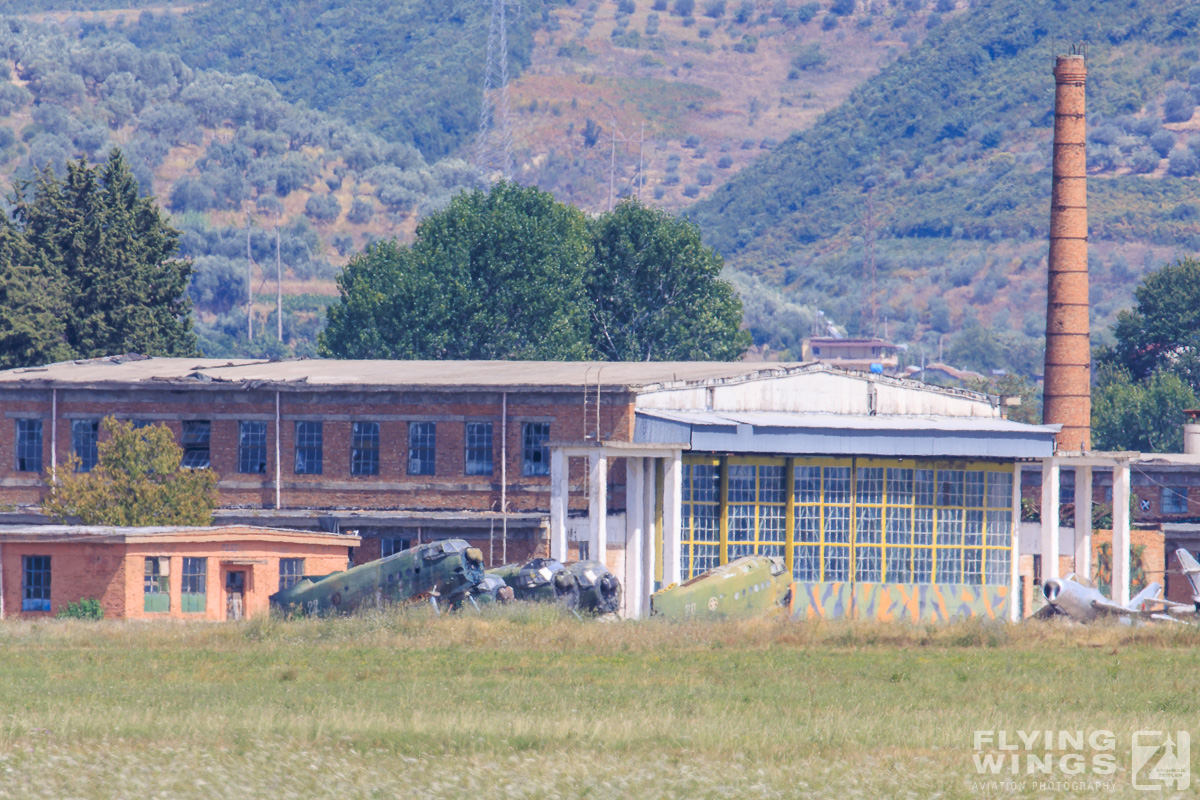
Rinas has also been a storage location for former fighters. Documented aircraft have included Soviet MiG-19S and Chinese Shenyang F-6 fighters, together with other withdrawn types. These aircraft are not part of a public museum and their number and condition have changed over the years, but the surviving machines provide an intriguing contrast to the formally displayed aircraft at Dobresh.
Historically, Rinas was also home to one of the more unusual aircraft in Albanian service: the Harbin H-5, China’s version of the Ilyushin Il-28 twin-engined bomber. H-5 3-608 remained stored at Rinas for years after its withdrawal, another reminder of the extraordinary variety of Chinese military aircraft once operated by Albania.
Kuçovë – From MiGs to NATO
Around 80 kilometres south of Tirana, Kuçovë Air Base occupies a particularly important place in Albanian aviation history. Jet operations began here during the 1950s, and the airfield subsequently became one of the principal bases of the Albanian fighter force.
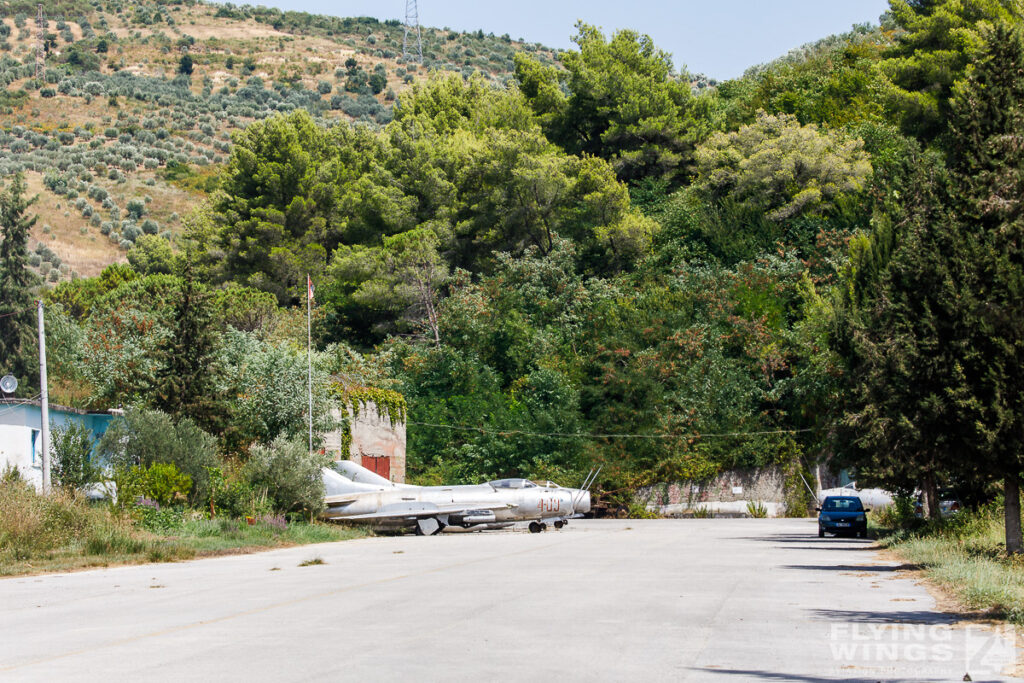
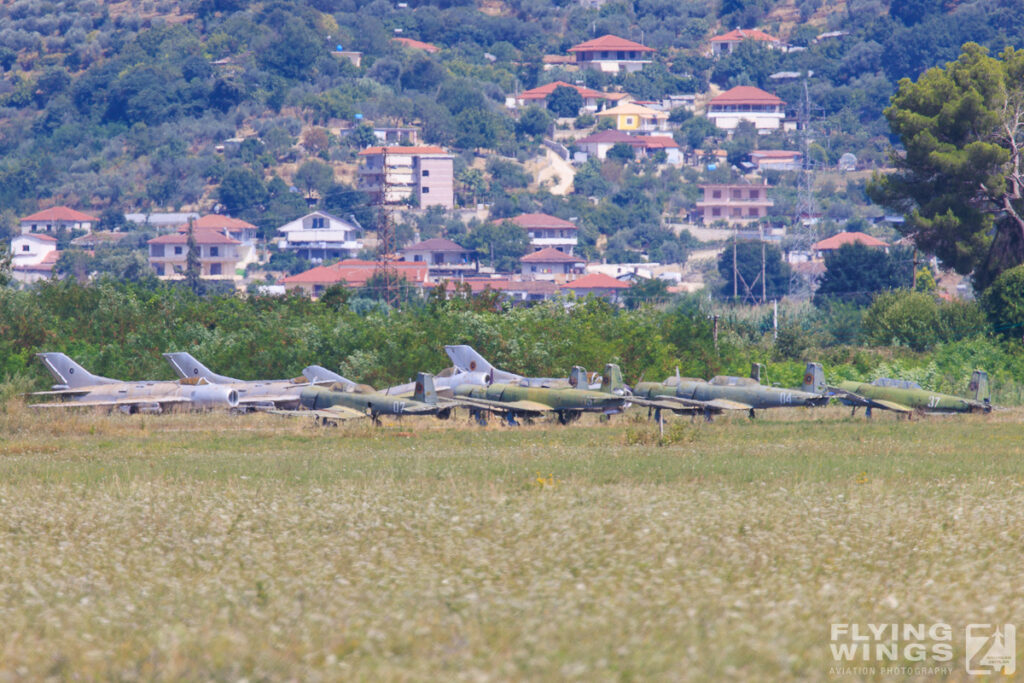
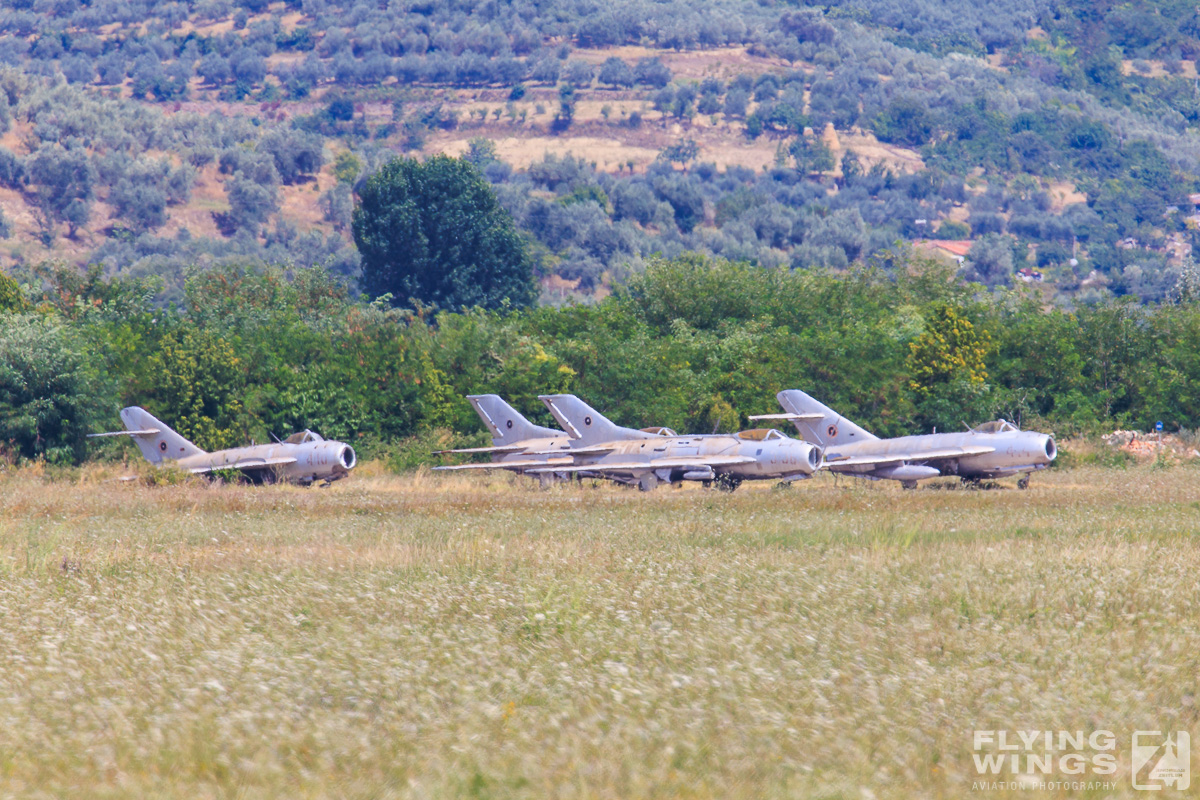
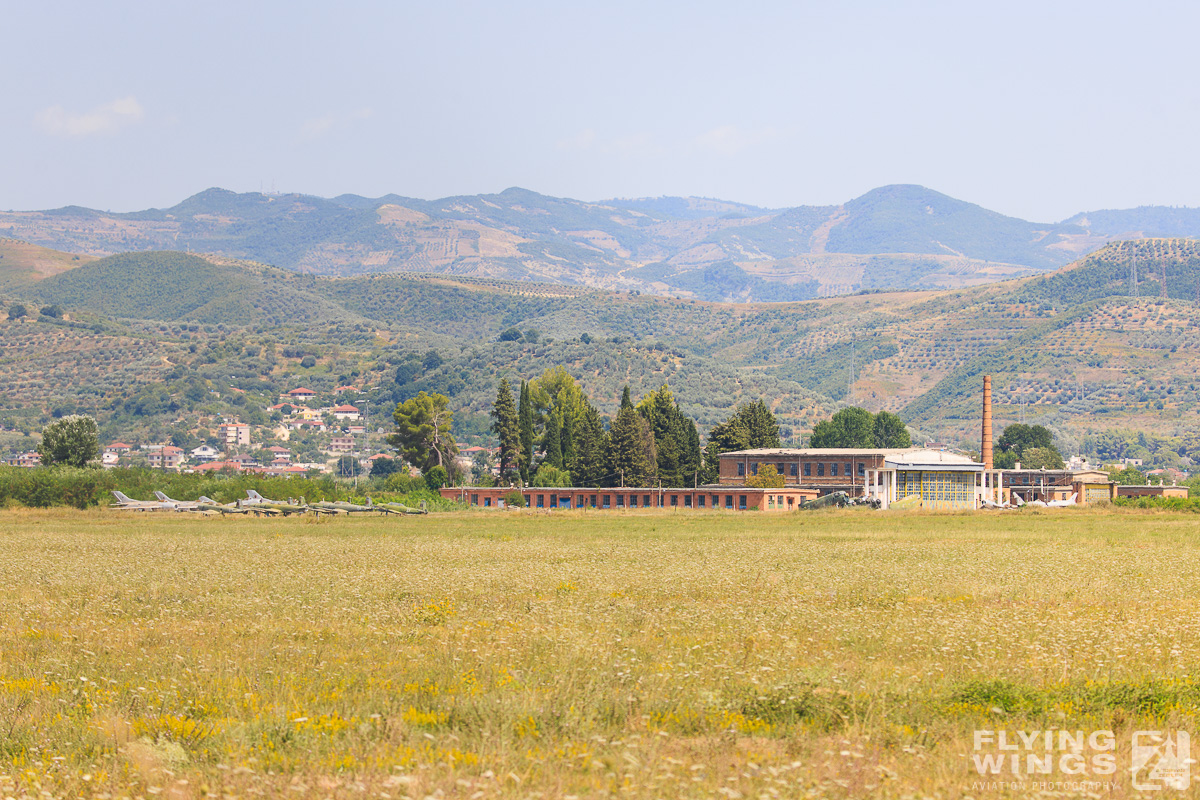
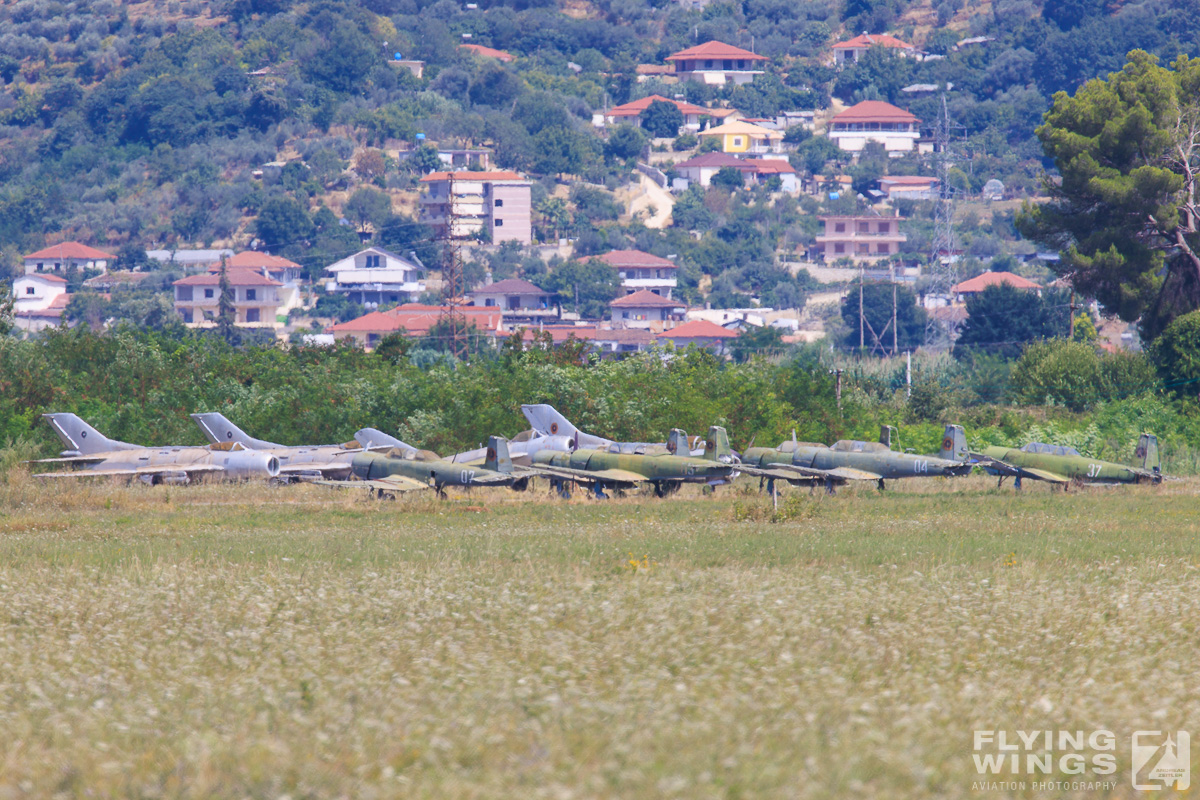
Following the withdrawal of Albania’s combat jets, Kuçovë also became a major storage location. Large numbers of MiG-15bis and MiG-15UTI, Shenyang F-5 and FT-5, MiG-19S and Shenyang F-6 fighters were documented here, together with trainers and transport aircraft.
Photographs from the years after their retirement showed impressive rows of former Albanian fighters parked around the base and near its cavern shelters. Many were the same aircraft types that can now be examined in much better condition at the Armed Forces Museum.
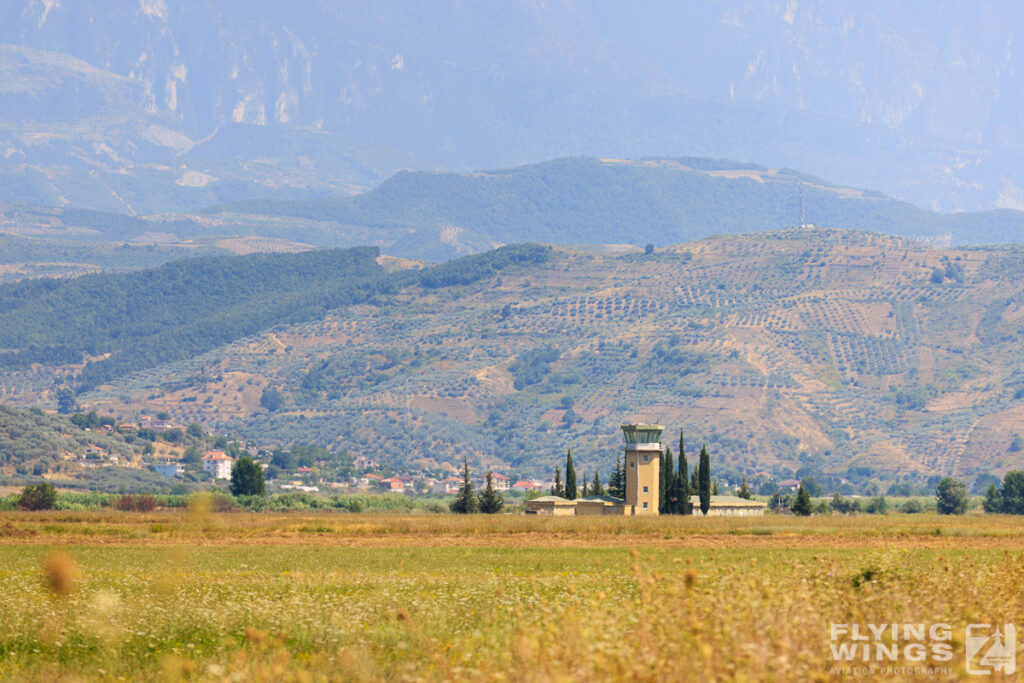
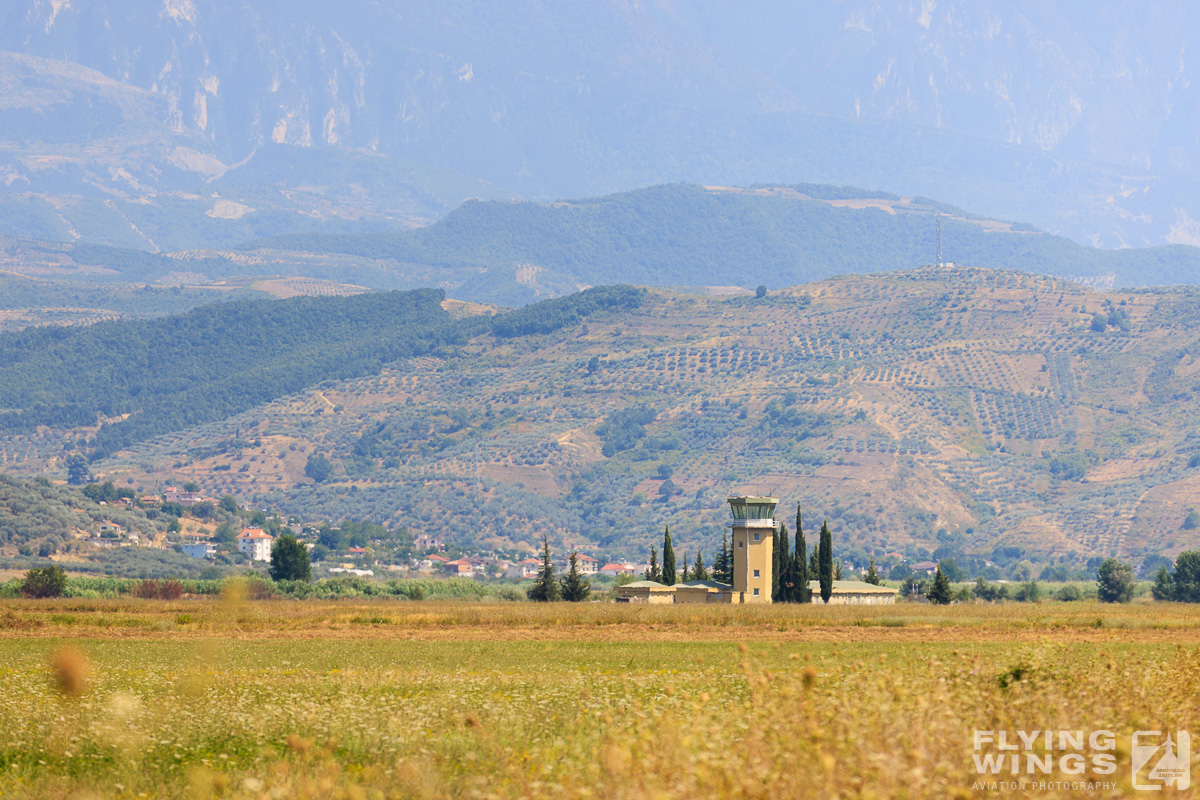
Kuçovë has since undergone a remarkable transformation. NATO invested in rebuilding the airfield, including its runway, control tower, hangars and supporting infrastructure. The modernised Kuçovë Air Base reopened in March 2024 as a NATO tactical air base, giving the historic location an entirely new role.
The contrast could hardly be greater: an airfield once filled with Soviet and Chinese fighters has become a modern facility supporting NATO air operations, exercises and logistics.
Gjadër – Fighters Hidden Inside a Mountain
Perhaps the most fascinating remnant of Albania’s Cold War aviation infrastructure lies at Gjadër, north of Tirana near Lezhë.
The air base was constructed during the late 1960s and early 1970s and became particularly associated with some of Albania’s most capable combat aircraft. Shenyang F-6s, FT-5 trainers and Chengdu F-7As were among the types stationed there.
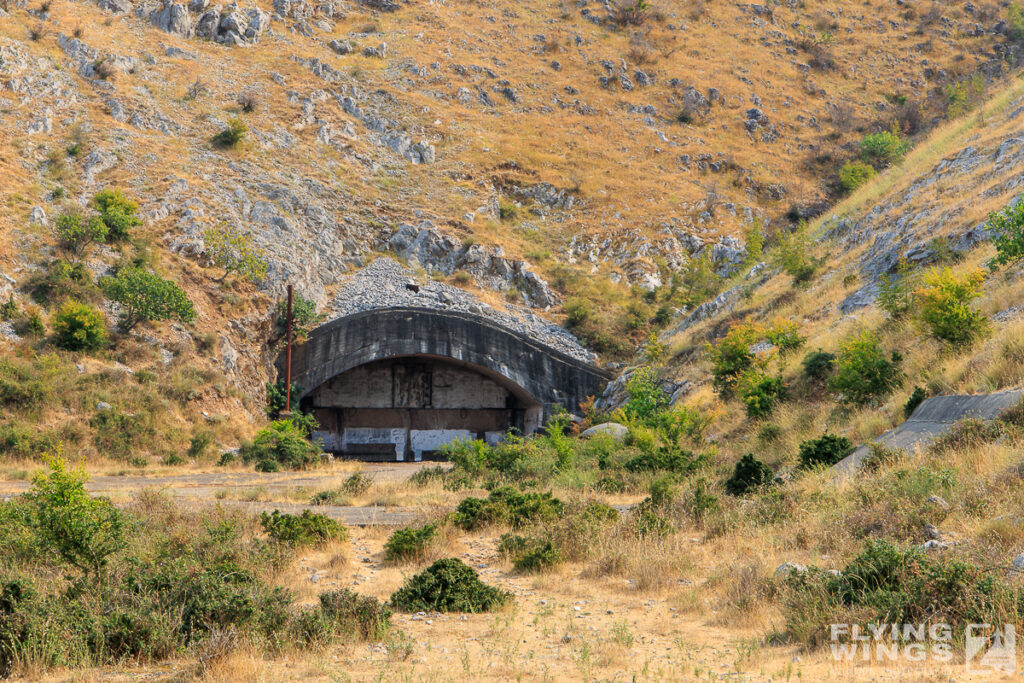
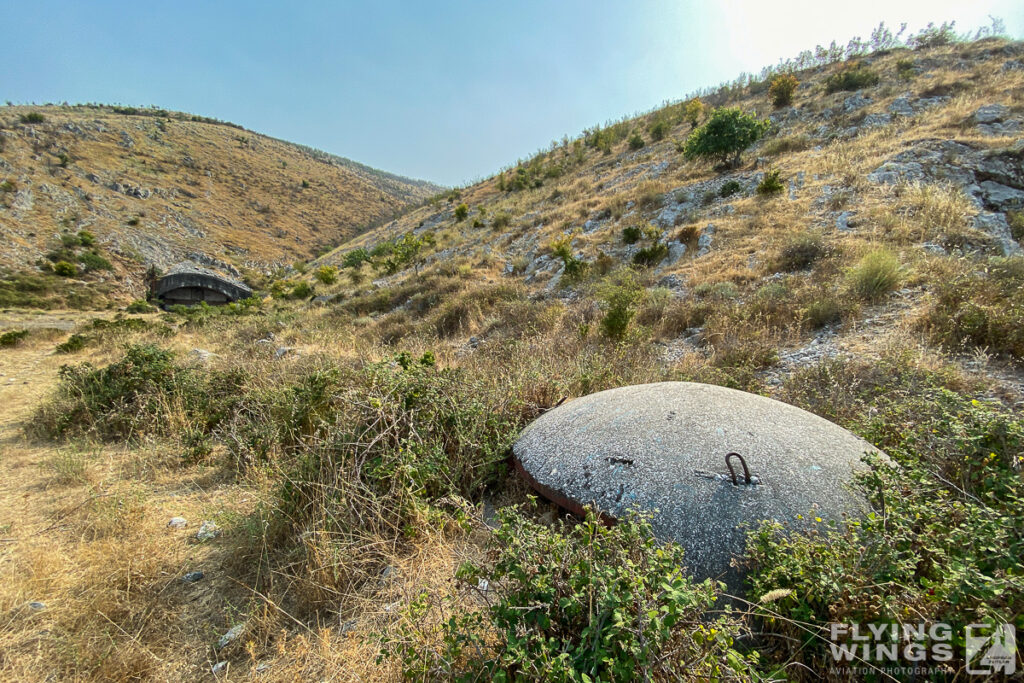
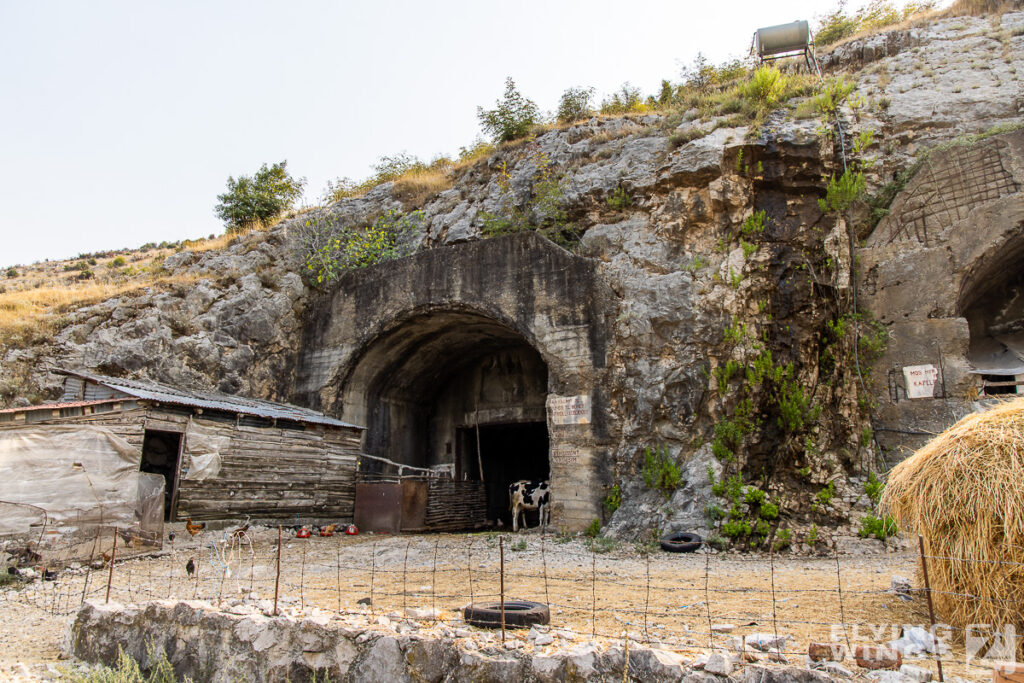
What made Gjadër exceptional was its underground aircraft complex. A dedicated taxiway led away from the conventional runway and dispersal area towards two portals cut into the mountain, allowing fighters to be moved into protected underground storage.
The concept reflected Albania’s defensive thinking during its period of extreme political isolation. Instead of leaving valuable combat aircraft exposed on conventional ramps, fighters could be dispersed and protected inside the mountain, ready to emerge when required.
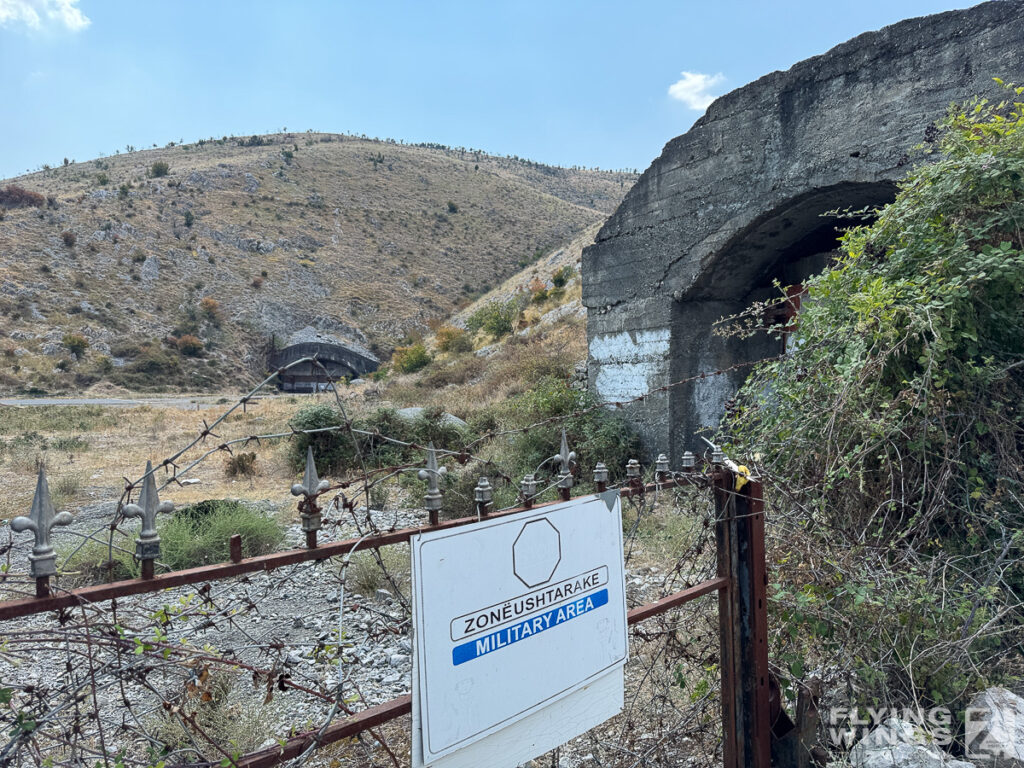
After flying operations ended, Gjadër continued to be associated with Albania’s retired fighters, with withdrawn aircraft stored around and inside the former military complex. The site is not a public aviation museum, but its tunnels remain one of the most remarkable physical reminders of the scale and mentality of Albania’s Cold War air defence system.
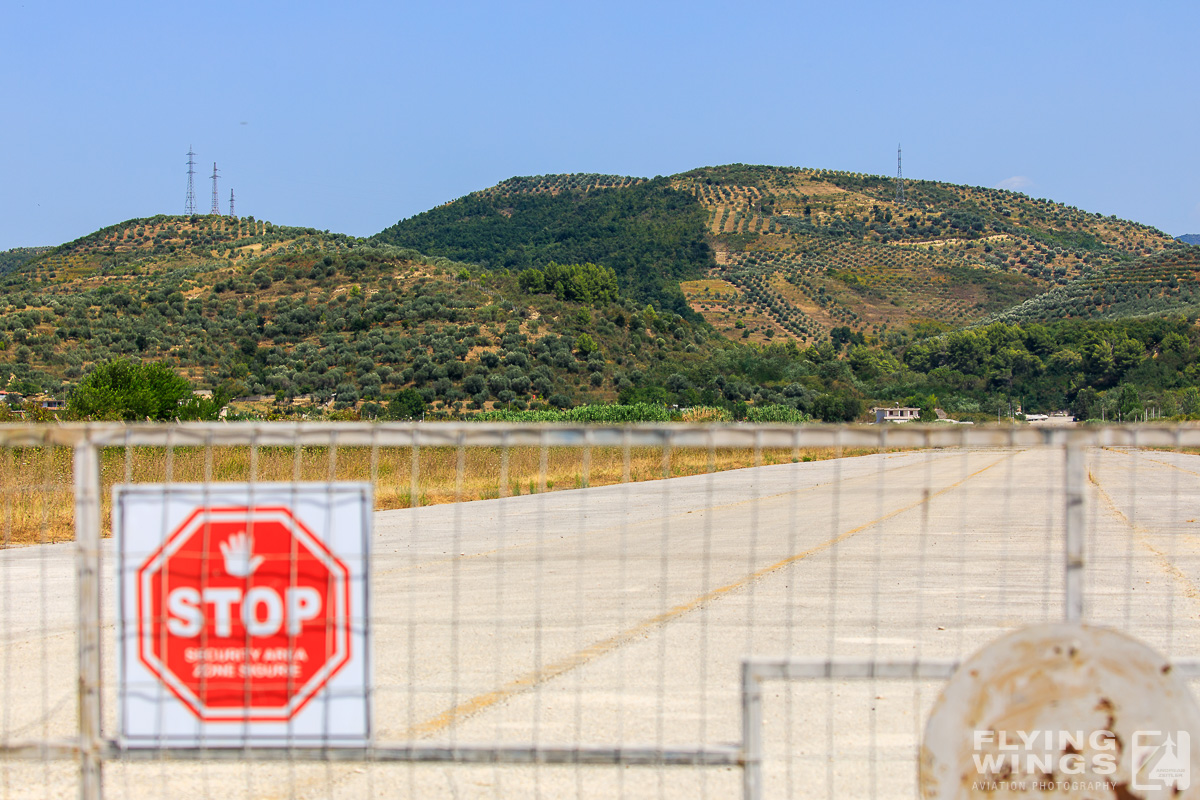
Nowadays, the site is closed to the public, as it became part of an Italian-run migration and detention facilities in northwest Albania (consisting of a reception hub in Shëngjin and a detention and the processing camp in Gjadër). Whereas it is still widely assumed, that those underground hangars still host a certain number of jets, their doors are closed and the whereabouts of the F-6 and F-7s at Gjadër will remain a secret well hidden under the steep hills of Albania.
A Rare Look at Albania’s Lost Fighter Force
Today Albania no longer operates combat jets. Its Air Force has evolved into a much smaller organisation integrated within NATO, while responsibility for policing Albanian airspace is supported through the Alliance.
That makes the surviving aircraft at Dobresh particularly significant. In one accessible collection, visitors can follow several decades of Albanian Air Force development – from the Soviet MiG-15 through Chinese Shenyang fighters to the Mach 2 Chengdu F-7A, complemented by trainers and helicopters from both Eastern and Western origins.
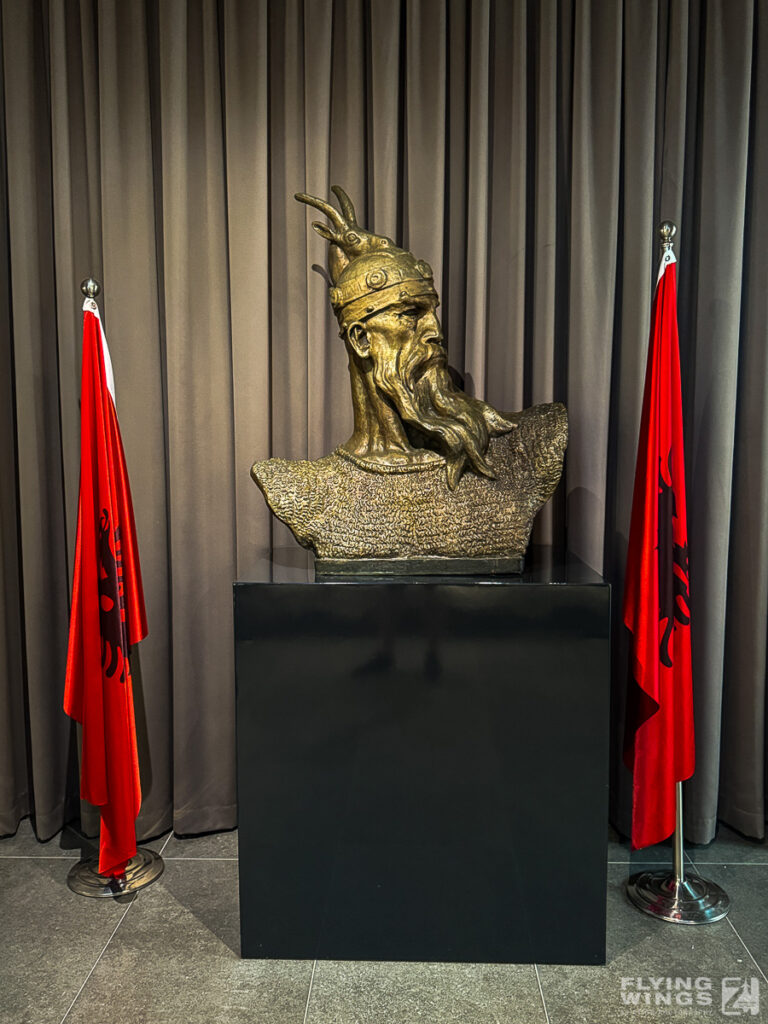
Rinas, Kuçovë and Gjadër add another dimension to that story, but the Armed Forces Museum remains the best starting point. Here the aircraft are accessible, displayed together and placed within the wider history of Albania’s armed forces.
Surrounded by tanks, artillery and naval craft, the ten complete aircraft and helicopters at Dobresh preserve a compact but fascinating cross-section of one of Europe’s most unusual Cold War air forces – and make the Albanian Armed Forces Museum near Tirana a worthwhile stop for any aviation enthusiast travelling through the country.
Hidden Aviation Gems in Albania – a Photo Gallery
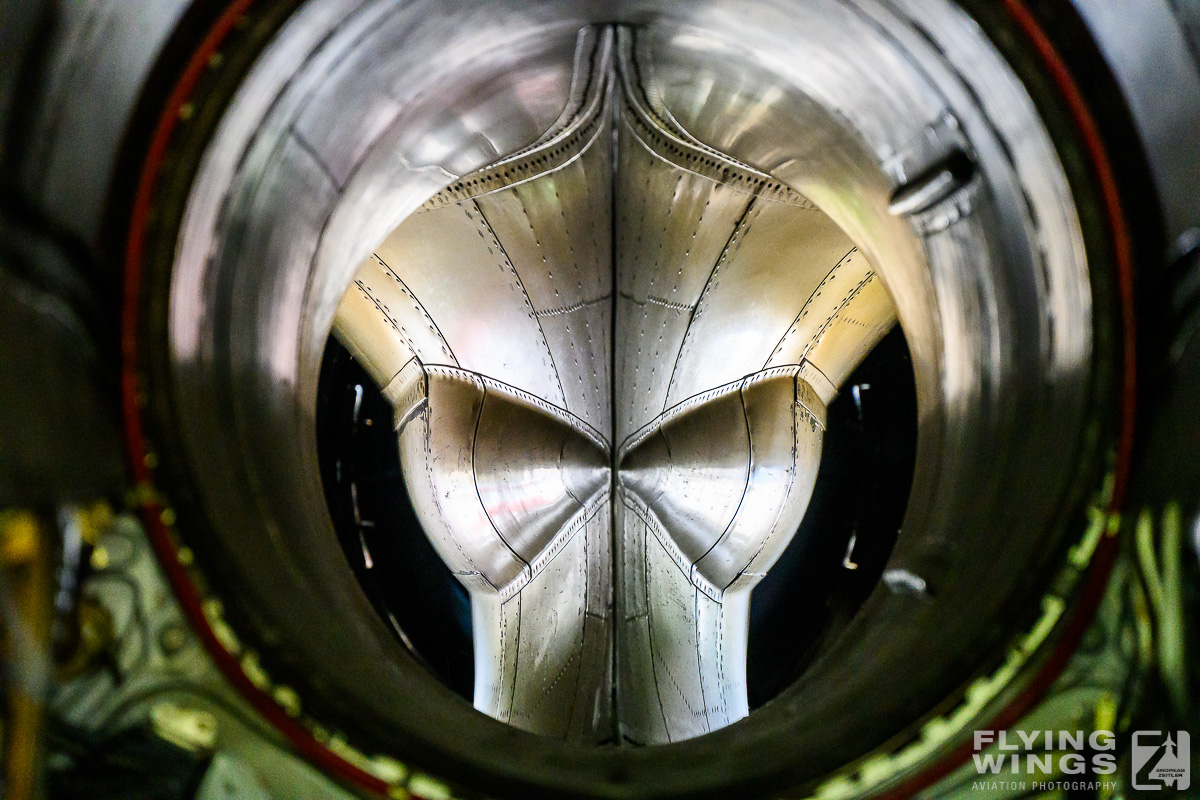
Wrecks & Relics in Albania 2021 – a Photo Gallery



Aircraft and Helicopters on Display at the Armed Forces Museum
Fixed-Wing Aircraft
- 5-48 – Mikoyan-Gurevich MiG-15bis – Soviet-built jet fighter
- 4-13 – Shenyang F-5 – Chinese-built derivative of the MiG-17F
- 4-65 – Shenyang FT-5 – Two-seat trainer of the F-5/MiG-17 family
- 4-22 – Shenyang F-6 – Chinese-built derivative of the MiG-19
- 8-01 – Shenyang F-6C – Chinese MiG-19-family fighter
- 0209 – Chengdu F-7A – Chinese development of the MiG-21F-13
- 105 – Nanchang PT-6 – Chinese piston-engined primary trainer
Helicopters
- 6-58 – Harbin Z-5 – Chinese-built derivative of the Mil Mi-4
- 607 – Agusta-Bell AB.206C-1 JetRanger – Italian-built light utility helicopter
- 5020 – MBB Bo 105 – German-built twin-engine light utility helicopter
Additional Indoor Aviation Exhibits
- Yakovlev Yak-18 – forward/nose section
- MiG-21 – cockpit section
- Target drone
- Aviation equipment, photographs and historical artefacts

You May Also Like
Bavarian Tiger on the prowl
Tornado 50th at Manching – celebrating a year long…