Israel’s Black Spitfire: An Exclusive Air-to-Air Encounter
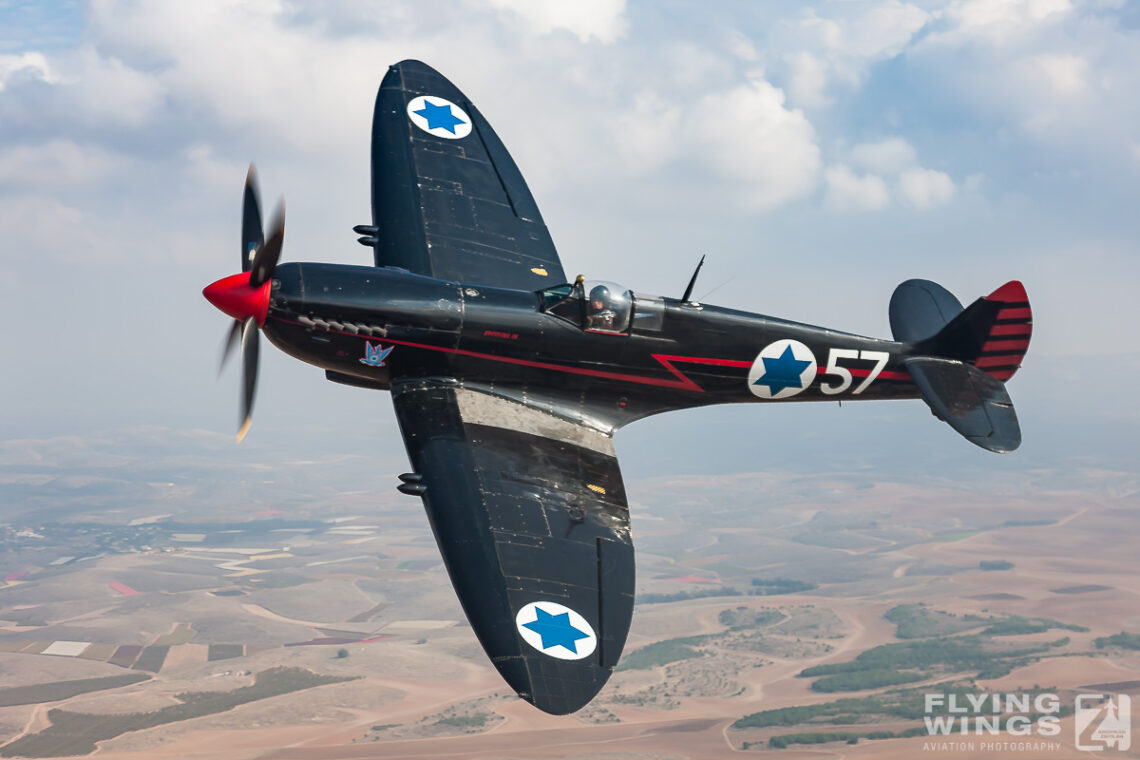
In 2011, a unique photo flight over Israel offered an air-to-air encounter with one of the Middle East’s most remarkable surviving warbirds: the Israeli Air Force’s black Spitfire Mk IX, serial 57. At the time, very few photographers had been granted meaningful access to the aircraft, and apparently no comparable air-to-air coverage had been produced before. The resulting photographs accompanied reports in Aircraft, Flugzeug Classic and several other aviation magazines. Even many years and numerous unusual assignments later, it remains my most exclusive photographic opportunity.
A Rare Encounter over Israel
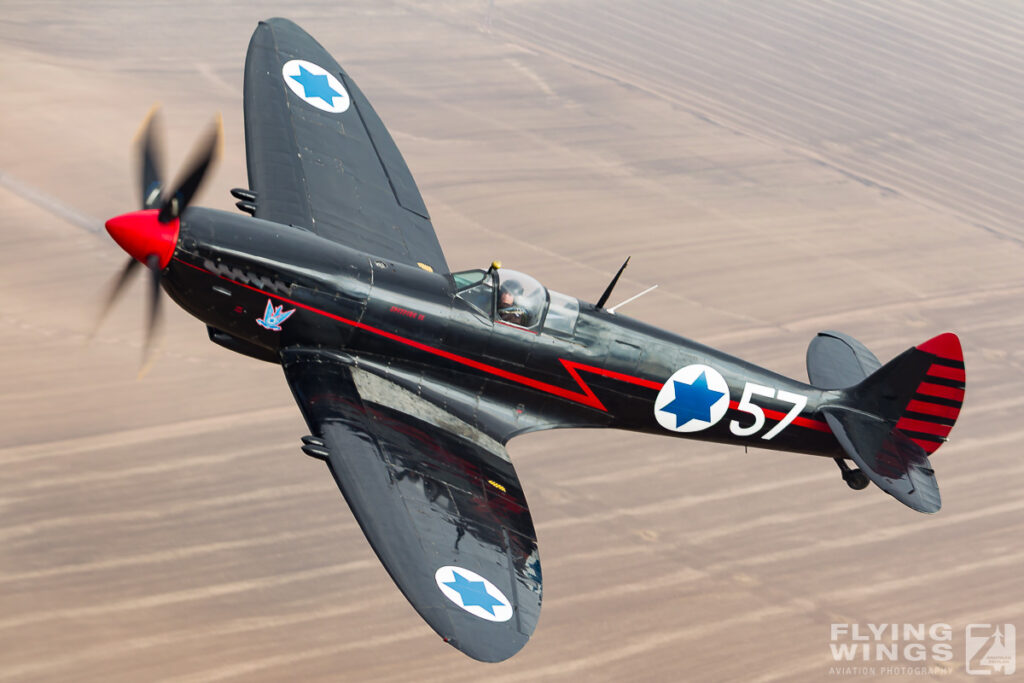
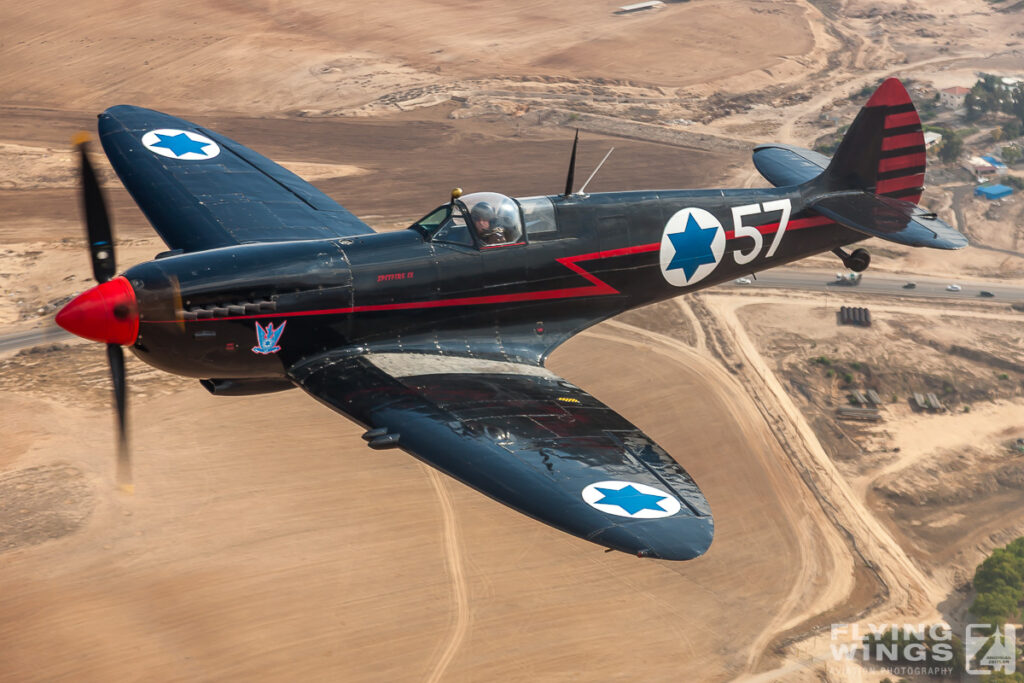
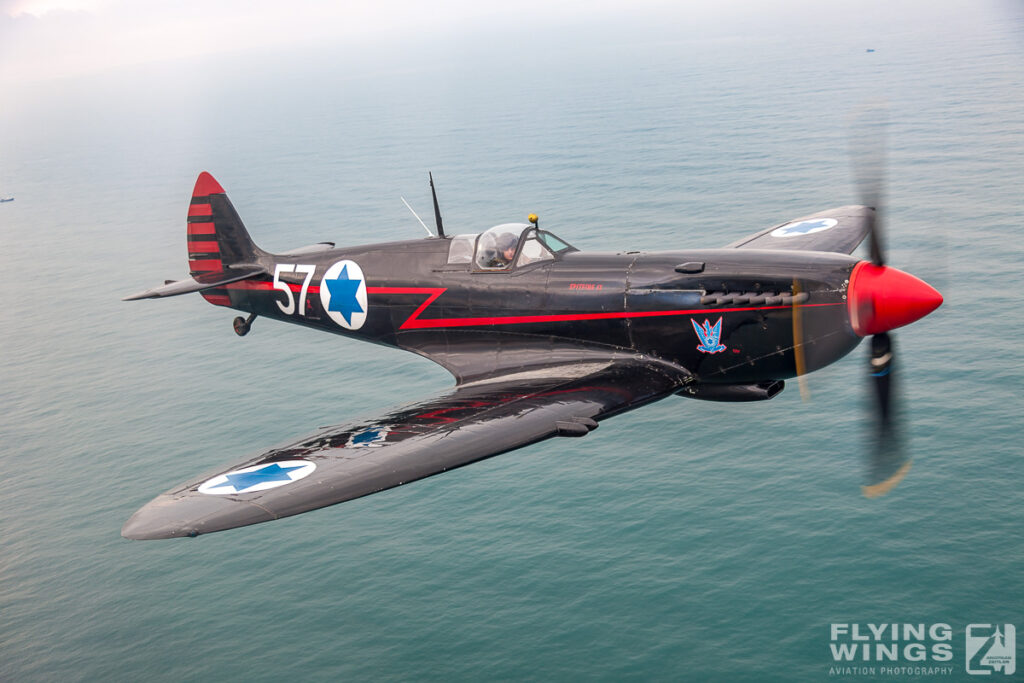
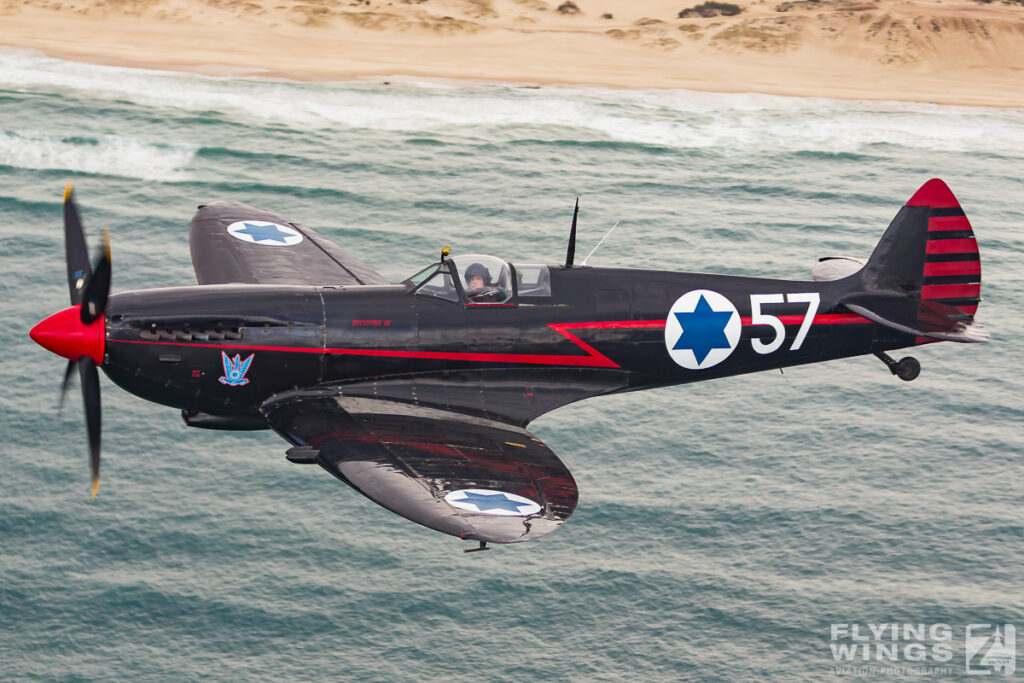
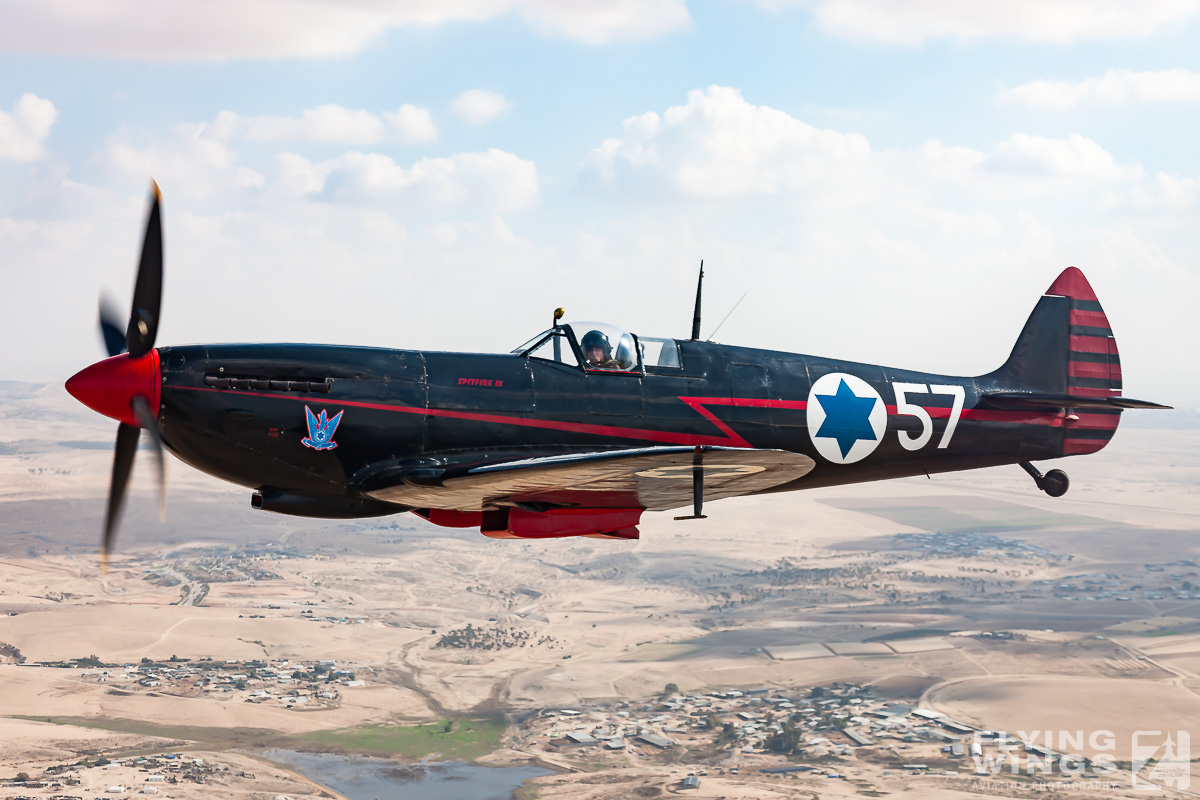
Against the pale landscape of the Negev, the aircraft looked unlike any other Spitfire. Its glossy black finish, red spinner and red lightning flash gave the familiar outline an almost modern appearance, while the blue-and-white Israeli markings left no doubt about its identity. Seen from another aircraft rather than from the ground, the combination was even more striking. The elliptical wings caught the light, the dark fuselage stood out against the desert and, for a brief time, one of Israel’s most carefully guarded pieces of aviation history was flying directly in front of my camera.
The visit also provided something just as valuable as the photographs: time with Colonel Oded “Dedi” Rosenthal, then the chief pilot of the Israeli Air Force Museum’s historic fleet. In 2011, he was completing his twentieth year on the Spitfire. His memories connected the aircraft’s operational past with the people who had kept it flying for decades, among them former Israeli Air Force commander and later President of Israel Ezer Weizman.
How the Spitfire Reached Israel
The story of the Black Spitfire cannot be separated from the creation of the Israeli Air Force. When the State of Israel was declared on 14 May 1948, the new country urgently needed combat aircraft. Spitfires were already familiar in the region: the Royal Air Force had operated them there during the Second World War, while the Royal Egyptian Air Force also employed the type.
For many of the overseas volunteers known as Mahal, the Spitfire was a natural choice. A number of these pilots had flown it with Allied air forces during the Second World War and knew its capabilities well. Israel’s first two examples were assembled from components and wreckage left behind after the British withdrawal, together with parts recovered from Egyptian aircraft. They joined 101 Squadron, the “First Fighter Squadron”, whose initial equipment included the difficult Avia S-199—a Czechoslovak-built derivative of the Messerschmitt Bf 109 airframe powered by the Junkers Jumo 211 engine.
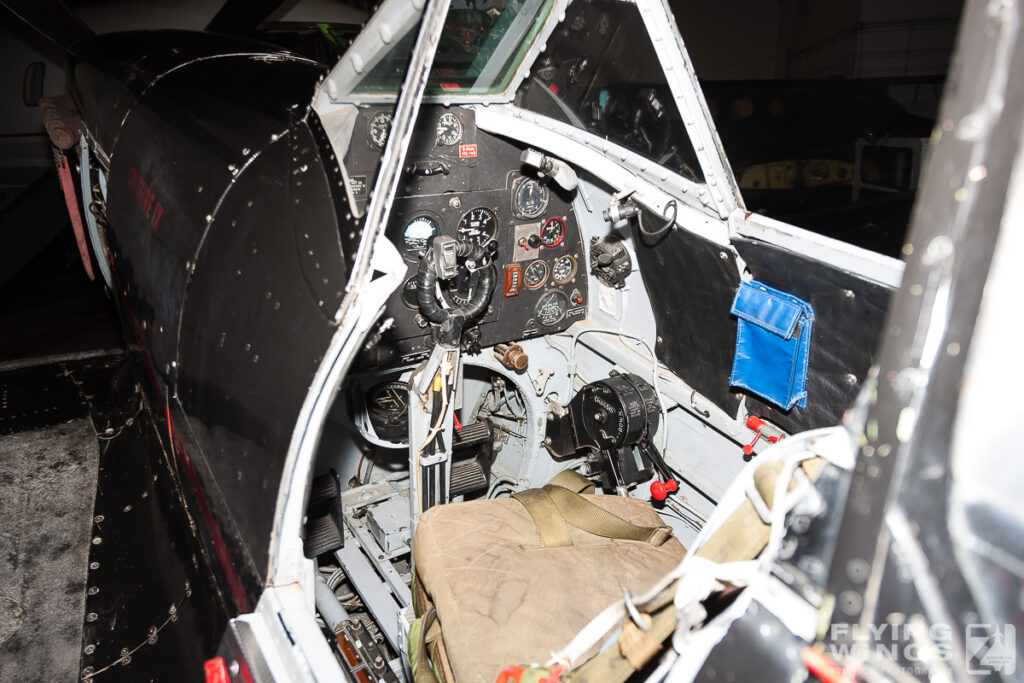
A larger Spitfire force remained a priority. The opportunity finally came in Czechoslovakia, which was reorganising its post-war inventory around Soviet-built aircraft and agreed to sell Israel a batch of Spitfire LF Mk IXs. Delivering them was an operation in itself. Political restrictions and the long route across countries that were not necessarily friendly to Israel made a conventional transfer impossible.
Operation Velveta
Under Operation Velveta, the fighters were prepared for exceptional ferry flights from Czechoslovakia to Israel via Yugoslavia. Armament, armour and other equipment were removed to save weight, while additional fuel tanks were installed for the long over-water leg from Nikšić to Israel. The first group departed in September 1948; further aircraft followed during Velveta II in December.
The Spitfires reached Israel under difficult circumstances and were rapidly committed to combat during the 1948 Arab–Israeli War, known in Israel as the War of Independence. Their service produced one of the most unusual episodes in the type’s history on 7 January 1949, when Israeli Spitfires engaged RAF aircraft over the Sinai battle area. Spitfires were now operating on several sides of the conflict, demonstrating how widely the fighter had spread after the Second World War.
After the fighting, the Israeli aircraft increasingly moved into training duties. Attrition remained high, and additional Spitfires were acquired from Italy. By the middle of the 1950s, however, the P-51 Mustang was well established in Israeli service and the first jet fighters—including the Gloster Meteor and Dassault Ouragan—were opening a new era. The Spitfire left frontline service in 1956, and most of the remaining aircraft were sold to Burma, today Myanmar.
The Making of Spitfire 57
The planned disposal of the Israeli Spitfire fleet became the starting point for the survival of aircraft 57. Ezer Weizman, then commander of Ramat David Air Base, wanted Israel to retain an airworthy example—not only as an aircraft he could continue to fly, but also as the nucleus of a future collection preserving the history of the young air force.
What emerged was not an untouched airframe with a perfectly linear identity. As was common when older military aircraft were kept operational, the best available components were selected from several Spitfires. Construction numbers found across the aircraft reflect this mixed heritage. The surviving machine is widely associated with RAF serial TE554 and the Israeli identity 2057, later shortened to 57, but its airframe also preserves the material history of other Israeli Spitfires.
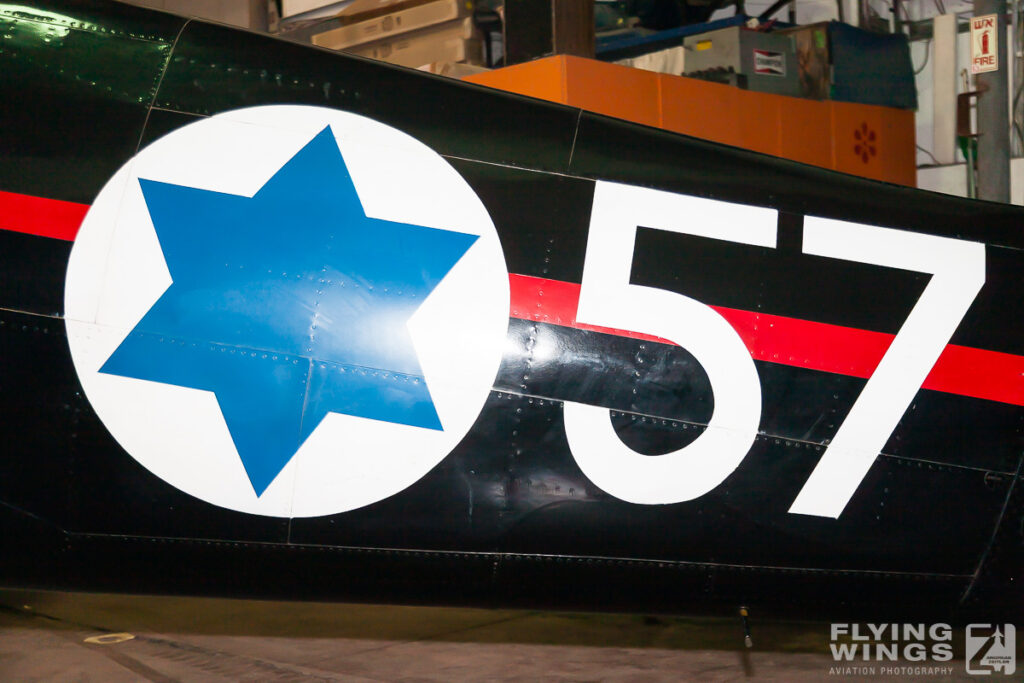
The fuselage traditionally linked with TE554 traces its British service to May 1945 and an assignment to No. 310 (Czechoslovak) Squadron before transfer to the Czechoslovak Air Force. Other major components were chosen according to condition and remaining life. Even the wings changed during the aircraft’s Israeli career, giving the preserved Spitfire the full-span elliptical outline seen today. Rather than diminishing its historical value, this composite identity illustrates the practical determination required to keep a unique aircraft flying for generations.
Why the Israeli Spitfire Is Black
Once the aircraft had been selected for preservation, Weizman ordered it to be painted black. The unusual finish recalled a black Spitfire he remembered from his wartime service with the Royal Air Force. The aircraft had made a lasting impression on him, and its appearance provided the model for the machine that would become inseparably linked with his own name.
The black finish was completed by a red spinner and red markings on the rudder, colours associated with 101 Squadron. The prominent red lightning flash along the fuselage may have drawn inspiration from Spitfire 2058/58, a distinctive silver aircraft that carried a red flash and was associated with squadron leadership before being sold to Burma. Not every detail of the scheme can be traced with certainty, and the appearance evolved over time; the red panels on the radiator housings, for example, were a later addition.
The result was one of the most recognisable post-war Spitfires anywhere in the world. In Israel it became known simply as the “Black Spitfire”, but just as often as “Ezer’s Spitfire”. The name acknowledged the man whose intervention had ensured its survival.
Ezer Weizman’s Personal Aircraft
Weizman flew the black aircraft himself, using it for visits to other airfields and presenting it to dignitaries. After becoming commander of the Israeli Air Force in 1958, his responsibilities left less time for regular flying. He nevertheless understood that an aircraft preserved in flying condition had to be flown, and entrusted the Spitfire to Danny Shapira, one of Israel’s most experienced pilots.
Shapira’s career would include flight-testing duties, the evaluation of the MiG-21 obtained by Israel during Operation Diamond and later work on Israeli Aerospace Industries programmes including the Lavi. For many years, he was also the pilot who kept Weizman’s Spitfire active. Weizman continued to fly it on special occasions, including his birthdays, and remained closely involved with its operation. When he became Minister of Defence in 1977, further solo flights were considered too great a risk, although he reportedly continued to mark his birthday with an engine run. The connection lasted beyond his lifetime: after his death in 2005, the Black Spitfire flew above his funeral.
Dedi Rosenthal and a Dream Realised
By the beginning of the 1990s, the search had begun for a successor to Shapira. Dedi Rosenthal was unusually well prepared for the role. He had grown up around powerful tailwheel aircraft, flying the Stearman owned by his father and gaining experience on other types whose pilots exchanged flying time for access to the biplane. Among them was the North American Harvard.
His military career added a very different range of experience. Rosenthal flew the A-4 Skyhawk and Mirage III, served with the Israeli Air Force Aerobatic Team on the Fouga-derived Tzukit and later became an F-16 squadron commander. He repeatedly expressed his interest in flying the historic aircraft based at Hatzerim, but the Spitfire cockpit remained firmly associated with Danny Shapira.
Rosenthal originally believed that the museum might one day acquire a Mustang, a type on which he was already qualified. Instead, when Shapira retired from Spitfire flying around 1990–91, the opportunity arrived sooner and in a more remarkable form: Rosenthal transitioned directly onto the Black Spitfire while continuing his active military duties.
By the time of our meeting in 2011, his fast-jet career had ended and he was flying commercially for El Al. At the museum, however, he remained the chief pilot of the historic fleet and the only pilot then qualified on all three of its active warbirds: the Boeing-Stearman, North American Harvard and Supermarine Spitfire.
“You Feel the Wings of History”
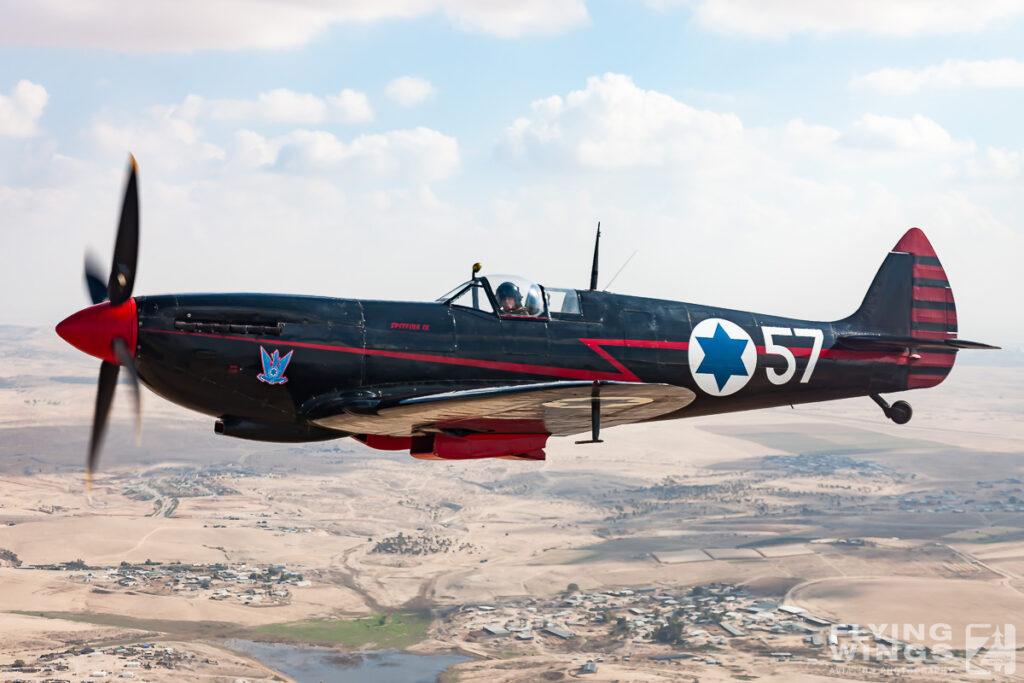
For a pilot with operational experience on the Mirage, F-15 and F-16, Rosenthal’s judgement of the Spitfire carried particular weight. He described it as “the Queen of the skies” and said that it “flies like hell”. Its responsiveness and agility reminded him in some respects of the F-16, yet the comparison only went so far.
“The Spitfire has a soul. You feel the wings of history when sitting in this aircraft.”
Oded “Dedi” Rosenthal, speaking to the author in 2011
He also emphasised that the aircraft rewarded skill and demanded respect. The Spitfire’s reputation for harmony and performance did not make it forgiving of careless handling. Extracting what the aircraft could offer required an experienced pilot—an observation reinforced by the unforgiving record of high-powered fighters in wartime.
Keeping the Black Spitfire Airworthy
In 2011, Rosenthal estimated that the Spitfire flew around 40 sorties per year. Most supported the twice-yearly graduation ceremonies for new Israeli Air Force pilots at Hatzerim, while other flights took place during public holiday events at the museum. The graduation programme was particularly symbolic: after its individual display, the Spitfire formed up with an F-16I Sufa, linking the first generation of Israeli fighters with one of the air force’s modern combat aircraft.
Because annual flying hours were limited, maintenance was organised mainly by calendar time rather than utilisation. Routine work was performed at Hatzerim, while major inspections were conducted with specialist support at Arkia’s maintenance facilities at Sde Dov. The relationship dated back to a former 101 Squadron mechanic who joined the airline after leaving military service and carried his Spitfire knowledge with him. When parts or specialist work were unavailable in Israel, established contacts in Britain and elsewhere provided support.
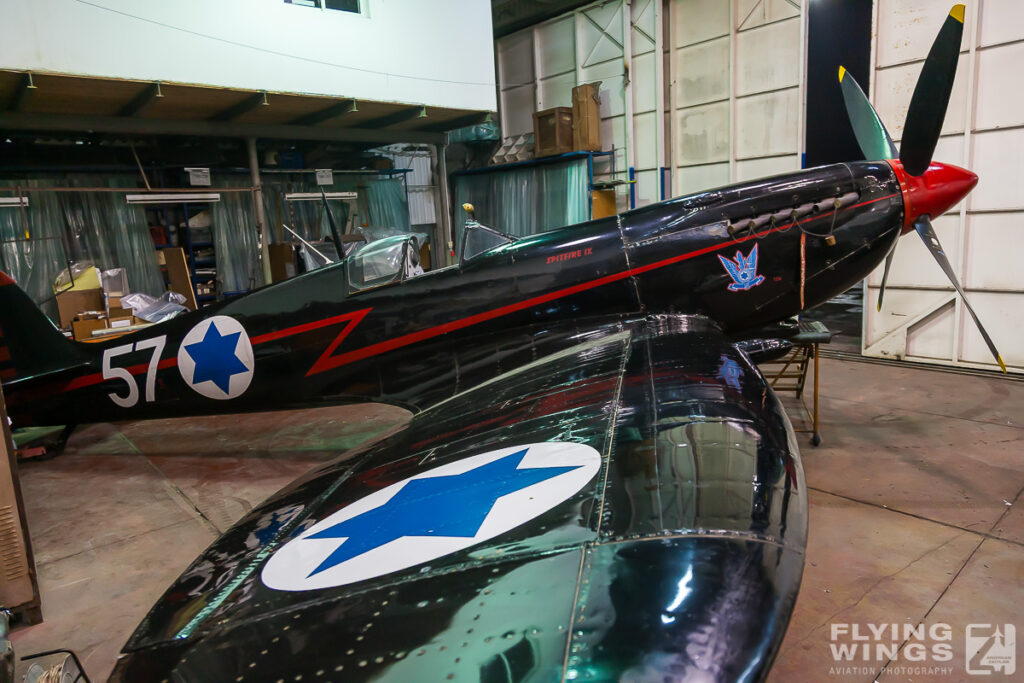
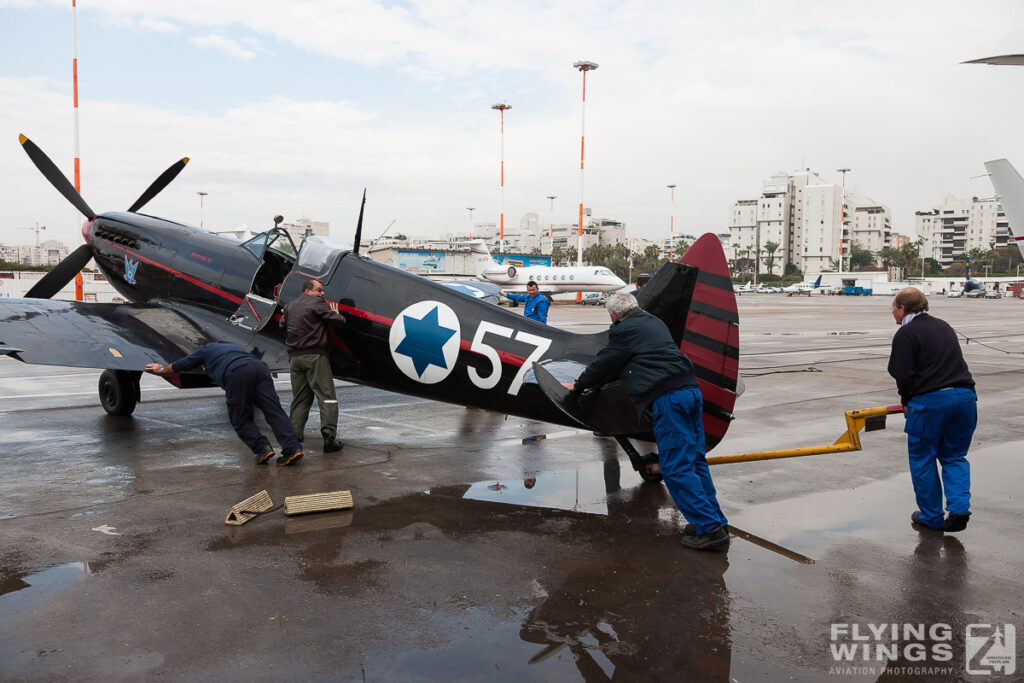
Shortly after the period in which these photographs were taken, the aircraft began an extensive overhaul that kept it on the ground for around four years. The work involved the Israeli Air Force, its museum, the Ministry of Defence, Arkia and several technical units. Radiators, fuel-system components, tyres and upholstery were among the items replaced or renewed, with specialist parts sourced from Britain and Germany. In May 2015, the Black Spitfire returned to the air.
More Than a Surviving Warbird
Many surviving Spitfires represent the history of an individual wartime airframe. Israel’s Black Spitfire tells a broader story. Its components reflect the mixed origins of the country’s post-war fleet; its markings preserve the memory of its first fighter squadrons; and its survival is inseparable from Ezer Weizman, Danny Shapira, Dedi Rosenthal and the technicians who kept it operational.
That history was present throughout the 2011 flight. Through the viewfinder, however, there was also the simple fascination of seeing a Spitfire in its element. The black aircraft moved across the Israeli landscape with a grace that no museum display could convey. The opportunity lasted only a short time, but the images travelled far beyond Israel and were published by aviation magazines in several countries.
More than a decade later, the assignment still stands apart. Access to an airworthy historic military aircraft is always special; photographing a unique national icon air-to-air, in the country whose history it represents, is something else entirely. For me, Spitfire 57 remains the rarest and most exclusive aircraft I have ever had in front of my camera.
Israel’s Black Spitfire – Photo Gallery
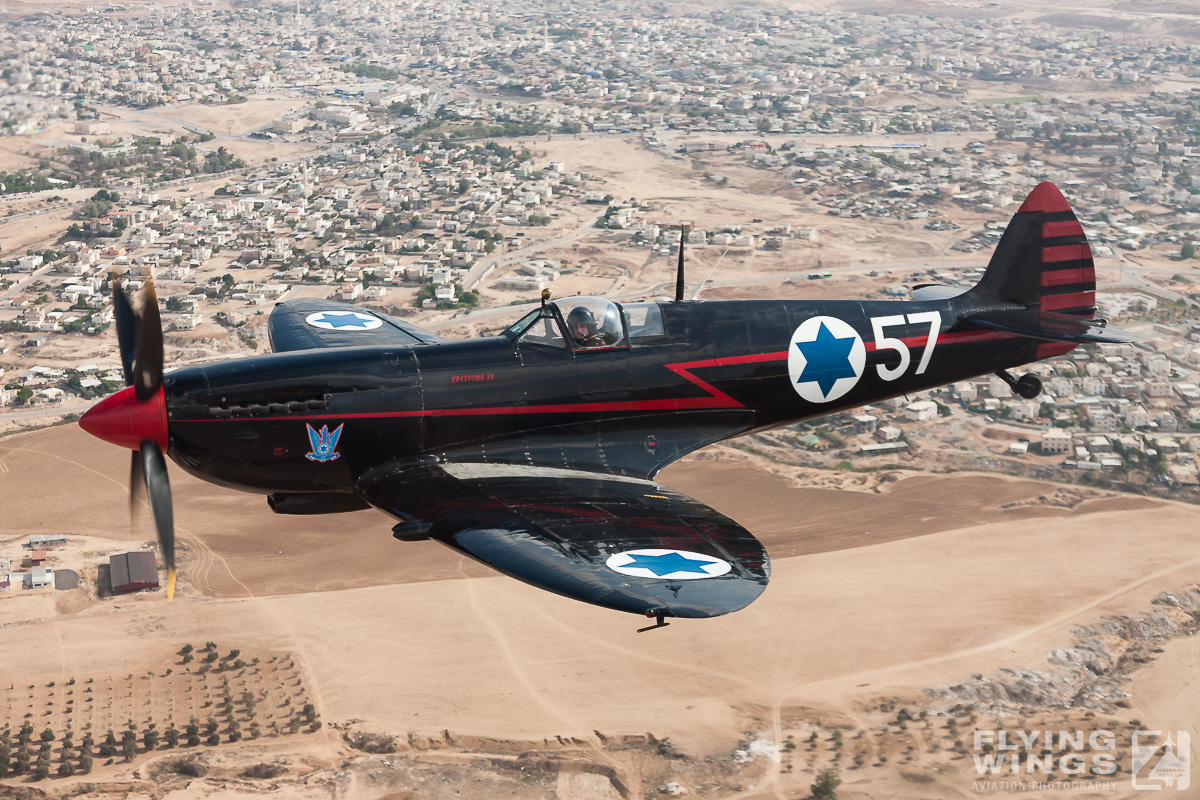
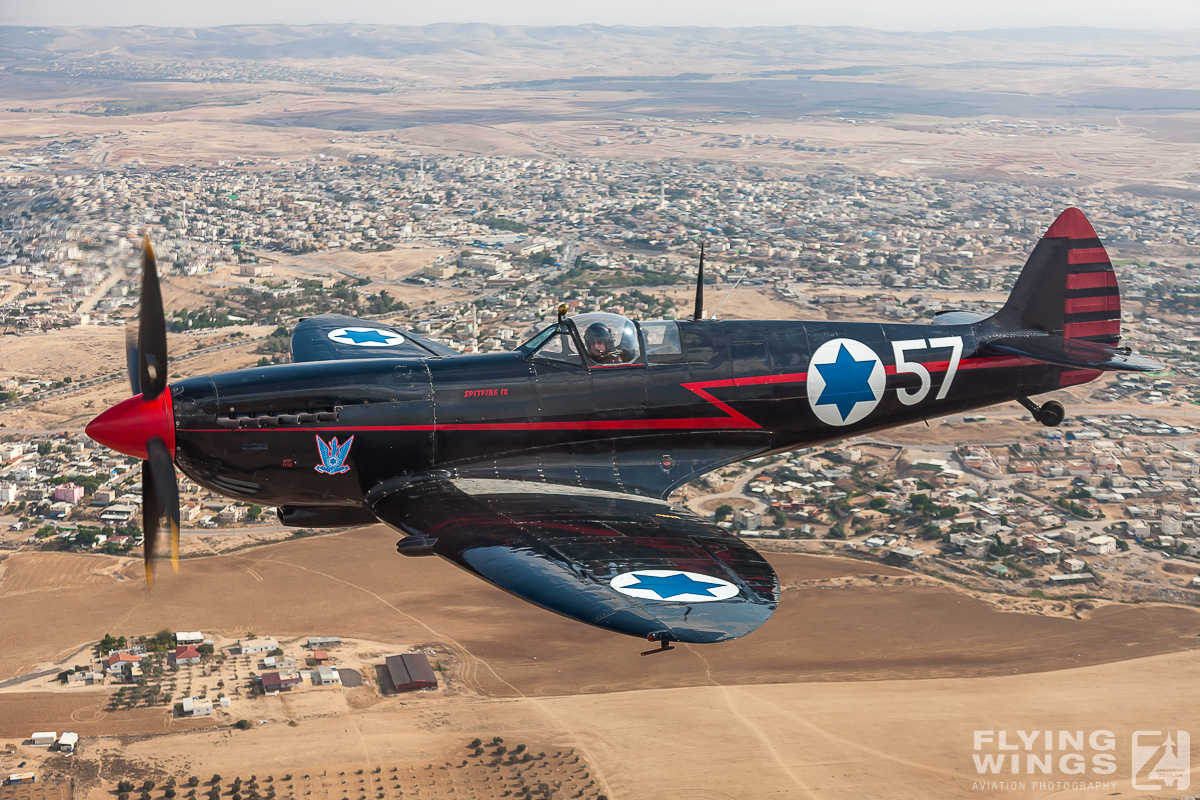
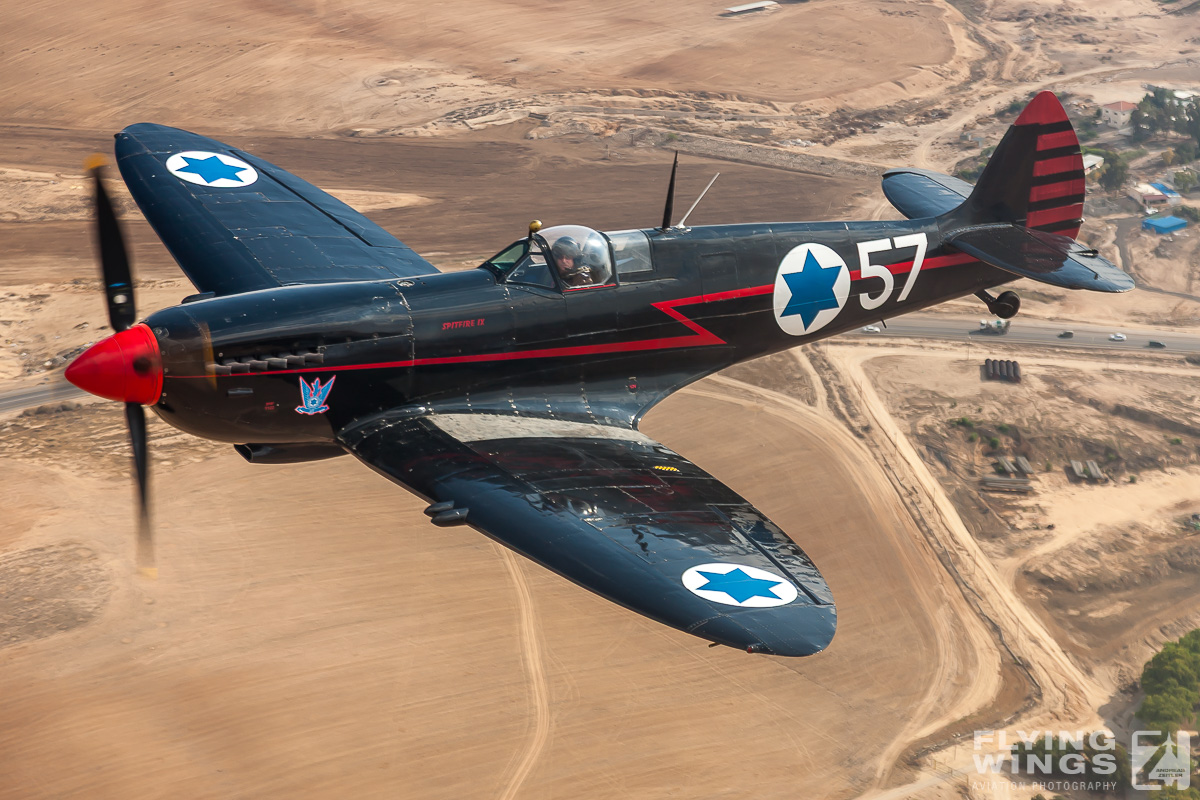
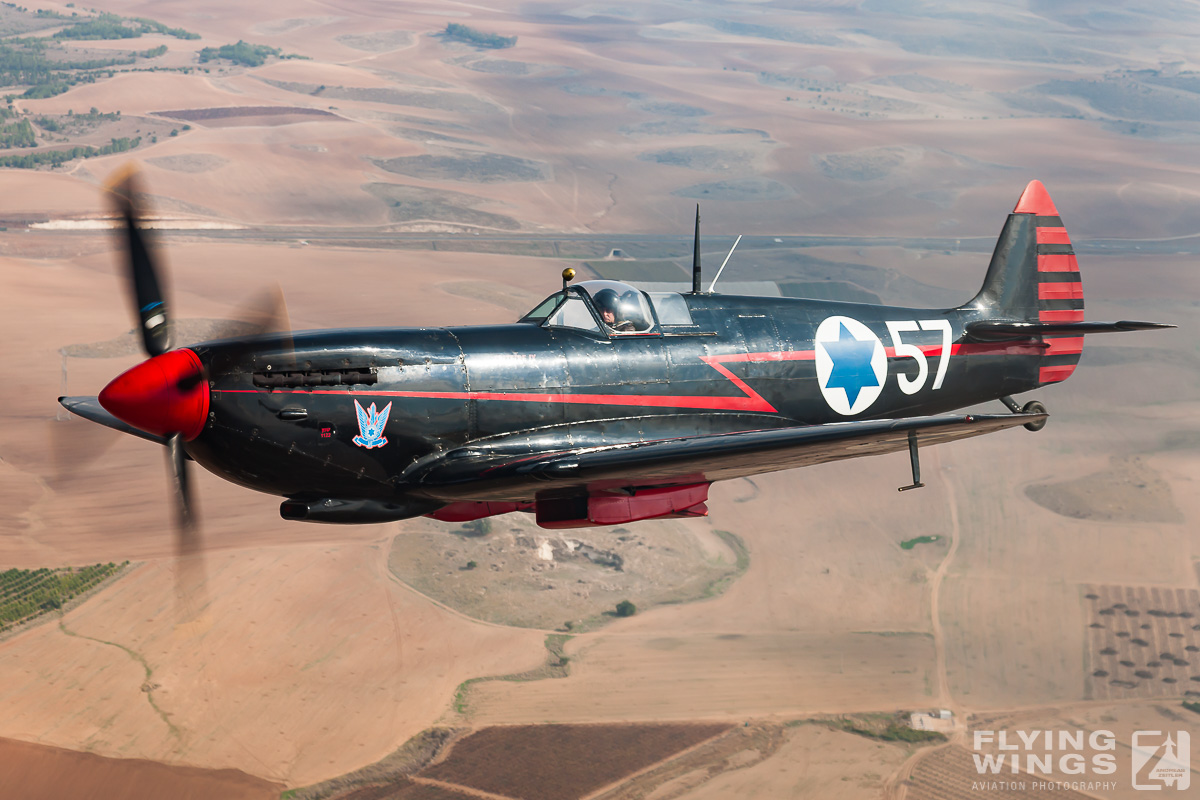
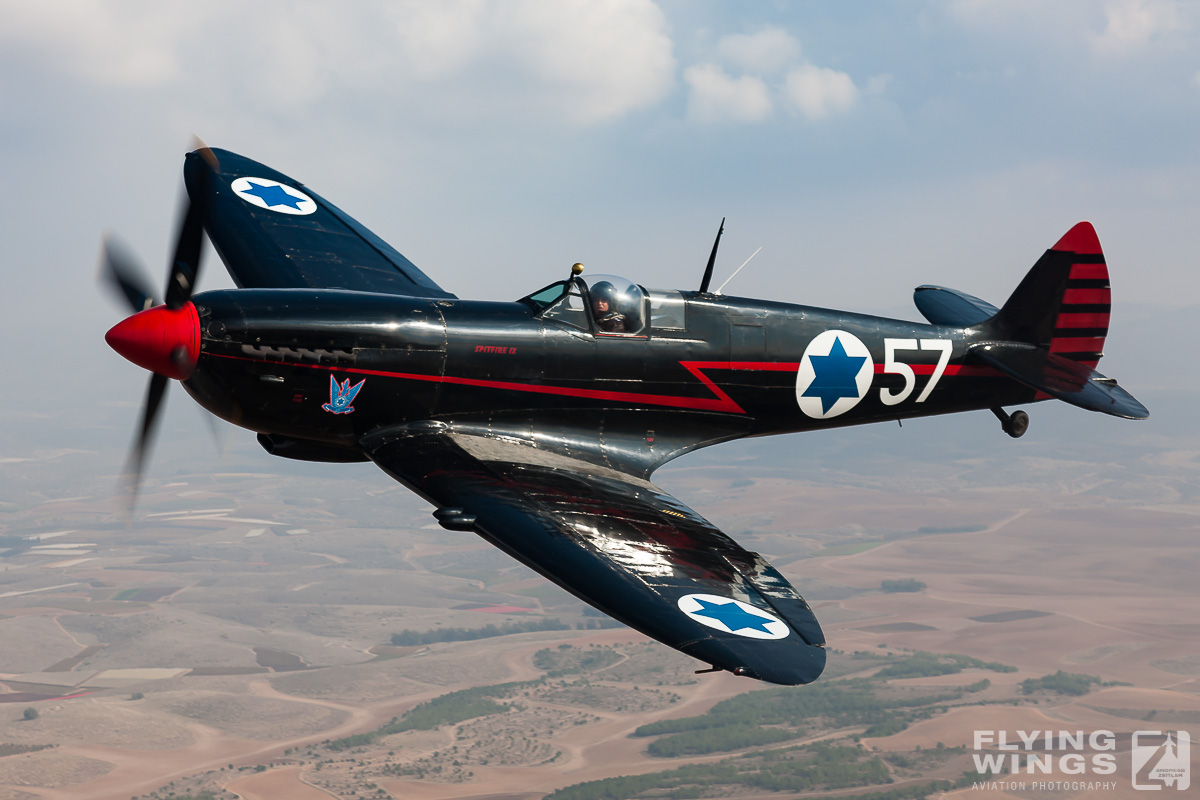
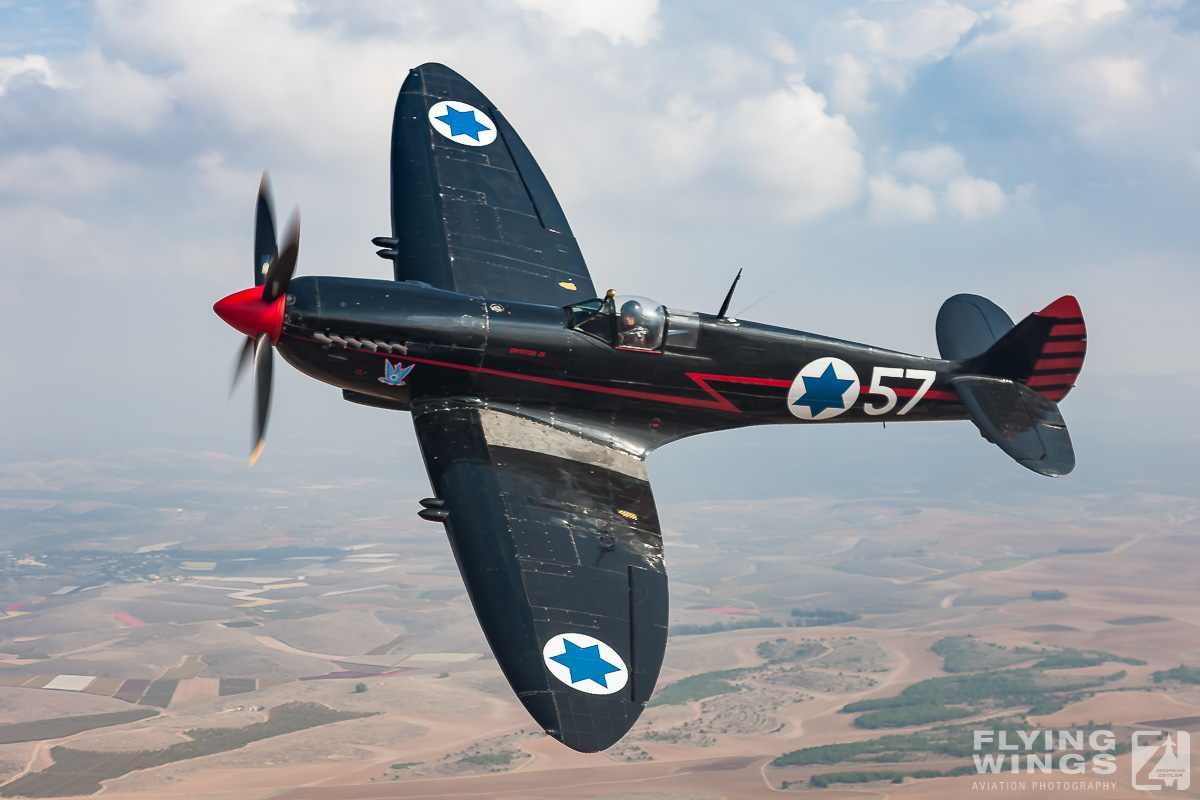
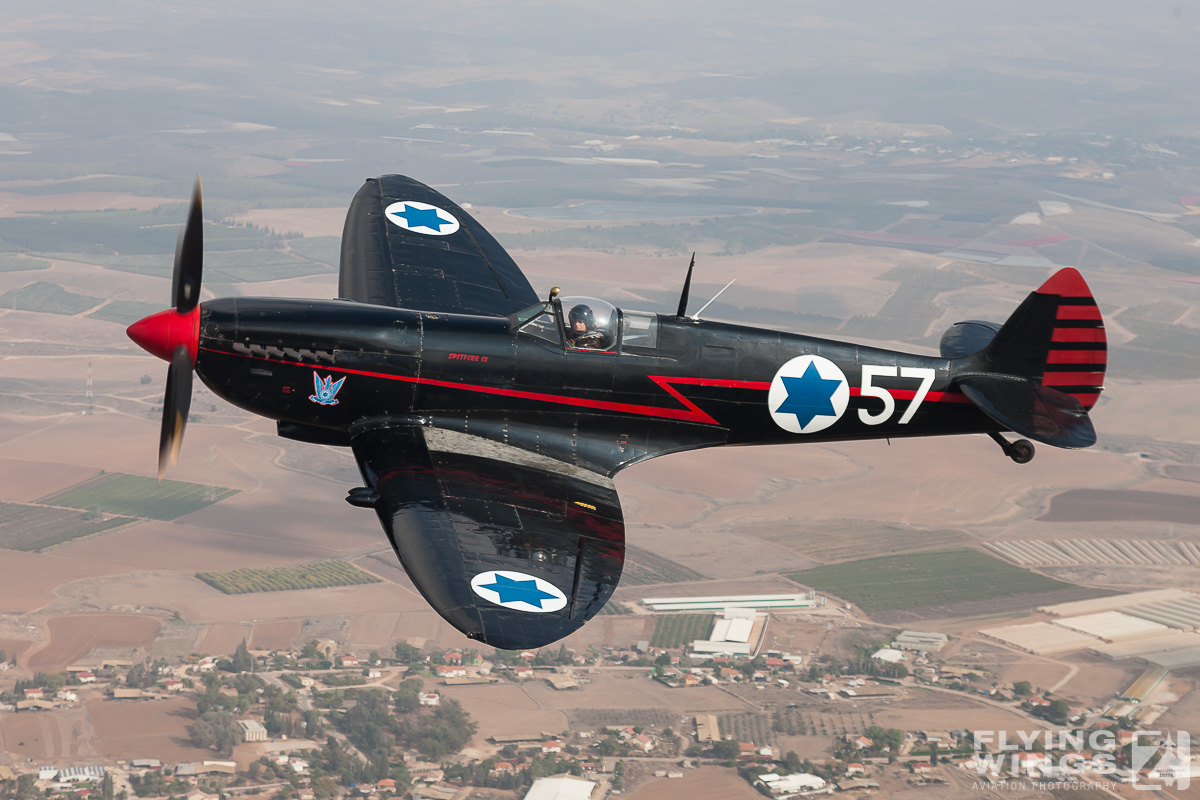
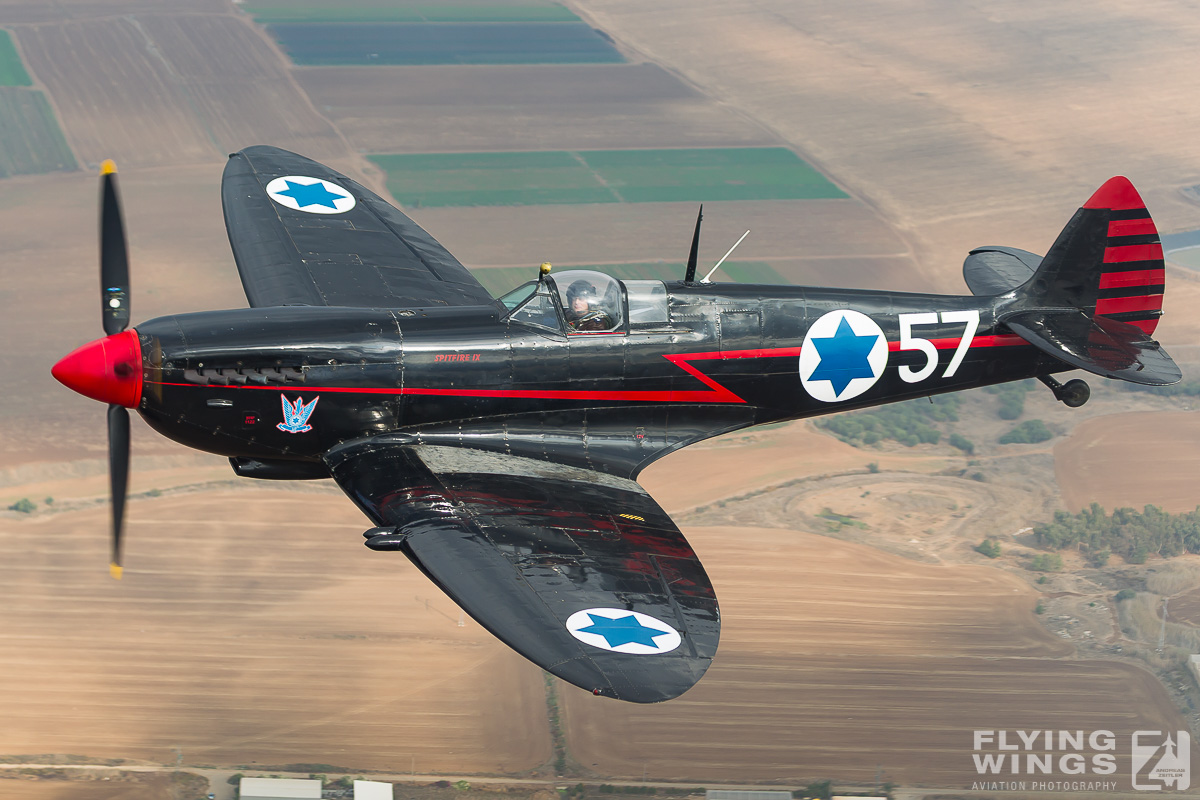
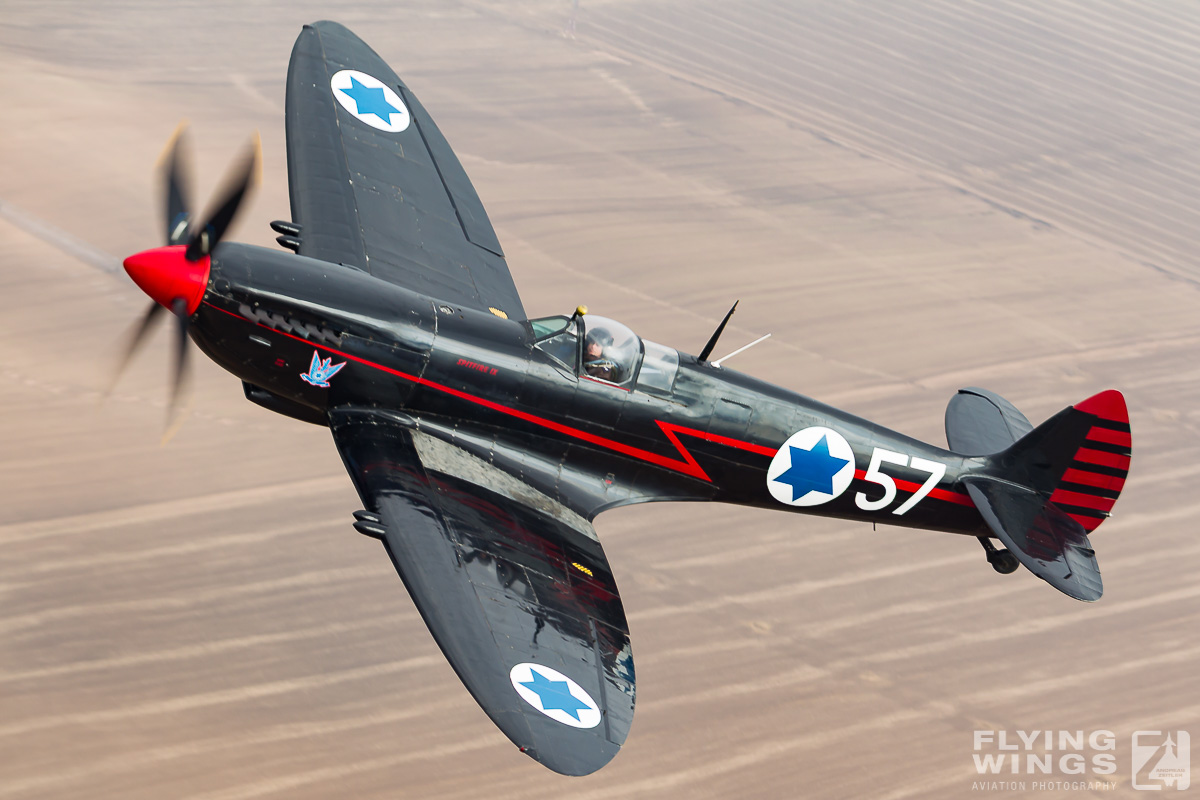
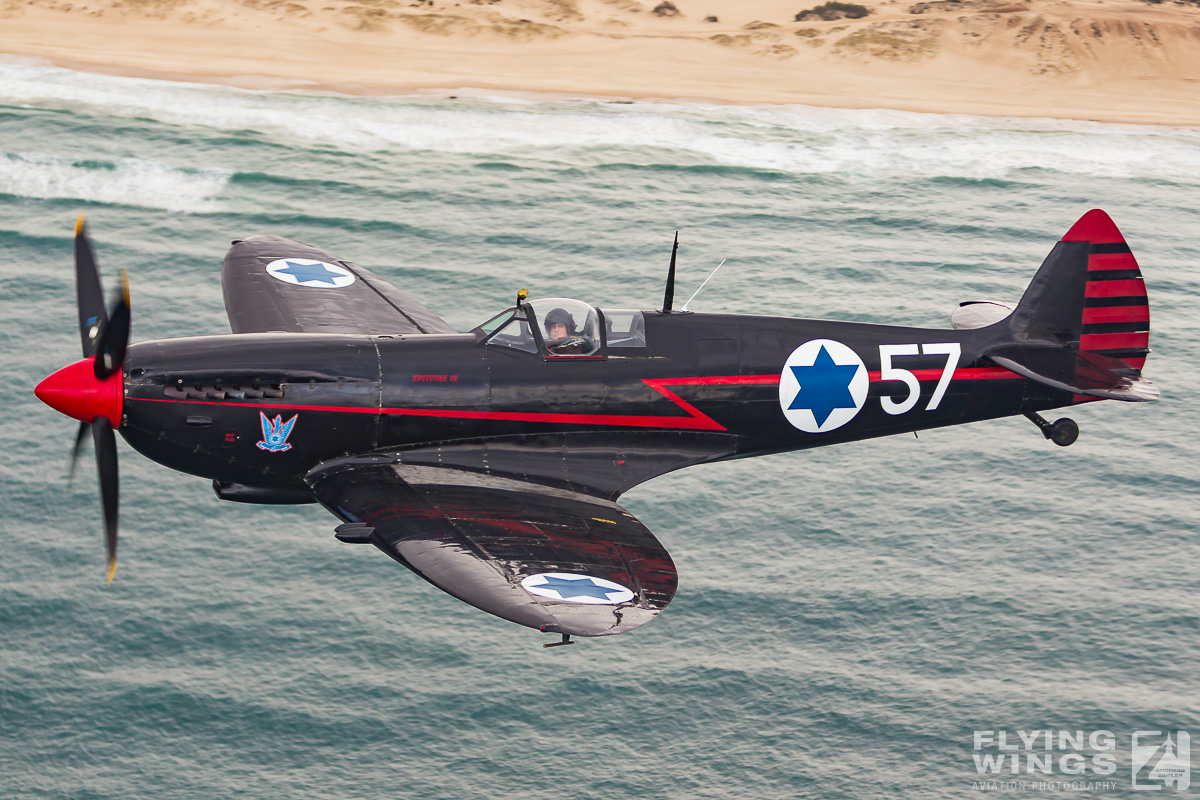
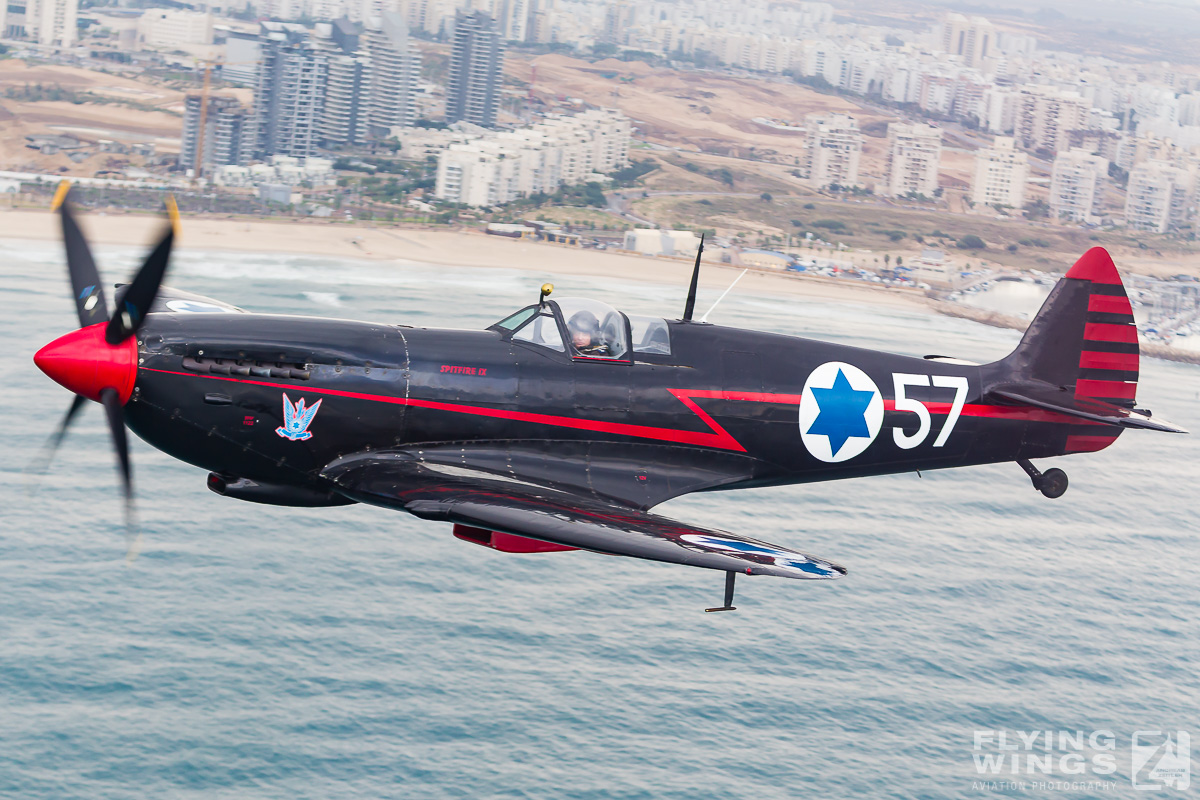
The author would like to thank David, Dedi and Yaron for their exceptional support, patience and persistence in making the 2011 feature and photo flight possible.
Selected Sources
- Bill Norton, Air War on the Edge: A History of the Israel Air Force and its Aircraft since 1947, Midland Publishing, 2004.
- Alex Yofe, Spitfire Mk.IX in the Israeli Air Force Service 1948–1956, White Crow Publications, 2005.
- World Machal: “The Israel Air Force – Spitfires Over Israel”.


You May Also Like
Consolidated PBY-5A Catalina
Bavarian Tiger on the prowl